
The Mathematics of Traveling to Europe With Your Dog
Most people think traveling to Europe with a dog is impossible.
They think it’s expensive. They think the dog will get quarantined. They think it’s too much stress.
They are wrong.
I have taken my dog across the Atlantic multiple times. I have navigated the customs agents in Paris, the train conductors in Switzerland, and the cafes in Italy.
It is not magic. It is a checklist.
If you follow the checklist, you walk through the “Nothing to Declare” line in 20 minutes.
If you ignore the checklist, they send your dog back to the US on the next flight at your expense.
Here is exactly how to do it. No fluff. Just the steps.
The Core Concept: The EU Pet Passport Scheme
Europe wants your tourist dollars. They also want your dog to be healthy.
Unlike the US, where rules vary by state and airline, the European Union has a standardized system. Once you are inside the EU, borders basically disappear.
The hard part is getting in.
You have two options:
- The EU Pet Passport: You can only get this after you arrive in Europe and see a European vet.
- The EU Health Certificate: This is what you need as an American tourist.
You are focusing on #2.
Step 1: The Timeline (Do Not Procrastinate)
This is where 90% of people fail.
You cannot book a flight tomorrow and leave. The paperwork has an expiration date.
Here is the logic:
- The paperwork is valid for entrance into the EU for 10 days after the USDA endorses it.
- You need to time your vet visit perfectly.
The 30-Day Countdown:
- Day 1: Check your dog’s microchip.
- Day 15: Book your vet appointment.
- Day 28: Go to the vet.
- Day 29: Get USDA endorsement.
- Day 30: Fly.
Step 2: The Microchip (The Iron Rule)
If your dog does not have an ISO-compliant microchip, nothing else matters.
In the US, we use 9-digit or 10-digit chips. Europe uses 15-digit ISO 11784/11785 compliant chips.
If your dog has an American chip, European scanners cannot read it. If they cannot read it, they assume your dog is not yours or is sick.
The Fix:
- Go to your vet.
- Ask them to scan the dog.
- Look at the number.
- If it is 15 digits, you win.
- If it is not, you must implant a new ISO chip.
Crucial Order of Operations:
The rabies vaccine must be given AFTER the microchip is implanted.
If you vaccinate the dog, then chip the dog the next day, the vaccine is invalid for travel. The chip proves the identity of the dog receiving the shot.
Step 3: The Rabies Vaccine
Europe is obsessed with rabies.
Your dog must have a valid rabies vaccination. It must be at least 21 days old at the time of travel.
The Trap:
If your dog’s vaccine expires the day before you fly, you cannot just get a booster and leave. You have to wait 21 days after the booster.
Check the records now. If the vaccine is less than a year old, you are safe.
Step 4: The USDA Health Certificate
This is the most expensive piece of paper you will ever buy.
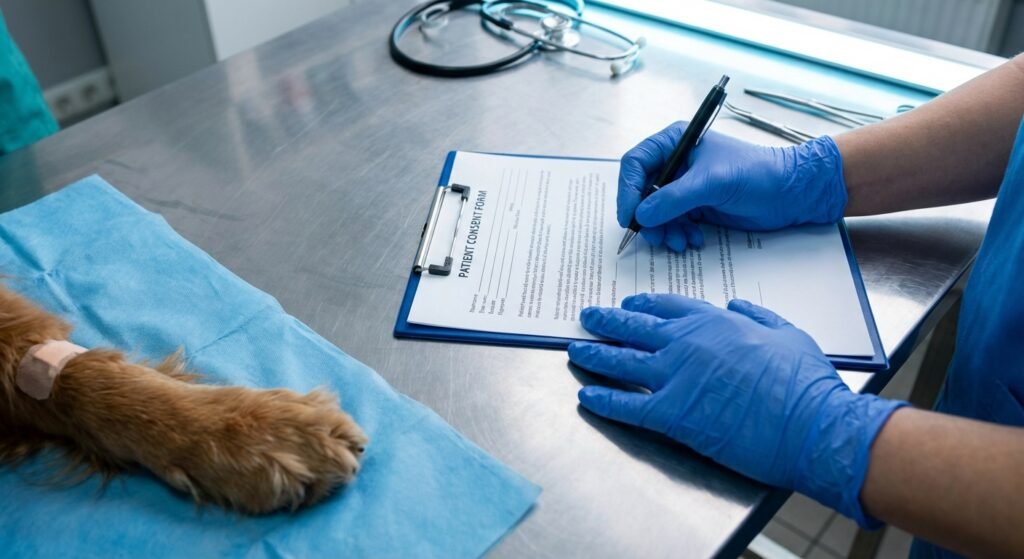
You cannot go to just any vet. You need a USDA Accredited Veterinarian.
The Process:
- Find an accredited vet. Call them. Ask specifically: “Do you do International Health Certificates for the EU?”
- Make an appointment 10 days before your flight.
- The vet examines the dog. They check the chip. They check the rabies record.
- They fill out the EU Health Certificate.
- They send it to the USDA APHIS office (usually digitally).
- The USDA stamps it and overnights it back to you.
The Cost:
- Vet Exam: $80 – $150
- Health Certificate Prep: $150 – $300
- USDA Endorsement Fee: $38
- Shipping: $50
Budget $500 for this step. It buys you peace of mind.
Step 5: Booking the Flight
Do not use third-party sites like Expedia. Book directly with the airline.
You have three ways to fly:
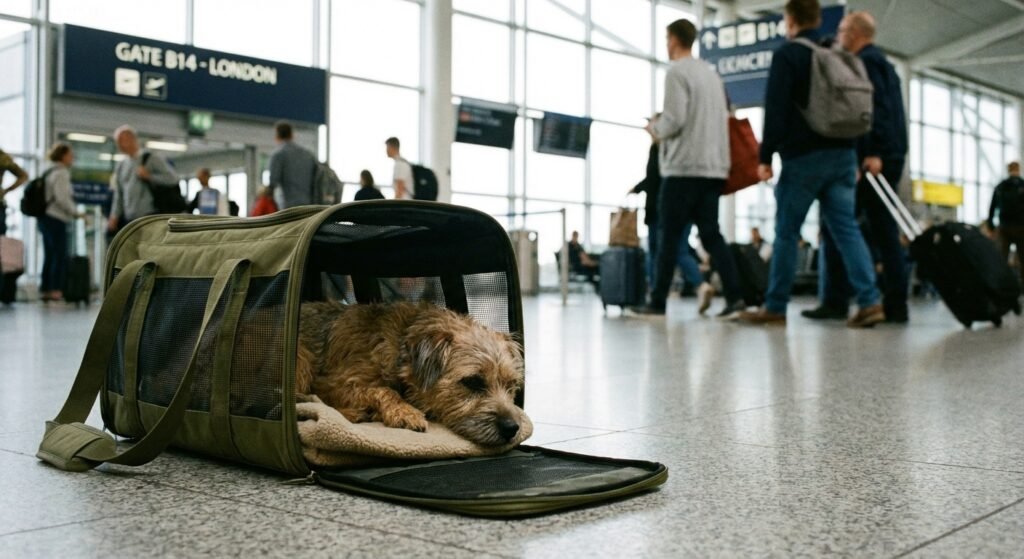
- In Cabin: Dog is under 18 lbs (usually) and fits in a carrier under the seat.
- Manifest Cargo: Dog flies in the belly of the plane on the same ticket.
- Air Freight: Dog flies as a package on a different plane (Avoid this. It costs thousands).
The Winner: In Cabin
If your dog is small, this is easy. You pay $100-$200 each way.
The Hard Truth for Big Dogs:
If you have a Golden Retriever, you are flying Cargo.
- Lufthansa and KLM are the best for this. They have temperature-controlled holds.
- US carriers (Delta, United, American) have largely stopped shipping pets as cargo for civilians.
- You likely need to fly a European airline.
The Layovers:
Book a direct flight.
Every layover is a risk point.
- Risk of missed connection.
- Risk of baggage delay.
- Risk of extreme temperatures on the tarmac.
Pay the extra $200 for the direct flight. It reduces risk by 50%.
Step 6: Arrival in Europe
You land. You are tired. Your dog needs to pee.
Do not just walk out.
Follow the signs for “Goods to Declare” or look for a Customs phone icon.
In many airports (like Paris CDG or Amsterdam Schiphol), there isn’t a massive checkpoint. You might have to find the officer.
You hand them the paperwork. They scan the microchip. They stamp the form.
Time elapsed: 5 minutes.
Cost: $0.
Now you are in.
Step 7: Trains > Planes
Once you are in Europe, stop flying.
US trains are slow and expensive. European trains are fast, cheap, and dog-friendly.
The Rules:
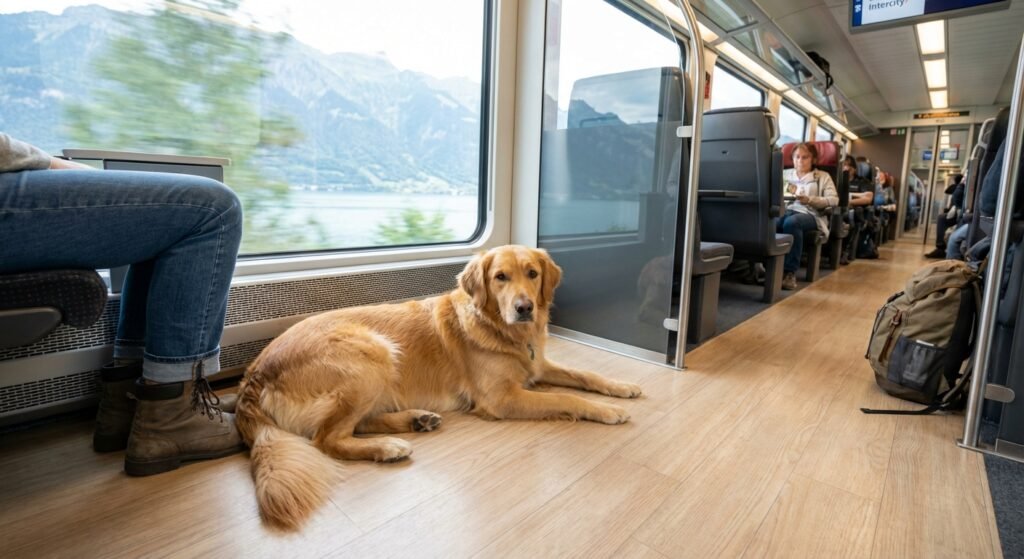
- Small dogs: Usually travel free in a carrier.
- Big dogs: usually pay 50% of a 2nd class ticket price.
- The Muzzle: You must carry a muzzle. Conductors may ask you to put it on the dog. If you don’t have one, they kick you off.
I have taken dogs on trains in France, Italy, Germany, and Switzerland. It is superior to driving. You sit. The dog sleeps at your feet. You arrive in the city center.
Step 8: Accommodation Strategy
Hotels in Europe are smaller than in the US.
A “Standard Room” in Paris is the size of a walk-in closet in Texas.
The Filter Strategy:
- Use Booking.com or Airbnb.
- Filter by “Pet Friendly.”
- Read the fine print.
Some hotels charge €10 per night. Some charge €50. Some charge a flat cleaning fee.
The Unwritten Rule:
Do not leave your dog alone in the room.
In the US, you can crate the dog and go to dinner. In Europe, many hotels forbid this. If the dog barks, the front desk calls you. If you don’t answer, they enter the room.
Plan your trips so the dog comes with you.
Step 9: Dining and Culture
This is the biggest ROI of traveling with a dog in Europe.
In the US, dogs are allowed on some patios.
In Europe, dogs are allowed almost everywhere.
- Restaurants: Yes. Inside and outside.
- Cafes: Yes.
- Retail Stores: Mostly yes (except grocery stores).
- Public Parks: Yes.
The Protocol:
- Walk into the restaurant.
- Make eye contact with the waiter.
- Point to the dog.
- Ask: “OK?”
- They will almost always say yes.
They will often bring a bowl of water before they bring you a menu.
I have seen dogs in Michelin-star restaurants in France. I have seen dogs in Zara in Italy. It is a cultural difference. Dogs are seen as family members, not livestock.

The “Final Boss”: The United Kingdom
Everything I wrote above applies to the EU (France, Germany, Italy, Spain, etc.).
The UK is different. Brexit made it harder.
You cannot fly a dog in the cabin into the UK.
Repeat: You cannot fly in-cabin into Heathrow or Gatwick.
You have to fly them as Manifest Cargo (expensive) or hire a private pet transport company to drive them through the “Chunnel” (Eurotunnel).
The Hack:
- Fly into Paris (CDG) or Amsterdam (AMS).
- Rent a car or hire a “Pet Taxi.”
- Drive into the UK via the Eurotunnel.
- There is a pet reception center at the border. They check the paperwork there.
Do not try to fly direct to London unless you want to pay $3,000+ and separate from your dog.
Packing List (Essentials Only)
Do not overpack. You are hauling luggage on cobblestone streets.
- The Paperwork: Keep the original USDA forms in a folder. Do not lose this.
- Food: Bring enough food for the first 3 days. Do not bring a 50lb bag. You can buy high-quality dog food in Europe (Royal Canin, Purina, etc. are everywhere).
- Medication: Bring enough for the whole trip plus one week. Getting US prescriptions filled in Europe is a headache.
- The Carrier: If flying in-cabin, use a soft-sided carrier (Sherpa brand is the gold standard). It must fit under the seat.
- The Muzzle: Mesh or basket style. Just have it in your bag.
- Waste Bags: Bring rolls from home. They are harder to find in some city centers.
Real World Costs
Let’s look at the math for a 14-day trip.
Option A: Leave Dog at Home
- Dog Sitter / Boarding: $60/day
- Total: $840
- Result: You miss your dog. Dog is stressed.
Option B: Bring Dog (In Cabin)
- Vet Paperwork: $500
- Airline Fee: $300 (round trip)
- Train tickets/Hotel fees: $150
- Total: $950
The Difference: $110.
For $110, you get to walk your dog past the Colosseum. You get photos of your dog in the Swiss Alps.
The value proposition is obvious.

Common Objections (Destroyed)
“It’s too long of a flight.”
Dogs sleep 14 hours a day. If you exercise them beforehand, they will sleep the entire flight. The hum of the engine is white noise. My dog sleeps better on a plane than in my living room.
“What if they get sick?”
European vets are excellent. They are often cheaper than US vets.
I had a dog get an ear infection in Italy.
- Consultation: €40.
- Meds: €15.
- Total time: 45 minutes.
“My dog is anxious.”
Talk to your vet about Gabapentin or Trazodone. Test it before the flight. It takes the edge off. Do not sedate them heavily (airlines forbid this because it affects breathing).
Summary
The system is designed to work. Millions of people cross borders with pets every year.
- Microchip (ISO).
- Rabies (Valid).
- Vet Appointment (10 days out).
- USDA Stamp.
- Direct Flight.
- Enjoy Europe.
Don’t overthink it. Don’t listen to people who haven’t done it.
Book the ticket. Get the stamp. Go.