
The “Old Way” of Banking is Costing You a Fortune
Most people are bad at math. They look at their bank statement. They see a $5 monthly fee. They think they are losing $60 a year.
They are wrong.
If you are a digital nomad, your bank isn’t charging you fees you can see. They are charging you fees you can’t see. They are hiding costs in the exchange rate.
Here is the reality:
You swipe your card in Thailand. The bill is 1,000 Baht. The real exchange rate is 36 Baht to 1 USD. Your bank gives you 34 Baht to 1 USD. You just paid a 5.5% tax on your own money. And you thanked them for it.
If you spend $50,000 a year living abroad, and you use a traditional bank (like Wells Fargo, Chase, or HSBC), you are lighting $1,500 to $2,500 on fire every single year. That is a free vacation. That is a new laptop. That is money you worked for.
Stop doing that.
I am going to show you the specific banks and tools you need to stop leaking cash. I will give you the setup for US citizens and International citizens. This is not about “perks.” This is about keeping your money.

The Three Rules of Nomad Banking
Before we look at the specific banks, you need to understand the criteria. If a bank does not meet these three rules, do not use them for international travel. Period.
- Rule #1: No Foreign Transaction Fees (FTF). Many banks charge 3% just to use your card abroad. This is a stupidity tax. Zero is the only acceptable number here.
- Rule #2: The Real Exchange Rate. You want the mid-market rate (the rate you see on Google). You do not want the “bank rate.”
- Rule #3: ATM Fee Reimbursements. Cash is still king in many parts of the world. You should not pay $5 every time you access your own cash.
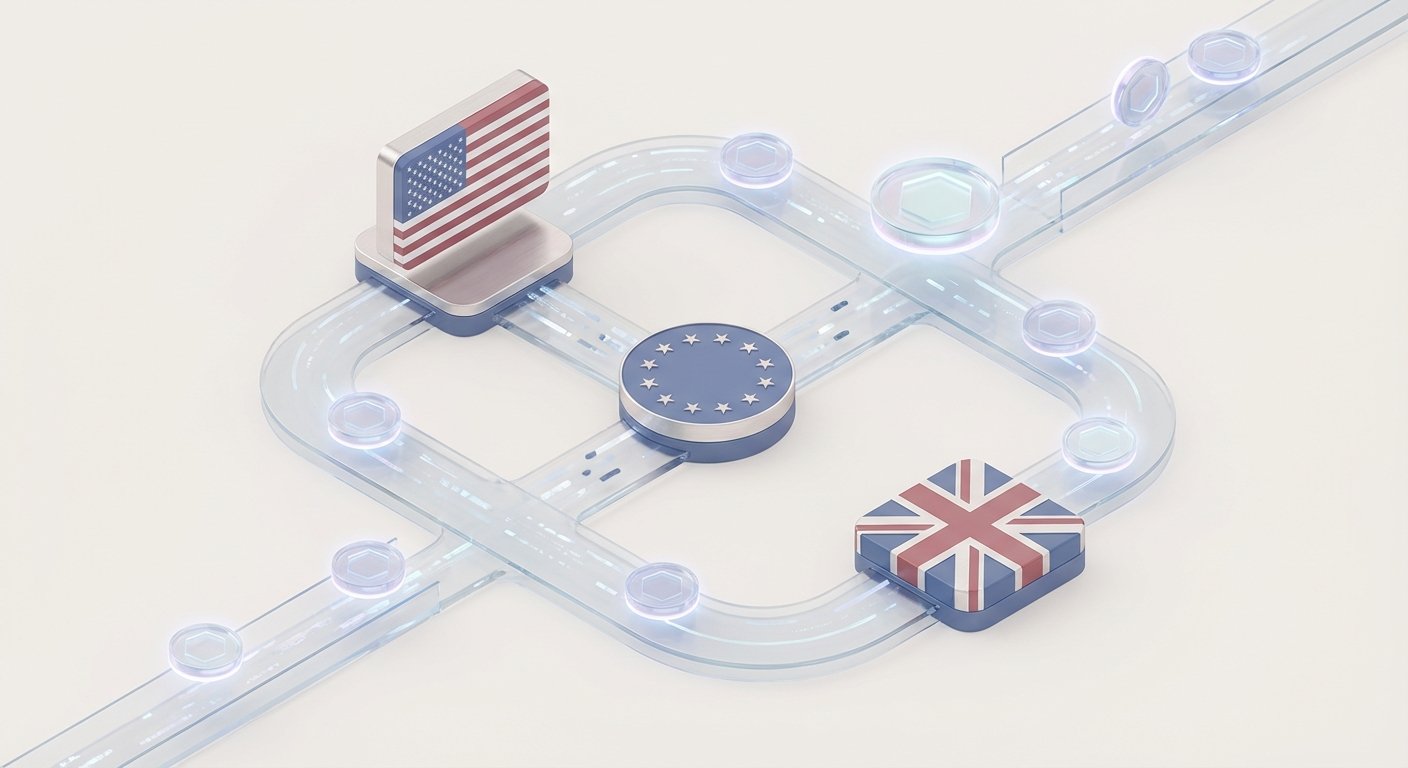
The “Hub” Strategy: Wise (Formerly TransferWise)
Wise is not a bank. It is an Electronic Money Institution. But you need it. It is the mandatory base layer of your financial stack.
Here is the problem Wise solves:
Traditional banks use the SWIFT network to move money across borders. It is slow. It is expensive. It involves intermediaries who all take a cut.
Wise built their own network. They have local bank accounts in dozens of countries. When you send money from the US to the UK, the money never actually crosses a border. You pay Wise in dollars in the US. Wise pays your recipient in Pounds from their UK account.
Why You Need It
You can hold 50+ currencies in one account. You get local bank details for the US, UK, Eurozone, Australia, New Zealand, and Singapore. This means you can get paid by clients in those currencies like a local. No conversion fees on receipt.
The Math:
- Old Way: Client sends $1,000. Intermediary bank takes $25. Your bank takes $15. You receive $960.
- Wise Way: Client sends $1,000 to your Wise US routing number. You receive $1,000.
Get a Wise debit card. Use it as a backup. But use the account as your “Hub” to move money between countries.
The Best for US Citizens: Charles Schwab Investor Checking
If you have a US passport or residency, this is the single best travel card in existence. Nothing else comes close.
Most banks penalize you for using ATMs. They charge you a fee. Then the ATM owner charges you a fee. It costs you $10 to withdraw $100.
Charles Schwab refunds all ATM fees worldwide. Unlimited.
The Logic
You go to an ATM in a sketchy alley in Vietnam. The machine charges you 50,000 VND (about $2) to withdraw cash. At the end of the month, Schwab sees that fee. They put the $2 back in your account.
- Monthly Fees: $0.
- Foreign Transaction Fees: 0%.
- Minimum Balance: $0.
They make you open a brokerage account to get the checking account. You do not have to use the brokerage account. You can leave it empty. Open it. Get the card. Save hundreds of dollars a year on ATM fees.
The Best for Europeans/Global: Revolut
If you cannot get Schwab, you get Revolut. Even if you can get Schwab, you might still want Revolut for the app interface.
Revolut is a “neobank.” They live on your phone. They move fast.
The Features That Matter
Revolut allows you to exchange money instantly in the app at the interbank rate (during weekdays). If you are in Europe, you convert your balance to Euros. If you go to Thailand, you convert a chunk to Baht.
They offer different tiers: Standard (Free), Plus, Premium, and Metal.
Is “Metal” Worth It?
Usually, paying for a bank account is stupid. In this case, do the math. The Metal plan costs around $16/month (depending on your country). It comes with travel insurance, delayed flight lounge access, and higher ATM withdrawal limits.
If you are a high earner spending $10k+ a month, the cashback features and higher limits on Metal might pay for the subscription. If you are bootstrapping, stick to the Standard plan.
The Best for Business Owners: Mercury
If you run a digital business, you probably have a US LLC. If you don’t, you should look into it. It is the standard for doing business online.
You need a business bank account that does not require you to walk into a branch. Chase and Wells Fargo often demand you show up in person to open an account. That is impossible if you are in Bali.
Enter Mercury.
Mercury is built for startups and digital businesses. It is FDIC insured (through partner banks). It has no monthly fees. It integrates with Stripe and PayPal seamlessly.
Why Mercury Wins
You can issue physical and virtual debit cards to your team. You can set spending limits. Everything is managed from a dashboard that actually looks like it was built in this decade.
They also offer a treasury product for idle cash. If you have $500k sitting in your business account doing nothing, you are losing money to inflation. Mercury Treasury puts that money into government-backed securities to earn yield. It is automated.
Hardware: Protecting Your Assets
Having the right bank is step one. Protecting the access to that bank is step two.
Nomads get robbed. It happens. You lose your bag. Someone swipes your wallet. If you lose your wallet, you are stranded.
You need a wallet that does two things:
1. Blocks RFID skimming (so people can’t scan your cards in a crowd).
2. Holds an AirTag (so you can find it when you leave it at a bar).
The Ridge Wallet is the industry standard for this. It is minimal. It is metal. It blocks RFID.
The Ridge Wallet
It holds 1-12 cards without stretching out. It forces you to stop carrying receipts and trash. It fits in your front pocket, making it harder to pickpocket.
Specs:
- Material: Aluminum, Titanium, or Carbon Fiber.
- Security: RFID Blocking.
- Price: $75 – $95.

Digital Security: The 2FA Problem
This is the nightmare scenario:
You are in Colombia. You need to transfer rent money. You log into your bank. The bank says, “We sent a text message code to your US phone number.”
But you don’t have your US SIM card in. Or you don’t have signal. Or you canceled that plan.
You are now locked out of your money.
SMS Two-Factor Authentication (2FA) is garbage. It is insecure (SIM swapping hacks are real) and it is unreliable for travelers.
The Solution: Hardware Security Keys.
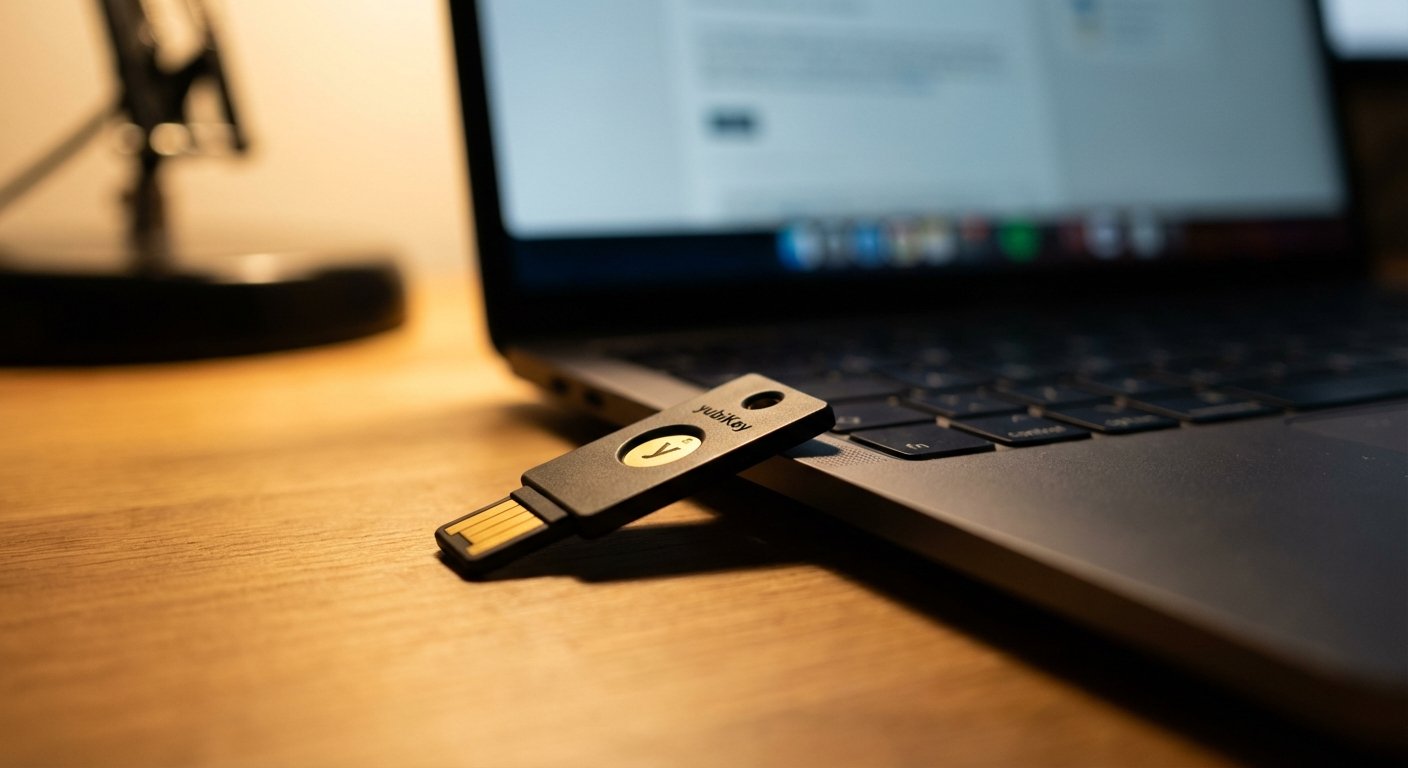
You need a YubiKey. This is a physical USB key that looks like a thumb drive. When you log into your bank or email, you plug it in and touch it. That verifies it is you.
It does not need a battery. It does not need a cell signal. It is unhackable by remote attackers.
YubiKey 5 NFC
This model works with USB-A ports (standard computers) and has NFC for your phone. You just tap it against the back of your iPhone or Android to log in.
Specs:
- Compatibility: USB-A and NFC.
- Durability: Water and crush resistant.
- Price: $50 – $60.
Buy two. Register both. Keep one on your keychain. Keep one in your safe or luggage as a backup.
The “Nomad Stack” Strategy
Do not rely on one bank. If an algorithm flags your account for “suspicious activity” (which happens when you travel), they freeze your money. If you have zero backup, you are dead.
You need a redundant system. This is called the “Hub and Spoke” model.
The Setup
1. The Hub (Income Layer)
This is where clients pay you. It is your “safe” home base.
Recommendation: Mercury (Business) or a major brick-and-mortar bank (Chase/HSBC).
2. The Distributor (Transfer Layer)
You move money from the Hub to here. This layer handles currency conversion.
Recommendation: Wise.
3. The Spoke (Spending Layer)
This is the card you carry in your pocket. You only load it with what you need for the week or month. If it gets skimmed or stolen, your main savings are untouched.
Recommendation: Schwab (for cash) and Revolut (for swiping).

The Cost of Inaction
Let’s do the math on a 5-year timeline.
Scenario A: The Ignorant Nomad
- Pays $15/month in maintenance fees ($900 total).
- Pays 3% FX fees on $50k spend/year ($7,500 total).
- Pays $20/month in ATM fees ($1,200 total).
- Total Lost: $9,600.
Scenario B: The Smart Nomad
- Pays $0 monthly fees.
- Pays ~0.5% FX fees via Wise/Revolut ($1,250 total).
- Pays $0 ATM fees.
- Total Cost: $1,250.
The difference is $8,350. That is cash in your pocket. That is an investment portfolio. That is the down payment on a rental property.
The banks are banking on your laziness. They profit from your inaction.
Spending one hour setting this up today pays you $1,600 a year for the rest of your life. That is a $1,600 hourly rate. You do not make that much working.
Set up the accounts. Buy the hardware wallet. Buy the security key.
Secure your freedom.