The Digital Nomad Money Trap
Most people lose money when they travel. They don’t lose it to pickpockets. They lose it to banks.
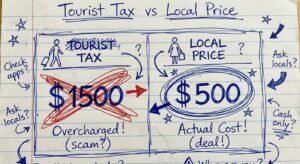
They work hard. They make $10,000. Then they try to spend it in Thailand or Portugal. By the time the money leaves their client’s hand and buys a coffee in Lisbon, $500 is gone. Poof.
Exchange rates. ATM fees. Wire transfer fees. Poor security protocols.
If you are a digital nomad, your margins are your life. You have two choices:
1. Ignore the math and lose 3-5% of your lifetime earnings.
2. Set up a system once and keep your money.
I prefer keeping my money. Here is exactly how you manage money internationally without getting ripped off.
The Golden Rule: Redundancy is Survival
If you have one bank account, you have zero bank accounts.
Banks trigger fraud alerts. ATMs eat cards. Systems go down. If you are in Medellin and your only debit card gets blocked, you are not a digital nomad anymore. You are a homeless tourist.
You need a “Triad” setup.
- Account A: Your Home Base. This is a major bank (Chase, Wells Fargo, HSBC). You receive income here. You rarely touch this debit card.
- Account B: The Spending Mule. This is a “neobank” like Charles Schwab (US) or Revolut (EU). You transfer one month of expenses here. You use this card at ATMs. If it gets skimmed, your life savings are safe in Account A.
- Account C: The Emergency Bunker. This is a completely separate bank. You keep $2,000 here. The card stays in your luggage. You never touch it unless A and B fail.
This structure costs you $0 to set up. It saves you from total ruin.
The Hardware: Protecting Your Assets
Digital security is not optional. You are logging into sensitive financial dashboards from Airbnb Wi-Fi and coffee shops.
Passwords are not enough. SMS 2-factor authentication is dangerous because SIM swapping is easy. You need physical keys.
I use hardware security keys. They look like USB drives. You plug them in, or tap them via NFC, to verify it is really you logging into your bank or crypto exchange.
Yubico YubiKey 5C NFC
This is the industry standard. It fits on your keychain. It works with USB-C (your laptop) and NFC (your phone). Without this physical key, hackers cannot drain your accounts, even if they have your password.
Price Range: $50 – $60
Crypto and Self-Custody
Many nomads use crypto not for speculation, but for transport. Bitcoin is money that doesn’t care about borders. But leaving money on an exchange (like Coinbase or Binance) is risky. Exchanges crash.
If you hold significant funds in crypto to bypass swift fees, you need a cold wallet.
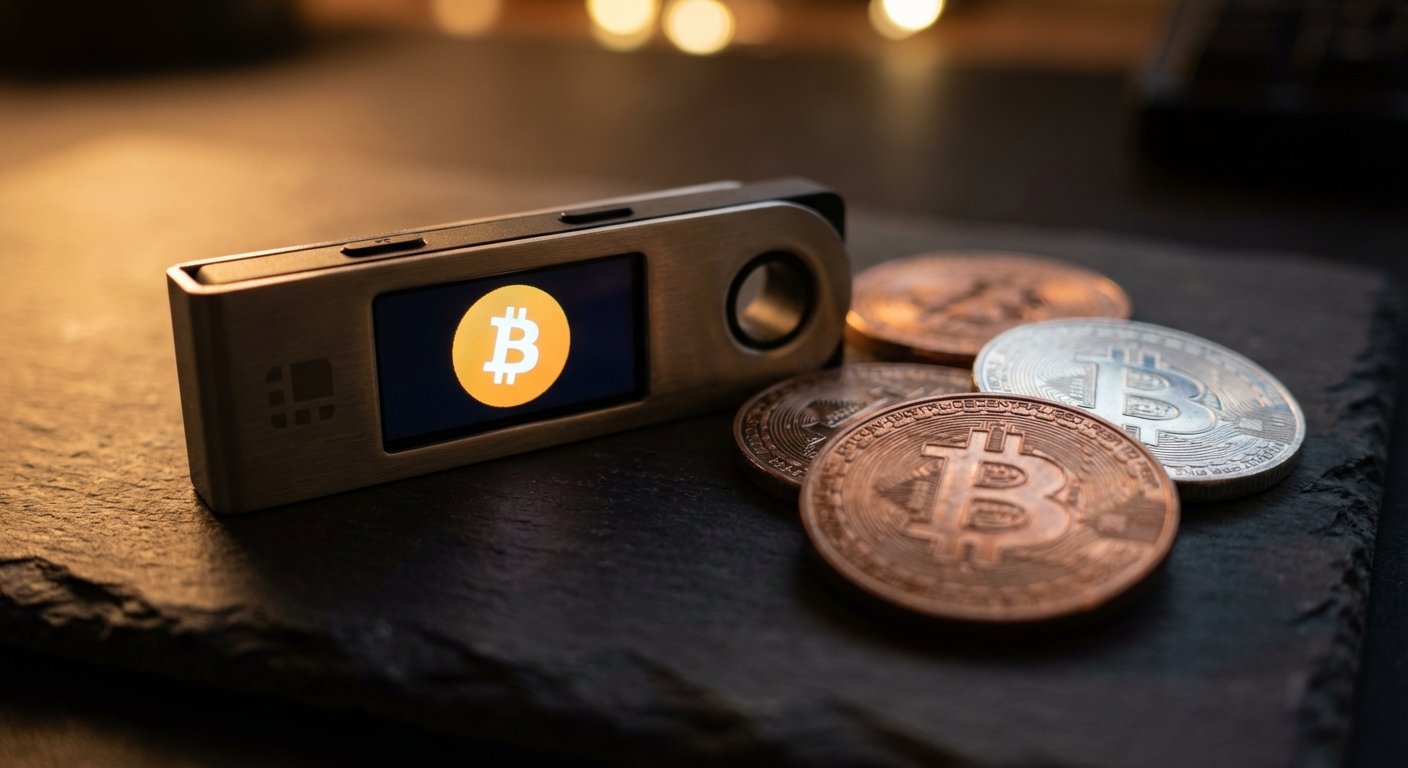
Ledger Nano X
This is the best balance of security and mobility. It has Bluetooth, so you can manage funds from your phone without plugging it into a computer. It keeps your private keys offline. If you lose the device, you can restore your money on a new one using your seed phrase.
Price Range: $140 – $160
The ATM Fee Math
Let’s look at the numbers. They are ugly.
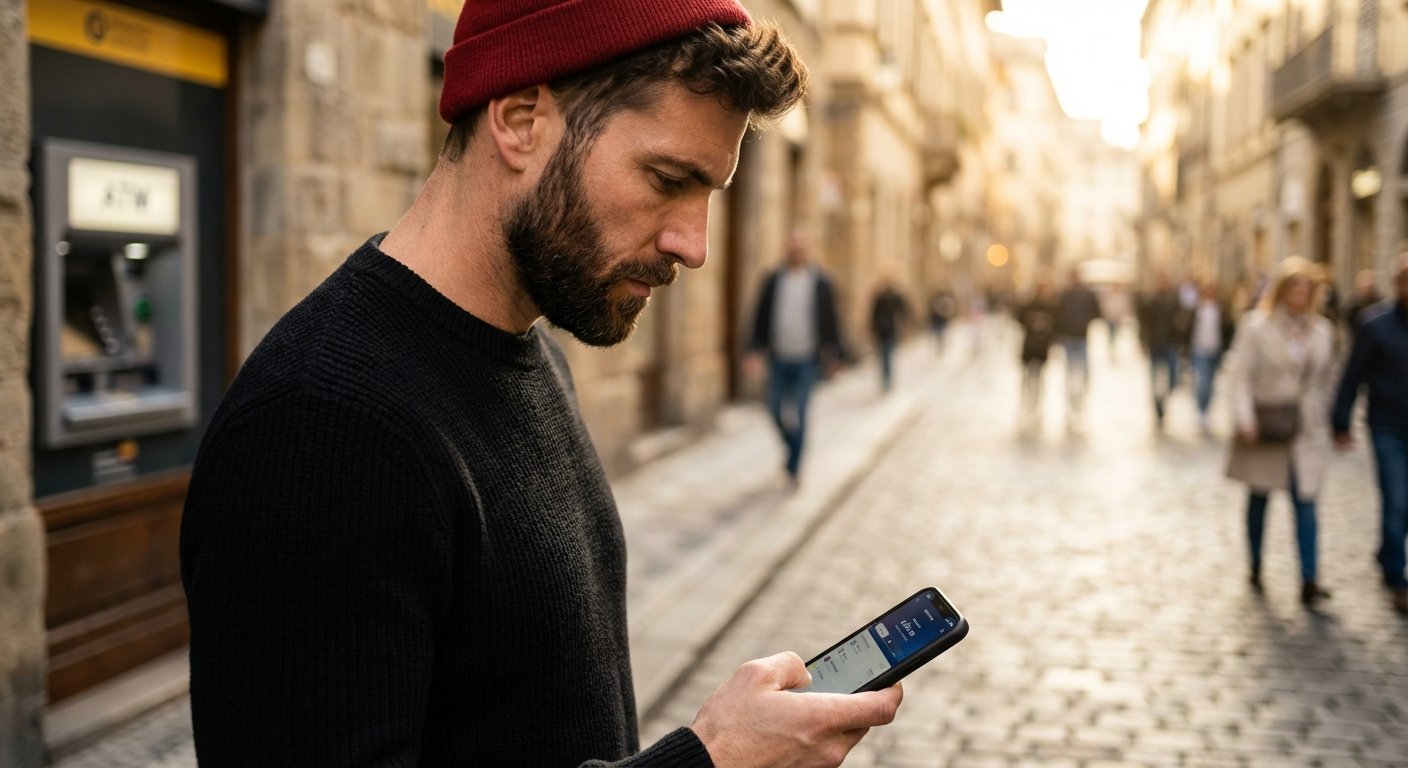
You need cash in Vietnam. You withdraw $200 (approx 5 million VND).
- The local ATM charges you $3.
- Your home bank charges you $5 “out of network” fee.
- Your home bank charges you a 3% “foreign transaction fee” ($6).
Total cost: $14.
Percentage loss: 7%.
If you spend $3,000 a month, you are throwing away $210 a month. That is $2,500 a year. That is a free vacation you just gave to the bank.
The Fix: Get a card that reimburses ATM fees. In the US, the Charles Schwab High Yield Investor Checking account is the king. They refund every single ATM fee worldwide at the end of the month. No foreign transaction fees. No minimums.
If you can’t get Schwab, look for “No Foreign Transaction Fee” cards. This is non-negotiable.
Physical Carry: The Anti-Theft Strategy
Carrying cards and cash is a physical risk. Pickpockets in Europe and South America are skilled. They don’t need to hurt you; they just need to bump into you.
You need gear that makes you a hard target. If you look difficult to rob, they will rob the guy behind you. That sounds harsh. It is also true.
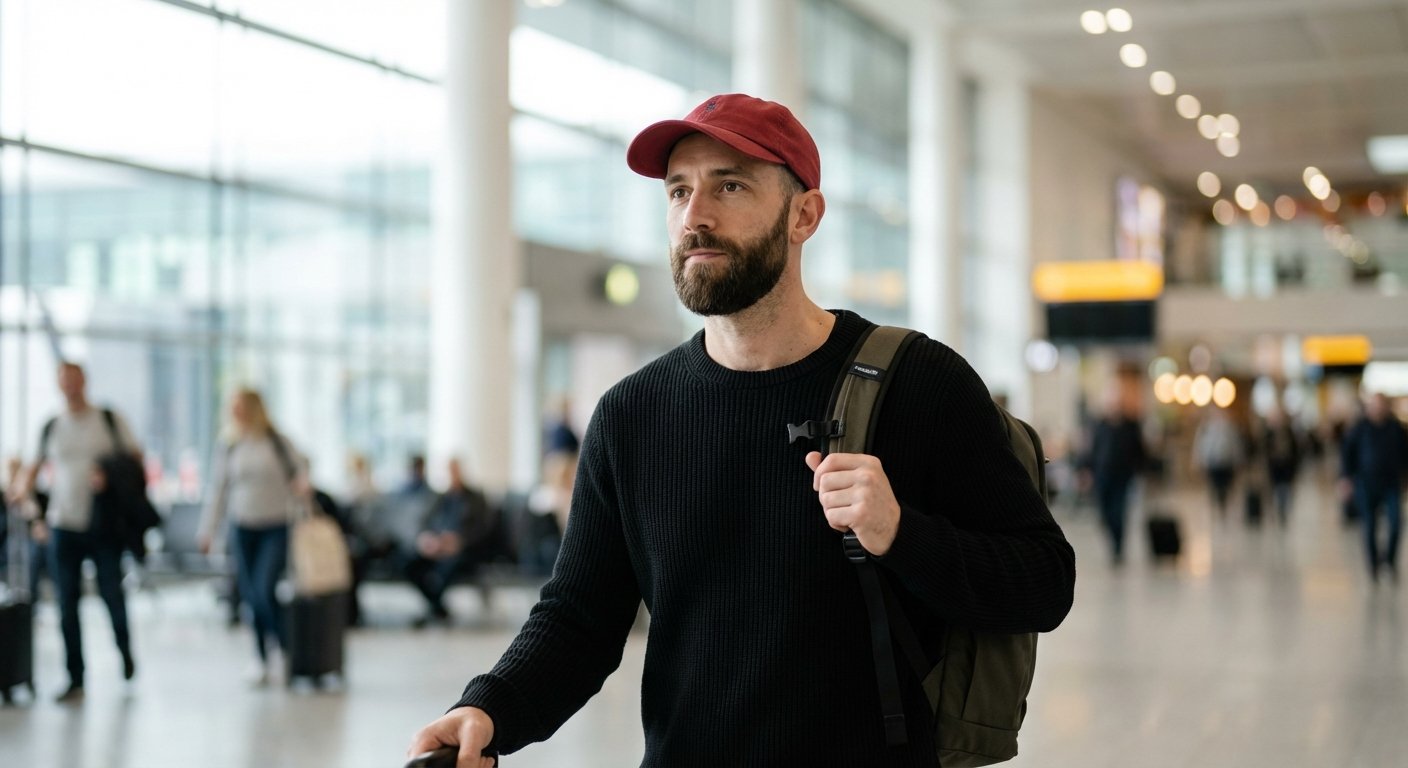
Pacsafe Metrosafe LS350 Anti-Theft Backpack
I recommend this bag. It has locking zippers. You can clip the zippers together so they can’t be slid open quickly. The material has steel mesh inside (eXomesh) so it can’t be slashed with a knife. It has an RFID blocking pocket for your cards.
It holds a 13-inch laptop. It is small enough to not look like a tourist hiking backpack, but secure enough for a mobile office.
Price Range: $100 – $130
The Credit Card Points Game
Debit cards are for ATMs. Credit cards are for spending.
When you use a debit card, you get nothing. When you use a premium travel credit card, you get:
- Points: Free flights and hotels.
- Insurance: Trip delay, lost luggage, and rental car coverage.
- Float: You keep your cash for 30 more days.
Chase Sapphire Reserve or Amex Platinum are the standard. Yes, they have high annual fees ($550+). But if you travel full-time, the lounge access and travel credit wipe out that fee.
Never use your debit card for a hotel booking. If the hotel double charges you, that cash is gone from your checking account. You have to fight to get it back. With a credit card, you just dispute the charge. The bank fights for you.
Organizing the Chaos
You will have multiple currencies. You will have SIM cards from three different countries. You will have Micro-SD cards with backups.
If you shove this in your pocket, you will lose it. If you lose your SIM card connected to your bank’s 2FA, you are locked out of your money.
You need a dedicated travel wallet.
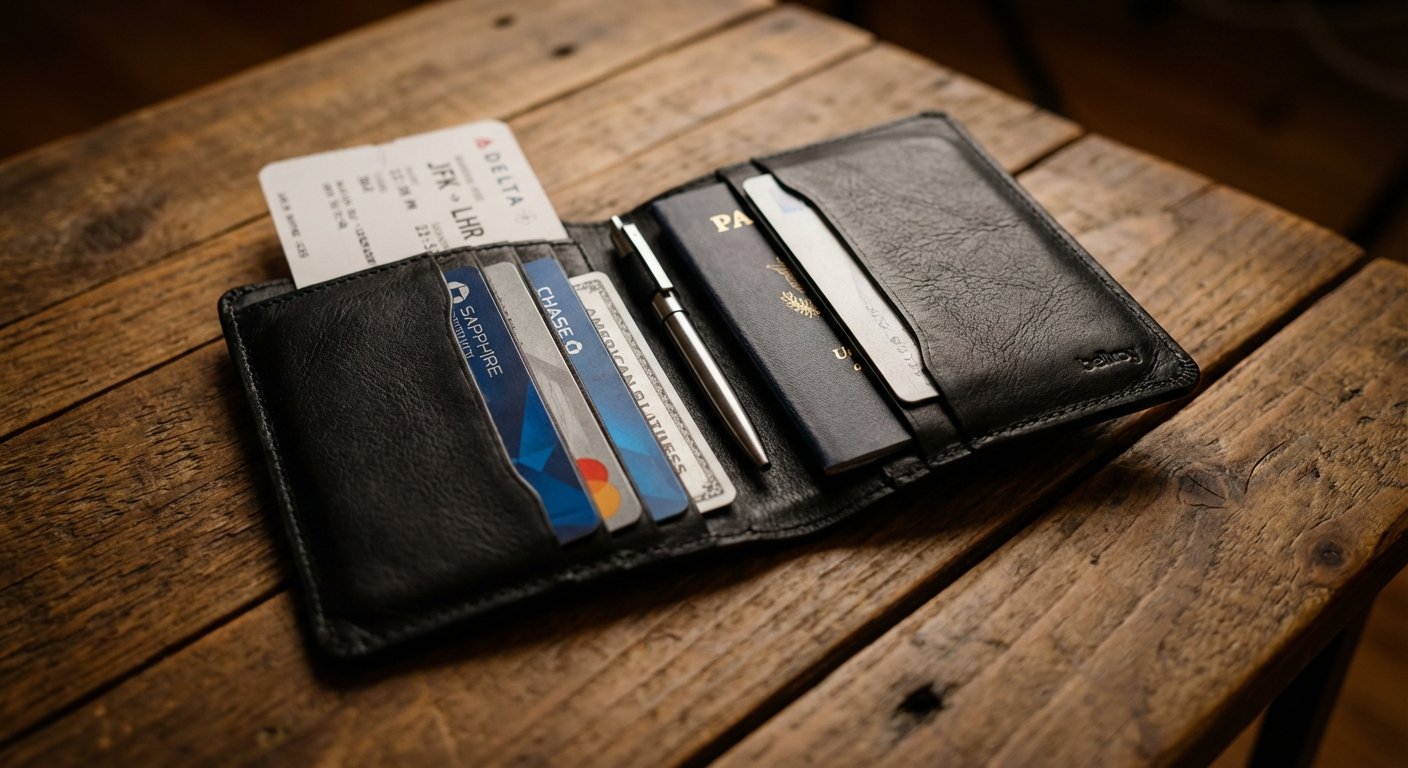
Bellroy Travel Wallet
This wallet is designed for the international operator. It fits a passport. It has a hidden compartment for a spare SIM card and a SIM ejector tool. It holds your boarding passes and cash without folding them awkwardly. It is made of high-quality leather that lasts for years.
Price Range: $130 – $160
Power is Money
You cannot manage money if your laptop is dead. You cannot trade crypto if your phone is at 1%.
Airports have plugs. Cafes have plugs. But they never have the plug you need. The UK uses massive three-prong plugs. Europe uses two pins. The US uses flat pins.
Do not carry a bag of adapters. Carry one universal beast.
EPICKA Universal Travel Adapter
This covers over 150 countries. It has 4 USB ports and 1 USB-C port. It charges your laptop, phone, and power bank simultaneously from one outlet. It has a built-in fuse so a power surge doesn’t fry your $2,000 MacBook.
Price Range: $20 – $25
The Tax Trap (FEIE)
I am not an accountant. This is not legal advice. But here is the logic.
If you are an American, you are taxed on global income. It doesn’t matter if you live on the moon. Uncle Sam wants his cut.
However, the IRS gives you a loophole: The Foreign Earned Income Exclusion (FEIE).
The Rule: If you are outside the US for 330 days in a 365-day period, you can exclude approximately $120,000 (adjusts yearly) from federal income tax.
The Math:
- Income: $100,000
- Tax if you stay in Ohio: ~$22,000
- Tax if you travel for 330 days: $0 (Federal)
You just made $22,000 by leaving the country. That covers your flights and Airbnbs. Living abroad can actually be cheaper than living at home because of the tax savings alone.
You must track your days. If you are in the US for 36 days, you fail the test. You owe the full tax. Don’t mess this up.
The “Emergency Drop” System
What happens if you are robbed? Phone gone. Laptop gone. Wallet gone.
Most people panic. You won’t. You will use the “Emergency Drop” system.
Before you leave, scan every document:
- Passport
- Driver’s License
- Credit Cards (Front and Back)
- Medical Insurance Policy
Put these in an encrypted ZIP file. Upload them to a cloud service (Google Drive, Dropbox) and email them to a trusted family member.
Keep a “Burner Cash Stash.” Take $200 USD. Fold it up small. Hide it somewhere weird. Inside a hollow hairbrush. Under the sole of your shoe. Sewn into the lining of your jacket.
If you lose everything, that $200 gets you a hotel for the night and a phone call to fix the mess.
Working Ergonomics
Managing money takes focus. You are looking at spreadsheets, banking apps, and tax forms.
If you do this hunched over a tiny café table, your neck will give out. You will get tired. You will make mistakes. Mistakes cost money.
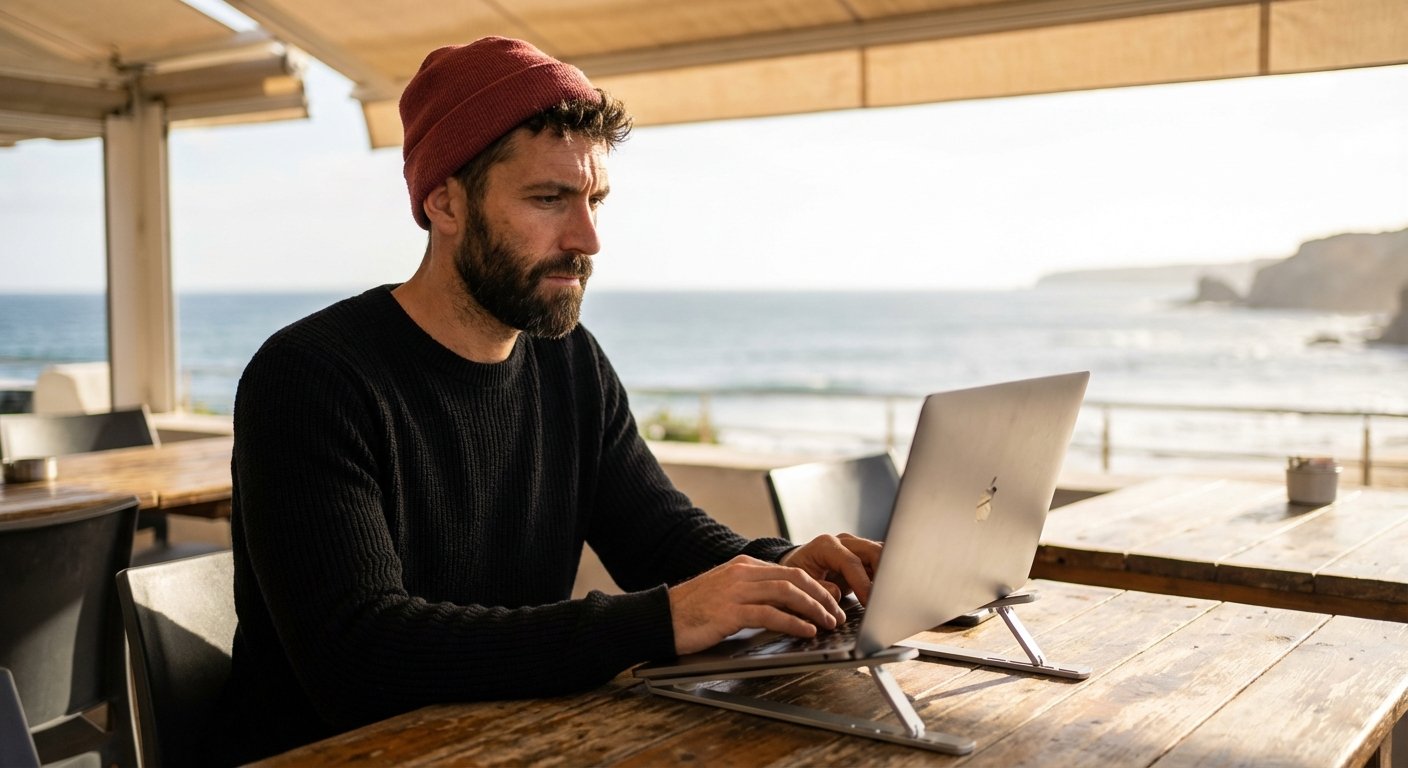
Turn any table into a desk.
Roost Laptop Stand V3
This is the lightest, most durable laptop stand on the market. It collapses into a tiny stick. It raises your screen to eye level. Pair it with a Bluetooth keyboard and mouse. You can now work for 4 hours without back pain. It is expensive for a piece of plastic, but it is cheaper than a chiropractor.
Price Range: $85 – $95
Conclusion: Action Plan
Managing money internationally isn’t hard. It just requires preparation.
Most people wait until they have a problem to fix it. That is why they are stressed. That is why they are broke.
Do this now:
- Open a second bank account today.
- Buy a hardware wallet for your digital assets.
- Get a backpack that locks.
- Set up 2FA with a hardware key, not SMS.
- Automate your savings to the account you cannot touch.
The goal isn’t just to travel. The goal is to build wealth while you travel.
Don’t be a tourist. Be a professional.