
Most “Passive Income” is a Scam. Here is the Truth.
I see it every day. People selling courses on “how to get rich” without doing any work. They talk about dropshipping. They talk about Amazon FBA. They talk about things that require massive capital, huge inventory risk, and 12-hour days managing supply chains.
That is not passive. That is buying a job.
If you are a digital nomad, or you want to be one, you need a different vehicle. You need an asset that you build once and sell a million times. The marginal cost of replication must be zero.
You need digital products.
Specifically, Notion Templates.
I don’t care if you think “organization” is boring. Boring makes money. Notion has over 30 million users. Most of them have no idea how to use the software efficiently. They are drowning in features. They have a problem. You sell them the solution.
This is not about making pretty colors. This is about selling systems. Here is how you do it.

The Mathematics of Zero Marginal Cost
Let’s look at the math. Because business is just math.
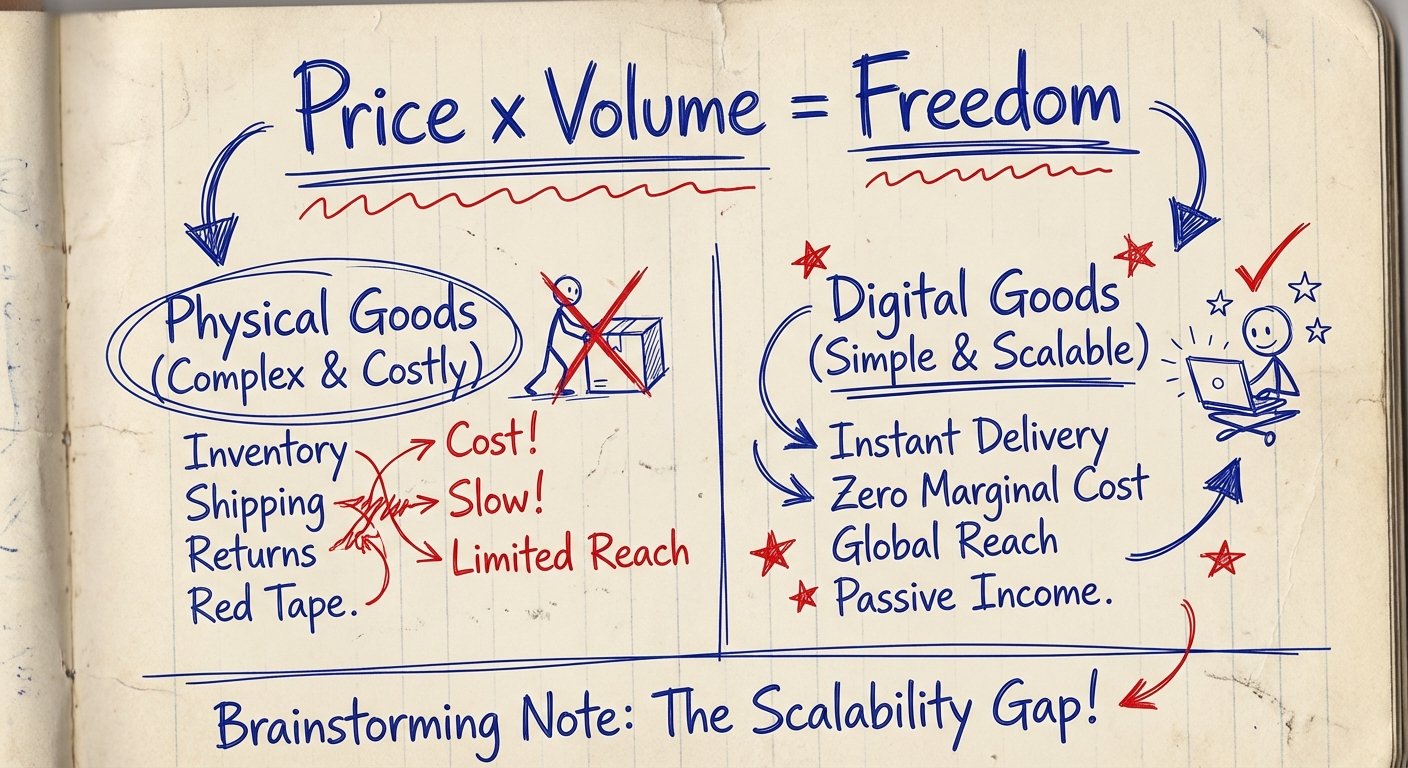
If you sell a physical t-shirt for $25, it might cost you $15 to make and ship. You make $10 profit. To make $100,000, you have to sell 10,000 shirts. You have to handle 10,000 shipments. If 100 people return the shirt, you lose money.
Now look at a Notion Template.
You sell a “Freelance Operating System” for $50.
- Cost to replicate: $0.
- Cost to ship: $0.
- Inventory cost: $0.
To make $100,000, you need to sell 2,000 units. Not 10,000. And you never touch a single package. You can be sleeping in Bali or hiking in Patagonia. The internet delivers the product for you.
This is called Leverage.
Labor leverage is hiring people. Capital leverage is investing money. Code/Media leverage is building software or content that works while you sleep. Notion templates are Code Leverage without needing to know how to code.
Stop Selling “Habit Trackers” (The Market Problem)
Here is where 99% of people fail.
They open Notion. They make a page called “My Daily Journal.” They put a cute picture of a sunset on it. They try to sell it for $5.
Nobody cares.
The market is flooded with $5 habit trackers. The competition is too high. The price is too low. The perceived value is zero.
You need to solve Expensive Problems.
Do not sell to the general public (B2C). Sell to businesses (B2B). A student might pay $5 to organize their homework. An agency owner will gladly pay $150 to organize their entire client workflow.
Why? Because if that $150 template saves them 5 hours of admin work, they made their money back in one day. It is an investment, not a cost.
High Value Niches:
- Agency CRMs: Managing leads, clients, and projects.
- Content Calendars: Systems for YouTubers managing 10 editors.
- Second Brains for Executives: High-level knowledge management.
- Finance Trackers for Startups: Burn rate, runway, and expense categorization.
Pick a niche with money. Solve their pain.
The Tools You Need (Don’t Be Cheap)
You cannot build a high-performance database on an iPad. You cannot run a digital empire on a Chromebook that crashes when you open three tabs.
You are a professional. Professionals use professional tools.
I see nomads trying to save $200 on a laptop and then losing 200 hours a year waiting for things to load. Time is the only asset you cannot buy back. Do not waste it on bad gear.
1. The Workstation
You need screen real estate and speed. Notion databases get heavy. If you have 5,000 rows in a database, a slow processor will lag. Lag breaks your flow. Broken flow costs you money.
The current best ROI for a nomad is the Apple MacBook Air 15-inch (M3 Chip). It is light enough to travel, has no fan noise, and the battery lasts 18 hours. You can work from a cafe without fighting for a power outlet.
Specs to look for: M3 Chip, 16GB RAM minimum (8GB is for amateurs), 512GB SSD.
Current Price Estimate: $1,200 – $1,400

2. The Input Device
You will be clicking and dragging thousands of blocks. If you use a trackpad for 8 hours a day, you will destroy your wrist. Carpal tunnel is not a badge of honor. It is an injury that stops you from working.
Get a programmable mouse. Map the buttons to shortcuts like “Duplicate,” “Delete,” or “Back.” I recommend the Logitech MX Master 3S. It works on glass, holds a charge for months, and is silent.
Current Price Estimate: $90 – $100
How to Build the Asset (The “Work” Part)
This is where the passive income stops and the active work begins. You have to build the thing.
Do not start with aesthetics. Start with function.
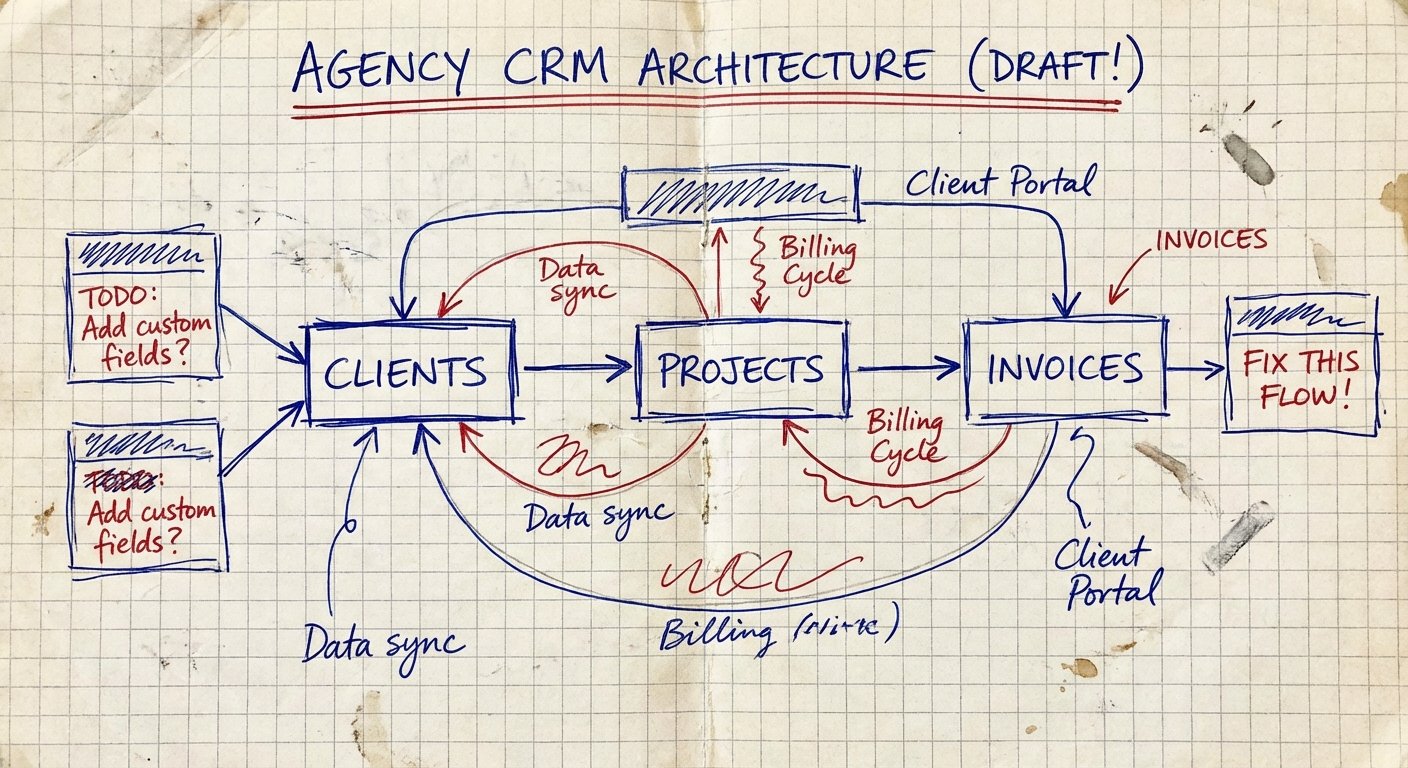
Step 1: Map the Workflow.
Get a piece of paper. Draw the boxes. How does data move? If I add a “Client,” does it automatically create a “Project” folder? If I check a box, does it archive the task? Figure out the logic before you touch the software.
Step 2: Build the Databases.
Notion is relational. You need a database for Projects, one for Tasks, one for Clients. Link them together using “Relations” and “Rollups.” This is the magic. This is what people pay for. They pay for the architecture, not the typing.
Step 3: Design the Dashboard.
This is the user interface. It needs to be clean. Use “Linked Views” to show only what is necessary for today. An overwhelmed user is a user who asks for a refund.
Distribution: Where to Sell
You built it. Now you need to take money.
Do not build your own website yet. It is a waste of time. Use platforms that already handle the tax, the hosting, and the delivery.
Gumroad
This is the standard. It is ugly, but it converts. Set up a landing page. Write copy that focuses on the result, not the features. Don’t say “Includes 5 databases.” Say “Save 10 hours a week on client management.” Gumroad takes a cut (10%), but they handle the headaches.
Notion Marketplaces
There are sites specifically for Notion templates (Notionway, Gridfiti, etc.). Submit your template there. They have the traffic. You have the product.
Etsy
Surprisingly, Etsy is huge for digital planners. If your template is more “lifestyle” or “organization” focused, list it here. The fees are low, and the search volume is high.
The Traffic Engine (Organic Marketing)
If you build it, they will not come. You have to drag them there.
But you don’t want to pay for ads yet. Ads are for scaling a proven offer. You are validating.
Strategy 1: Twitter/X “Build in Public”
Post screenshots of what you are building. Tag the Notion community. Share free value. “Here is a formula I wrote to calculate tax automatically.” People love seeing the backend. It builds trust.
Strategy 2: YouTube Tutorials
Record your screen. Show how you solve a specific problem using your template. Title the video “How to Manage a Marketing Agency in Notion.” In the description, put the link to buy the template. This is high-intent traffic. They are already looking for the solution.
Strategy 3: The “Freemium” Model
Give away a basic version for free. A simple tracker. Put it on Gumroad for $0+. Collect their email address. Then, use email automation to upsell them the “Pro” version with all the automation and bells and whistles.
The Price of Freedom
Selling Notion templates gives you location independence. You don’t need a warehouse. You don’t need employees. You just need a laptop and a brain.
But it is not “easy.”
You have to learn the software. You have to learn basic design. You have to learn copywriting. You have to be consistent.
Most people will read this article and do nothing. They will go back to scrolling Instagram. They will complain that the economy is bad.
A few of you will open Notion today. You will struggle for a week. You will build something ugly. Then you will fix it. Then you will sell it. Then you will make $50 while you are sleeping.
Once you make that first $50, your life changes. Because you realize that money is not traded for time. Money is traded for value.
Do the work. Build the asset. Get the ROI.

Disclaimer: I am not a financial advisor. This is based on my experience and logic. The Amazon links above are affiliate links. If you buy through them, I get a small commission at no extra cost to you. This funds my coffee habit so I can write more guides like this. Win-win.