
The “Passive Income” Lie vs. The $60/Hour Reality
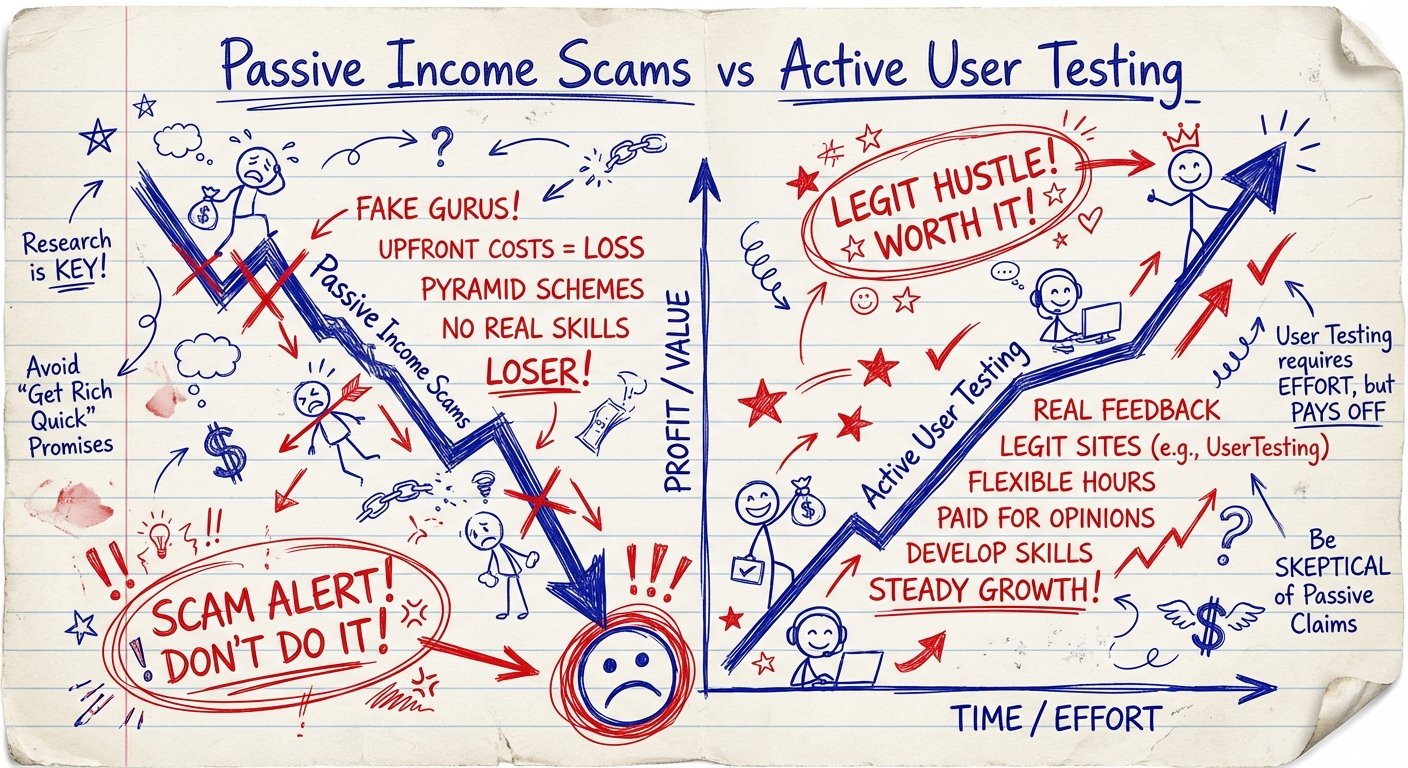
Most side hustles are scams. Let’s get that out of the way immediately.
You have gurus selling you courses on dropshipping. You have apps promising you riches for filling out surveys. They are lying to you.
If you spend 30 minutes filling out a survey on Swagbucks to earn $0.50, you are valuing your time at $1.00 per hour. That is not a business. That is slavery with extra steps. You are losing money by existing.
But there is a pocket of the internet where companies pay real money for your opinion. Not because they are nice. But because they are terrified.
Big tech companies launch products every day. If Amazon launches a checkout button that doesn’t work, they lose millions of dollars in an hour. If a startup launches an app that is confusing, they burn their venture capital and go bankrupt.
They need insurance. You are the insurance.
This is called User Testing.
It is not “passive income.” You have to show up. You have to think. You have to speak. But the math works.
The standard rate is $10 for 10 to 20 minutes of work. That is $30 to $60 per hour. Sometimes, for live interviews, it is $60 for 60 minutes.
The ROI (Return on Investment) on your time is higher here than driving for Uber. You don’t have gas costs. You don’t have vehicle depreciation. You don’t have traffic.
You just need a laptop, a voice, and a brain.
The Business Model: Why They Pay You
Understanding the “why” is the only way to succeed at this. If you think they are paying you to just click buttons, you will fail. You will get low ratings. You will stop receiving invites.
Companies suffer from “The Curse of Knowledge.” The engineers who built the app know exactly how it works. They cannot un-know it. To them, the navigation makes perfect sense.
They need a fresh pair of eyes. They need a normal person to look at the screen and get confused.
Your confusion is the product.
When you get stuck on a website, that is valuable data. When you can’t find the “Log Out” button, that is worth $10 to them. It tells them their design sucks.
You are selling friction identification.
If you can articulate why you are frustrated, you become a top-tier tester. Top-tier testers get first dibs on the high-paying tests. The people who just say “this is cool” and click through in 3 minutes get banned.
The Setup: Stop Being Cheap
You are competing with thousands of other people for these tests. The platforms use algorithms to rate you. If your audio sounds like you are inside a wind tunnel, they will reject your test. You get paid $0. You wasted your time.
You need a minimal viable setup. This is a capital expense. You spend money once to make money repeatedly.
1. The Audio (Non-Negotiable)
Your laptop microphone is garbage. It picks up the fan noise. It picks up the echo in the room. It makes you sound unprofessional.
Clients watch these videos in boardrooms. If they can’t hear you clearly, they will request a refund from the testing platform. The platform will then penalize you.
Get a dedicated USB microphone. You don’t need a $4,000 studio mic. You need the industry standard.
Recommendation: Blue Yeti USB Microphone
This is the microphone 90% of successful YouTubers and Podcasters started with. It is plug-and-play. It is heavy. It sounds like you are in the room with them. It usually retails between $100 – $130.

2. The Visuals
Some tests require your face to be on camera. These usually pay more ($30-$60) because they want to see your emotional reaction. They want to see you grimace when the app crashes.
Grainy, dark video looks low-status. You want to look like a professional consultant, not someone in a dungeon.
Recommendation: Logitech C920x HD Pro Webcam
This is the workhorse of the internet. 1080p. Good autofocus. It sits on top of your monitor. It costs between $60 – $80. It pays for itself after 4 hours of testing.
3. The Machine
You need a computer that doesn’t lag. If the screen recording software crashes your browser, you lose the money. You also need silence. A gaming laptop that sounds like a jet engine will ruin your audio.
I prefer the MacBook Air. No fans. Dead silent. Fast enough to handle screen recording and video calls simultaneously without choking.
Recommendation: Apple MacBook Air 13-inch (M3 Chip)
The M3 chip is overkill for most things, but for reliability, it is the best. It holds value. Price range is usually $999 – $1200.

The Platforms: Where the Money Is
There are 50 sites. 45 of them are a waste of time. Focus on the ones with volume and high payouts.
1. UserTesting (The Whale)
This is the biggest player. They have the most clients (Apple, Microsoft, eBay).
Pay: $10 per 20-minute test. $30-$60 for live interviews.
Volume: High.
The Catch: It is competitive. You need to be fast when the email comes in.
2. Userlytics
They accept testers globally. The interface is clean.
Pay: $5 to $90 depending on the project.
Volume: Medium.
3. Intellizoom (YouGov)
More simple tests. Sometimes just card sorting (grouping items into categories).
Pay: varies, usually around $5-$8 for shorter tests.
Volume: Medium/High.
4. Validately (UserZoom)
Similar to UserTesting. Good for unmoderated tests.
Pay: Standard market rates.
Ignore: Swagbucks, SurveyJunkie, InboxDollars. Those are for people who don’t understand math. Do not touch them.
The Screener Strategy: How to Qualify
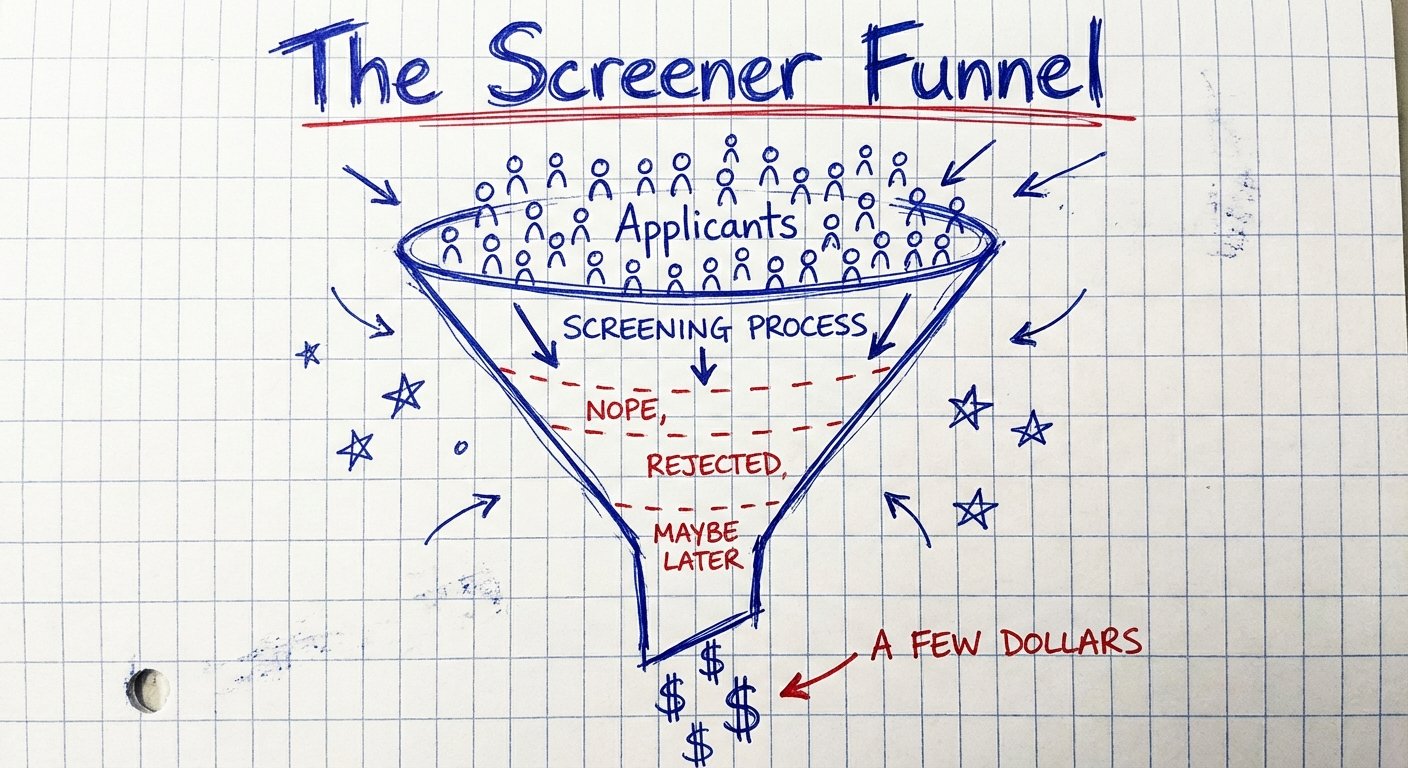
You sign up. You see a dashboard full of tests. You click one. It asks: “Do you work in the Oil & Gas Industry?”
You say “No.”
Screen: “Sorry, you do not qualify.”
This will happen 80% of the time. This is the Screener Funnel.
Companies want specific demographics. They don’t want feedback on their vegan food app from a cattle rancher. They don’t want feedback on their enterprise coding software from a florist.
The Ethics of Screening
Do not lie. If you lie and say you are a neurosurgeon, you will get into the test, have no idea what you are looking at, give garbage feedback, and get banned.
However, you must be generous with your definitions. If they ask “Do you do the grocery shopping for your household?” and you buy milk once a week, the answer is Yes.
Volume is the game here. You need to keep the dashboard open. When a screener pops up, take it immediately. Expect to fail 5 screeners to get 1 paid test. That is the cost of doing business.
The Execution: How to Get 5-Star Ratings
Your rating is your lifeblood. Testers with 5-star ratings get the invites 5 minutes before the 4-star testers. By the time the 4-star testers see the job, it’s gone.
Here is how you get 5 stars every time.
1. Stream of Consciousness
Most people stop talking when they read. They read the prompt silently, click the button, and sit there breathing.
Wrong.
You must vocalize everything. Even the boring stuff.
“Okay, I’m looking at the homepage. The blue banner is catching my eye first. I’m looking for the search bar… okay, I see it in the top right. It’s a bit small. I almost missed it. Now I’m going to type in ‘running shoes’.”
Silence is the enemy. If you are silent for more than 5 seconds, you are failing.
2. Be Brutally Honest (But Polite)
Don’t be mean. Don’t say “This designer is an idiot.”
Say: “I expected this button to take me to checkout, but it took me to the cart. That is confusing. I feel frustrated because I wanted to buy it immediately.”
Use “I” statements. “I feel…” “I expected…” “I am looking for…”
3. Follow Instructions Exactly
The test has steps.
Step 1: Find a pair of black boots.
Step 2: Add them to the cart.
Step 3: Do NOT checkout.
If you checkout, you ruined the test. You cost them money. Read the prompt. Do the prompt. Read the next prompt.
The Advanced Tactics: Live Interviews
The $10 tests are the bread and butter. The $60 live interviews are the steak.
These are Zoom calls with a researcher. They want to talk to you for an hour. To get these, you usually have to write a short response in the screener.
Most people write: “I like apps.”
You write: “I use fintech apps daily to manage a portfolio of stocks and crypto. I have experienced issues with KYC verification on other platforms and can offer detailed feedback on the onboarding flow.”
Be specific. Show competence. Show that you have a vocabulary. If you sound articulate in the screener text, they assume you will be articulate on the call.
The ROI Calculation
Let’s look at the real numbers.
Scenario A: The Hobbyist
You do this casually while watching Netflix.
You catch 3 tests a week.
Time: 1 hour.
Pay: $30.
Monthly: $120.
This pays for your internet bill. Fine.
Scenario B: The Sniper
You have the tab open while you work your main job.
You have a 5-star rating because you bought the good mic and follow the rules.
You catch 5 tests a week ($50).
You land 1 live interview a week ($60).
Total weekly: $110.
Time spent: ~2.5 hours.
Monthly: $440.
That is $5,280 a year. For talking. For 2.5 hours a week.
If you invested that $440 every month into the S&P 500 for 10 years, you’d have over $75,000. From talking at your computer.

Why Most People Fail
People fail because they want money for nothing. They want to open the laptop, grunt a few times, and get paid.
Or they get discouraged by the screeners. They try for 10 minutes, get rejected twice, say “this is a scam,” and go back to scrolling TikTok (which pays them $0).
The barrier to entry is low. The barrier to success is patience and quality.
Conclusion: Action Plan
Stop reading. Go do this.
- Buy the Blue Yeti. If you can’t afford it, sell something you don’t use. Prioritize the tool.
- Register on UserTesting.com and Userlytics.
- Take the practice test. Talk constantly. Do not shut up.
- Keep the tab open.
- Wait for the ding.
- Make the money.
The opportunity is there. The money is there. The only variable missing is the work.