Most people overcomplicate Facebook ads. They think it is magic. They think they need a degree in data science. They think they need a fancy office in downtown Manhattan with a ping-pong table.
They are wrong.
Running a remote marketing agency is simple arbitrage. You buy attention cheaply on one side. You sell that attention for a profit on the other side. That is it.
If you can spend $1 to get $3 back, you win. If you spend $1 to get $0.50 back, you lose. The market does not care about your logo. It does not care about your “brand voice.” It cares about the offer.
I am going to show you how to set up a remote Facebook Ads management agency. No fluff. Just the mechanics of printing money.
The Remote Agency Model: Low Overhead, High Margin
The old way of doing business is dead. You do not need overhead. Overhead kills cash flow.
The beauty of a remote agency is that your costs are near zero. You need a laptop. You need an internet connection. You need a brain. That is the entire inventory.
When you remove the office lease and the commute, you gain leverage. You can hire the best talent in the world, not just the best talent within 20 miles of your zip code.
But you have to treat this like a machine. A machine has inputs and outputs. If the machine is broken, you don’t paint it. You fix the gears.

The Hardware: Don’t Be Cheap on Tools
I see guys trying to run a six-figure agency on a seven-year-old laptop that crashes when they open Chrome. This is stupid.
You are a digital carpenter. Your laptop is your hammer. If your hammer breaks, you stop building. If you stop building, you stop getting paid.
You need speed. Speed is the only currency that matters. If you save 10 minutes a day because your computer is fast, that is 60 hours a year. That is a week and a half of extra work you get for free.
The Workstation
Get a machine that handles heavy lifting. Ads Manager is bloated. Creative tools like Premiere Pro or Photoshop eat RAM. Do not buy a Chromebook.
The current standard is the Apple MacBook Pro M3. It processes video files fast. It handles 50 tabs open at once. It has a battery life that lets you work from a cave if you have to.
Current Price Range: $1,600 – $2,400
If you cannot afford this, sell something until you can. It is an investment, not an expense.
The Focus Tool
You are remote. That means distractions. The dog barks. The coffee shop is loud. The neighbors are mowing the lawn.
You cannot do deep work with noise. You need silence. Silence costs money, but it pays dividends.
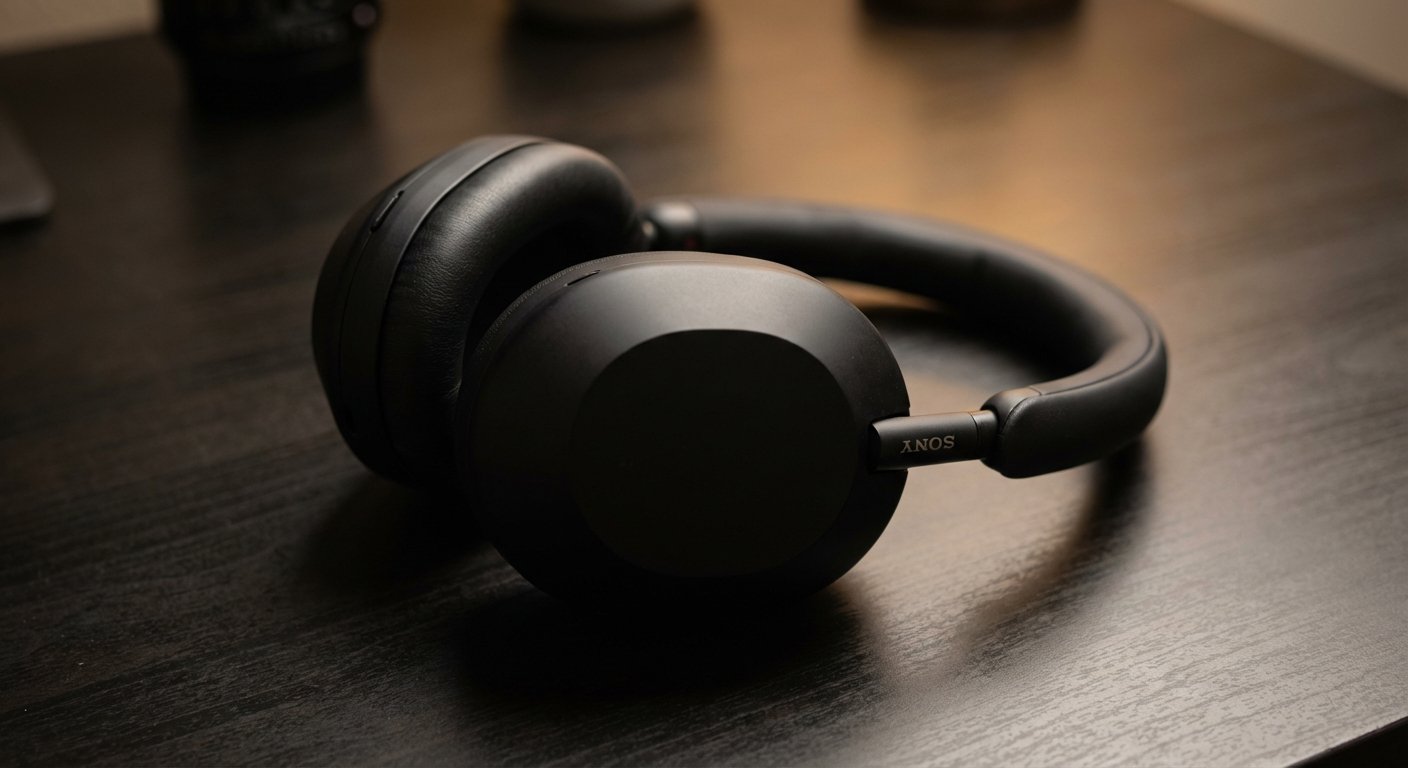
I recommend the Sony WH-1000XM5 Wireless Noise Canceling Headphones. Put them on. Turn on the noise canceling. The world disappears. It is just you and the data.
Current Price Range: $320 – $350
The Offer: Why Your Ads Fail
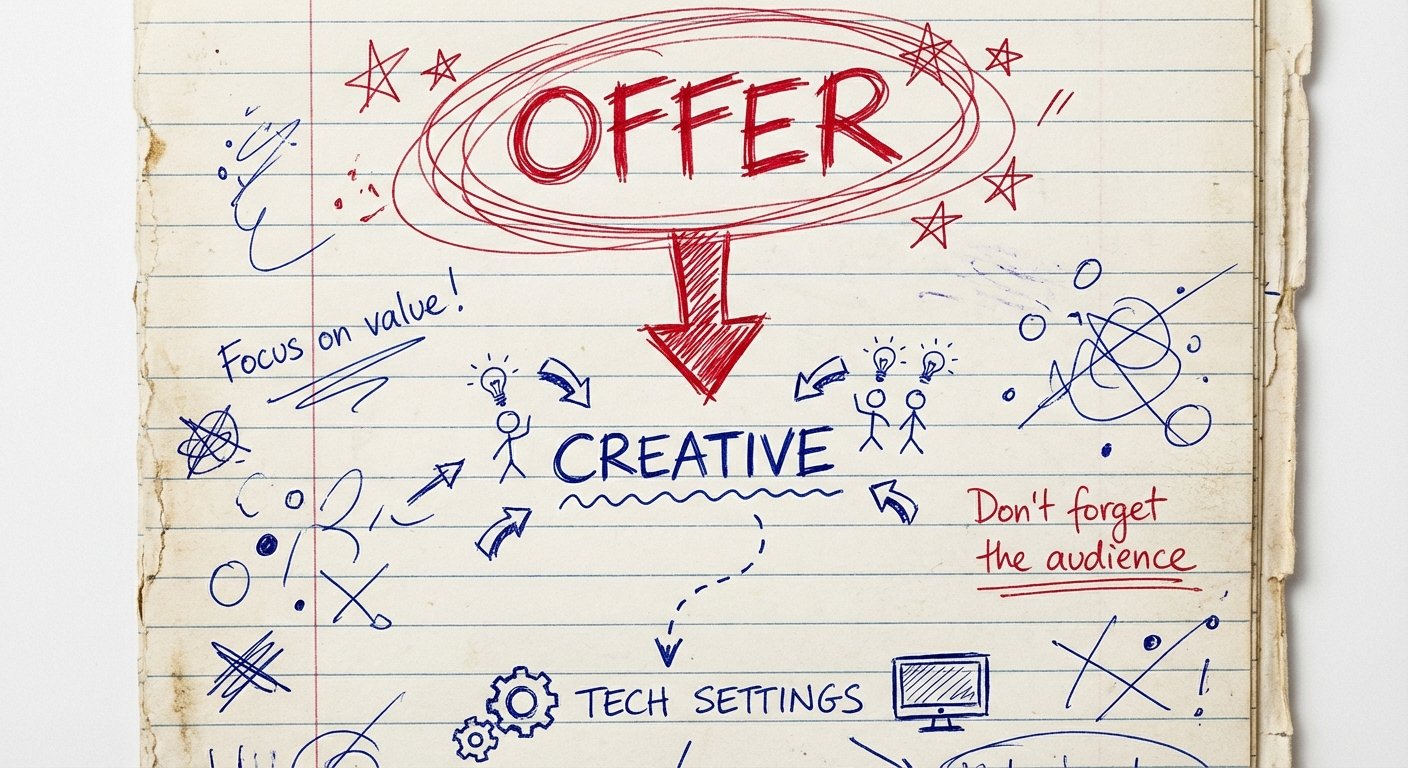
Here is the hard truth. If your ads aren’t working, it is usually not the ad. It is the offer.
Facebook is an amplifier. If you have a great offer, Facebook amplifies it to millions of people, and you get rich. If you have a terrible offer, Facebook amplifies it, and everyone finds out you suck faster.
Before you even open Ads Manager, look at what you are selling.
- Is it scarce?
- Is there a guarantee?
- Is the perceived value 10x the price?
If you are selling “Digital Marketing Services,” you are a commodity. You are fighting a race to the bottom.
Change the offer. Sell “30 Qualified Leads in 30 Days or You Don’t Pay.”
See the difference? The first one is a service. The second one is a result. Clients buy results. They do not buy Facebook Ads.
The Technical Setup: Keep It Simple
Marketers love to sound smart. They talk about “proprietary AI targeting matrices.” It is garbage.
Facebook’s algorithm is smarter than you. It has billions of data points. It knows what your customer ate for breakfast. Stop trying to outsmart the robot. Let the robot work for you.
The “Broad” Strategy
Years ago, we used to target “Women, aged 25-30, who like Yoga and own a Chihuahua.”
Today, that kills performance. It constricts the algorithm. The cost per 1,000 impressions (CPM) goes up.
Do this instead:
- Location: United States (or your target country).
- Age: 18-65+.
- Gender: All.
- Interests: None. Leave it empty.
This is called Broad Targeting. You let your creative do the targeting. If your ad talks about back pain, only people with back pain will click. The algorithm sees who clicks, finds more people like them, and lowers your costs.
The Creative: Ugly Ads Win
This is where agencies waste the most money. They hire a videographer. They rent a studio. They get perfect lighting. They make a TV commercial.
Then they run it on Facebook. And it flops.
Why? Because it looks like an ad. People hate ads. People scroll past ads.
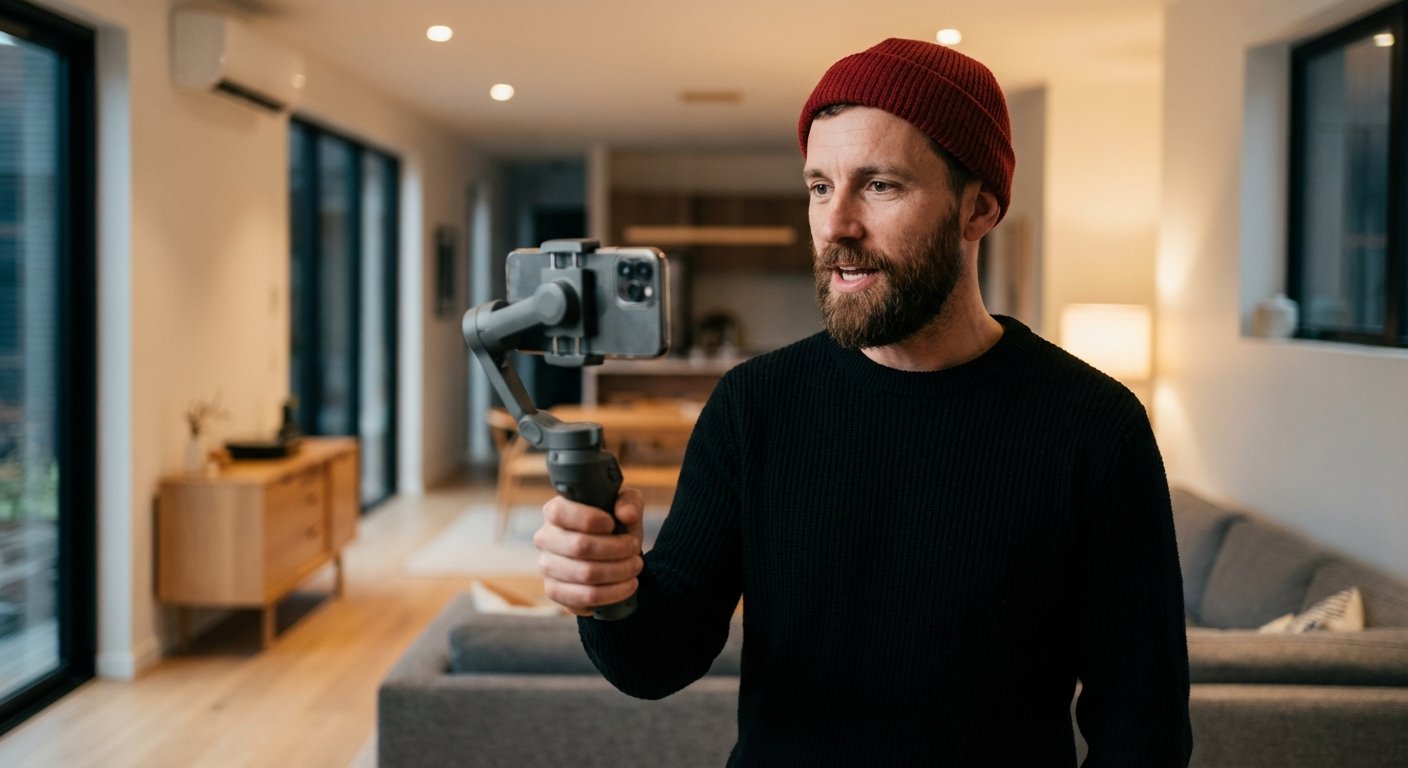
You need ads that look like organic content. We call this UGC (User Generated Content). It needs to look like a normal person holding a phone, talking to a friend.
The Mobile Setup
You do not need a RED camera. You need a smartphone and stability. Movement grabs attention, but shaky footage causes motion sickness.
To shoot high-volume creative assets, get a stabilizer. The DJI Osmo Mobile 6 is the standard. It tracks faces. It keeps the shot smooth. It allows you to film dynamic walk-and-talk ads that keep retention high.
Current Price Range: $140 – $160
The script matters more than the camera. Here is the framework:
- Hook (0-3 seconds): Call out the pain. “Does your back hurt when you sleep?”
- Story/Solution: “I tried everything, then I found this…”
- Proof: Show it working. Show the result.
- CTA (Call to Action): Tell them exactly what to do. “Click the link below to get 50% off.”
Testing: The Scientific Method
You are not an artist. You are a scientist testing hypotheses.
Most agencies launch one ad and pray. When it fails, they panic. Winners launch ten ads. Nine fail. One works. They kill the nine. They double the budget on the one.
This is the game. It is a volume game.
The 3:2:2 Method
I use a specific structure to test creative.
- 3 Creatives: Three different videos or images.
- 2 Headlines: Two different text hooks.
- 2 Primary Texts: Two different body copies.
You put these in a Dynamic Creative campaign. Facebook mixes and matches them. It finds the winning combination for you.
Once you find a winner, you move it to a “Scaling Campaign.” You put money behind it. You ride the wave until it crashes. Then you do it again.
Operations: Managing Clients Remotely
The hardest part of a remote agency isn’t the ads. It is the people.
Clients are anxious. They gave you money. They want to know you aren’t drinking margaritas on a beach (even if you are).
You solve this with Over-Communication.
The Weekly Update
Do not just send a spreadsheet. Clients do not read spreadsheets. They don’t understand CPM or ROAS or CTR.
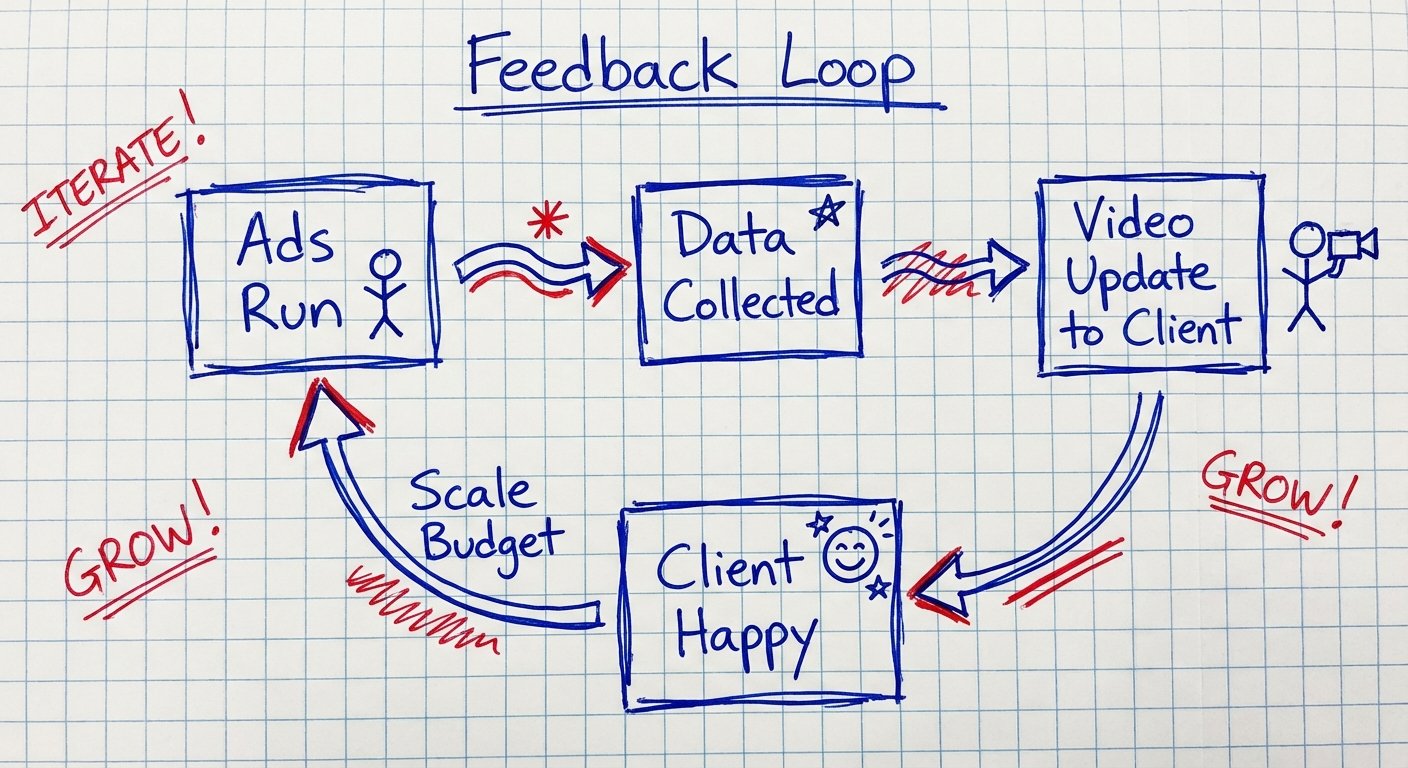
Send a video. Use Loom. Record your screen.
“Hey John, we spent $1,000 this week. We made you $4,000. That is a 4x return. We are testing three new videos next week to try and get that to 5x. Approve the creative here. Talk soon.”
That is a 60-second video. It saves you a one-hour meeting. It builds trust. It shows you are working.
Hiring: When to Delegate
At the start, you do everything. You write the copy. You make the videos. You run the ads.
This is fine for $10k/month. You cannot scale to $100k/month doing this. You will burn out.
You need to buy back your time. The first hire is usually a Media Buyer or a Creative Strategist.
The Media Buyer: Presses the buttons in Facebook. Watches the budget.
The Creative Strategist: Comes up with the angles. Writes the scripts. Edits the videos.
Hire from places with lower cost of living but high talent density. Eastern Europe, South America, Philippines. You can pay above-market rates in their country, which is still lower than US rates. You get loyalty. They get a great life. You get margin.
The Financial Math of a Remote Agency
Let’s look at the numbers. This is why you are here.
Revenue:
You charge a setup fee ($2,000) and a monthly retainer ($3,000).
Costs:
- Software (Slack, Loom, GoHighLevel): $400/month.
- Contractor (Media Buyer): $1,000/month per 5 clients.
- Office: $0.
If you have 5 clients:
Revenue: $15,000/month.
Costs: $1,400/month.
Profit: $13,600/month.
That is roughly $160,000 a year in pure profit. No commute. No boss. And that is with only five clients. Imagine if you actually tried and got twenty.
Conclusion
Facebook ads are not dead. They are just more expensive for people who are lazy.
The days of putting up a stock photo and becoming a millionaire are over. Good.
Now, you actually have to be good at business. You need a real offer. You need real creative. You need to treat the platform with respect.
Get the right hardware so you don’t lag. Understand the math. Test aggressively. Cut the losers. Scale the winners.
It is simple. It is hard. But the ROI is infinite compared to a 9-to-5 job.
Go build the machine.