Most people travel like idiots.
They think travel is a luxury. They save up for 50 weeks just to blow it all in two weeks. They act rich for 14 days, then go back to being broke for the rest of the year.
That isn’t freedom. That is a transaction. You are trading your life for a temporary dopamine hit.
There is a better way. The rich don’t take vacations. They live in different locations.
I call this the “Slow Travel” Rule.
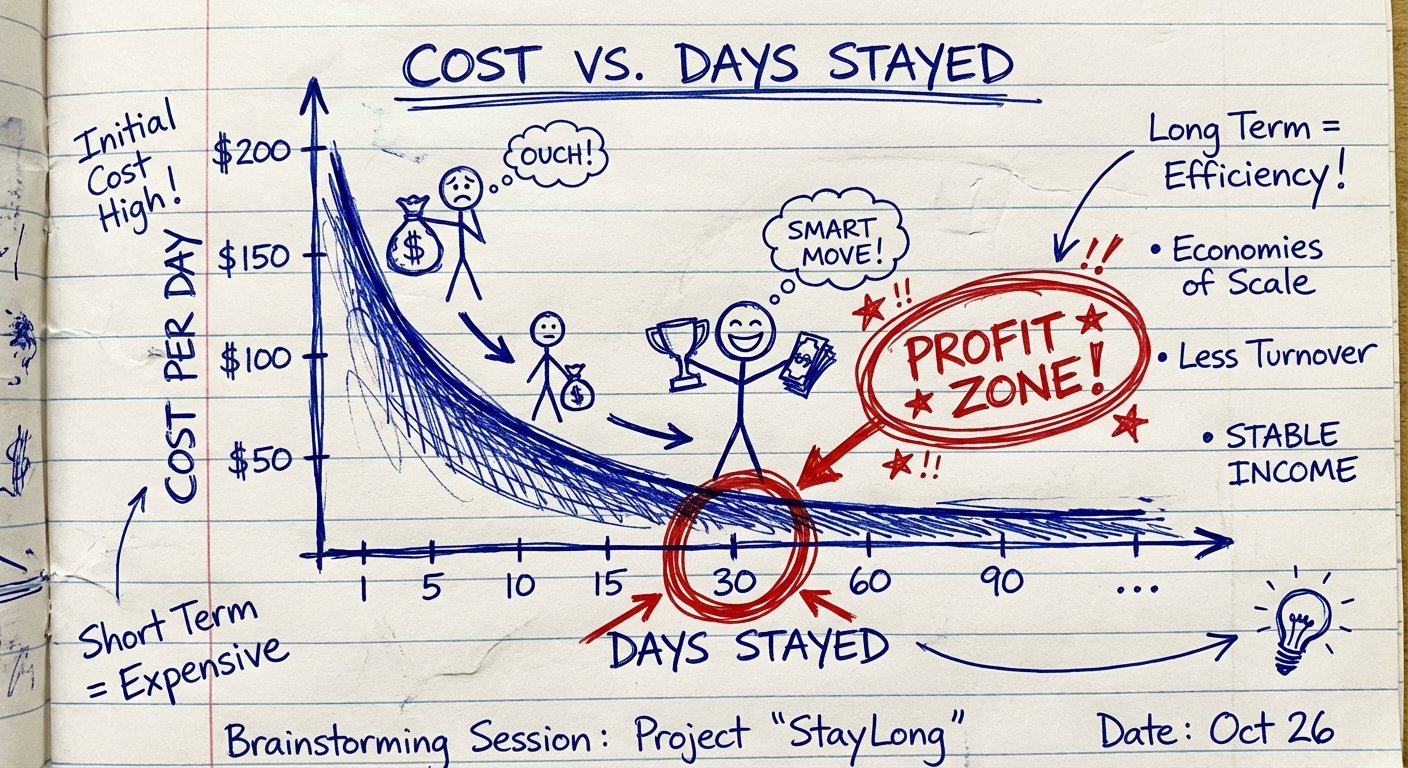
It’s simple logic. The longer you stay in one place, the cheaper your life becomes. The faster you move, the more money you burn.
If you want to see the world without going broke, you need to stop acting like a tourist. Tourists are prey. They get eaten by the travel industry.
Be a resident. Residents get rich.
Here is how the math works.
The Mathematics of Movement
Let’s look at the numbers. Emotions lie. Math doesn’t.
If you book a hotel in Austin, Texas, or London, or Tokyo for three nights, you pay the “Tourist Tax.”
The Fast Travel Model:
- Lodging: $200 per night.
- Food: Eating out 3x a day ($100 per day).
- Transport: Ubers everywhere ($50 per day).
- Flights: $500 every 4 days to move to the next city.
Cost per day: $350+. Plus flight costs.
Now look at the Slow Travel Model (1 Month+ Stay):
When you book an Airbnb or a serviced apartment for 28 days or more, the algorithm changes. Most hosts offer a monthly discount. Usually 30% to 50%.
- Lodging: $2,000 per month ($66 per night).
- Food: Grocery shopping and cooking steak ($20 per day).
- Transport: Renting a scooter or walking ($5 per day).
- Flights: Amortized over 30 days ($16 per day).
Cost per day: ~$107.
The ROI:
By staying put, you slash your burn rate by 60-70%. You get the same location. You get the same weather. You get the same culture.
But the person moving every 3 days goes broke. The person staying 3 months stacks cash.
The Hidden Cost: Switching Context
Money is renewable. Time is not.
When you “fast travel,” you aren’t just spending money on flights. You are spending time. And if you are an entrepreneur or a high-performer, your time is worth way more than the plane ticket.
Every time you change cities, you lose two days of productivity.
- Day 1 (Travel Day): Packing. Uber to airport. Security. Flight. Uber to new place. Unpacking. Figuring out the Wi-Fi. You get zero work done.
- Day 2 (Acclimation): Finding the grocery store. Finding the gym. Figuring out where to get coffee. Your brain is in “survival mode,” not “deep work mode.”
If you move four times a month, you lose 8 days. That is 25% of your month.
You are voluntarily giving up 25% of your earning potential just to say you visited four cities instead of one. That is a bad trade.

Slow travel gives you your time back. You set up base camp. You find your gym. You stock your fridge. You get into a routine.
Routine creates revenue. Chaos creates costs.
Geo-Arbitrage: The Cheat Code
This is where it gets unfair.
If you earn in Dollars, Pounds, or Euros, but you spend in Pesos, Baht, or Liras, you are effectively giving yourself a 3x to 5x raise.
I know people making $50,000 a year living in New York. They are broke. They are stressed. They live in a shoebox.
I know people making $50,000 a year living in Buenos Aires or Bangkok. They eat ribeye every night. They have a maid. They live in a penthouse.
Same income. Completely different life.
When you Slow Travel, you can leverage Geo-Arbitrage. You take your high-value skills to a low-cost environment.
- Rent in NYC: $4,000/mo for a closet.
- Rent in Medellin: $800/mo for a luxury apartment with a view.
The difference is $3,200 a month. That is $38,400 a year. After tax.
You could invest that $38k into the S&P 500. Over 30 years, that one year of savings turns into $600,000+.
Or you can give it to a landlord in NYC. Your choice.
Infrastructure: Don’t Be Cheap
There is a trap here. Some people hear “save money” and they start buying cheap gear. They stay in hostels. They use bad backpacks.
Do not do this. Cheap things are expensive.
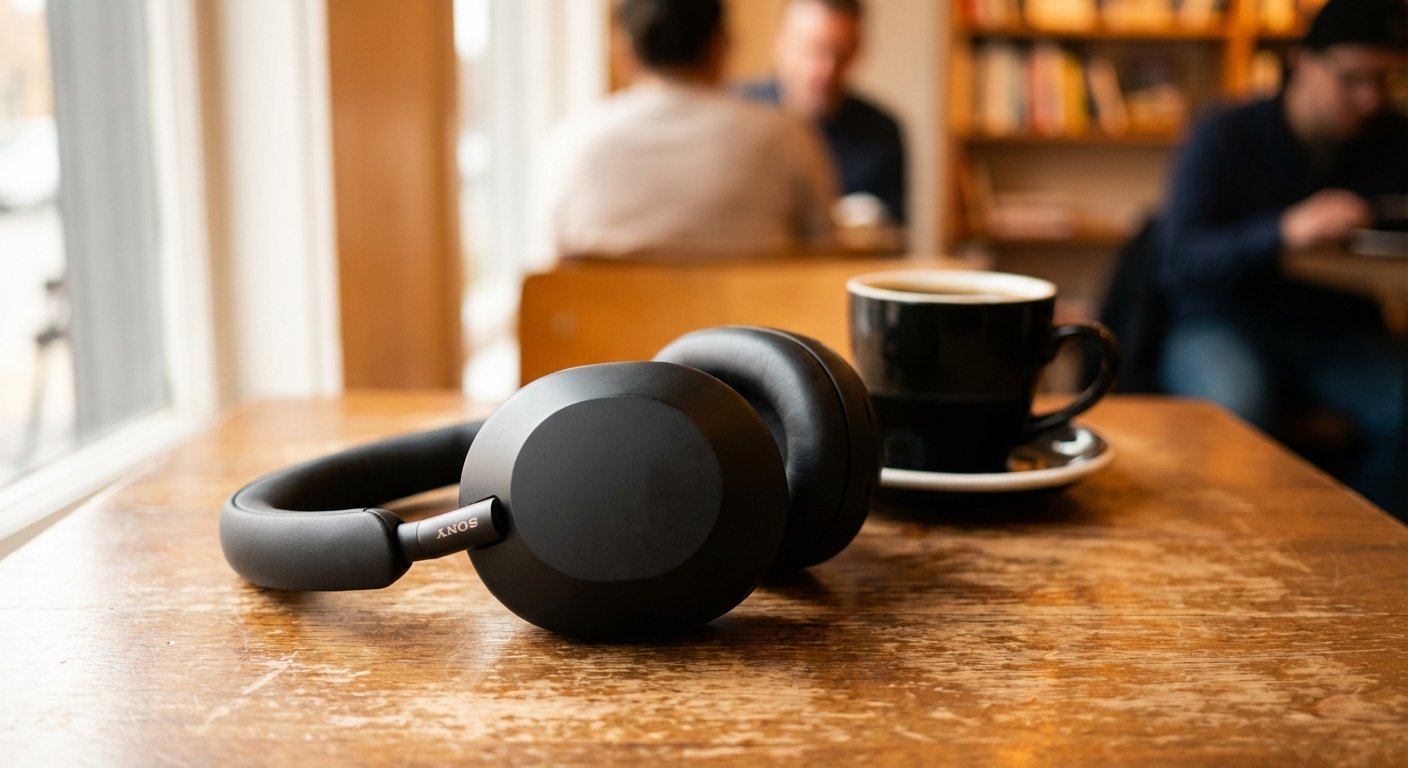
If your backpack rips, you lose a day fixing it. If your laptop breaks, you lose a week of work. If your headphones leak sound, you can’t focus in a cafe.
You need “Commercial Grade” equipment. You need gear that works every single time.
1. The “One Bag” Rule
If you check a bag, you are losing. You have to arrive early. You have to wait at the carousel. Airlines lose bags. It adds stress.
You need one bag. It needs to be carry-on size. It needs to be bombproof.
The best I have found is the Peak Design Travel Backpack 45L.
It expands to 45L to fit everything you own. It compresses to 35L to fit in the overhead bin. It is weatherproof. It has a lifetime warranty. It doesn’t look like a hiker backpack; it looks professional.
Current Price: $299 – $330
2. The Focus Engine
You cannot control your environment when you travel. There will be crying babies. There will be construction noise. There will be loud talkers.
You need to buy silence.
The Sony WH-1000XM5 headphones are non-negotiable. The noise cancellation is the best in the market. The battery lasts 30 hours. You put these on, and the world disappears.
I see people trying to work with AirPods. The battery dies in 4 hours. They let in noise. That is amateur hour. Get real headphones.
Current Price: $348 – $399

3. The Mobile Office
If you code, edit video, or look at spreadsheets, working on a single 13-inch laptop screen is slow. You are tab-switching all day. Tab-switching kills flow.
Get a portable monitor. The ASUS ZenScreen 15.6” (MB165B) is thin, light, and runs off a single USB cable.
It doubles your screen real estate. It fits in your backpack laptop sleeve. It costs less than a nice dinner, but it increases your output by 30%.
Current Price: $130 – $160
The Local Leverage
When you stay for a week, you use services designed for tourists. You pay the “Gringo Price.”
When you stay for three months, you unlock the local economy.
Gyms:
Tourist: Pays $25 for a day pass.
Slow Traveler: Negotiates a 3-month cash deal for $60 total.
Food:
Tourist: Eats at the restaurant on the main strip. Terrible food. High prices.
Slow Traveler: Goes to the local butcher. Buys high-quality protein. Cooks at home.
You have to stop thinking like a consumer. Think like a producer.
When I land in a new city, my first stop isn’t the museum. It’s the grocery store. It’s the gym. I am building my infrastructure.
Once the infrastructure is built, I can work. If I can work, I can earn.
The Negotiation Script
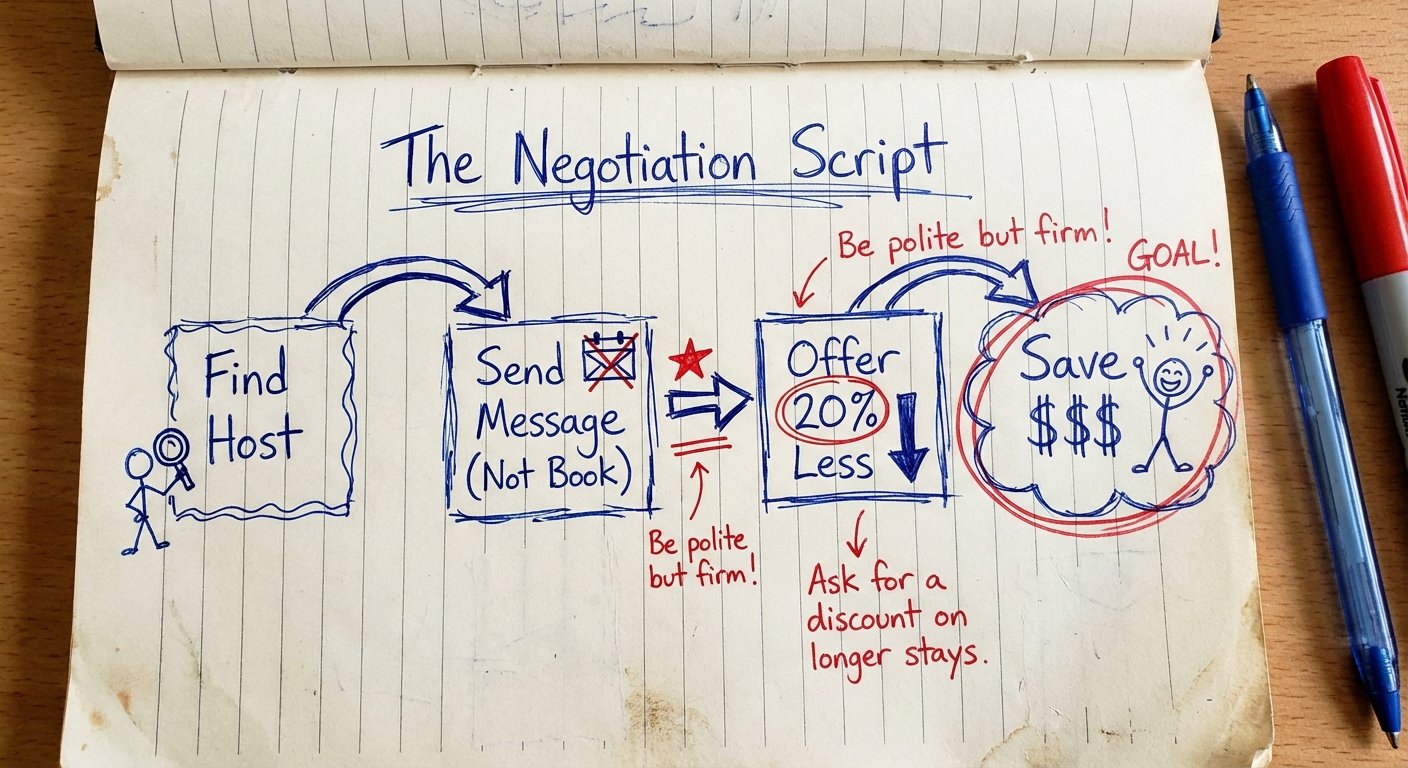
Here is a tactic that will save you thousands of dollars immediately.
Never just click “Book” on Airbnb for a long stay.
Hosts prefer long-term guests. It means less cleaning. Less check-in hassle. Guaranteed income.
Use this leverage. Before you book, send this message:
“Hey [Name],
I’m a quiet professional coming to [City] for work. I have 500+ positive reviews. I don’t party. I don’t smoke.
I love your place. I’m looking to book for 3 months starting [Date].
Since this guarantees you 100% occupancy with zero turnover work, would you be willing to do it for $[Price] per month? That is my budget cap.
Let me know and I can book immediately.”
This works 50% of the time. If the rent is $2,000, offer $1,600. That is $1,200 saved over three months. Just for asking a question.
Conclusion: The “Rich” Mindset
Society tells you that being rich means flying First Class and staying at the Four Seasons for a weekend.
That is being “High Income, Low Net Worth.” That is how you stay on the hamster wheel.
Real wealth is control over your time. Real wealth is living in a beautiful place for 90 days, getting in the best shape of your life, and doubling your business revenue because you aren’t distracted by travel logistics.
Stop hopping around. Stop burning cash.
Plant your feet. Do the work. Stay longer.
Get rich.