
Most People Fail at Traveling With Pets. Here is The Math.
I see people claiming they want the “digital nomad lifestyle” with their dog. They post a photo on Instagram. It looks cute.
They don’t show you the reality.
The reality is paperwork. The reality is unexpected quarantine fees. The reality is landlords slamming the door in your face because you own a 60lb Golden Retriever.
Your pet is a liability. That’s the hard truth.
But—if you set up your life correctly—your pet is also a massive asset to your mental health and productivity. And productivity equals money.
If you want to travel with a pet, you cannot be a tourist. You have to be an operator. You need a strategy.
Most countries are terrible for pets. They have six-month quarantines. They have breed bans. They have zero walkable infrastructure.
You need to go where the ROI (Return on Investment) is high. You want low friction, high quality of life, and zero quarantine.
Here are the countries where the math actually works.

The Framework: How I Pick These Countries
I don’t pick countries based on “vibes.” I pick them based on data. When you have a dog or cat, you have four distinct variables that determine your success.
- Entry Friction: Does the country require a blood titer test six months in advance? If yes, I’m out. I want speed.
- Housing Inventory: Go to Airbnb. Filter for “Pets Allowed.” If the inventory drops by 90%, you are going to overpay for rent. Supply and demand.
- Veterinary Arbitrage: Can I get US-level care for 20% of the price? This is a massive leverage point for nomads.
- Walkability Score: If I have to put the dog in an Uber to find a patch of grass, I’m wasting time. Wasting time kills my hourly rate.
Here are the winners.
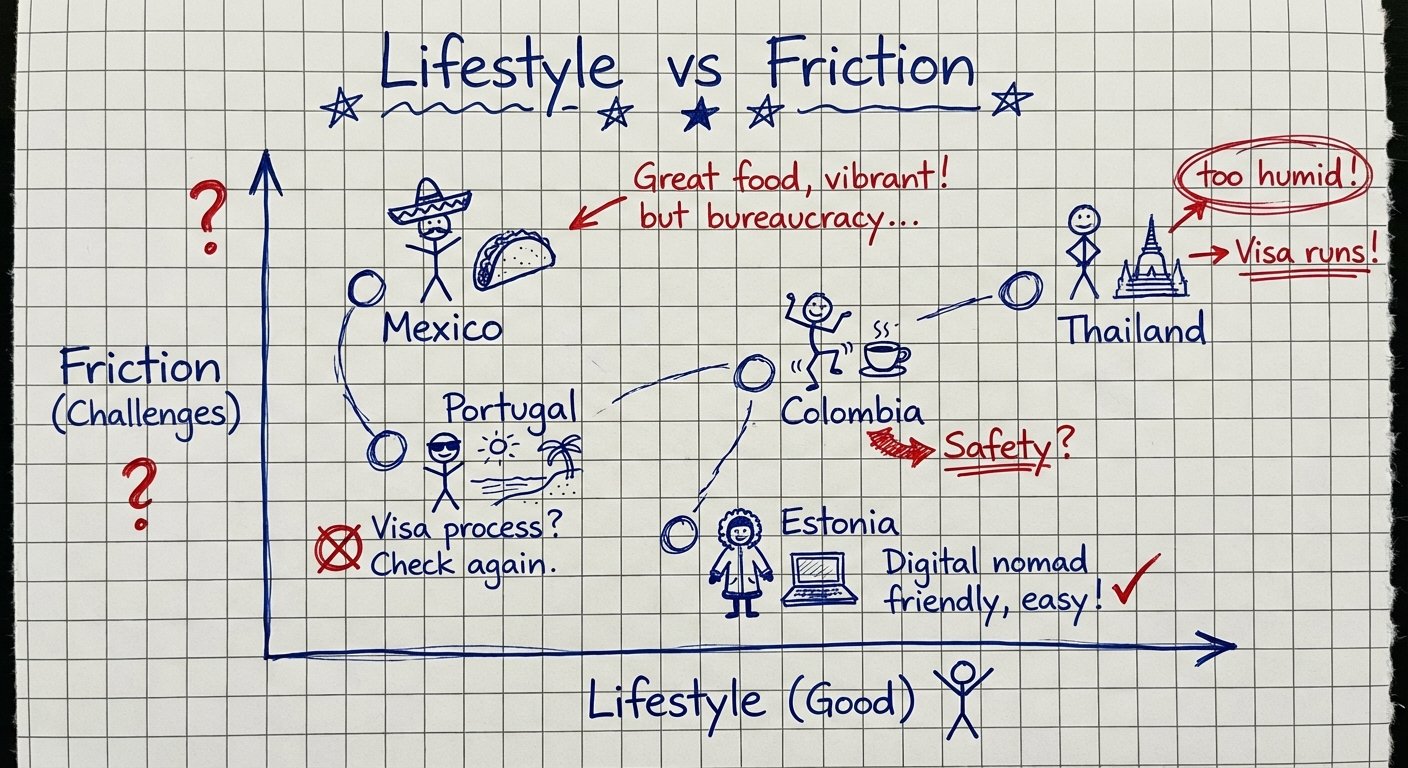
1. Mexico (The High-Speed Play)
Mexico is the path of least resistance. If you are from the US or Canada, this is the easiest win on the board.
The Entry Logic: Mexico does not demand complex blood tests or microchips for entry (though you should have them anyway). You need a health certificate issued within 10-15 days of travel. That’s it. You land, they check the paper, you walk out.
The Location: Mexico City. Specifically, Roma and Condesa.
I have never seen a higher density of dogs in my life. Every restaurant has a water bowl. Every park is full of people training dogs. It is socially unacceptable not to like dogs there.
The Cost: You can get a high-end apartment for $1,200 – $1,500 a month. A vet visit that would cost you $300 in New York costs $40 here. The quality is identical.
The Downside: It’s loud. Fireworks go off randomly. If your dog is skittish, you need to desensitize them or pick a quieter neighborhood.
2. Portugal (The European Gateway)
Everyone talks about Portugal. They are right, but for the wrong reasons.
People go for the weather. You should go for the EU Pet Passport.
Once you establish residency or stay long enough to register your pet in the EU system, you unlock the entire continent. No more health certificates for every flight within Europe. You show the blue passport, and you walk through.
The Logistics: Lisbon and Porto are hilly. If you have an old dog, this is physically demanding. The sidewalks are cobblestone (calçada). It’s hard on paws in the heat.
The Housing Market: This is the bottleneck. Portuguese landlords are becoming stricter. You need to offer 3-6 months of rent upfront to secure a pet-friendly unit in a prime area. Cash solves the problem.

3. Colombia (The Value Arbitrage)
If you want to stack cash while living well, you go to Medellin.
The Culture: The “Paisa” culture is incredibly warm toward pets. In the El Poblado district, you can take your dog into almost any shopping mall. They have designated pet bathrooms in the malls. Think about that. The infrastructure is built for you.
The Economics:
- Rent: $800 – $1,200 for a luxury loft.
- Dog Walker: $5 per hour.
- Grooming: $15 for a full service.
You can outsource 100% of your pet care logistics for pennies. This buys you back 10 hours a week. What is 10 hours of your time worth?
The Risk: Some breeds are restricted (Pitbulls, etc.). You need to wear a muzzle in public by law for these breeds. Don’t ignore this. The police will fine you.
4. Estonia (The Frictionless Society)
This is the contrarian pick. It’s cold. It’s dark in winter. Why is it here?
Because Estonia is the most digitized society on earth.
The Efficiency: Everything is done online. Public transport is free for residents. The city of Tallinn is incredibly green. There are forests everywhere.
The Pet Culture: It is silent and respectful. In Latin America, dogs run up to each other. In Estonia, people give you space. If you have a reactive dog or you need focus, this is the environment you want.
The Internet: Fast. Reliable. Everywhere. You will never drop a Zoom call.
5. Thailand (The Advanced Level)
Thailand is hard mode for entry, but God mode for lifestyle.
The Friction: You need an import permit. You cannot just show up. You have to email the quarantine station at Suvarnabhumi Airport (BKK) weeks in advance. If you mess this up, they ship your dog back.
The Payoff: If you go to an island like Koh Samui or Phangan, you are living in paradise for $1,000 a month. You can hire a full-time housekeeper who will also watch your dog for $300 a month.
The Warning: Street dogs (Soi dogs). They are territorial. You cannot walk your dog blindly down a side street. You have to be aware. This requires vigilance.
The Gear You Need (Don’t Be Cheap)
You are moving a living creature across international borders. If your gear fails, you miss your flight. If you miss your flight, you lose thousands of dollars.
Don’t buy the $20 carrier from a discount store. It will break. The zipper will bust. The airline will deny you boarding.
Here is the kit I use. It pays for itself by preventing disasters.
1. The Only Carrier That Matters
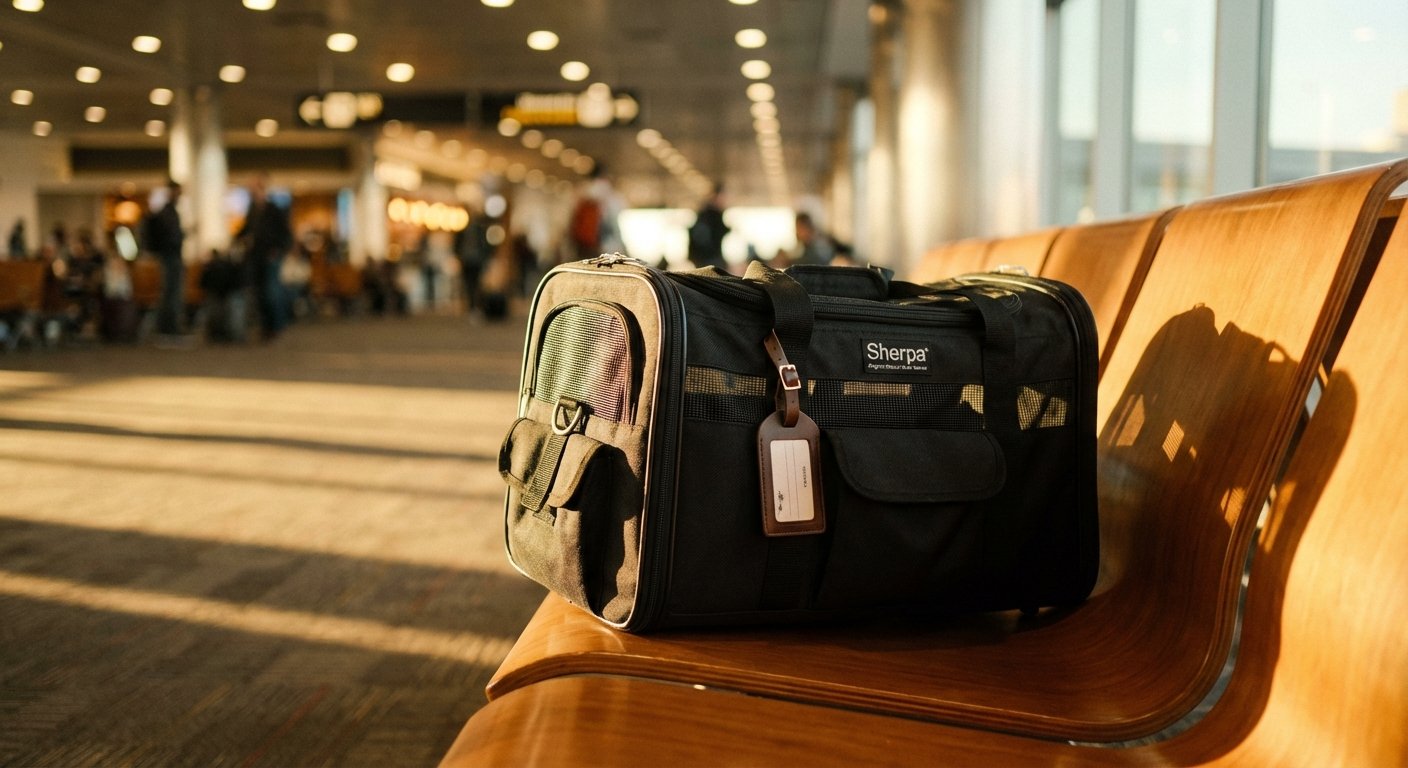
If you have a small dog or cat (under 18lbs usually), they go in the cabin. There is one brand that every airline agent recognizes: Sherpa.
It has a flexible frame. This is crucial. If the space under the seat is tight, you can compress the rear of the bag slightly to make it fit. Hard cases don’t fit. Hard cases get you bumped to cargo.
The “Guaranteed on Board” program creates a paper trail. It’s insurance for your travel plans.
Price: $40 – $80
2. Asset Tracking
Your pet is an asset. You track your revenue. You track your leads. Why aren’t you tracking your pet?
In a foreign country, if your dog bolts, you don’t speak the language. You can’t ask neighbors for help efficiently. You need telemetry.
Get an Apple AirTag. Put it on a collar holder that screws in so it can’t fall off. It pings off every iPhone in the vicinity. In cities like Lisbon or Mexico City, the coverage is 100%.
Price: $25 – $30
3. The “All-Terrain” Harness
Collars are for tags. Harnesses are for control.
When you are navigating a crowded airport or a busy street in Bangkok, you need a handle on the back of the dog to lift them or hold them back. You need a front clip to stop pulling.
The Ruffwear Front Range is the industry standard. It’s durable. It has a padded chest plate so you don’t injure the dog when you pull. It lasts for years.
Price: $40 – $50

The Paperwork Pipeline (SOP)
Amateurs just “go to the vet.” Pros have a Standard Operating Procedure (SOP).
Here is the timeline you need to follow for every single move. This is your checklist.
- T-Minus 6 Months: Check the rabies requirements. Some countries require a titer test (blood test) that takes 3 to 6 months to process. Do this first.
- T-Minus 30 Days: Book your flight. You must call the airline to reserve the pet spot. Do not book online and assume it’s fine. There is a limit of pets per plane (usually 4 to 6). If you are number 7, you aren’t flying.
- T-Minus 10 Days: Visit the USDA Accredited Vet (or local equivalent). Get the International Health Certificate.
- T-Minus 2 Days: Get the endorsement from the government agriculture department (USDA/CFIA/DEFRA).
If you miss one step, you stay home. It’s binary. Pass or Fail.
The Hidden Cost: The “Pet Tax”
You need to budget for the Pet Tax. This isn’t a government tax. It’s the premium you pay for flexibility.
You will pay 20% more for Airbnbs because the cheap ones don’t allow pets.
You will pay $100 – $200 per flight for the pet ticket.
You will pay for Uber Pet or private drivers because you can’t take the bus.
Accept this. Factor it into your monthly burn rate. If you make $5,000 a month, your pet costs you $500 of that in “lifestyle friction.”
Is the companionship worth 10% of your income? For me, yes. It keeps me sane. It keeps me consistent.
Conclusion: Stop Dreaming, Start Filing
Most people reading this will never leave their hometown. They will say “it’s too hard” to bring the dog.
It’s not hard. It’s just a process. It’s a series of checkboxes.
You can live in Mexico City eating tacos for $1 while your dog plays in Parque México. You can watch the sunset in Portugal with your best friend. You can have a higher quality of life for half the price.
But you have to do the paperwork. You have to buy the right gear. You have to pay the Pet Tax.
The ROI is massive. But only if you execute.
Pack the bag. Book the vet. Go.