
Stop Bleeding Cash: The Mexican Residency Arbitrage
Most people stay poor because they play the game on “Hard Mode.”
They live in expensive cities. They pay high taxes. They compete with everyone else doing the exact same thing in the exact same place.
If you are a freelancer making dollars, euros, or pounds, living in a high-cost country is a bad investment. You are burning capital that could be used to buy assets.
Mexico isn’t just about tacos and beaches. It is a leverage play. It is geographic arbitrage.
You keep your high income. You slash your expenses by 60%. You invest the difference.
That is how you get rich.
But you can’t just show up and stay forever. Tourist visas are getting harder. They used to give everyone 180 days. Now? You might get 10 days. You might get rejected.
You need a system. You need the Residente Temporal (Temporary Residency) permit.
This is the no-nonsense guide to getting it done. No fluff. No “magical vibes.” Just the steps, the numbers, and the ROI.
The ROI of Mexican Residency
Let’s look at the math.
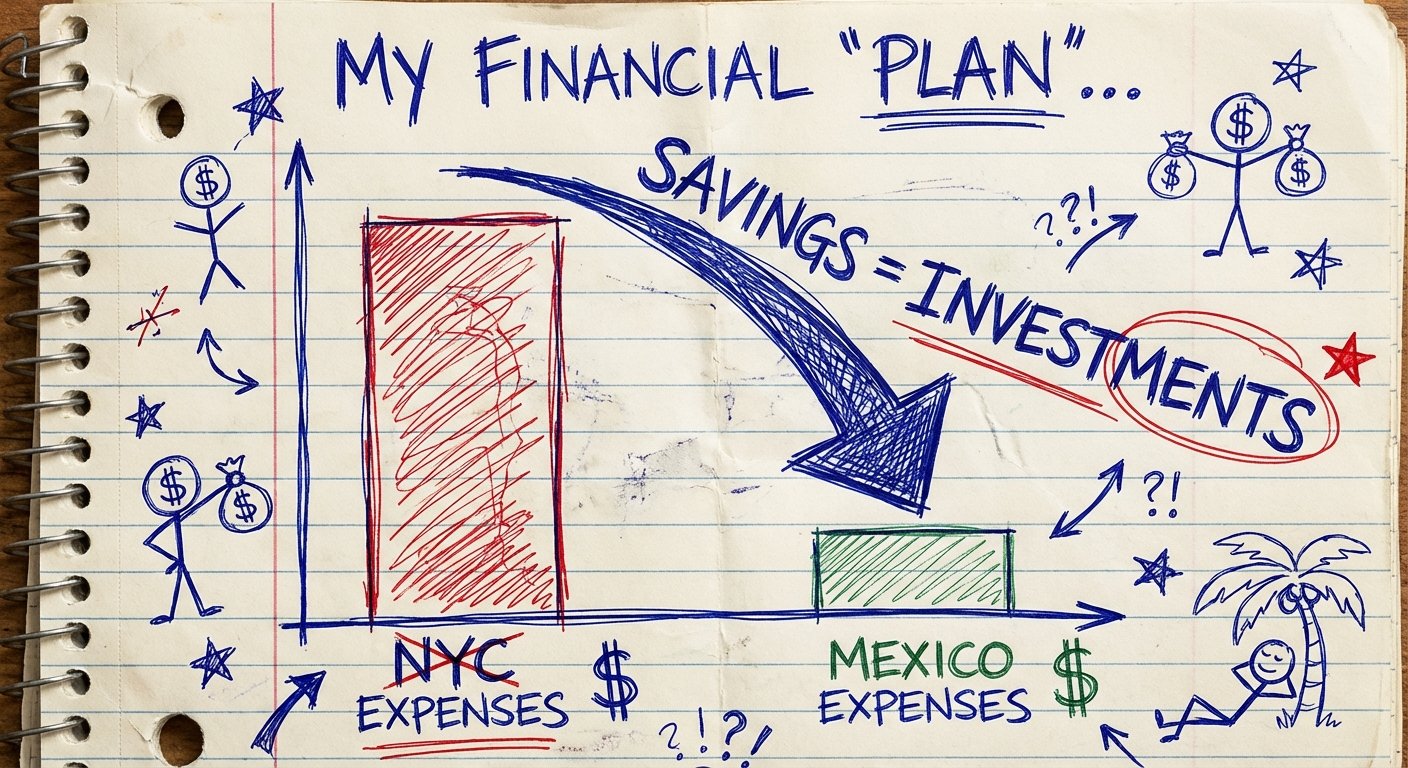
If you live in Miami, New York, or London, your “burn rate” (monthly living expenses) is likely $4,000 to $6,000 just to exist.
In Mexico City, Guadalajara, or Playa del Carmen, you can live like a king for $2,000 to $3,000.
That is a $2,000 monthly spread. $24,000 a year.
If you invest $24,000 a year into the S&P 500 for 10 years at 8%, that’s roughly $350,000.
Getting this visa is literally worth a third of a million dollars to your future self.
Stop thinking of it as paperwork. Think of it as a business deal.
The Requirements: Economic Solvency
Mexico wants to know one thing: Do you have money?
They don’t want you coming there to take jobs. They want you to spend money.
There are two main ways to prove this as a freelancer.
Option A: Monthly Income
You need to prove you have a consistent income coming from outside Mexico.
- The Number: Roughly $3,500 – $4,500 USD per month (net).
- The Proof: Bank statements for the last 6 months. Not screenshots. Real, stamped, or downloadable official PDFs.
- The Catch: The deposits must be consistent. If you make $10,000 one month and $0 the next, they will reject you. They want stability.
Option B: Savings Balance
If your freelance income fluctuates, use savings.
- The Number: Roughly $55,000 – $75,000 USD total balance.
- The Proof: Bank statements or investment account statements for the last 12 months.
- The Catch: The balance must never drop below the minimum threshold during those 12 months. Not even for one day.
Note: These numbers change based on the exchange rate and the specific Mexican Consulate you visit. Always aim higher than the minimum.
Step 1: The Consulate Appointment
This is where 90% of people fail.
You cannot start this process inside Mexico. You must go to a Mexican Consulate abroad. Usually in your home country.
The problem? Appointments are scarce. It’s a supply and demand issue.
The Strategy:
- Check the appointment portal (Citas) every single day.
- Don’t be picky. If the consulate in New York is booked, fly to Las Vegas. Fly to Raleigh. Fly to McAllen.
- The cost of the flight is negligible compared to the ROI of the visa.

Step 2: The Interview
You got the appointment. Now you have to sell yourself.
Dress well. Don’t look like a backpacker. Look like a business owner.
Bring:
- Your passport (valid for at least 6 more months).
- Application form (printed double-sided).
- Passport photo (check the specific size requirements for Mexico, they are weird).
- Cash for the visa fee. Usually around $50 USD. They often don’t take cards.
- Originals AND Copies of every bank statement.
The Script:
When they ask why you want to go to Mexico:
“I am a remote worker. I want to spend my money in your country while working for my US clients. I will not seek employment in Mexico.”
That’s it. Don’t tell them your life story.
If approved, they put a sticker in your passport. This is vital. You have 6 months to enter Mexico to activate it.
The Freelancer’s Toolkit: Don’t Be Cheap
If you are moving to Mexico to work, you need to actually work.
Internet in Mexico is generally good, but bureaucracy requires paper. And power outages happen.
You are not a tourist. You are a mobile business. Invest in your infrastructure.
1. The Portable Scanner
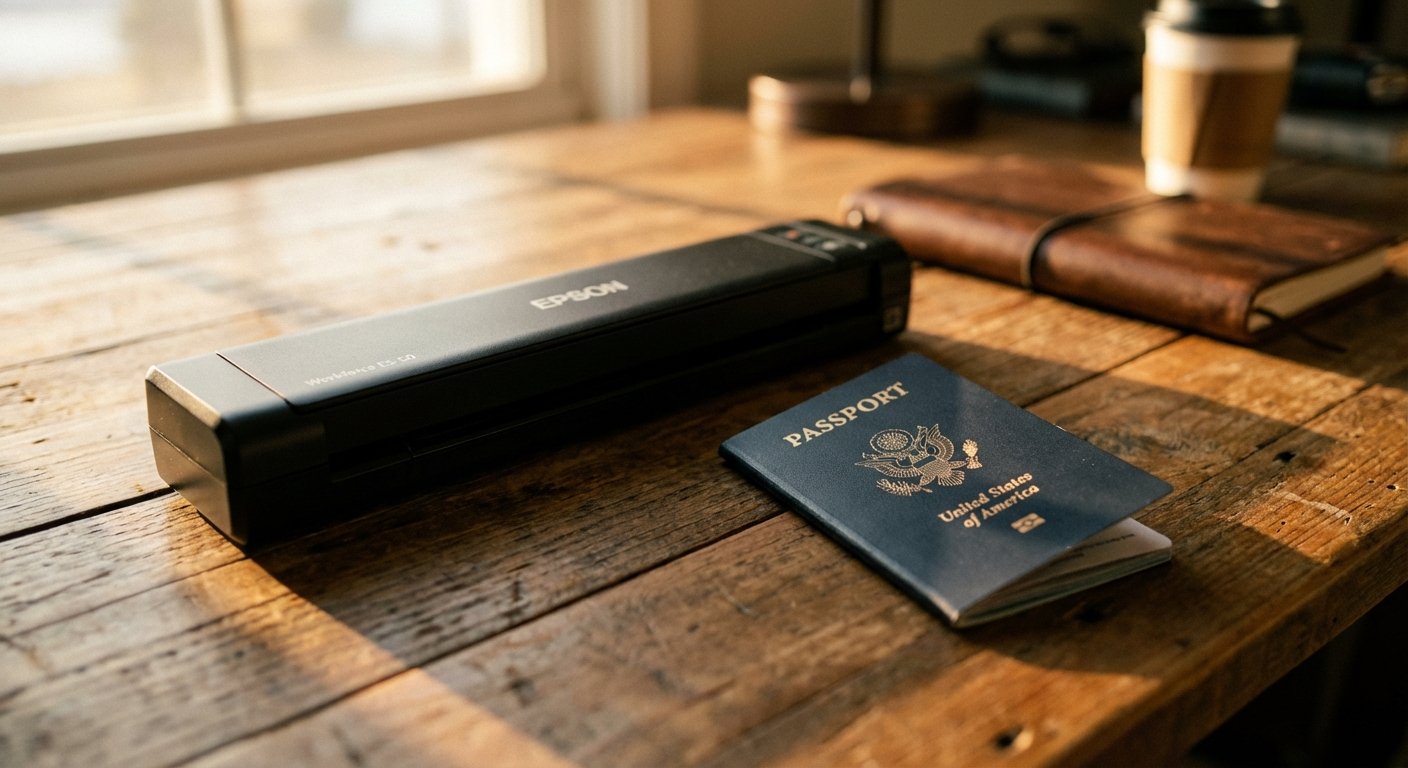
Mexican bureaucracy runs on paper. You will need to scan documents, sign them, scan them again, and email them. If you are running around looking for a print shop, you are wasting billable hours.
Get a high-speed portable scanner. It pays for itself in one use.
Recommended: Epson Workforce ES-50
It’s tiny. It’s fast. It’s USB-powered. It scans receipts and legal docs in seconds.
Price: $110 – $130
2. The Portable Monitor
Working on a single laptop screen kills productivity. Studies show dual monitors increase output by 40%.
If you bill $100/hour, a 40% increase is huge. Don’t be the guy squinting at a 13-inch screen in a cafe.
Recommended: ASUS ZenScreen 15.6”
Lightweight. USB-C connection. Fits in your backpack.
Price: $150 – $200
3. Backup Power
In the rainy season, power goes out. If your laptop dies during a client call, you look amateur.
Get a serious power bank that can charge your laptop, not just your phone.
Recommended: Anker 737 Power Bank (PowerCore 24K)
This thing is a beast. 140W output. It can charge a MacBook Pro quickly.
Price: $100 – $150
Step 3: The “Canje” (The Exchange)
You have the sticker. You flew to Mexico. Now the clock starts.
CRITICAL: When you land in Mexico, do NOT use the automated e-gates. Go to a human officer.
Show them the visa sticker. They must stamp your passport as “CANJE” or “RESIDENTE TEMPORAL.” If they mark you as a “Turista,” you screwed up. You have to leave and start over.
Once you are in, you have 30 days to start the exchange process at the INM (immigration office).
This is the part that hurts. It is slow. It is confusing. The website is often down.
DIY vs. Hiring a Facilitator
You have two choices:
1. DIY (Do It Yourself):
- Cost: $0 (plus government fees).
- Time Cost: 3 to 5 visits to the immigration office. Standing in line at 5:00 AM. Dealing with Spanish forms. Getting rejected because your signature didn’t match perfectly.
- Verdict: Stupid.
2. Hire a Facilitator:
- Cost: $300 – $600 USD.
- Time Cost: 1 visit usually. They handle the forms. They know the people. They wait in line for you.
- Verdict: Smart.
Calculate your hourly rate. If you make $50/hour, and you spend 20 hours dealing with immigration, you lost $1,000. Paying someone $400 to do it is positive ROI.
Buy back your time.
The Tax Trap
This is where freelancers get in trouble. They think “I live in Mexico, I don’t pay US taxes.”
Wrong.
If you are a US citizen, you pay taxes on worldwide income. Always. The IRS owns you.
However, you can use the FEIE (Foreign Earned Income Exclusion).
- If you are outside the US for 330 days a year, you can exclude the first ~$120,000 of your income from Federal Income Tax.
- This is the holy grail.
What about Mexican Taxes?
Technically, if you live in Mexico, you are a tax resident. However, if your income source is foreign and you don’t have a Mexican employer, enforcement is low for temporary residents. But legally? You should consult a Mexican accountant.
Don’t take tax advice from a guy with dreadlocks in a hostel. Pay a professional.

Timeline Expectation
Realistically, how long does this take?
- Research & Gathering Docs: 1-2 weeks.
- Getting Appointment: 1-4 weeks (depends on luck/persistence).
- Consulate Interview: 1 day (Passport returned usually same day or next day).
- Entering Mexico: Whenever you book your flight (within 6 months).
- The “Canje” Process: 2 weeks to 3 months. (Mexico City is fast. Playa del Carmen is slow).
Conclusion: Action beats Anxiety
Most freelancers talk about moving for years. They join Facebook groups. They ask “Is it safe?” repeatedly.
They never go.
Meanwhile, the ones who took action are sitting in a cafe in Roma Norte, paying $4 for a gourmet lunch, banking $5,000 a month, and lowering their stress levels.
The Residency Permit gives you security. It allows you to open a Mexican bank account. It allows you to buy a car. It stops the clock on tourist visa runs.
It is an asset.
Gather your bank statements. Book the appointment. Get on the plane.
Stop waiting.