This post contains affiliate links. If you purchase through our links, we may earn a small commission at no extra cost to you.
Stop Begging. Start Selling.
Most people get this wrong.
They walk into their boss’s office. They have sweaty palms. They talk about their feelings. They talk about their “dreams” to travel or work from a coffee shop.
Your boss doesn’t care about your dreams.
Your boss cares about one thing: ROI.
They care about the Return on Investment on your salary. If they pay you $100,000, they expect $300,000 to $500,000 in value back. That is the math. That is the only math that matters.
When you ask to work remotely based on “lifestyle,” you are adding risk to that equation. You are telling them:
“I want to make you uncomfortable so I can be more comfortable.”
That is a bad deal. I wouldn’t take that deal. Neither should they.
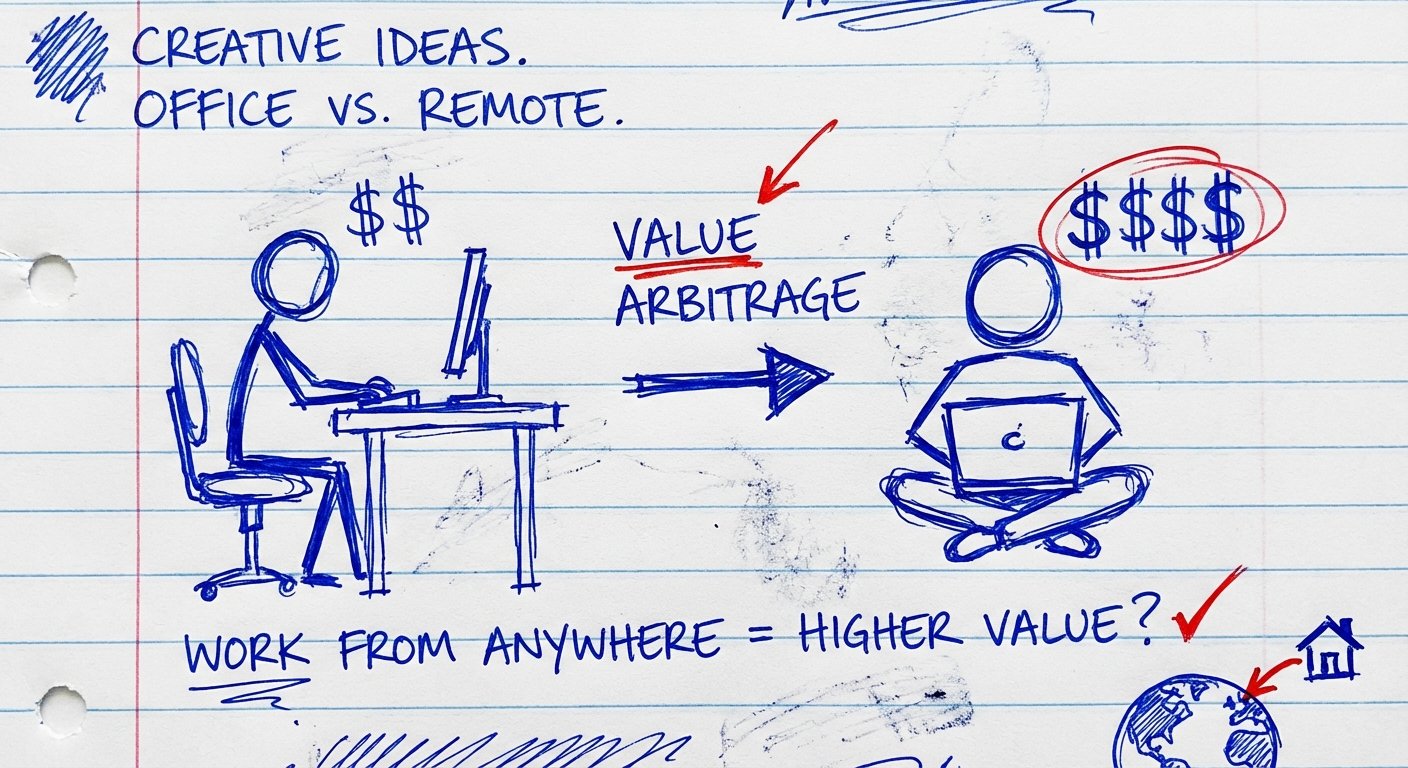
If you want to work remotely, you have to flip the equation. You have to prove that your physical absence actually increases the ROI. You frame remote work not as a perk for you, but as an efficiency hack for the company.
The Psychology of the “No”
Why do bosses say no to remote work?
It’s not because they are evil. It’s not because they want to control your soul. It’s because they are risk-averse.
Middle managers are paid to maintain stability. If you go remote and productivity drops, it’s their neck on the line. They assume three things will happen when you leave the office:
- Communication latency: They won’t be able to reach you when the building is on fire.
- Tech failure: Your internet will suck, or your audio will cut out during a client call.
- The “Slacker” Factor: They think you will be sitting on a beach drinking margaritas instead of hitting Q3 targets.
To get a “Yes,” you don’t need to be persuasive. You need to be reliable. You need to systematically dismantle these three fears before you even send the email.
If you remove the risk, the decision becomes easy. If you don’t, you are gambling.
Phase 1: The Pre-Work (Build Leverage)
You cannot send the email today.
If you are currently the guy who is late to meetings, takes long lunches, and needs hand-holding, stop reading. You need to fix your performance first. Remote work is an amplifier. If you are good, you get better. If you are bad, you get fired.
Spend the next two weeks doing what I call “The Ghost Protocol.”
1. Go Asynchronous
Stop walking over to people’s desks to ask questions. Stop shouting across the room. Start using Slack, Teams, or email for everything. Create a digital paper trail of your competence. You want to train your team that you deliver value through a screen, not through your physical presence.
2. Over-Deliver on Speed
When a request comes in digitally, reply instantly. Faster than you would if you were in the office. You are conditioning your boss to realize that Digital You is faster than Physical You.
3. The “Output” dump
At the end of every week, send a bulleted list of exactly what you accomplished. Most employees don’t do this. They assume the boss knows. The boss doesn’t know. The boss is worried about their own boss. Give them the data.

Phase 2: The Hardware (Eliminate the Excuses)
This is where most people cheap out. And it costs them their freedom.
If you get on a Zoom call to negotiate your remote life and your audio sounds like you are underwater, you lose. If a dog is barking in the background, you lose.
You need to signal—through your equipment—that you take this seriously. You are setting up a professional satellite office, not a couch crash pad.
1. Audio is King
People forgive bad video. They do not forgive bad audio. If your boss has to say “Can you repeat that?” more than once, they will subconsciously associate “Remote You” with “Friction.”
You need noise cancellation. Absolute silence. You need to be able to work from a coffee shop, an airport, or a coworking space without the person on the other end knowing where you are.
The industry standard is the Sony WH-1000XM5. They have the best noise-canceling microphone array on the market. It isolates your voice and kills the background noise.
Price: $300 – $400
2. Security (The IT Objection)
If you work in a corporate environment, the IT department is the enemy of your freedom. They will block your request citing “security risks” regarding public Wi-Fi.
Do not let IT hold the veto card.
Beat them to the punch. In your proposal, you state clearly: “I will be using a military-grade VPN for all connections to ensure data integrity is higher than it is at my home internet.”
You use NordVPN. It’s fast, it’s secure, and it works everywhere. It kills the “security risk” argument dead.

Phase 3: The Offer (The “Puppy Dog Close”)
Sales 101: Lower the barrier to entry.
If you ask to move to Bali forever, the answer is No. It’s too big of a commitment. It feels permanent. Permanent decisions are scary.
So, we use the “Puppy Dog Close.”
Pet stores let you take the puppy home for the weekend. They know that once you have the puppy in your house, you aren’t bringing it back. You fall in love with it. The risk was low (just a weekend), but the outcome is permanent.
You are going to ask for a Trial Run.
You aren’t asking to be a digital nomad. You are asking for a “One Week Deep Work Experiment.”
You frame it as a productivity sprint to finish a specific project without office distractions. This aligns your selfish desire (freedom) with their selfish desire (project completion).
The Exact Email Script
Do not copy-paste this blindly. Adapt it to your voice. But keep the structure. The structure is designed to handle objections before they arise.
Subject: Proposal to increase [Project Name] output (Trial)
Hey [Boss Name],
As we discussed, getting [Project Name] across the finish line by end of month is the top priority.
I’ve looked at my workflow data from the last two weeks. I’m finding that between 9am and 5pm in the office, I’m losing about 30% of my deep work time to ad-hoc interruptions and context switching.
I want to run a brief experiment to maximize efficiency next week.
The Plan:
I work remotely for 3 days (Tuesday – Thursday) to focus purely on execution.
The Goal:
Complete [Specific Deliverable A] and [Specific Deliverable B] 24 hours ahead of schedule.
Risk Mitigation:
- Availability: I will be on Slack/Teams instantly during core hours. If you don’t get a reply in 10 minutes, the deal is off.
- Connectivity: I’ve upgraded my home office setup (noise-canceling audio and dedicated high-speed line) so calls will be clearer than they are here.
- Security: All traffic runs through a secure VPN.
The “No-Risk” Clause:
We review the output on Friday. If productivity didn’t increase, I’m back in my seat Monday morning, no questions asked.
Does that sound fair?
-[Your Name]

Why This Works
Let’s break down the mechanics of this email.
1. “Proposal to increase output”
You aren’t asking to “work from home.” You are proposing a way to make the company more money. The framing is aggressive on value.
2. The Data Anchor
“I’m losing 30% of my time…”
You are identifying a problem (office distractions) that costs the boss money. You are positioning the office as the problem and remote work as the solution.
3. The Specific Deliverable
Vague promises get vague answers. Specific targets get approval. By promising to deliver “24 hours ahead of schedule,” you are offering a tangible reward for their flexibility.
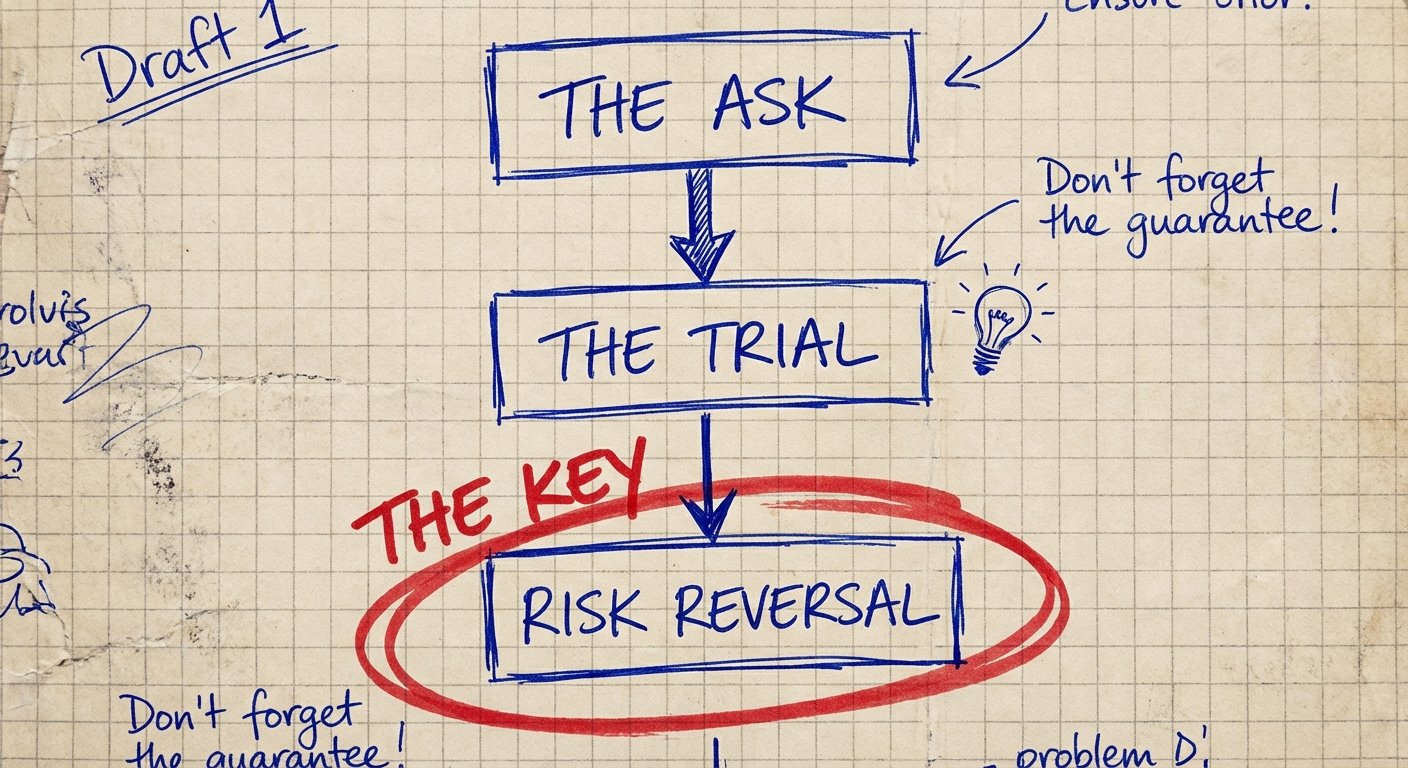
4. The Risk Reversal
“If productivity didn’t increase, I’m back in my seat…”
This is the most important line. You are taking the risk off the table. You are giving them an eject button. This makes it incredibly difficult for a logical person to say no. If they say no to a risk-free trial that promises higher output, they are being irrational.
Handling the Logistics
Once they say yes to the trial (and they will), you have to execute. This is game day.
Over-Communicate.
Silence creates anxiety. In the absence of information, people assume the worst. Send a morning update: “Here is what I am crushing today.” Send an evening update: “Here is what got done.”
Be Visible.
If there is a Zoom meeting, camera on. Always. Be the most engaged person in the room. You need to compensate for the lack of physical presence with high-energy digital presence.
Don’t Be Cheap.
I mentioned the headphones earlier. But this applies to everything. If you are traveling, get a portable monitor. If you are in a different country, ensure your phone works.
You are a business of one. Reinvest your salary into your infrastructure. A $300 monitor is nothing compared to the freedom of living anywhere.
The Escalation
After you crush the 3-day trial, you don’t immediately ask for full remote.
You do it again. “That worked great. Let’s do it for two weeks this time.”
Then two weeks becomes a month.
Then a month becomes: “Hey, I’m thinking of basing myself out of [Location] for Q4 to focus on [Big Project].”
It is a gradual expansion of the “Puppy Dog Close.” Eventually, you are just the guy who works remotely. It becomes the new normal. You didn’t ask for permission to change your life; you proved that your life change was good for business.
Conclusion
Stop romanticizing remote work. It isn’t a spiritual journey. It is a logistical arrangement.
Treat it like a business deal. Identify the leverage, remove the risk, and make an offer they would feel stupid saying no to.
Get the gear. Send the email. Do the work.
And if they still say no after you’ve done everything right? Then you are in the wrong vehicle. Find a new job. But use the script first.