This post contains affiliate links. If you purchase through our links, we may earn a small commission at no extra cost to you.
The Instagram Nomad is Dead
Most digital nomads are broke.
They pick a country because the beaches look good on Instagram. They spend half their day trying to find a cafe with decent Wi-Fi. They pay 3% fees on every ATM withdrawal. They get sick, have no insurance, and beg their friends for money on GoFundMe.
That is stupid.
Your life is a business. Moving to another country is a business decision. You are making an investment. You want a return on that investment (ROI).
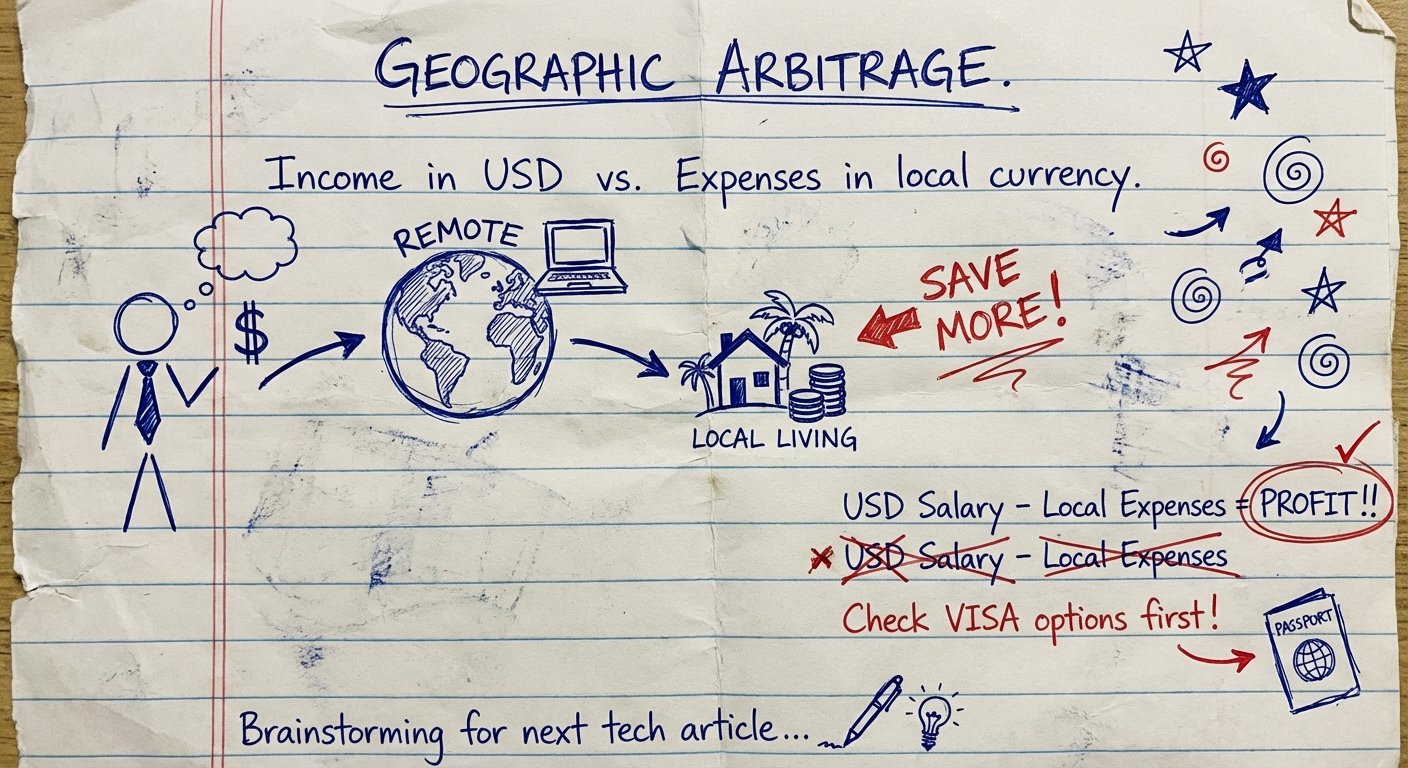
In 2026, the game is no longer about finding the cheapest beer in Southeast Asia. The game is about Geographic Arbitrage.
You earn in strong currencies like US Dollars. You spend in weaker currencies. You keep the difference. You reinvest the profit.
But cost of living is only half the equation. The other half is your output. If you move to a cheap island but the power goes out twice a day, your output drops. You lose money. A $500/month apartment is expensive if it costs you $5,000 a month in lost productivity.
You need three things to maximize your ROI as a digital nomad:
- World-class infrastructure. Fast internet, good airports, zero friction.
- Favorable visa laws. No sketchy border runs. You need legal stability so you can focus on work.
- Low effective tax rates. Keeping what you make.
If a country doesn’t have all three, cross it off the list.
Here are the best countries to start your digital nomad journey in 2026. Look at the math.
1. Thailand: The Ultimate Baseline
Thailand has been the nomad capital for a decade. But in the past, the visa situation was a nightmare. People were doing “education visas” to study Thai for 10 years or flying out every 30 days. It was amateur hour.
Now, Thailand has the DTV (Destination Thailand Visa).
Here is why this changes everything. The DTV costs about $300. It is valid for 5 years. You get 180 days per entry, which can be extended. You need to show a bank balance of around $15,000 once. That’s it.
No border runs. No anxiety. Pure focus.
The ROI Breakdown:
- Cost of Living: $1,500 – $2,500/month. For $2,000, you live in a luxury high-rise condo in Bangkok with a rooftop infinity pool, a full gym, and co-working spaces.
- Infrastructure: Bangkok has 5G everywhere. Home internet is a gigabit connection for $20 a month.
- Food: You can eat world-class meals for $3 to $10. You never have to cook. Cooking costs you time. Time is money. Buy back your time.
If you are making $5,000 a month, you can live like a king in Thailand for $2,000, and bank $3,000 in pure profit every single month. In two years, you have $72,000 in the bank.
That is geographic arbitrage.

2. Malaysia: The Underrated Workhorse
Everyone talks about Bali. Bali traffic will make you want to blow your brains out. You will spend two hours in a taxi to go three miles. Bali is for vacations. Malaysia is for business.
Kuala Lumpur is the most underrated nomad city on earth.
Malaysia launched the DE Rantau Nomad Pass. It allows IT and digital professionals to live there legally for 3 to 12 months, renewable.
The Math on Malaysia:
- Income Requirement: You only need to show you make $24,000 a year. That is $2,000 a month. If you can’t make $2k a month online, you shouldn’t be traveling. You should be working.
- Visa Cost: Under $250.
- Infrastructure: Kuala Lumpur is a modern metropolis. The trains work. The English proficiency is incredibly high. The internet is flawless.
Kuala Lumpur gives you the infrastructure of a Tier-1 Western city at a Tier-3 Southeast Asian price. You can rent a modern studio in the city center for $600 to $800 a month. It is the best place in Asia to put your head down and build a business for six months without distractions.
3. UAE (Dubai): The High-Earner Tax Haven
If you make $50,000 a year, go to Thailand. If you make $250,000 a year, go to Dubai.
Dubai is not cheap. A decent apartment in the Marina will cost you $2,500 to $4,000 a month. A beer costs $12. Groceries are expensive.
But if you are a high earner, Dubai is actually the cheapest place on earth. Why? Zero percent income tax.
Let’s do the math.
If you live in California and make $300,000, you are paying roughly $100,000 in state and federal taxes. You keep $200k. Your expensive rent in LA costs you $48,000 a year. You are left with $152,000.
If you move to Dubai on their 1-Year Virtual Work Program. You pay $0 in income tax. You keep $300,000. You pay $48,000 a year in rent. You are left with $252,000.
By moving to Dubai, you just gave yourself a $100,000 raise for doing the exact same work.
The UAE Virtual Work Visa requires proof of $3,500/month income. It takes a few weeks to process. Once you have it, you get an Emirates ID. You can open local bank accounts. You have total financial privacy. You fly out of DXB to anywhere in the world.
Don’t look at the cost of rent. Look at the total cost of your life. Taxes are your biggest expense. Dubai eliminates them.
4. Spain: The European Access Point
Maybe you hate the heat. Maybe you want European time zones. Spain is the answer.
Spain’s Digital Nomad Visa is fully operational and highly efficient in 2026. It allows non-EU citizens to live and work in Spain for up to 5 years. It also gives you a direct path to permanent residency.
The Baseline Numbers:
- Income Requirement: You need to prove roughly 2,500 EUR per month (200% of the national minimum wage).
- Taxes: Under the Beckham Law (if you qualify), you pay a flat 24% tax on your Spanish-sourced income up to 600,000 EUR. But you need an accountant to structure this correctly. Don’t cheap out on tax advice. Pay the professional.
Spain gives you unmatched quality of life. Madrid and Valencia offer exceptional infrastructure. You get high-speed rail across the country. You get access to the entire Schengen zone.
You don’t move to Spain to save money. You move to Spain to build a European base while paying a reasonable, predictable amount of tax compared to the UK or Germany.
The Nomad Tech Stack: Don’t Pay the “Stupid Tax”
If you have the right country, you need the right setup. The biggest mistake rookies make is trying to save pennies on their gear and infrastructure, only to lose thousands in emergencies and inefficiencies.
Amateurs buy cheap tools. Professionals buy leverage.
1. Banking: Stop Giving Money to Banks
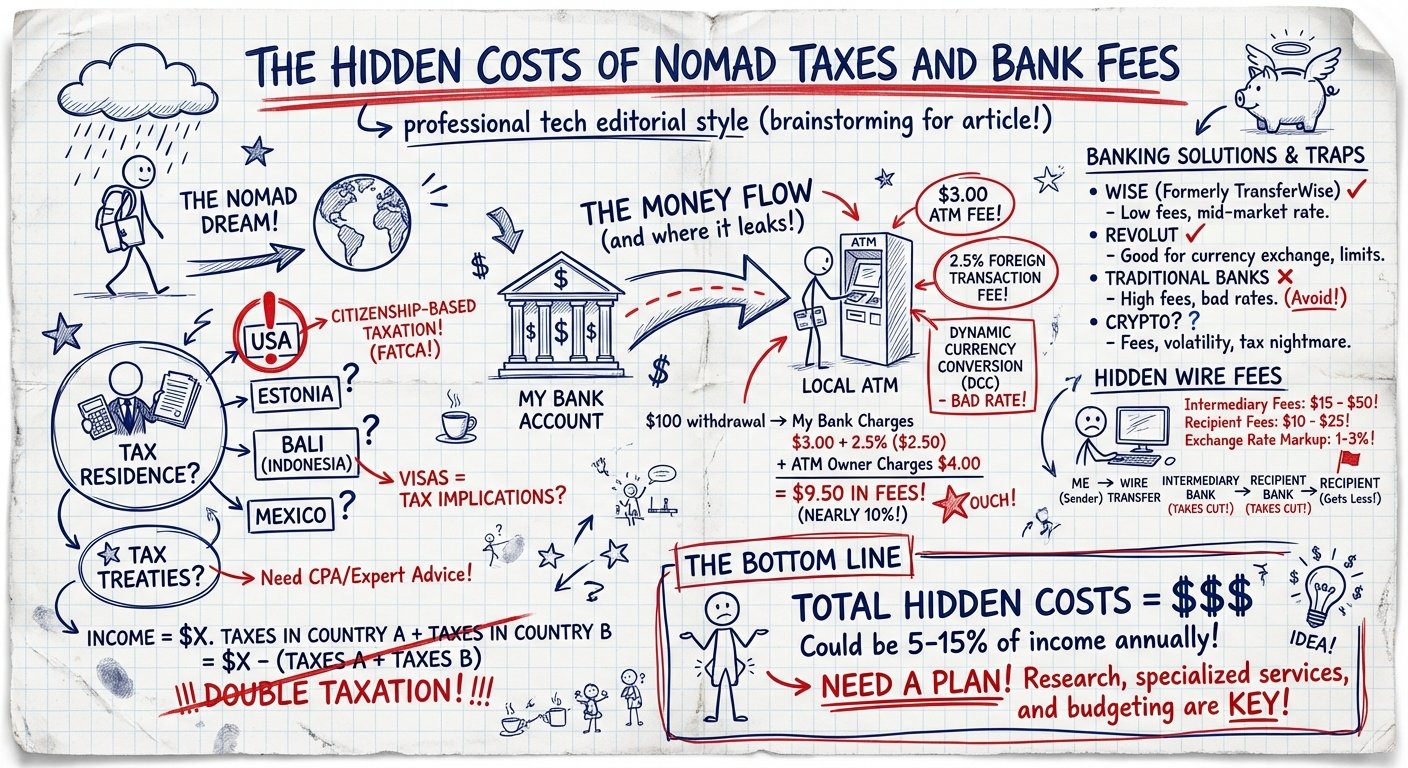
When you use your local bank card overseas, the bank charges you a 3% foreign transaction fee. Then the local ATM charges you $5. Then your bank gives you a terrible exchange rate, hiding another 2% fee.
If you spend $3,000 a month abroad, you are losing $150 a month to invisible bank fees. That is $1,800 a year. You are burning money for no reason.
Get a multi-currency account. You need a platform that gives you the mid-market exchange rate with zero hidden fees. It holds your money in USD, EUR, GBP, or whatever you need, and auto-converts at the cheapest rate when you swipe your card.
Try Wise. It is the only banking tool I use for international travel. Setup takes 5 minutes. Do it before you leave.
2. Insurance: Don’t Rely on GoFundMe
I see this every week. A nomad moves to Chiang Mai. They rent a scooter. They have zero experience riding a scooter. It rains. They crash. They break their leg. The Thai hospital bill is $15,000. They don’t have insurance. They cry on Instagram asking people to donate.
Don’t be a liability.
Your domestic health insurance does not cover you when you live overseas. You need dedicated travel medical insurance designed for nomads. It needs to cover hospital visits, emergency evacuation, and unexpected travel delays. It needs to bill monthly like a subscription.
Get SafetyWing. It costs around $45 to $50 a month. If you can’t afford $50 a month to protect yourself from bankruptcy, you cannot afford to be a digital nomad. Period.
3. Security: Protect Your Client Data
You are working from a coffee shop in Medellin or an airport lounge in Frankfurt. You log into the free public Wi-Fi. You open your Stripe account. You send client data.
Public Wi-Fi networks are unencrypted. Anyone with a basic packet sniffer can see your passwords, your banking details, and your client data.
If you lose your client’s trust, you lose your income. If you lose your income, your nomad journey is over. You go home and get a normal job.
You need a VPN. Not a free one. Free VPNs sell your data. You need a military-grade encrypted tunnel that masks your IP address and secures your connection, no matter where you are.
Get NordVPN. Turn it on. Leave it on. It takes one click. It costs less than a cup of coffee a month. It protects your entire business.
The Essential Nomad Gear
Your laptop is your factory. If your factory breaks, production stops. You need gear that is durable, efficient, and protects your ability to earn.
Here is what you actually need. No fluffy travel gadgets. Just ROI-positive tools.
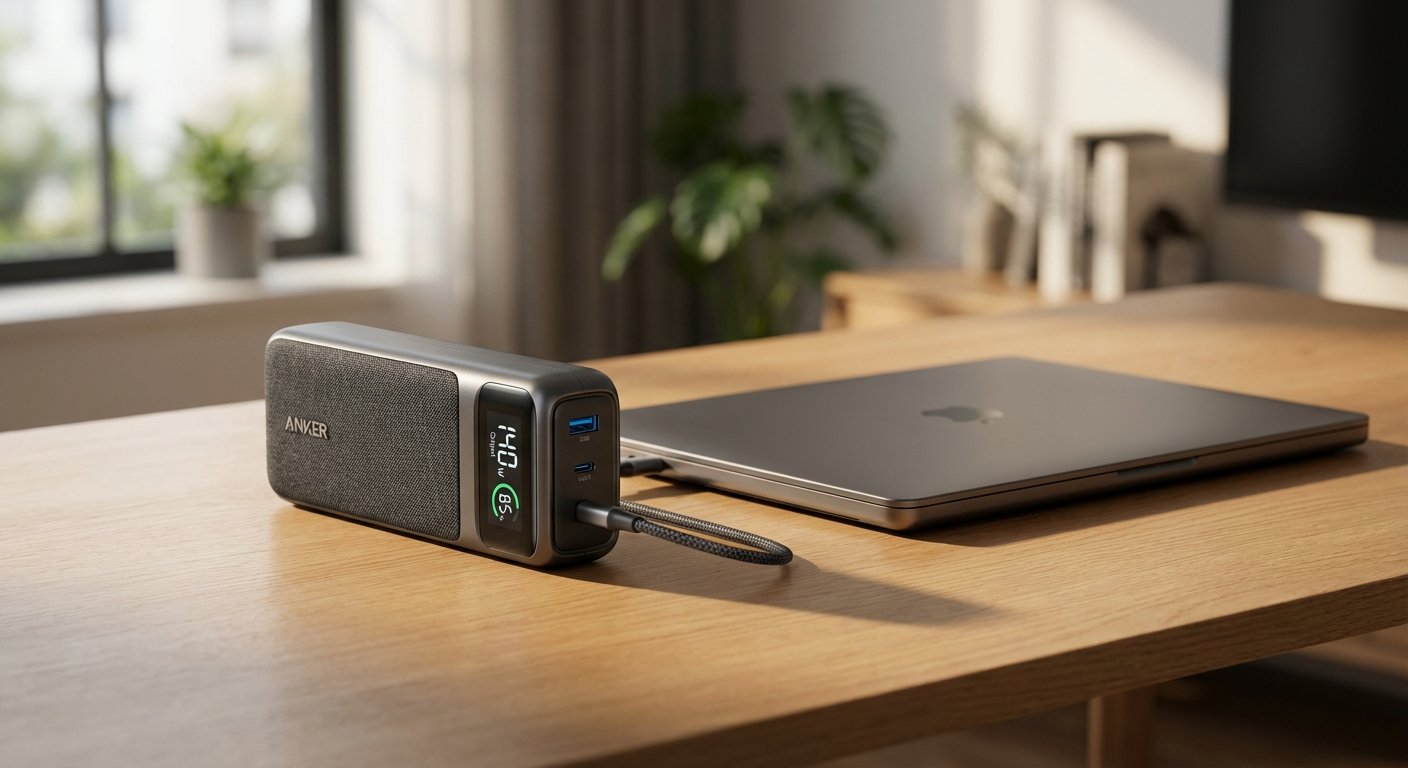
Power Bank: Anker Prime 27,650mAh
You will be in buses, trains, and cafes without outlets. Your laptop battery will die. When your laptop dies, you stop making money.
You need a power bank that outputs enough wattage to charge a MacBook Pro at full speed. The Anker Prime outputs 250W. It holds 27,650mAh, which is right under the legal limit for TSA carry-on rules. It can charge your laptop from zero to full, twice.
Estimated Price: $130 – $180.
Laptop Stand: Roost V3
If you hunch over a laptop at a cafe table for 8 hours a day, your neck will be destroyed in 6 months. Chiropractic bills in foreign countries are expensive. Neck pain destroys your ability to focus.
You need to elevate your screen to eye level. The Roost V3 is the only laptop stand that matters. It weighs almost nothing. It folds into a tiny stick. It is built out of carbon fiber and reinforced plastic. I have used the same one for five years.
Estimated Price: $80 – $90.
The Bag: Nomatic 30L Travel Bag
Checking bags is for amateurs. Checked bags get lost. Checked bags take 45 minutes to claim at the carousel. 45 minutes of wasted time per flight.
You travel with one carry-on backpack. It forces you to only bring what makes you money or keeps you healthy. The Nomatic 30L is weather-resistant. It has dedicated tech compartments. It opens like a suitcase so you aren’t digging from the top. It looks professional, not like you are backpacking the Andes.
Estimated Price: $270 – $300.
The Reality of Geographic Arbitrage
There are two types of digital nomads.
The first type is running away from something. They hate their life back home. They want to drink cheap beer on a beach and do the bare minimum to survive. They do freelance writing on Fiverr for $10 an article. They are constantly stressed about money. They burn out in a year.
The second type is running toward something. They see the world as a marketplace of inefficiencies. They realize that making US Dollars while living in a high-infrastructure, low-cost country gives them unfair leverage. They use the low cost of living to bootstrap a real business. They reinvest the profits.

When your rent drops from $2,500 to $800, you have $1,700 of free cash flow every month. You can use that to hire an assistant. You can use it to run ads. You can use it to buy software that automates your work.
The goal is not to live cheap. The goal is to build wealth faster.
Conclusion: Execute
Do not overthink this. You don’t need a perfectly optimized spreadsheet comparing 50 different cities.
You need to pick a hub, pack your bag, and get to work.
- If you want the ultimate low-cost, high-reward baseline: Go to Thailand.
- If you want a modern city to build in silence: Go to Malaysia.
- If you make $200k+ and want to keep all of it: Go to Dubai.
- If you want European access and lifestyle: Go to Spain.
Get your money right with Wise. Protect your health with SafetyWing. Protect your data with NordVPN. Buy tools that give you leverage.
Stop looking at Instagram. Stop consuming content about traveling. Choose a country. Buy the flight. Start building.