
This post contains affiliate links. If you purchase through our links, we may earn a small commission at no extra cost to you.
Stop Paying Tourist Prices
Most digital nomads bleed cash on rent. They treat their housing like a vacation. They search like tourists. They book like tourists. And they pay tourist prices.
Housing is your biggest expense. Period. If you overpay for your Airbnb, you are burning profit. You are working extra hours just to hand that money over to a landlord who saw you coming from a mile away.
Southeast Asia is built on negotiation. But Americans and Europeans get uncomfortable talking about money. So they click “Book Now,” eat the 300% markup, and think they got a good deal because it was cheaper than London or San Francisco.
That is losing logic. You are comparing apples to oranges.
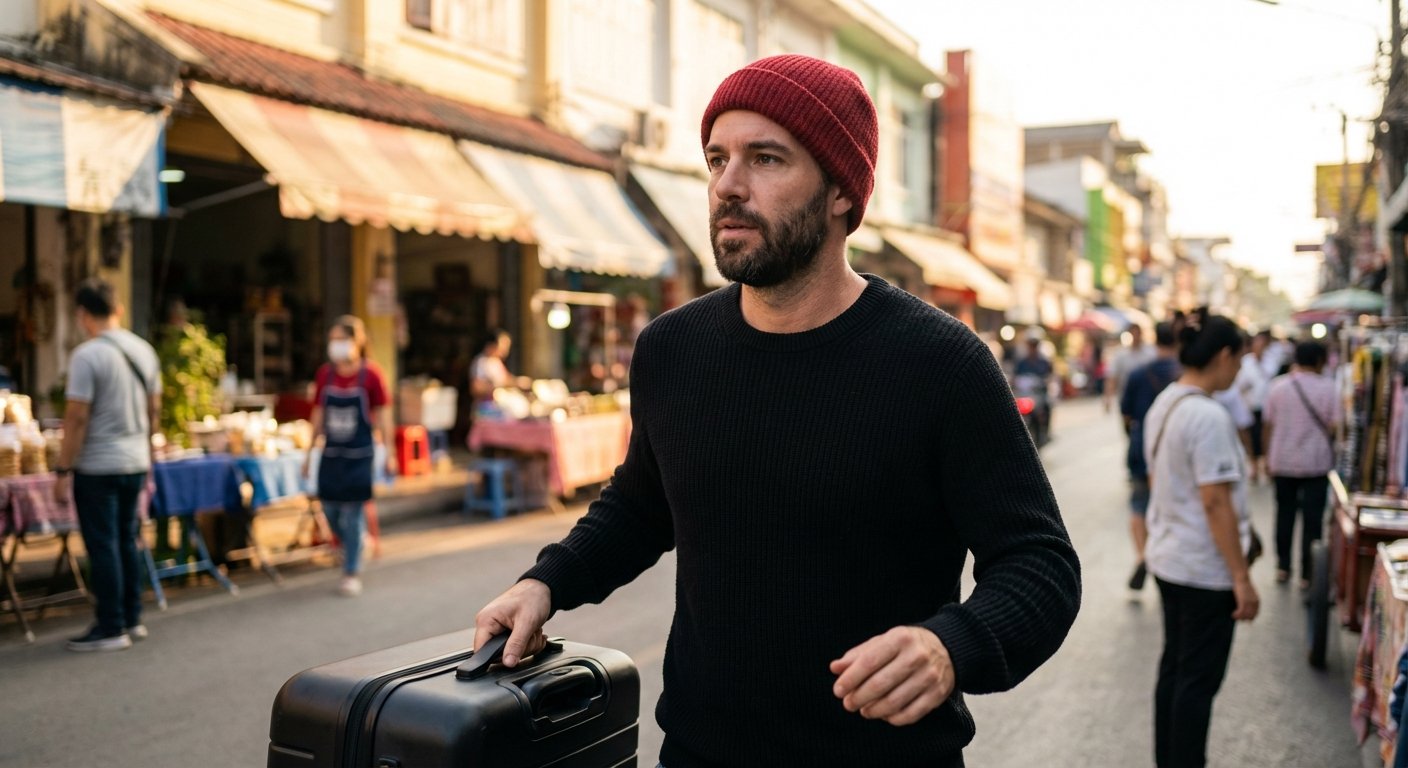
If you want to stay in places like Chiang Mai, Bangkok, Da Nang, or Bali for a month, you should never pay more than $800. In most cases, you can get a premium, modern apartment for $500 to $600. But you have to stop using the platform the way they want you to use it.
Airbnb is a marketplace. It connects supply (hosts with empty rooms) to demand (you). Airbnb makes money on volume and fees. They want you to book short, expensive stays because the margin is higher. You want to book long, cheap stays. Your goals are completely opposed.
Here is the exact framework I use to bypass the tourist tax and lock down luxury apartments in Southeast Asia for under $800 a month. It is just math, leverage, and human psychology.
Step 1: The 28-Day Algorithm Trigger
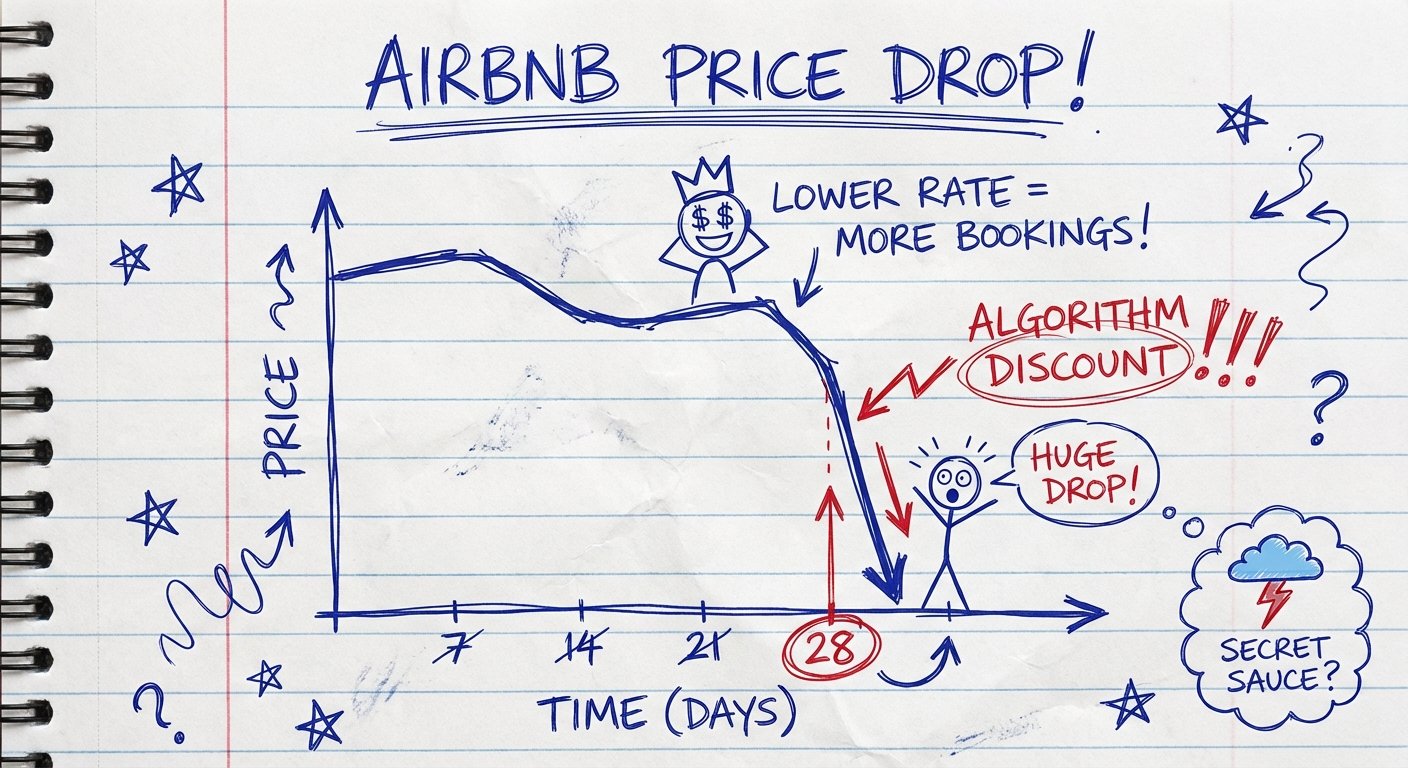
Airbnb has a built-in trigger. It happens at exactly 28 days.
If you search for 27 days, you pay the daily rate. If you search for 28 days, the system automatically applies the host’s monthly discount. Most hosts set this discount between 30% and 50% without even thinking about it. Airbnb actually prompts them to do it when they set up the listing.
Let’s do the math. Let’s say an apartment in Da Nang is listed for $45 a night.
If you book for 21 days: 21 x $45 = $945.
If you book for 28 days with a 40% monthly discount: 28 x $45 = $1,260. Subtract 40% ($504). Your total is $756.
You literally get 7 extra days of housing, and you pay $189 less. It makes zero logical sense to book an Airbnb for 3 weeks. Always book for 28 days. Even if you leave a week early, you save money. Do not be irrational. Follow the math.
Step 2: Understanding Host Psychology
To win negotiations, you have to understand what the other person fears.
What does an Airbnb host fear? An empty calendar.
An empty apartment is a rotting asset. If a night goes unbooked, the host can never sell that night again. It is gone forever. If a host charges $60 a night, they might only have a 40% occupancy rate. That means out of 30 days, they only get paid for 12. They make $720 for the month, but they have to clean the place 5 different times, deal with 5 different tourists, and worry about parties and damage.
You are going to offer them something better: Peace of mind.
You offer them a guaranteed 30 days of zero-hassle income. You are a single professional. You work on your laptop. You don’t throw parties. You don’t use extra towels. You are quiet. You are the perfect asset.
When you message a host, you are not begging for a discount. You are offering them a stable business contract. Shift your mindset. You have the money. They need the money. You hold the leverage.
Step 3: The “Ghost Listing” Strategy
Everyone fights over the listings with 4.9 stars and 150 reviews. Because people are cowards. They need social proof to make a decision.
You pay a massive premium for social proof.
If you want the best ROI, look for brand new listings. Look for places with zero reviews, or maybe 1 or 2 reviews. These are the hosts who are desperate. They just spent $10,000 furnishing an apartment in Bangkok, they just listed it, and crickets. The algorithm buries them because they have no history.
They are sweating. They want to prove their concept. They want their first 5-star review.
Filter your search for exactly 28 days. Set your max price to $1,000 (we will negotiate it down). Find a brand new listing that looks amazing. The photos will usually be taken on a cell phone, not by a professional. That is a good sign. It means it’s a real person, not a massive corporate property management company.
You cannot negotiate with a corporate manager. They don’t care. You can only negotiate with an emotional human being who owns the property.
Step 4: The Negotiation Script
Do not use the “Request to Book” button. Use the “Contact Host” button.
You need to send a message before you commit a single dollar. Your goal is to get them to send you a “Special Offer.” Airbnb allows hosts to manually override the price and send you a custom quote in the chat.
Here is the exact script. Copy it. Paste it. Do not add fluffy greetings. Keep it strictly business.
Message 1: The Hook
“Hi [Name], I am looking for a place to live and work for the next month. Your apartment looks great. I am a single professional, quiet, and I work online all day. I have a strict budget of $700 for the month. I know your listing is a bit higher, but if you have availability and want a guaranteed, low-maintenance tenant for 30 days, let me know. I am ready to book right now. If not, no worries at all. Best, [Your Name].”

Let’s break down why this works.
- “Single professional, quiet, work online.” This removes their fear of parties and damage.
- “Strict budget of $700.” This anchors the price immediately. You are not asking “Can you lower the price?” You are stating your terms.
- “Ready to book right now.” This creates urgency. Money is on the table today.
- “If not, no worries.” This shows you are willing to walk away. The person who cares less, wins.
Send this to 10 hosts. Three will say no. Five will ignore you. Two will say yes and send you a Special Offer. You just saved $400 for 5 minutes of copy-pasting. That is a $4,800 hourly rate for your time.
Step 5: Location Arbitrage Within the City
Most nomads fail because they insist on living exactly where the internet tells them to live.
In Chiang Mai, they want Nimman. In Bali, they want Canggu. In Ho Chi Minh City, they want District 1.
These areas have an artificial premium. Landlords know Westerners are lazy and won’t rent a scooter. So they charge $1,200 for a box in the center, while a luxury condo with a rooftop pool sits 10 minutes down the road for $450.
Zoom out on the map. Find the boundary line of the tourist trap, and go 2 miles past it. Rent a scooter for $50 a month. You now have total mobility, and you just dropped your rent by 50%. You are playing location arbitrage inside of a location arbitrage. You are stacking your margins.
When you are booking, your location is broadcasted to the website. Sometimes, platforms adjust pricing based on where you are searching from. To make sure you are seeing the true local baseline and not a marked-up Western price, use a VPN. Set your location to the country you are traveling to before you open Airbnb or book any local flights. Get NordVPN to secure your connection and stop platforms from tracking your domestic IP.
Step 6: Fixing the Cheap Apartment Flaws
When you negotiate a place down to $600, there is usually a catch. The host will have cheaped out on two things: The Wi-Fi router, and the workspace.
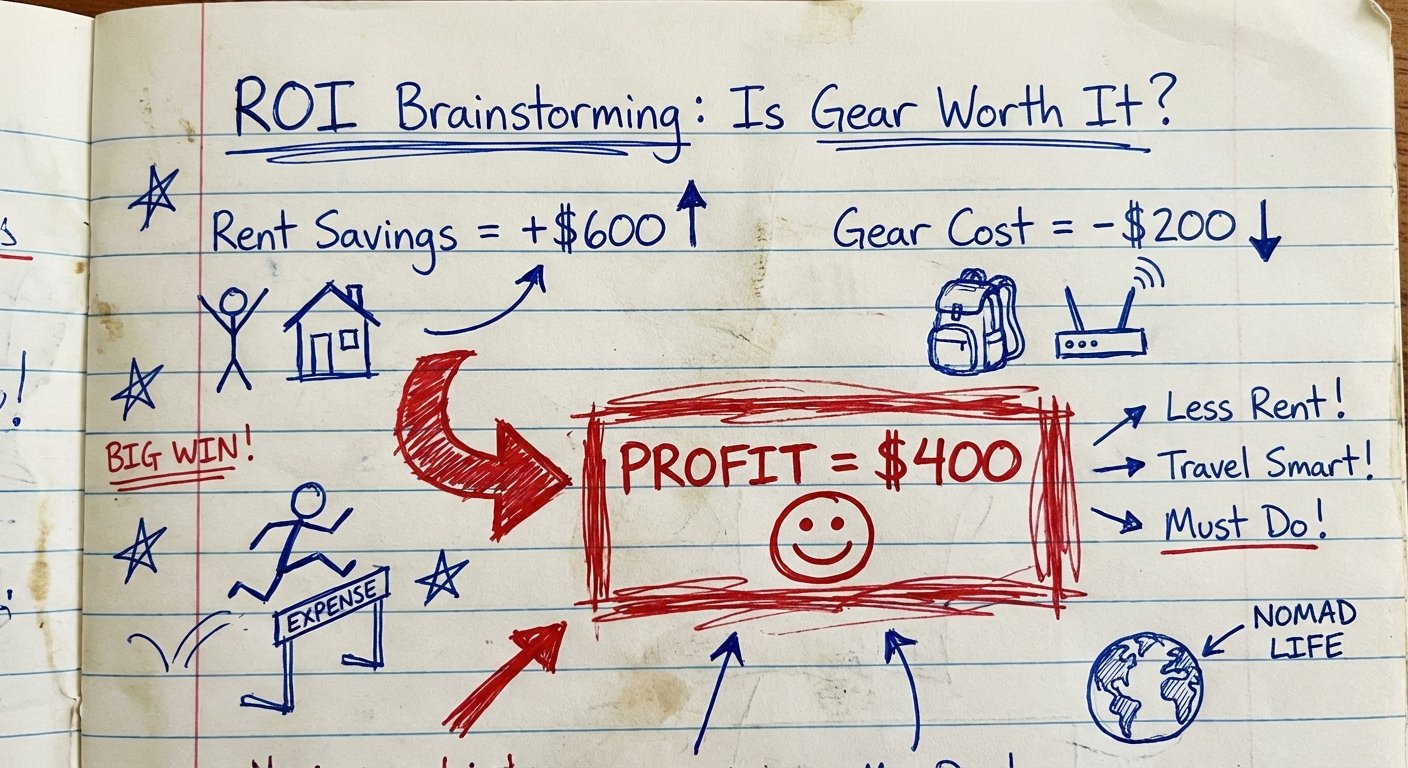
Do not complain to the host. Fix it yourself. You just saved $600 on rent. Reinvest $200 of that into mobile gear that you carry with you forever.
The biggest risk in a cheap Southeast Asian Airbnb is a dead zone in the apartment or a shared router that drops out when it rains. As a digital nomad, internet is your oxygen. No internet, no money.
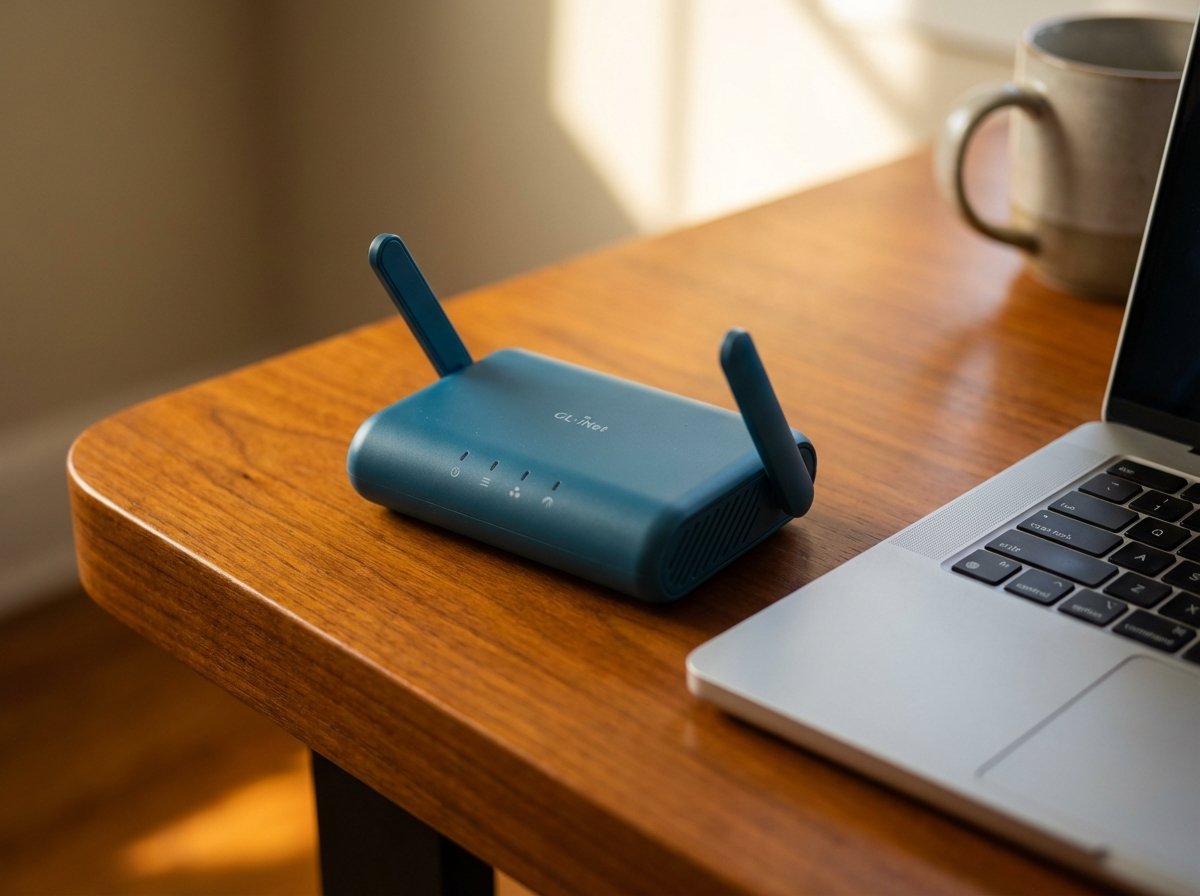
Instead of demanding the host upgrade their entire infrastructure, carry a travel router. I use the GL.iNet Beryl AX. You plug it directly into the wall or the host’s modem, and it creates a private, hyper-fast Wi-Fi 6 network just for your devices. It bypasses hotel captive portals and secures your connection. It usually costs between $90 and $120.
Next, the desk. Cheap Airbnbs have terrible ergonomics. Sitting on a wooden dining chair staring down at a 13-inch laptop will destroy your neck. If your neck hurts, you work less. If you work less, you make less money. Bad ergonomics is a threat to your income.
Buy a portable monitor. The ASUS ZenScreen 15.6 inch portable monitor runs off a single USB-C cable. It fits in your backpack. You set it up in the Airbnb, and suddenly you have a dual-screen command center. You can usually find the newest models for $150 to $200.
Think about the ROI here. You spend ~$300 once on a router and a screen. You save $500 a month on rent by booking places that don’t market themselves as “Premium Nomad Hubs.” You are cashflow positive by Month 1.
Step 7: The Month 2 Rollover (Going Off-Platform)
If you stay in a city for more than a month, you should never use Airbnb for Month 2.
Airbnb charges the guest a service fee of around 14%. They also charge the host a fee of 3%. That means 17% of the transaction is being evaporated by the middleman.
Once you are in the apartment, look around. Is it clean? Does the AC work? Is the host responsive? If yes, text them directly on WhatsApp 10 days before your month ends.
Say this: “Hi, I love the place and want to stay another month. If I pay you directly in cash or via bank transfer, can we drop the price to $550? It saves us both the Airbnb fees.”
Hosts love this. They get cash instantly without waiting for Airbnb payouts. You save another 10-15%. You have effectively removed the platform tax.
To do this efficiently, you need to be able to transfer money without getting crushed by international wire fees. Never use your traditional US or UK bank to wire money to a Thai or Indonesian bank account. They will charge you a $30 wire fee plus a 3% hidden exchange rate markup. Use Wise. It gives you the real mid-market exchange rate and lets you transfer directly into the host’s local bank account in seconds. Try Wise.
Step 8: Cover Your Downside Risk
When you optimize for cheap rent and off-platform deals, you assume more personal liability.
If you break an ankle stepping off a curb in Hanoi, or get dengue fever in Bali, your cheap rent means nothing. Medical bills will wipe out months of savings. Do not be stupid to save a penny.
Traditional health insurance back home does not cover you when you are in Southeast Asia. You need travel medical insurance built specifically for nomads. SafetyWing is essentially a subscription model for your medical safety. You pay a flat monthly rate, and if you end up in a Thai hospital, you don’t go bankrupt. It is basic risk management. Protect the machine that makes the money (you). Get SafetyWing before you fly.
The Final Breakdown
Let’s review the system.
- Stop searching for 2 weeks. Always search for exactly 28 days to trigger the algorithm discount.
- Stop caring about reviews. Target brand new listings where the host has zero leverage and needs momentum.
- Stop begging. Send a business proposal. State your budget firmly and be willing to walk away.
- Stop paying the tourist tax. Move 15 minutes outside the main hub and rent a scooter.
- Stop whining about bad Wi-Fi. Buy a GL.iNet travel router and build your own infrastructure.
- Stop paying fees on renewals. Go off-platform for Month 2 using Wise to send local currency.
Business is about managing your P&L (Profit and Loss). If your income stays exactly the same, but you drop your housing costs from $1,500 to $600 by using a few scripts and doing some math, you just gave yourself a $900-a-month raise.
That is $10,800 a year in pure, untaxed profit directly into your pocket.
Execute the system. Keep your money.