This post contains affiliate links. If you purchase through our links, we may earn a small commission at no extra cost to you.
Stop Burning Cash on “Cheap” Bali Villas
Bali in 2026 is not the Bali of 2016.
The secret is out. Traffic in Canggu is a nightmare. Rents are sky-high. Construction noise is everywhere. The days of getting a quiet, pristine villa for $400 a month are dead. If you find one, it’s cheap for a reason. The internet will drop. The power will cut. The roosters will scream through your 8 AM sales call.
Most digital nomads come to Bali and play house. They rent a cheap villa. They spend three days fighting with the local internet provider. They spend two hours a day sitting in traffic trying to get to a decent cafe. They ruin their backs working from a bamboo chair. They think they are saving money.
They are wrong. They are hemorrhaging money in the form of lost time and lost productivity.
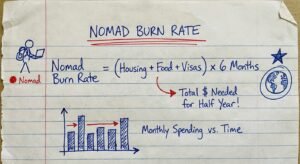
You are a business. Your time has a fixed hourly rate. If your hourly rate is $50, and you waste 10 hours a week dealing with basic life logistics, you are paying a $2,000 “cheap tax” every single month.
This is why high-performers don’t rent random villas. They buy back their time. They use coliving spaces.

The ROI of a Premium Coliving Space
Coliving is simple. You pay one bill. You get a private bedroom, an ergonomic workspace, enterprise-grade Wi-Fi, cleaning, and a built-in network. Zero setup time. Minute one, you sit down and make money.
Let’s do the math on a “cheap” villa setup versus a premium coliving space.
The Cheap Villa Route:
- Rent: $800/month
- Coworking pass (because your villa Wi-Fi sucks): $150/month
- Scooter rental (to commute): $120/month
- Gas and parking: $30/month
- Lost time commuting (20 hours at $50/hr): $1,000/month
- Lost time managing bills/cleaning (5 hours at $50/hr): $250/month
Total real cost: $2,350 per month.
The Coliving Route:
- Premium Coliving Rent (everything included): $1,400/month
- Commute time: 0 seconds.
- Setup time: 0 seconds.
Total real cost: $1,400 per month.
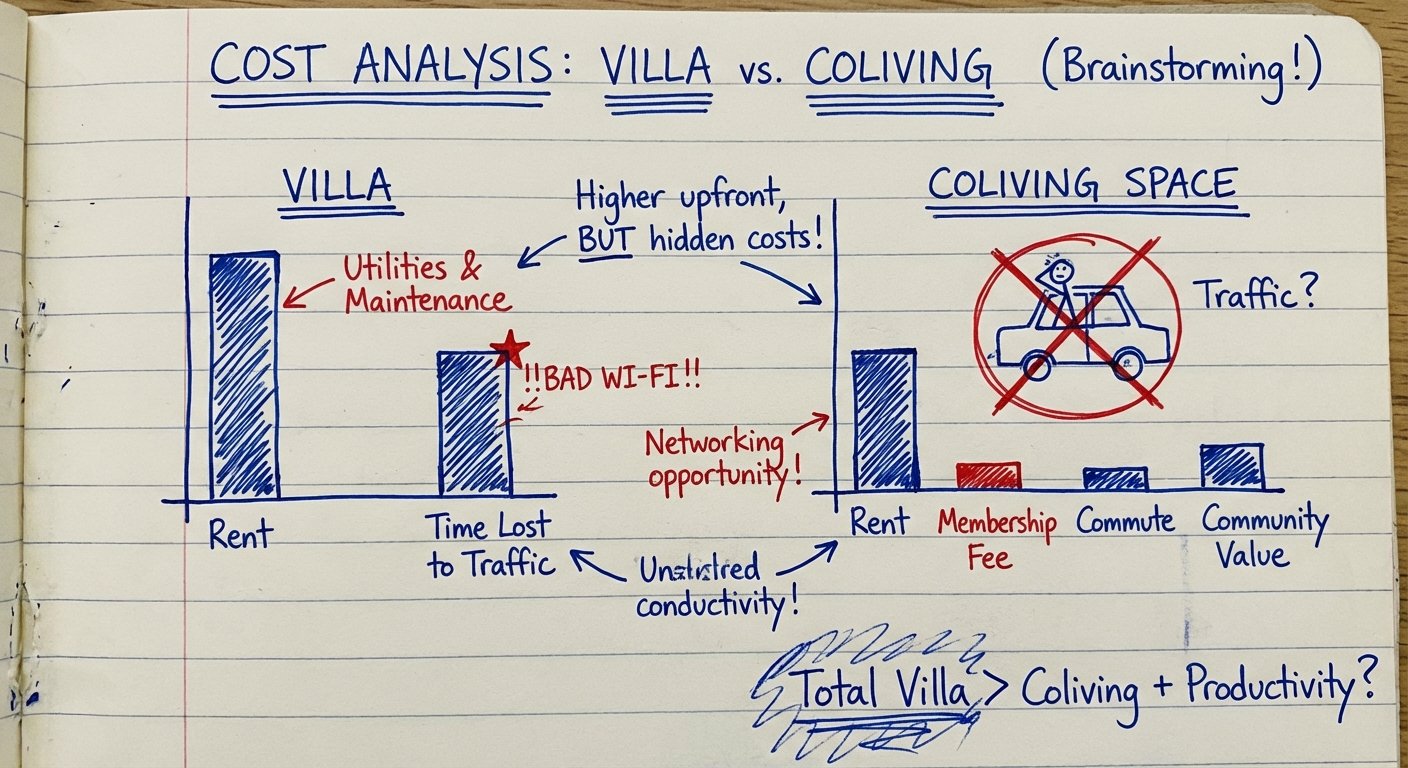
You don’t save money by paying less rent. You save money by eliminating friction. You buy an environment that guarantees output. If a $1,400 coliving space helps you close one extra client because your video didn’t freeze, the space pays for itself. End of discussion.
The 4 Best Coliving Spaces in Bali for 2026
Most coliving spaces are adult frat houses. They sell “community” but deliver hangovers. If you want to party, go to a hostel. If you want to build a business, scale an agency, or write code without distractions, you need a professional environment.
Here are the only four coliving spaces in Bali worth your money in 2026.
1. Outpost (Canggu & Ubud)
Outpost is the veteran in the space. They survived the pandemic. They survived the tourist booms. They know exactly what remote workers need.
The ROI: Outpost filters out the backpackers through pricing and marketing. The people here are usually in their late 20s to 40s. They run real businesses. They aren’t trying to “find themselves.” They are trying to find their next Q3 growth metric. The networking alone is worth the rent.
The Setup: Rooms are private, quiet, and heavily air-conditioned. The coworking space is attached. The chairs are Herman Miller clones. The backup generators kick in within 3 seconds of a power cut.
2. Tribal Bali (Pererenan)
Canggu is chaotic. Pererenan is the next village over. It’s what Canggu was five years ago. Tribal Bali was built from the ground up for remote work.
The ROI: Huge, massive desks. Most cafes give you a tiny round table where your laptop hangs off the edge. Tribal gives you massive slabs of wood. You can spread out a monitor, a laptop, an iPad, and a notebook. They understand space. The coliving rooms are sleek, minimalist, and built for sleep.
The Setup: The food is actually good. You don’t need to leave the building to get 40 grams of protein. Less time hunting for food equals more time working.
3. Livit Hub (Sanur)
Sanur is on the east coast. It’s the “sleepy” side of Bali. That means zero traffic, zero beach clubs blasting bass at 2 AM, and a much higher quality of life for focused work.
The ROI: Livit Hub is famous for housing tech teams and serious developers. If you need to lock yourself in a room and sprint for 30 days to launch a product, this is where you go. Distractions are near zero.
The Setup: Ergonomics here are top-tier. Standing desks, multiple monitors available for rent, soundproof call booths. It operates like a Silicon Valley office dropped onto a tropical island.
4. Habitat Village (Uluwatu)
Uluwatu is south. It’s hilly, the beaches are better, and the fitness culture is elite. Habitat Village caters to the high-performer who cares about health as much as revenue.
The ROI: Proximity to world-class gyms and recovery centers. If your routine is work, lift, ice bath, work—this is your spot. You don’t have to navigate 40 minutes of traffic to get to the gym. Everything is in your bubble.
The Setup: Modern, concrete, brutalist design. Fast internet. High-level crowd. It’s expensive, and it should be. The price is the filter.
The Gear You Need to Protect Your Output
Even in premium spaces, you need redundancies. Bali infrastructure is fragile. A single rogue backhoe can sever an optic cable and take out the internet for a whole neighborhood. You need your own backup systems.
The Hardware
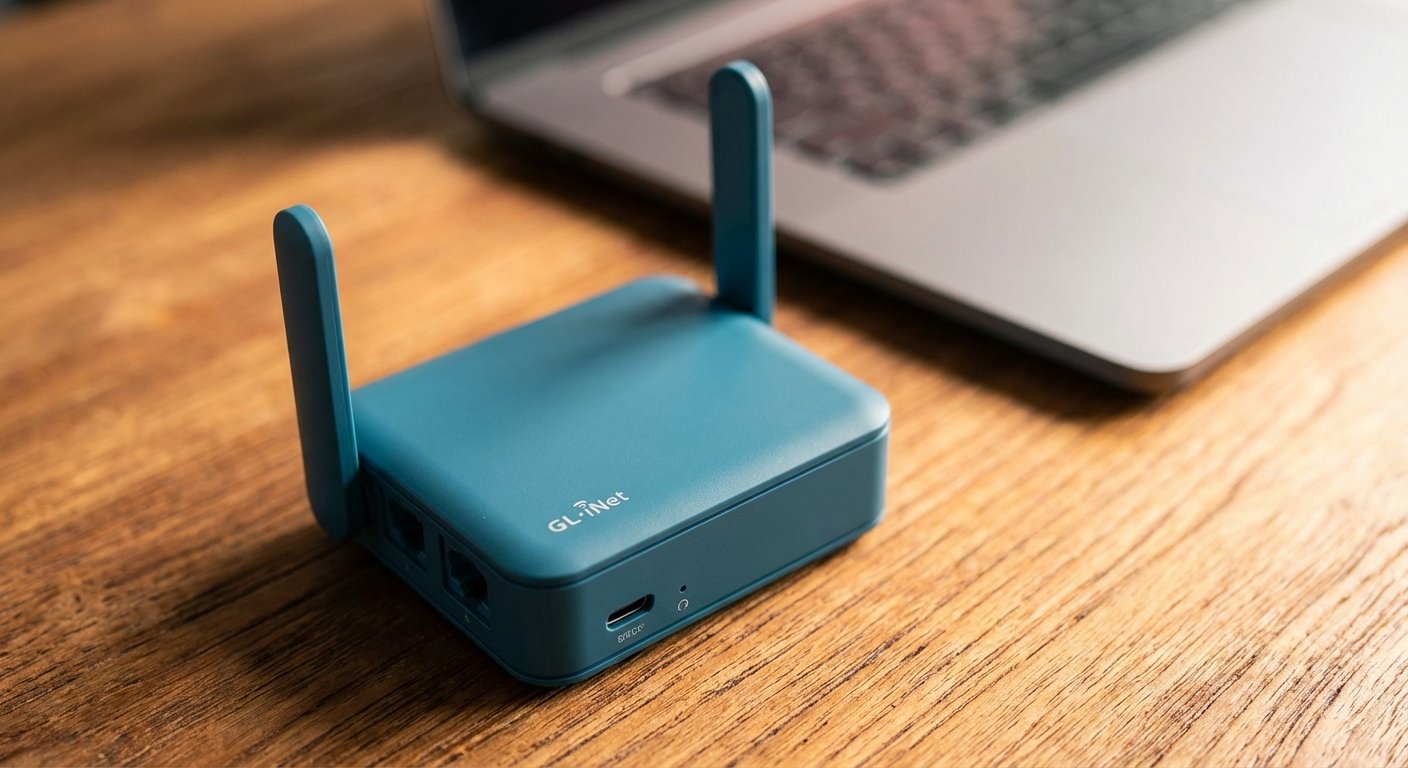
Do not rely entirely on the coliving Wi-Fi. When the whole building gets on a Zoom call at 9 AM, bandwidth throttles. You need a dedicated travel router.
I recommend the GL.iNet Beryl AX. It’s a pocket-sized Wi-Fi 6 router. You plug it into the wall, connect it to the local network or a tethered local SIM card, and it broadcasts your own private, encrypted, high-speed network. It stops your devices from fighting for bandwidth with 40 other people. It also has a built-in VPN client to encrypt your connection at the hardware level. Current price is roughly $90 – $130.
The Software
Public Wi-Fi is a hunting ground. Coworking spaces and cafes are the easiest places on earth for someone to intercept your data. If you are logging into bank accounts, Stripe, or client servers on a shared Bali network without protection, you are playing Russian Roulette with your business.
Get a VPN. Not a free one. Free VPNs sell your data. Pay for a real one. NordVPN is fast enough that it won’t throttle your video calls, and it secures your entire connection with one click. It’s a non-negotiable business expense.
The Hidden Costs of Bali (And How to Evade Them)
Living in Bali has massive upside. But it also has landmines. If you step on one, it will blow up your bank account and your business momentum. You must mitigate these risks before you land.
The Currency Trap
Everything in Bali is paid in Indonesian Rupiah (IDR). Coliving rent. Scooter deposits. Gym memberships. If you use your standard Bank of America or Chase card to pay for these, you are getting robbed. Traditional banks charge a 3% foreign transaction fee, plus they give you a terrible exchange rate. They hide a 2% margin in the spread.
That means you are paying a 5% tax on your entire life. If you spend $3,000 a month in Bali, you are handing $150 to a bank for absolutely no reason. Over a year, that’s $1,800 burned.
Stop doing this. Use Wise. It holds your money in multiple currencies and gives you the exact mid-market exchange rate. You can pay your Bali coliving rent directly in IDR via a local bank transfer from your Wise app in seconds. No hidden fees. No garbage exchange rates.

The Medical Landmines
Let’s talk about the “Bali Tattoo.” This is the massive scar people get when they burn their leg on a scooter exhaust or wipe out on loose gravel. Everyone thinks they are Valentino Rossi until a stray dog runs into the road.
Medical care in Bali is decent, but private clinics for foreigners are not cheap. A minor scooter accident can cost you $2,000 out of pocket. Dengue fever, which puts you in a hospital bed on an IV for five days, will cost you even more. If you have a medical emergency and need to be flown to Singapore or Bangkok, it’s going to cost $30,000+.
Your health insurance back home does not cover this. Credit card travel insurance usually only covers the first 30 days of a trip, and the claims process takes months of fighting.
You need dedicated nomad medical insurance. You need a policy built for people who live overseas. SafetyWing is exactly that. It works like a subscription. You pay a flat monthly fee, and it covers your medical emergencies, accidents, and hospital stays globally. If you wipe out on a scooter, they cover the hospital bill. It is the cheapest safety net you can buy for your business operations.

The 2026 Coliving Checklist
Before you book a spot, ask these questions. If the space says “no” to any of them, walk away. Your business can’t afford their incompetence.
- Do you have a backup generator? Bali’s power grid fails. A UPS battery backup for the router is not enough. The building needs a diesel generator. If the AC cuts out, your room becomes a sauna in ten minutes.
- What is the chair brand? “We have comfortable chairs” is a lie. Demand photos of the chairs. If it’s a wooden dining chair, or a cheap mesh chair from a hardware store, your back will be destroyed in a week. Look for Herman Miller, Steelcase, or high-end gaming chairs.
- Are there private call booths? Taking a sales call in a room full of other people typing is amateur. You need absolute silence to close deals.
- How far is the gym and the grocery store? Measure this in minutes, not miles. One mile in Canggu traffic can take 25 minutes. If the gym is 25 minutes away, you will lose an hour a day just commuting to lift weights. Get a coliving space where the essentials are walkable.
Pay for the Outcome
Stop thinking like a backpacker. Stop looking at the monthly price tag of a coliving space in isolation.
You are not buying a bed. You are not buying a desk.
You are buying reliable internet. You are buying uninterrupted deep work. You are buying networking opportunities with other people who are actually making money. You are buying the elimination of friction.
A $400 villa that causes you to drop a client call is the most expensive room on the island. A $1,400 coliving space that allows you to scale your income without stress is a bargain.
Do the math. Protect your downsides with the right insurance and the right tech. Book the premium space. Then sit down, shut up, and get to work.