
This post contains affiliate links. If you purchase through our links, we may earn a small commission at no extra cost to you.
The Truth About Chiang Mai in 2026
Most digital nomads are broke. They fly to Chiang Mai, rent a $250 condo, and spend their days drinking $1 lattes while pretending to build a business. They isolate themselves to save pennies, and as a result, they make pennies.
I don’t care about saving pennies. I care about making dollars. ROI is the only metric that matters.
Chiang Mai is still the remote work capital of the world in 2026. But the game has changed. The days of working from noisy cafes on plastic chairs are over. If you want to scale a business, you need infrastructure. You need high-speed internet. You need an ergonomic setup. Most importantly, you need to be around killers—people who are actually making money, not just talking about it.
That is why coliving is the only logical choice for a serious entrepreneur moving to Thailand. Yes, it costs more upfront than a cheap apartment. But the ROI of the network, the focus, and the environment will pay for the room ten times over.

The Trap of Cheap Rent
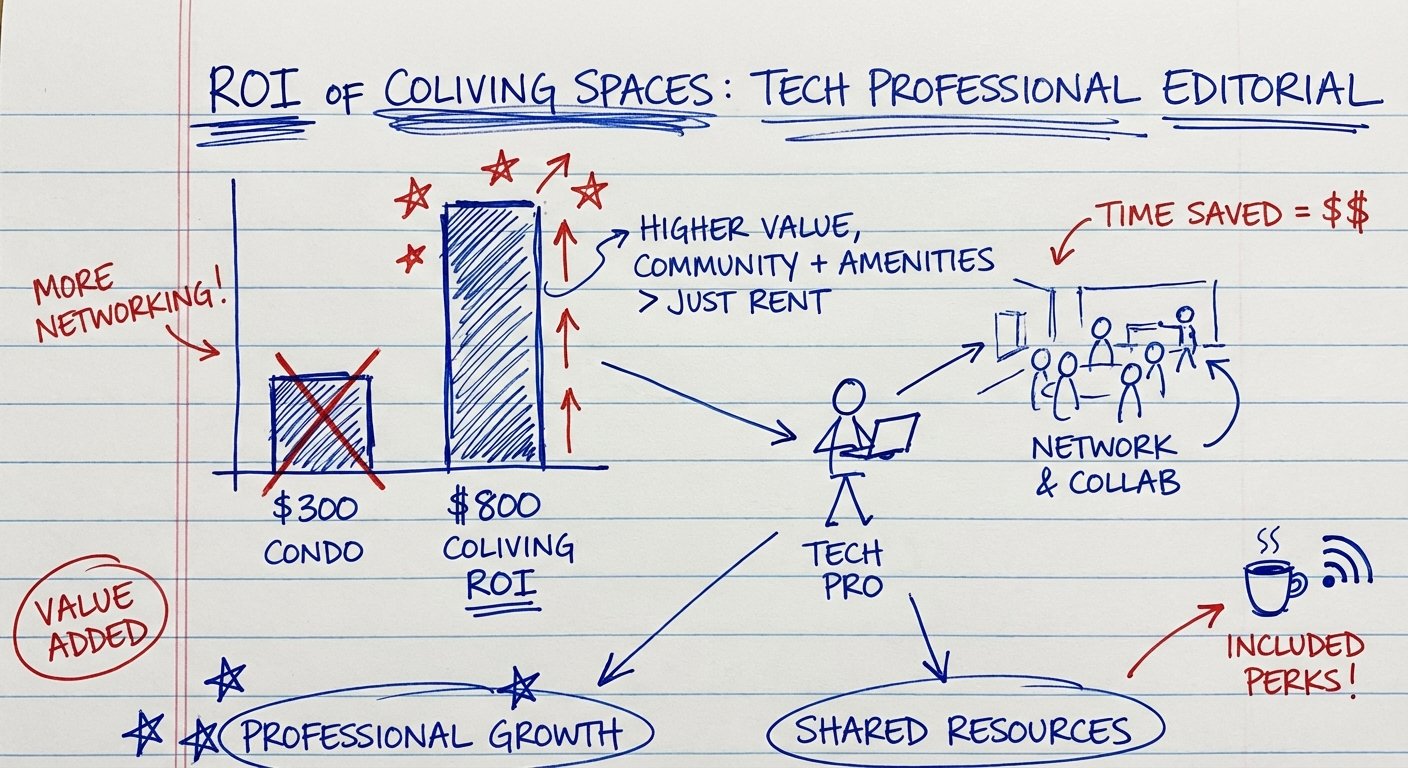
Let’s do the math. You can rent a studio in the Nimman neighborhood for $300 a month. It sounds like a steal. But let’s look at the hidden costs.
You work from your room. You get lonely. You go to a cafe. The Wi-Fi drops. You buy two coffees just to use the table. Your back hurts because you are hunched over a tiny table. You go out at night to meet people, but you only meet backpackers who want to talk about finding themselves. You waste time. You lose focus. Your business stagnates.
Now look at a premium coliving space. It costs $800 a month. That is a $500 difference. But what do you get for that $500?
- Zero commute to a dedicated, quiet workspace.
- Ergonomic chairs that save you thousands in future chiropractic bills.
- Redundant fiber-optic internet. Zero downtime.
- Instant access to a vetted network of other business owners.
If being in a room with other founders helps you close one extra client, or launch one feature a week faster, that $500 premium just made you $5,000. It is a no-brainer. Stop stepping over dollars to pick up dimes.
The 4 Best Coliving Spaces in Chiang Mai for 2026
Not all coliving spaces are equal. Most are just glorified hostels with beanbag chairs. You don’t want to live with backpackers. You want to live with operators. Here are the only four spaces worth your money this year.
1. Alt_ChiangMai (The Premium Choice)
This is the gold standard. Located just inside the Old City, Alt_ChiangMai was built specifically for people who actually work. They didn’t just throw desks into a hotel. They engineered the space for productivity.
The Vibe: Focused, mature, and professional.
The Math: Rooms run between $700 and $1,100 a month depending on the season and room size. It is at the top end of the Chiang Mai market. But the ROI is massive. The people paying $1,000 a month in Thailand are not scraping by. They are running successful agencies, SaaS companies, and e-commerce brands. These are the people you want to eat breakfast with.
The Verdict: If you are already making money and want to scale, go here. The networking alone will pay for your rent.
2. Hub53 (The Transition Space)
Hub53 is located just outside the Nimman area. It is a massive complex. They have a huge coworking space, private offices, and a variety of room types.
The Vibe: Energetic, slightly younger, lots of first-time nomads.
The Math: Rooms start around $400 to $600 a month. It is incredibly affordable for what you get. The coworking space is massive, meaning you will always find a desk.
The Verdict: If you are just starting out, have a tight runway, but still understand the value of a dedicated work environment, Hub53 is your best bet. It gets you out of the isolation trap without draining your savings.
3. Yellow Coliving (The Web3 & Tech Hub)
Yellow started as a massive coworking space in Nimman and expanded into the coliving game. They have positioned themselves as the tech and crypto hub of Chiang Mai.
The Vibe: Fast-paced, tech-heavy, slightly chaotic.
The Math: Expect to pay around $600 to $800. The value here is entirely in the niche. If you are building software or working in blockchain, this is where your potential partners and investors are hanging out.
The Verdict: Don’t go here if you run a dropshipping store. Go here if you write code or build tech infrastructure. Proximity to your specific industry is a massive leverage point.
4. The August (The Quiet Performer)
Located in the Santitham neighborhood, The August is for the minimalist. It doesn’t have the loud parties of Nimman or the tourist traffic of the Old City.
The Vibe: Deep work, quiet, routine-oriented.
The Math: Around $500 a month. Santitham is cheaper than Nimman, so your money goes further. The local food is better and cheaper, too.
The Verdict: If your current business phase requires 12-hour days of uninterrupted focus—like writing a book or coding an MVP—this is the place. It removes all distractions.
The Hardware You Need to Survive Coliving
Coliving is great, but it is still shared space. People make noise. Desks are not perfectly tailored to your body. If you want to perform at a high level, you cannot rely on the default equipment provided by the space. You need your own gear. Treat your setup like a professional athlete treats their shoes.

Noise Is The Enemy: Buy Good Headphones
You cannot control when the guy next to you decides to take a loud Zoom call. You can only control your environment. Buy the best noise-canceling headphones on the market. It is not an expense. It is a productivity insurance policy.
I recommend the Sony WH-1000XM5. They block out everything. When you put them on, it is a signal to your brain (and to everyone else in the room) that you are working. Do not cheap out on $40 earbuds. They will break, they sound terrible, and they don’t block out the background chatter.
Current Price: $348 – $398
Check Price on Amazon
Protect Your Neck: Get a Laptop Stand
I see nomads all the time working 10 hours a day hunched over a 13-inch screen. It is pathetic. In five years, their businesses might be big, but their spines will be destroyed. Medical bills destroy ROI.
You need a portable laptop stand. The Roost V3 Laptop Stand is the only one you should buy. It folds up smaller than a rolled magazine, weighs almost nothing, and elevates your screen to eye level. Pair it with a cheap Bluetooth keyboard and mouse. It takes 30 seconds to set up and saves your posture.
Current Price: $80 – $90
Check Price on Amazon
The Software and Services You Need in Thailand
Your physical environment is only half the battle. Your digital and personal security in Thailand is the other half. People lose thousands of dollars because they are lazy and ignore the basics. Do not be stupid. Set up these three systems before you land at Chiang Mai International Airport.

1. Secure Your Data
Thai internet is fast. Almost every coliving space has gigabit speeds. But it is shared internet. You are logging into your bank, your Stripe account, and your server on a network shared with 50 strangers. All it takes is one compromised router, and your business data is stolen.
You need a VPN. I don’t care if you think you have nothing to hide. Your payment processors care. If Stripe sees you logging in from Thailand one day and the US the next, they will freeze your funds. A frozen Stripe account means zero revenue.
Use NordVPN. It is fast, it doesn’t throttle your connection, and it runs quietly in the background. Pay for the year upfront and forget about it.
2. Secure Your Body
This is the harsh reality: Chiang Mai has some of the deadliest roads in the world. Everyone rents a scooter. Most people have no idea how to ride one. They drive up Doi Suthep mountain, hit a patch of gravel, and end up in Chiang Mai Ram Hospital with a broken collarbone.
If you do not have health coverage, a scooter accident will drain your business runway in three days. Surgery in Thailand is cheaper than in the US, but it is not free.
You need nomad insurance. SafetyWing is designed specifically for people living this lifestyle. It operates like a subscription. You pay month-to-month, and it covers you for medical emergencies and travel delays. It costs less than your monthly coffee budget. Get it.
3. Stop Paying Stupid Bank Fees
Thai banks charge a fee of 220 THB (about $6.50) every single time you withdraw cash from an ATM. If you are withdrawing small amounts every few days, you are throwing hundreds of dollars into a fire every year. Worse, your home bank is probably giving you a terrible exchange rate on the backend.
Stop paying the idiot tax. Get a multi-currency account. You want to hold your money in USD or EUR, convert it to Thai Baht at the mid-market rate, and pay locally without friction.
Wise is the only tool you need for this. Open an account, get the physical card, and transfer your living expenses for the month into Baht in one go. It takes five minutes to set up and saves you a massive percentage on currency conversion.
The Daily Routine for Maximum Coliving ROI
You have the room. You have the gear. You have the insurance. Now you have to actually execute. The biggest danger of living in Chiang Mai is the comfort. It is too easy to live a soft life. Massages are $8. Pad Thai is $2. You can survive on very little work.
Survival is for losers. You are here to win.
If you want to get a 10x return on your coliving investment, you need a ruthless daily routine. You do not wake up and “see how you feel.” You operate like a machine.
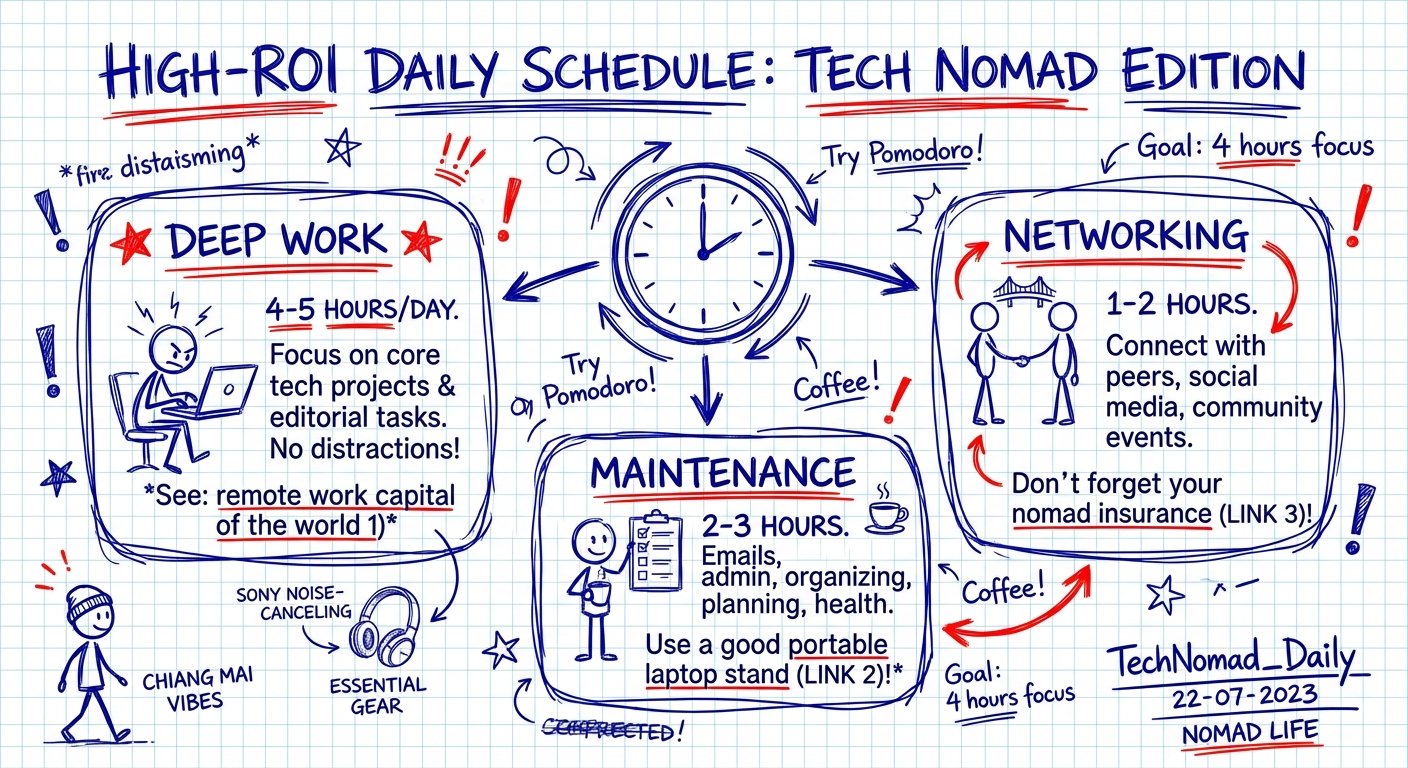
Phase 1: The Deep Work Block (8:00 AM – 12:00 PM)
Wake up. Drink water. Go straight to the coliving workspace. Do not check your phone. Do not look at Instagram. Put your Sony headphones on. This is your high-leverage time.
Spend these four hours doing the thing that actually moves the needle. If you own an agency, this is sales outreach. If you run a SaaS, this is coding. This is not for answering emails or tweaking your logo. This is for revenue-generating activities.
Phase 2: The Maintenance Block (1:00 PM – 3:00 PM)
Take an hour to eat. Chiang Mai food is incredible and cheap. Get out of the building. Eat local.
Come back to the workspace. This is when you do the low-leverage work. Answer emails. Pay contractors. Fix bugs. Do the admin work that keeps the business running but doesn’t necessarily grow it.
Phase 3: The Leverage Block (4:00 PM – 6:00 PM)
This is why you paid for a premium coliving space. Take your headphones off. Go to the communal kitchen or the lounge area. Talk to people. Find out what they are working on.
Do not pitch them your services immediately. Provide value. If they have a problem with Facebook ads and you know Facebook ads, help them fix it for free. Building goodwill with other competent founders is the highest ROI activity you can do. One solid introduction from a guy down the hall can double your business.
Burning Season: The Elephant in the Room
I cannot write about Chiang Mai without mentioning the smoke. From late February to early April, the farmers in Northern Thailand burn their fields. The air quality becomes toxic. It is not an exaggeration. The PM2.5 levels go off the charts.
Do not stay in Chiang Mai during burning season. Period.
It will ruin your health. You will feel lethargic, you will get headaches, and your productivity will plummet. This is the beauty of the nomad lifestyle—you can leave.
When February hits, take your laptop and fly to the Thai islands, Vietnam, or Japan. A good coliving space in Chiang Mai will often let you pause your contract or offer flexible terms. Plan your year around this. Be in Chiang Mai from October to January, and leave when the smoke arrives.
Make a Decision
Information without execution is poverty. You now know exactly why Chiang Mai is still the best place to build a business. You know that cheap apartments are a trap. You know exactly which coliving spaces to book, what gear to buy, and what software to use to protect yourself.
The only thing left is the friction in your own head.
Stop over-researching. Stop watching YouTube vlogs of guys drinking out of coconuts. Pick a date. Book a room at Alt_ChiangMai or Hub53. Buy your flight. Pack your laptop. Show up, put your head down, and do the work.
The environment will support you. The network is there. The ROI is waiting. Now go make some money.