
This post contains affiliate links. If you purchase through our links, we may earn a small commission at no extra cost to you.
The Instagram Nomad Lie
Most digital nomads are broke.
They choose a city based on an Instagram reel. They fly to a beach in Mexico or a jungle in Costa Rica. They rent a $2,500-a-month shack that gets power outages twice a week. They sit on a hammock trying to upload a 50MB file to a client, but the internet cuts out.
The client gets mad. The contract gets canceled. They run out of money. They fly home.
That is not a business. That is an expensive, stressful vacation.
If you work online, you are playing a game of geographic arbitrage. The rules are simple. You earn strong currency (like US Dollars). You spend weak currency. You keep the difference.
But there is one hard constraint: Infrastructure.
If your internet goes down, you make zero dollars. If your Zoom calls lag, you look like an amateur. Clients fire amateurs. Fast WiFi is oxygen for your business. Cheap rent is the margin that makes you rich.
Here are the best cities for digital nomads in 2026. They have lightning-fast internet. They cost less than $1,500 a month to live like a king. And they will actually help you build wealth instead of draining your bank account.
The Mathematics of Choosing a City
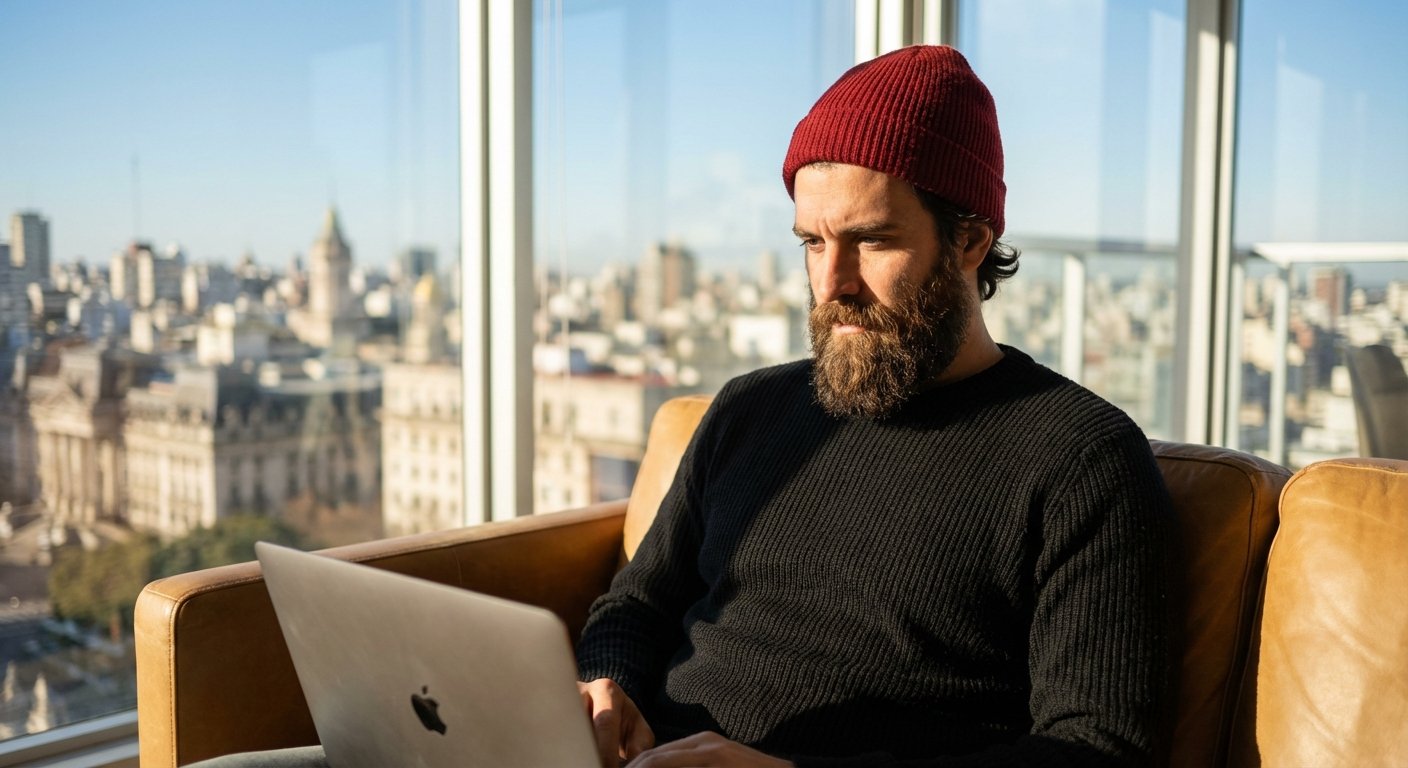
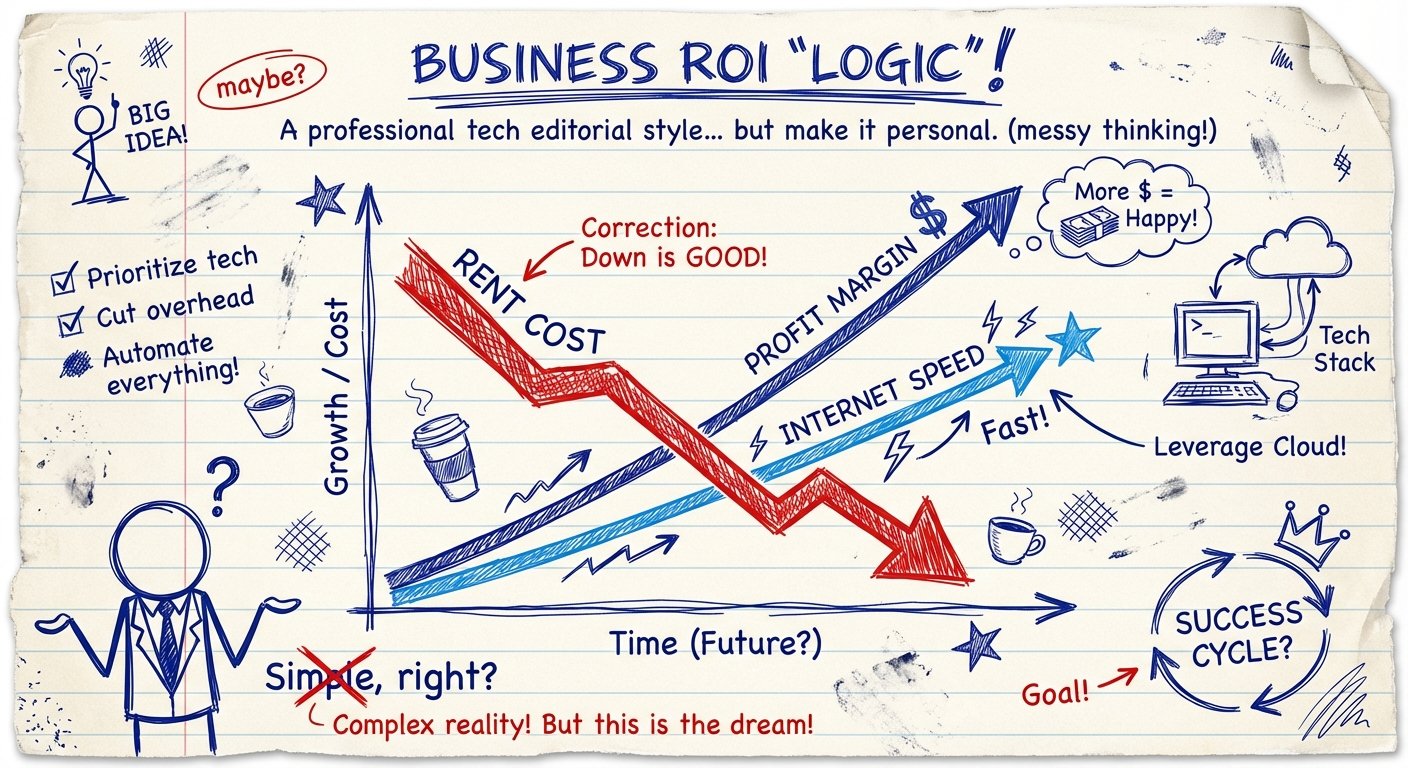
When you pick a base, you are choosing your business overhead.
In New York, your overhead is $5,000 a month just to exist. You have to make $5,000 just to break even. Your stress is high. Your margin is zero.
If you move to a smart nomad city, your overhead drops to $1,000. If you make $5,000, you now have $4,000 in pure profit every single month to invest.
But you can’t just pick the cheapest place on earth. If you go to a village with zero infrastructure, you can’t work.
Here is my criteria for a high-ROI city in 2026:
- Internet Speed: Must consistently hit over 200 Mbps. Fiber optics preferred.
- Cost of Rent: A modern, furnished 1-bedroom apartment must be under $800.
- Safety: You are carrying a $2,000 laptop. You need to walk down the street without getting robbed.
- Cafes and Coworking: You need backup spots to work when you lose your mind sitting in your apartment.
Here are the top five cities that pass the math test.
1. Bucharest, Romania: The Forgotten Giant
Bucharest is the best-kept secret in Europe.
People ignore it because it doesn’t have the Eiffel Tower. Let them. While they pay $3,000 for a closet in Paris with 20 Mbps internet, you can get a luxury apartment in Bucharest for $600.
Romania has some of the fastest internet speeds on the planet. I am talking gigabit speeds for $10 a month. It is insane.
The city is highly walkable. The cafes look like they belong in Brooklyn, but an espresso costs $2. The tech scene is massive, which means the infrastructure matches your needs.
The ROI Breakdown:
- Average Rent: $500 – $700 for a premium 1-bedroom.
- Average WiFi Speed: 500+ Mbps.
- Total Monthly Overhead: $1,200 – $1,500.
- The Verdict: If you want European lifestyle on a Southeast Asian budget, go here.
2. Buenos Aires, Argentina: The Timezone Hack
If your clients are in the United States, timezones are a massive bottleneck.
If you live in Asia, you are doing Zoom calls at 2:00 AM. That destroys your sleep. It destroys your health. It destroys your focus.
Buenos Aires is in the EST (or close to it) timezone. You work when your clients work. You sleep when they sleep.
The cost of living right now is practically a glitch in the matrix if you earn dollars. Because of the currency exchange rates, you can eat world-class steak dinners and drink premium wine for $15.
More importantly, the top neighborhoods (Palermo, Belgrano) have dense fiber-optic networks.
But to make this work, you need to manage your money correctly. Do not bring a traditional bank card to Argentina. You will get crushed by awful exchange rates and massive ATM fees. You need a multi-currency account. I use Wise to hold my money, convert it at the mid-market rate, and avoid getting screwed by banks. Stop giving your money to traditional banks.
The ROI Breakdown:
- Average Rent: $600 – $800 in Palermo.
- Average WiFi Speed: 150 – 300 Mbps.
- Total Monthly Overhead: $1,000 – $1,300.
- The Verdict: The ultimate base for US-client businesses.
3. Kuala Lumpur, Malaysia: Discount Luxury
Most people go to Bali. Bali has terrible traffic, unstable internet, and overcrowded cafes.
Smart people go to Kuala Lumpur (KL).
KL offers you a high-end corporate lifestyle for the price of a mid-western US trailer park. You can rent a high-rise condo on the 40th floor with a rooftop infinity pool, a full commercial gym, and 24/7 security for $700 a month.
The internet is flawless. They have widespread 5G and massive fiber networks.
English is spoken everywhere. The public transit actually works. You have massive air-conditioned malls with dedicated coworking spaces. It is a city built for people who want to get work done, not just take photos for Instagram.
The ROI Breakdown:
- Average Rent: $600 – $800 for a luxury high-rise.
- Average WiFi Speed: 300+ Mbps.
- Total Monthly Overhead: $1,200 – $1,600.
- The Verdict: The highest standard of living per dollar spent.
Your Non-Negotiable Tech Stack
Do not trust Airbnb hosts.
A host will tell you the WiFi is “fast.” Their definition of fast is being able to load Netflix. Your definition of fast is uploading a 4GB video file while on a video call. These are not the same.
If you rely entirely on the router in the wall of your rental, you are playing Russian Roulette with your income.
You need to control your own connection.
The Travel Router
Every time you arrive at a new apartment, the provided router is usually a cheap piece of plastic from 2014. It drops connections. It overheats.
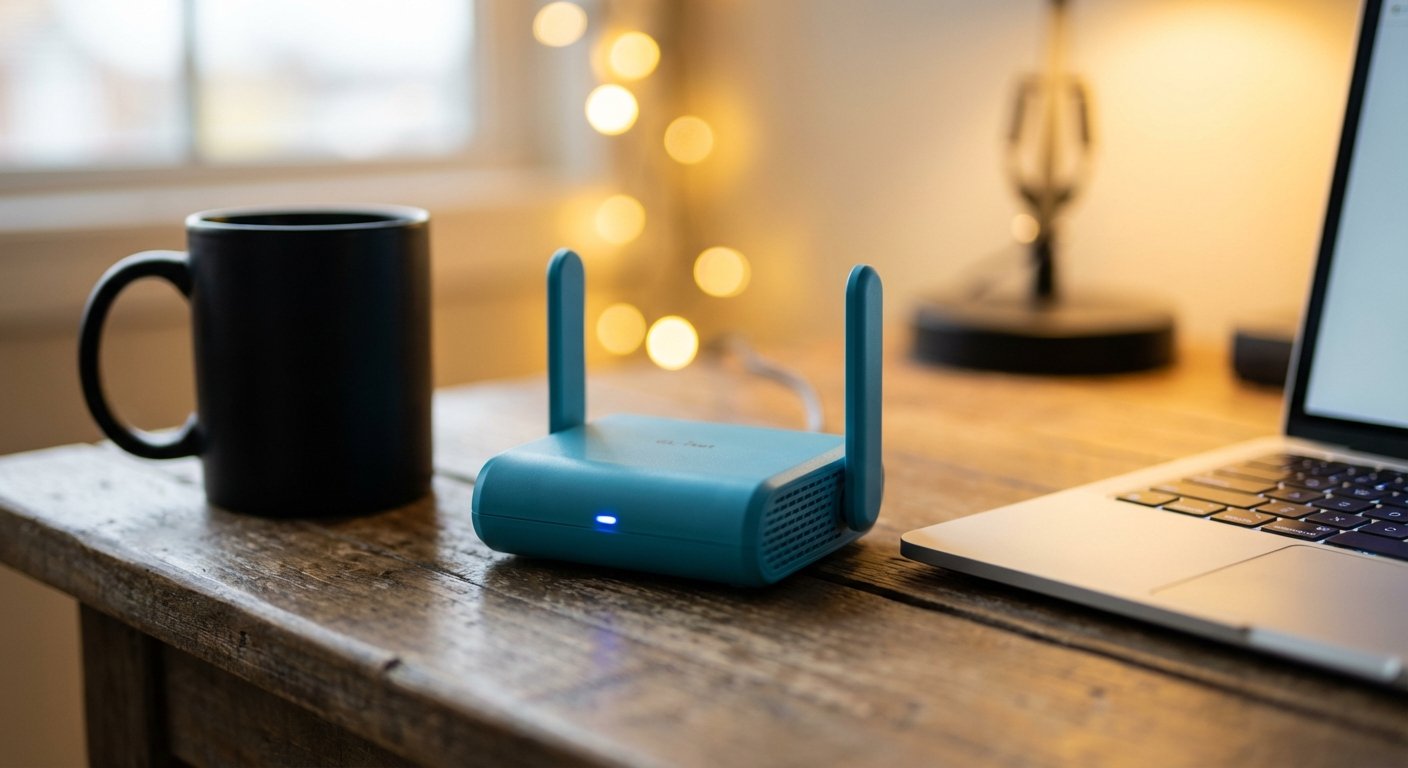
You need a dedicated travel router. You plug this into the Airbnb modem, and it broadcasts your own private, encrypted Wi-Fi 6 network. It stabilizes the connection. It acts as a firewall.
Get the GL.iNet Beryl AX. It fits in your palm. It runs Wi-Fi 6. It can hit gigabit speeds. It usually costs between $90 and $130 on Amazon. It will pay for itself the first time it prevents a dropped client call.
The Massive Power Bank
Power grids go down. It happens in Europe. It happens in Asia. It happens everywhere.
When the power dies, the WiFi dies. Unless you are prepared.
If you have a massive power bank, you can charge your laptop, run a mobile hotspot from your phone, and keep working while the rest of the city goes dark. Time is money. You can’t tell a client, “Sorry, the power went out.” They don’t care. They just want the work done.
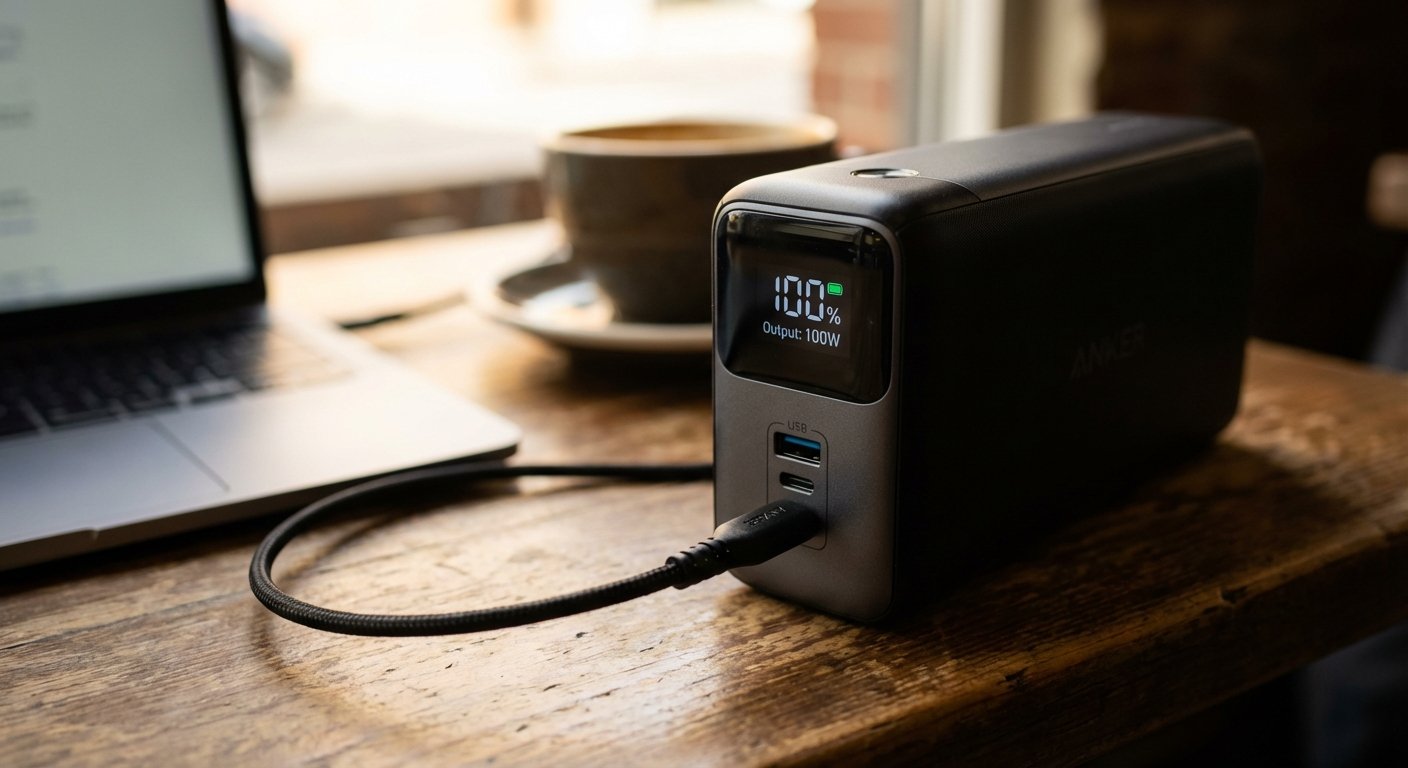
Buy the Anker Prime 27,650mAh Power Bank. It outputs 250W. It can charge a MacBook Pro to 50% in under 30 minutes. It costs around $150 to $180. It is a business insurance policy in your backpack.
Protecting Your Ass(ets)
Making money is only half the equation. Keeping it is the other half.
When you travel, your risk exposure skyrockets. You are sitting in cafes using public WiFi. You are eating foreign food. You are riding on scooters in chaotic traffic.
If you ignore risk, it will bankrupt you.
Stop Getting Your Data Stolen
Working from a cafe in another country means you are connecting to open, unencrypted networks. Hackers love this. They sit in the same cafe, run a simple script, and steal your passwords, client data, and banking logins.
If your client data gets breached, your business is dead.
You need a VPN running at all times. No exceptions. It encrypts your traffic so no one can intercept it. Do not use a free VPN. Free VPNs sell your data. Use NordVPN. It’s fast, it doesn’t throttle your speed, and it costs less than a cup of coffee per month.
Stop Risking Medical Bankruptcy
A lot of nomads have no health insurance. They think they are invincible because they do yoga and take supplements.
Then they get hit by a scooter in Thailand. The hospital bill is $40,000. They have to start a GoFundMe to pay for their surgery. That is pathetic.
Your business relies on you being alive and functional. You must hedge against physical injury. Traditional insurance from your home country usually won’t cover you abroad. You need nomad medical insurance.
I use SafetyWing. It’s built for nomads. It covers you in almost every country. It operates like a subscription—you pay roughly $50 to $60 a month, and if you get hit by a bus or get dengue fever, you don’t go bankrupt.
4. Tirana, Albania: The Rising Star
Western Europe is too expensive. The Schengen Zone limits your stay to 90 days.
Tirana solves both problems.
Albania is outside the Schengen zone. Americans can stay for a full year visa-free. It is incredibly cheap, and the internet infrastructure is shockingly good. They bypassed legacy copper wire systems and went straight to modern fiber.
Tirana is rugged, but it is rapidly modernizing. New coworking spaces are opening every month. A massive espresso is $1.50. You can get a massive steak dinner for $12.
The ROI Breakdown:
- Average Rent: $400 – $600.
- Average WiFi Speed: 200+ Mbps.
- Total Monthly Overhead: $900 – $1,100.
- The Verdict: The cheapest place in Europe to grind and save cash.
5. Chiang Mai, Thailand: The Reliable Factory
I can’t write a list without Chiang Mai. It is the undisputed capital of the digital nomad world.
Yes, it’s cliché. Yes, every crypto-bro and dropshipper is there. But they are there for a reason: The math works.
Chiang Mai is an absolute machine for productivity. The internet is screaming fast (Thailand has some of the best 5G networks in the world). The cost of living is dirt cheap. You can eat a world-class Pad Thai for $1.50.
The real value of Chiang Mai is the friction. There is zero friction. You arrive, rent a condo in an hour, walk to a world-class coworking space (like Punspace or Yellow), and start working. You don’t waste time figuring things out.
Less friction equals more time. More time equals more output. More output equals more money.
The ROI Breakdown:
- Average Rent: $300 – $500.
- Average WiFi Speed: 400+ Mbps.
- Total Monthly Overhead: $800 – $1,200.
- The Verdict: The lowest barrier to entry. Period.
The Bottom Line
Stop treating your business like a hobby.
You don’t need to live in a $3,000 apartment in Miami or London. You don’t need to suffer with 5 Mbps internet in a beach shack in Costa Rica.
Lower your overhead. Maximize your internet speed. Protect your downside with the right gear, the right VPN, and the right insurance.
Pick one of these five cities. Pack your bag. Go print money.