
Most Digital Nomads Fail Because They Ignore Time Zones
You want the European lifestyle. But you have an American job.
Most people think this is the dream. It isn’t.
It’s a logistical nightmare if you pick the wrong city.
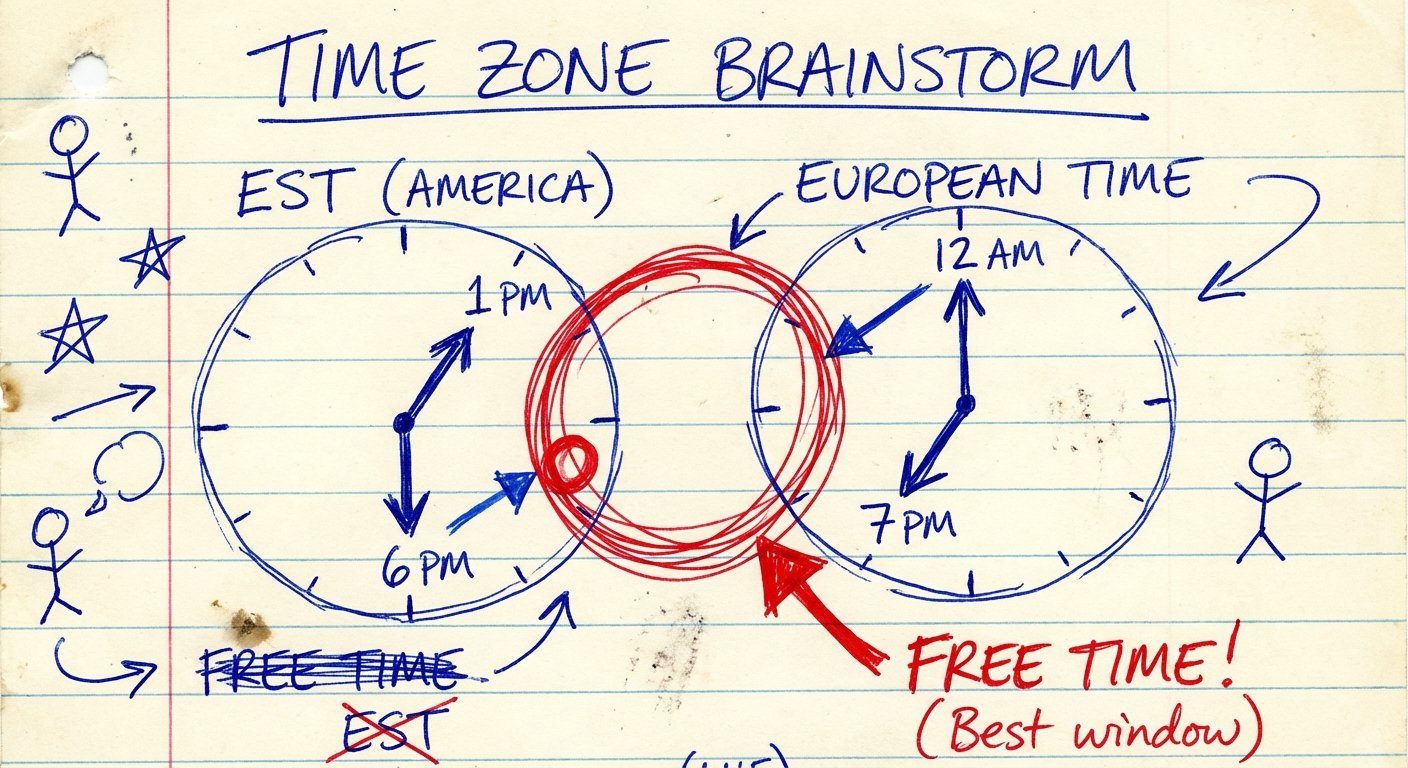
If you work New York hours (EST), you are six hours behind Europe. You clock in at 2:00 PM local time. You clock out at 10:00 PM.
If you work California hours (PST), it’s worse. You start at 5:00 PM. You finish at 1:00 AM.
If you move to a city that sleeps, you will be miserable. You will finish work, walk outside, and everything is closed. No food. No gyms. No people.
You become a prisoner in a nice apartment.
That is a low ROI on your life.
To make this work, you need Time Zone Arbitrage.
You need cities where the culture starts late and stays open later. You need places where eating dinner at midnight is normal, not weird.
I have analyzed the data. I have looked at opening hours, safety indices at 3:00 AM, and internet infrastructure reliability.
These are the only cities in Europe that make sense for US working hours.

The Criteria for High-ROI Night Shifts
Before you book a flight, understand the metrics.
A “pretty” city is useless if the Wi-Fi drops at midnight or if you can’t buy groceries after your shift.
Here is what you look for:
- Late Dinner Culture: If kitchens close at 9:00 PM, do not go there. You will starve or get fat on 7-Eleven snacks.
- 24/7 Infrastructure: Gyms. Coworking spaces. Pharmacies. If these aren’t open 24 hours, the city is not viable.
- Safety at Night: You will be walking home at 2:00 AM. In some cities, this is suicide. In others, it’s safer than walking in San Francisco at noon.
- The “Vibe” Shift: You want a city where being awake at 1:00 AM doesn’t make you a pariah.
1. Madrid, Spain: The King of Late Nights
If you work US hours, Spain is not just good. It is optimal.
Madrid does not wake up until 10:00 AM. They do not eat lunch until 2:00 PM. They do not eat dinner until 10:00 PM.
If you walk into a restaurant at 7:00 PM, you will be eating alone with other tourists. The locals haven’t even left work yet.
The Schedule Align:
Working EST (2 PM – 10 PM Madrid time) puts you exactly in sync with the local rhythm.
You finish work at 10:00 PM. You go out for dinner. The streets are packed. The energy is high.
You are not the “weird night guy.” You are just on Spanish time.
The ROI:
- Cost of Living: Medium. Rent is rising ($1,200 – $1,800 for a good 1-bedroom), but food is cheap and high quality.
- Internet: Fast. Fiber is everywhere.
- Safety: Very high. Walking through Malasaña or Salamanca at 1:00 AM is perfectly safe.
The only downside is the summer heat. It gets hot. But you’ll be sleeping during the hottest part of the day anyway.
2. Belgrade, Serbia: The Underrated Asset
Most people sleep on Belgrade. That is a mistake.
It is not in the Schengen Zone. This is huge for Americans. You can stay here for 90 days without eating into your 90-day EU allowance.
Belgrade is a 24-hour city. It has a gritty, New York vibe, but safer and cheaper.
You can find coffee shops, bakeries (pekara), and fast food open 24/7 everywhere.
The Economics:
Your dollar goes 2x further here than in Western Europe.
A luxury apartment in the city center is $800. A steak dinner is $20.
The Night Owl Logic:
Serbians stay out late. The “Kafana” culture means bars and restaurants are bustling well past midnight, even on Tuesdays.
If you are bootstrapping a business while working a US job, go here. Keep your burn rate low. Keep your output high.
3. Lisbon, Portugal: The Safe Bet
Lisbon is crowded. It is getting expensive. But it is still on the list for a reason.
The time zone is UTC+0 (or UTC+1 in summer). This is one hour closer to the US than the rest of Europe.
The Math:
If you work 9-5 New York time, in Madrid that is 3 PM – 11 PM.
In Lisbon, that is 2 PM – 10 PM.
That one hour matters. It gives you an extra hour of “life” after work before places close.
Lisbon has pivoted hard toward Digital Nomads. This means infrastructure.
- Croissant: A coworking app that lets you access spaces all over the city. Many are 24/7.
- Gyms: Chains like Fitness Hut are open late.
- English: Everyone speaks it. Zero friction.
The Warning:
Do not stay in Bairro Alto if you want to sleep. It is a party district. It is loud. Stay in Santos or Arroios. Commute to the fun.
4. Berlin, Germany: The Hardcore Option
Berlin doesn’t care what time it is.
If you finish work at 3:00 AM (PST schedule), Berlin is just getting started.
This is the best city in Europe for “extreme” night owls—people working West Coast hours.
The Culture:
Berlin is decentralized. Every neighborhood (Kiez) has late-night food. Spätis (convenience stores) are open all night and serve as social hubs.
The Infrastructure:
German internet used to be bad. It has improved. But check the speed test before you sign a lease.
The Downside:
Bureaucracy. Getting an apartment is a war. Getting registered (Anmeldung) is a war. If you are just passing through for a month or two, use Airbnb and avoid the paperwork.
Essential Gear for the Night Shift
You can move to the perfect city, but if your sleep hygiene is garbage, you will burnout.
Working at night fights your biology. You need tools to hack your circadian rhythm.
Do not be cheap with your sleep. It costs you IQ points. IQ points cost you money.
1. Total Blackout Solution
Curtains in Airbnbs are usually trash. They let light in at 7:00 AM. This wakes you up.
You need a mask that allows zero light leak. Not a cheap airline mask. A real tool.
The Manta Sleep Mask is the industry standard. It has eye cups so you can open your eyes in total darkness without your lashes touching the fabric.
Price: $30 – $35
2. Noise Control
European cities are dense. Walls are thin. If you are sleeping until 11:00 AM, the city is awake. Construction. Traffic. Neighbors.
You need Active Noise Cancellation (ANC). Apple AirPods are okay for calls. They are bad for long-term focus and silence.
The Sony WH-1000XM5 headphones are currently the best ROI for noise cancellation. They delete background drone sounds.
Price: $348 – $398

3. Lighting Control
When you work at night, standard overhead lights kill your eyes. They also mess up your melatonin production when you finally want to sleep.
You need bias lighting behind your monitor. It reduces eye strain and creates a focused environment.
The Philips Hue Play White & Color Smart Light Bar is the premium choice. It syncs with your computer. It’s expensive, but it lasts forever.
Price: $150 – $170 (Double Pack)
The “Social Life” Strategy
Moving to Europe to sit in your room is stupid. You could do that in Ohio for cheaper.
You need a system to meet people despite your weird hours.
Here is the playbook:
1. The “Morning” Coffee
Your morning is 12:00 PM. This is everyone else’s lunch break.
Do not eat breakfast at home. Go to a high-traffic cafe. This is your social window.
2. The Weekend Sprint
Monday through Thursday, you are a monk. You work. You gym. You sleep.
Friday and Saturday, you adjust. You stay out until 4:00 AM. In Madrid or Berlin, this is easy.
This allows you to sync with the “day walkers” on the weekends without wrecking your sleep schedule.

The Cost of “Cheap” Cities
I see nomads go to cheap villages in Bulgaria or Albania to save money.
They save $500 a month on rent.
But they lose:
- Networking opportunities: High-value people congregate in major hubs.
- Reliability: Power outages cost you more than rent if you miss a client call.
- Sanity: Isolation kills productivity.
Do not optimize for the lowest cost. Optimize for the highest output.
Spending $500 more to live in Madrid vs. a random village gives you access to a massive network and a lifestyle that keeps you energized.
Data-Driven Decision Making
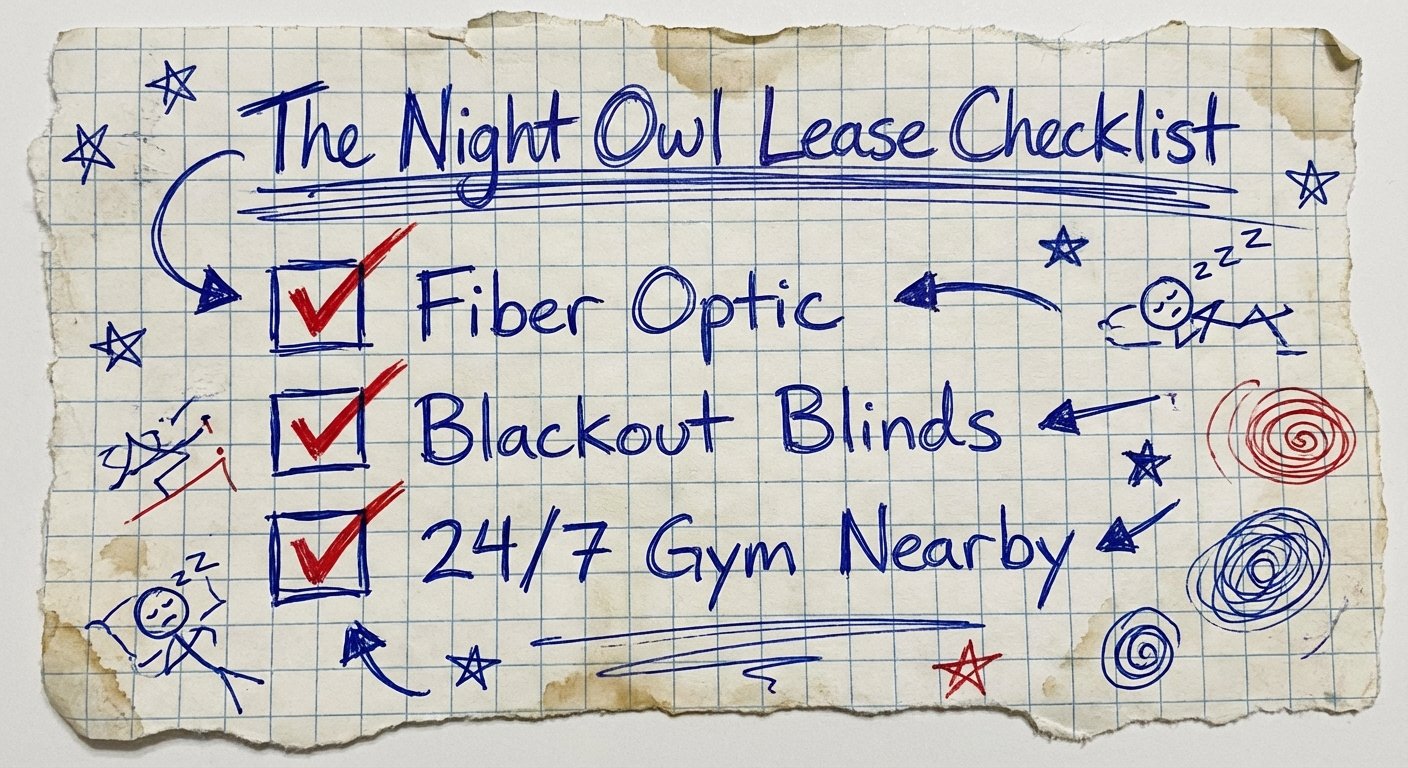
Stop guessing. Use this checklist before you sign a lease:
- Speed Test: Ask the host for a screenshot of a speed test. If it is under 100mbps, walk away.
- Noise Check: Read reviews specifically looking for “street noise” or “club noise.”
- Gym Proximity: Map the nearest 24-hour gym. If it is more than a 15-minute walk, you won’t go.
Conclusion: Just Pick One
Analysis paralysis is the enemy.
All four cities I listed—Madrid, Belgrade, Lisbon, Berlin—work.
They have the internet. They have the late-night culture. They have the safety.
If you want sunshine and late dinners? Go to Madrid.
If you want to save money and hustle? Go to Belgrade.
If you want the classic nomad hub? Go to Lisbon.
If you are a degenerate night owl? Go to Berlin.
Buy the ticket. Buy the noise-canceling headphones. Get to work.