
The connectivity trap: Why you are losing money at the airport
Most digital nomads are bad at math.
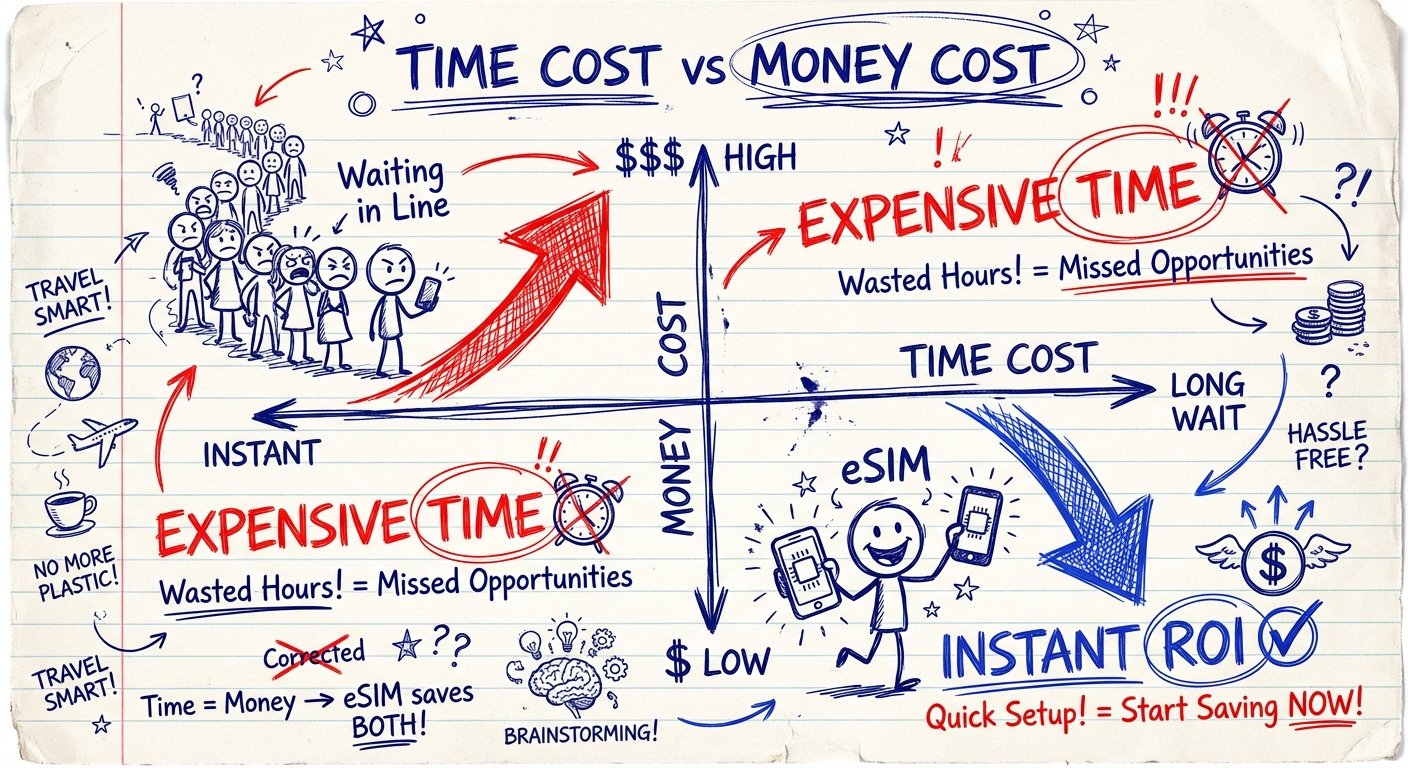
They land in a new country. They get off the plane. They see a kiosk selling SIM cards. They see a line of twenty people waiting.
They think: “I can save $15 if I wait in this line instead of buying an international plan.”
They wait. They spend 45 minutes. They fumble with a paperclip. They swap a tiny piece of plastic. They lose their home SIM. They stress out.
If your time is worth $50 an hour, you just spent $37.50 of your time to save $15 of your cash.
You lost $22.50.
That is a negative ROI (Return on Investment). You are starting your trip in the red.
I don’t care about saving pennies. I care about speed. I care about reliability. I care about landing, turning off Airplane Mode, and immediately closing a deal on Slack.
There are three ways to handle internet when you travel:
- Airalo: The marketplace approach.
- Holafly: The unlimited data approach.
- Local SIMs: The “cheap” approach.
We are going to break down the math, the speed, and the utility of each. No fluff. Just the data you need to make the decision.

The Hardware Requirement
Before we talk about software, we need to talk about hardware.
None of this works if your gear is trash.
If your phone is carrier-locked, you are dead in the water. You are a slave to Verizon or AT&T’s $10/day roaming pass. That is $300 a month. That is a stupid tax.
To play this game, you need an unlocked phone that supports multiple eSIM profiles. The latest iPhones allow you to have multiple eSIMs stored and two active at once. This is critical. You keep your US number active for 2FA (Two-Factor Authentication) texts, and use the data eSIM for internet.
Recommended Gear:
You want the latest unlocked model. It has the best bands for global 5G coverage.
Contender 1: Airalo (The Data Bundler)
Airalo is an app. You download it. You buy a data package. You install it. You have internet.
The Mechanism:
Airalo does not own the towers. They are a broker. They buy data in bulk from local telcos (like Movistar, O2, AIS) and sell it to you at a markup.
The Pros:
- Frictionless: You can buy the plan while sitting on the toilet in your home country before you even fly.
- Tiered Pricing: You pay for what you use. 1GB, 3GB, 10GB.
- App Experience: The UI is clean. It tells you exactly how much data you have left.
The Cons:
- No Phone Number: usually data only. You can’t make traditional calls. (Use WhatsApp/Facetime).
- The Markup: You are paying for convenience. It is 2x or 3x the price of a local SIM per GB.
The ROI Verdict:
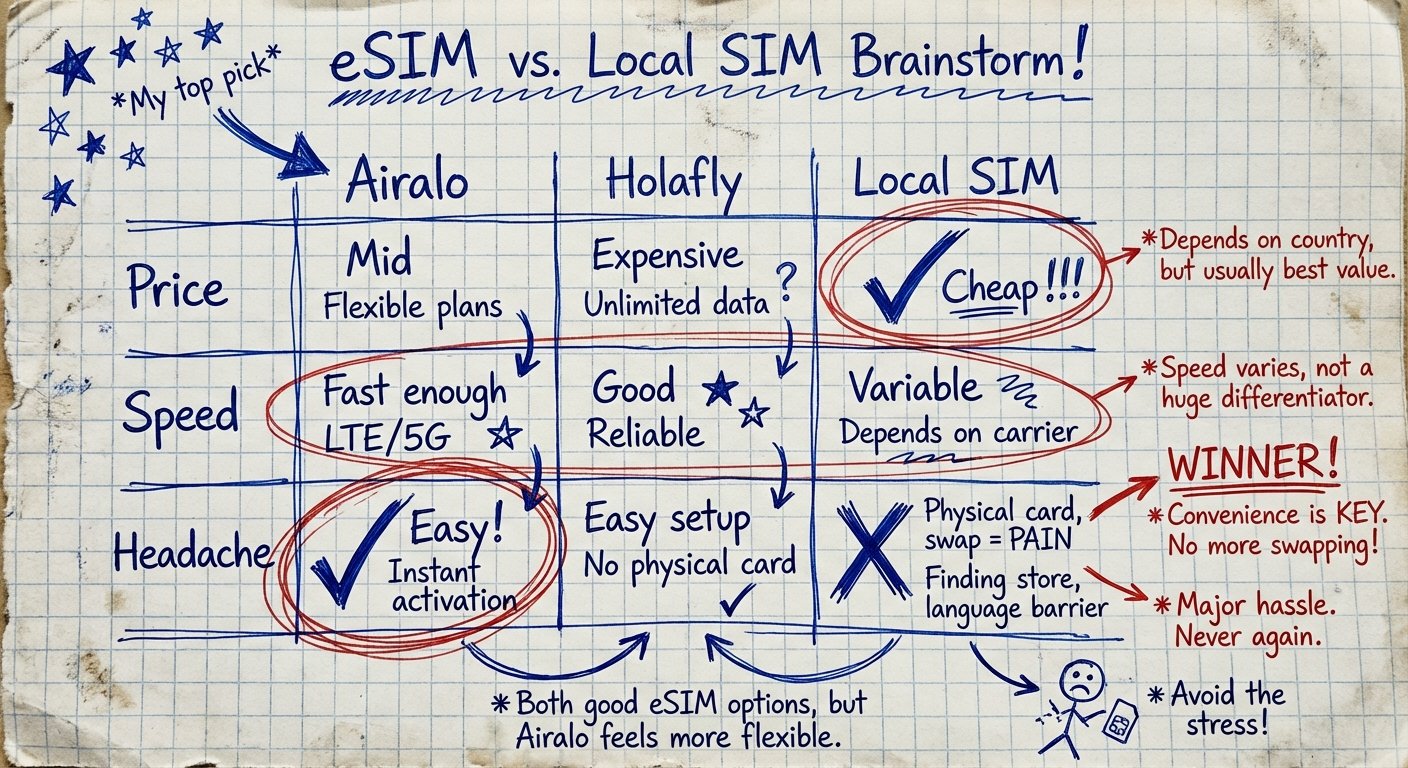
Airalo is the best option for short trips (3 to 14 days). If you are in London for a week, do not waste time finding a Vodafone store. Buy 5GB on Airalo for $15. Done.
The time you save is worth more than the markup you pay.
Contender 2: Holafly (The Unlimited King)
Holafly has a different offer. They don’t sell buckets of data. They sell time.
You pay for 5 days, 10 days, or 30 days. You get “Unlimited Data.”
The Mechanism:
Similar to Airalo, they piggyback on local networks. But they negotiate agreements that allow for high-volume usage.
The Pros:
- No “Data Anxiety”: You never have to check your balance. You never worry about a Zoom call cutting out because you hit your 5GB limit.
- Simplicity: One price. One duration.
The Cons (The “Fine Print”):
- Hotspot Restrictions: This is the dealbreaker for many. Most Holafly plans strictly limit or block tethering. You cannot share the internet to your laptop.
- Throttling: “Unlimited” is a marketing word. It is not a physics word. If you pull 100GB in a day, the carrier will slow you down. It’s called Fair Usage Policy (FUP).
The ROI Verdict:
Holafly is for the heavy phone user who does not work from a laptop. If you are a content creator engaging on TikTok/Instagram from your phone all day, this is your product.
If you need to tether your laptop to work from a cafe with no WiFi, Holafly is risky. You might get blocked.
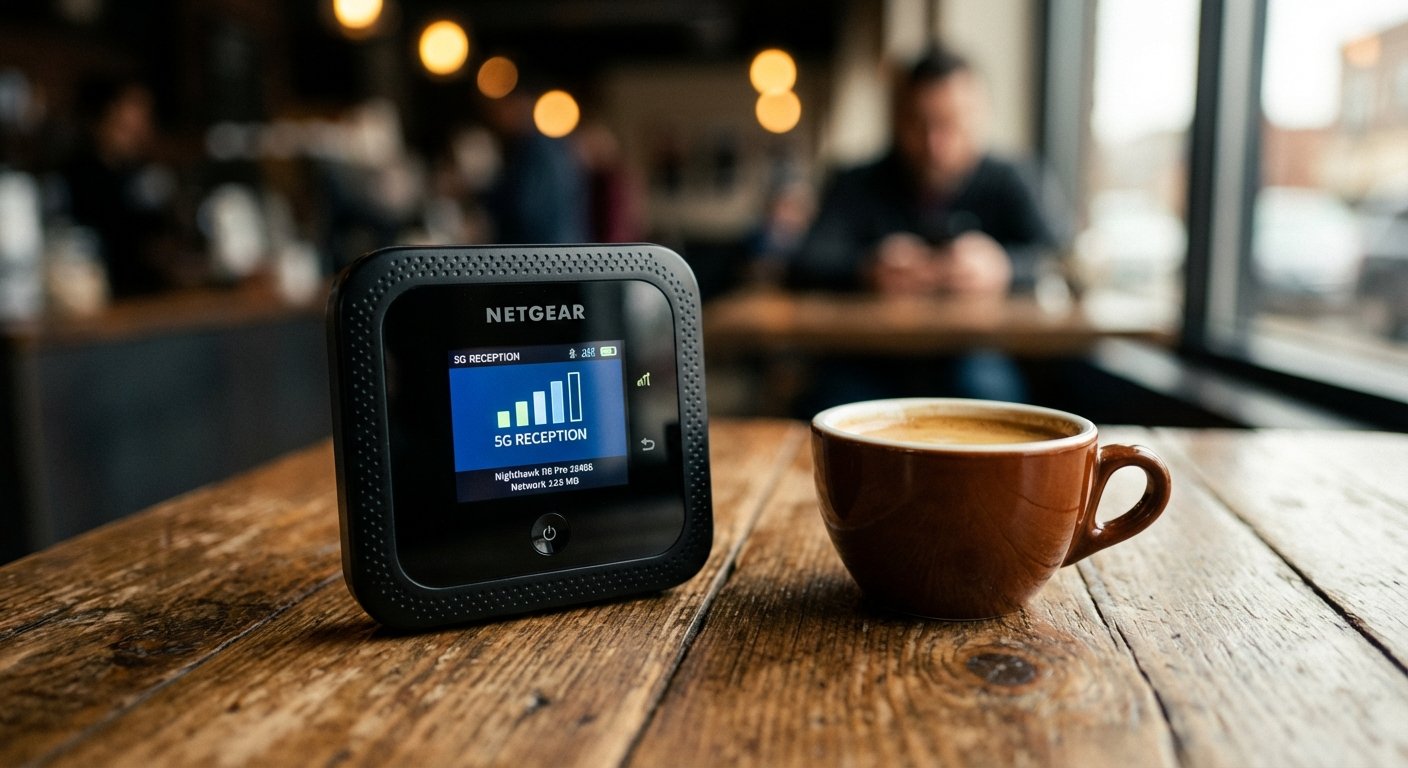
If you are serious about mobile working, you shouldn’t rely on your phone battery anyway. You should have a dedicated mobile hotspot. This allows you to insert a physical local SIM or use another data plan specifically for your laptop, saving your phone battery for calls.
Recommended Gear:
Get a dedicated hotspot. It pulls a stronger signal than a phone and handles more devices.
Contender 3: Local SIM Cards (The “Cheap” Option)
This is the old school way. You land. You go to a shop. You hand them your passport. They photocopy it. You pay cash. They give you a plastic card.
The Pros:
- Cost: It is dirt cheap. In Thailand, you get unlimited 5G for $20/month. In Europe, 50GB for $15.
- Speed: You usually get priority on the network because you are a direct customer, not a roaming partner.
- Local Number: Essential for food delivery apps (Uber Eats, Grab, Gojek) and 2FA for local banking.
The Cons:
- Friction: High. You have to physically go there.
- Language Barrier: Good luck explaining APN settings in a language you don’t speak.
- Single Country: You cross the border; the SIM stops working.
The ROI Verdict:
Local SIMs are the only choice for stays longer than 30 days. The cost savings become significant over a month. $20 vs $100. That $80 difference is real money.
Also, if you are running a business, having a local number makes you look legitimate to local vendors.
The “Hybrid Strategy” (What I Actually Do)
I do not believe in binary choices. I believe in redundancy.
If my internet goes down, I lose money. Therefore, I need backups.
Here is the exact stack I use to ensure 100% uptime:
- Primary (Airalo/eSIM): I buy an Airalo regional eSIM (e.g., “Eurolink”) before I leave. This ensures I have data the second the plane wheels touch the tarmac. I use this for Uber, Google Maps, and checking into the Airbnb.
- Secondary (Local SIM): Once I am settled, if I am staying for more than 2 weeks, I walk into a store and buy a high-data physical Local SIM. I put this in my phone (or hotspot). This becomes my “heavy lifting” data for laptop work.
- Power: Running hotspots and 5G drains batteries. If your phone dies, your internet dies. If your internet dies, you are unemployed. You need a massive power bank.
Recommended Gear:
Do not buy a cheap gas station charger. Get one that can charge your laptop and your phone at the same time.
Summary: The Decision Matrix
Stop overthinking it. Use this logic:
- Trip < 7 days: Airalo. The convenience is worth the premium.
- Trip > 30 days: Local SIM. The cost savings are massive.
- Social Media Addict (No Laptop): Holafly.
- Professional Nomad: The Hybrid Strategy. Airalo for arrival, Local SIM for work.
Money loves speed. Stop waiting in lines. Get the eSIM, get connected, and get to work.