The Most Expensive Words in the World
You have a product. It works. The code is clean. The interface is slick.
But nobody is buying it.
You are confused. You think the product is the problem. So you build more features. You add a dark mode. You rewrite the backend to make it 50 milliseconds faster.
And still, nobody buys.
The problem isn’t your code. The problem is your words.
SaaS (Software as a Service) is the best business model in the history of humanity. You write the code once. You sell it infinite times. The marginal cost of replication is zero. It is infinite leverage.
But there is a bottleneck. That bottleneck is the sales page.
If you cannot articulate the value of your software in three seconds, you lose. The customer clicks the “Back” button. They are gone forever.
This is why SaaS companies pay the most for copywriting. They don’t pay for “creative writing.” They don’t pay for puns. They pay for words that convert strangers into recurring revenue.
Here is the math. Here is why you are leaving millions on the table.
The Math: Why 1% Matters
Let’s look at the numbers. No fluff. Just logic.
Imagine you have a SaaS product. It costs $100 a month.
You drive 10,000 visitors to your landing page every month via ads and SEO.
Currently, your headline sucks. It says something vague like: “Empowering Solutions for Tomorrow’s Enterprise.”
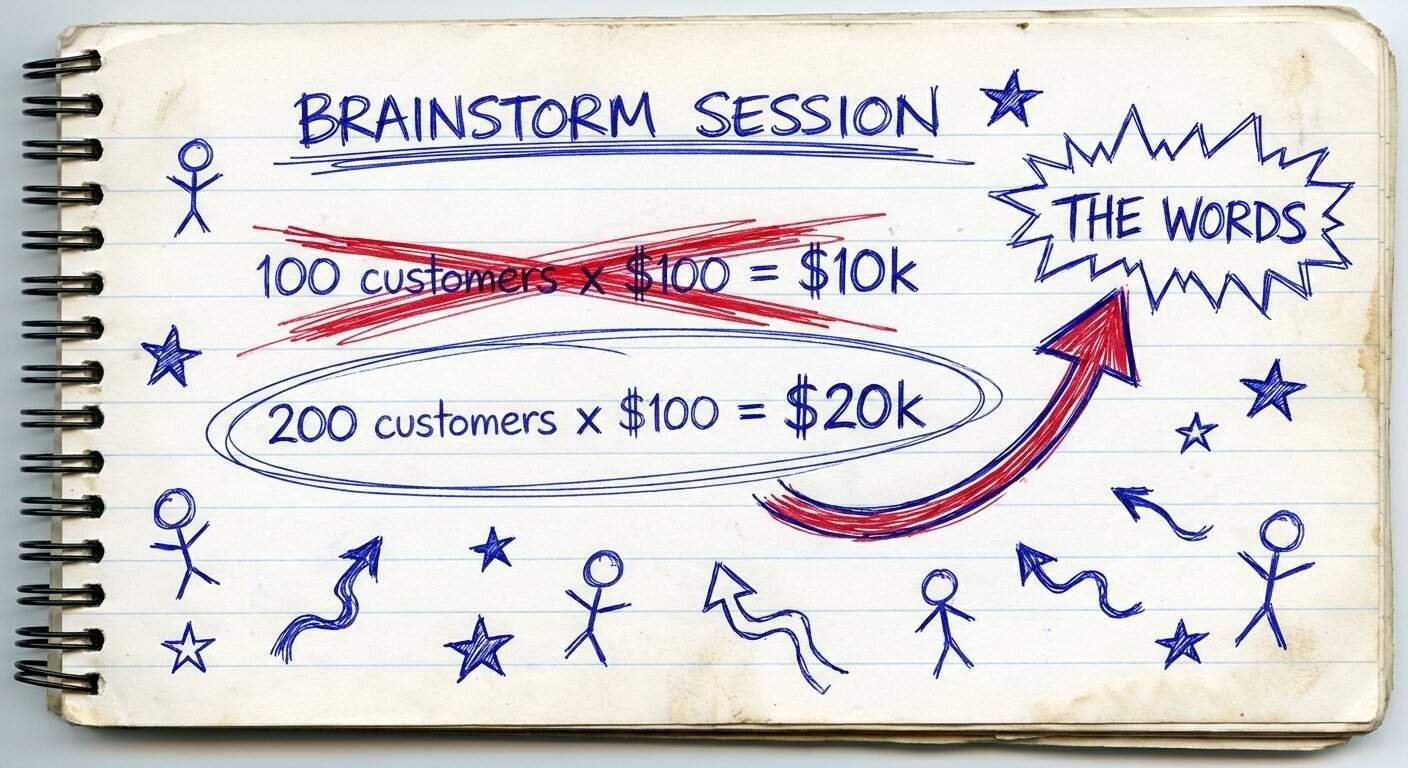
Because your headline sucks, your conversion rate is 1%. That means 100 people sign up.
100 people x $100/month = $10,000 Monthly Recurring Revenue (MRR).
Now, let’s say you hire a real copywriter. Or you learn to do it yourself. You change the headline to something concrete. You change it to: “Automate Your Payroll in 5 Minutes or Less.”
Suddenly, the right people understand what you do. Your conversion rate goes from 1% to 2%.
That doesn’t sound like a lot. It’s just one percent. But look at the money.
200 people x $100/month = $20,000 MRR.
You just doubled your business. You didn’t change the product. You didn’t hire more support staff. You didn’t spend a penny more on ads. You just changed the words.
Now, project that over a year.
At 1% conversion, you make $120,000 a year.
At 2% conversion, you make $240,000 a year.
Those few words put $120,000 in your pocket. Pure profit.
That is why copywriters get paid $20,000 for a single page. It’s not an expense. It’s an investment with a 10x return.
The Founder’s Curse
Most SaaS founders are technical. They are engineers. They view the world through logic and features.
When an engineer writes copy, they talk about the “how.”
- “We use React Native.”
- “Our API has 99.9% uptime.”
- “AI-driven neural networks.”
Nobody cares.
Your customer does not wake up in the morning wanting “AI-driven neural networks.” They wake up with a problem. They have a pain. They want the pain to go away.
Good copy talks about the “what.” Great copy talks about the “who.”
You need to stop selling the drill. You need to sell the hole. Actually, you need to go deeper. You need to sell the satisfaction of hanging the shelf on the wall.
If you cannot get out of your own head, you will fail. You need to understand psychology.

Required Reading: The Psychology of “Yes”
You don’t need a degree in English Literature. In fact, that would probably hurt you. You need to understand human behavior.
There are tools for this. There are books that have mapped the human brain for you. If you haven’t read these, you are flying blind.
Influence: The Psychology of Persuasion
This is the Bible. Robert Cialdini breaks down why humans say “yes.” He identifies triggers like Reciprocity, Scarcity, and Social Proof.
If your landing page doesn’t have testimonials (Social Proof), you are losing money. If your pricing page doesn’t have a “Limited Time” offer (Scarcity), you are losing money.
This book gives you the cheat codes to the human brain. It works for B2B. It works for B2C. It works for SaaS.
Current Price: $15 – $20
The Framework: How to Actually Write
You understand the math. You understand the psychology. Now you have to type the words.
Do not stare at a blank cursor. That is for amateurs. Pros use frameworks.
1. The Headline (The Hook)
The job of the headline is not to sell the product. The job of the headline is to sell the next sentence.
If they don’t read the headline, they don’t read the rest. If they don’t read the rest, they don’t buy.
Your headline must promise a specific benefit. It must address a specific timeframe. It must address a specific objection.
Bad Headline: “The Best Project Management Tool.”
(Vague. Opinion based. Boring.)
Good Headline: “Save 10 Hours a Week on Project Management or We Pay You.”
(Specific benefit. Timeframe. Risk reversal.)
2. The Lead (The Story)
Once you have their attention, you need to agitate the pain. Remind them why their current life sucks.
“You are tired of chasing your team for updates. You are tired of missed deadlines. You feel like a babysitter, not a CEO.”
They are nodding their heads. They feel understood. When the customer feels understood, they trust you to have the solution.
3. The Solution (The Mechanism)
Now—and only now—do you introduce your software.
Explain how it solves the pain. This is where you can mention features, but tie every feature to a benefit.
- Feature: Cloud-based syncing.
- Benefit: Work from anywhere, even your phone.
- Feature: 256-bit encryption.
- Benefit: Your data is safer than it is in a bank.
The “Grandma Test”
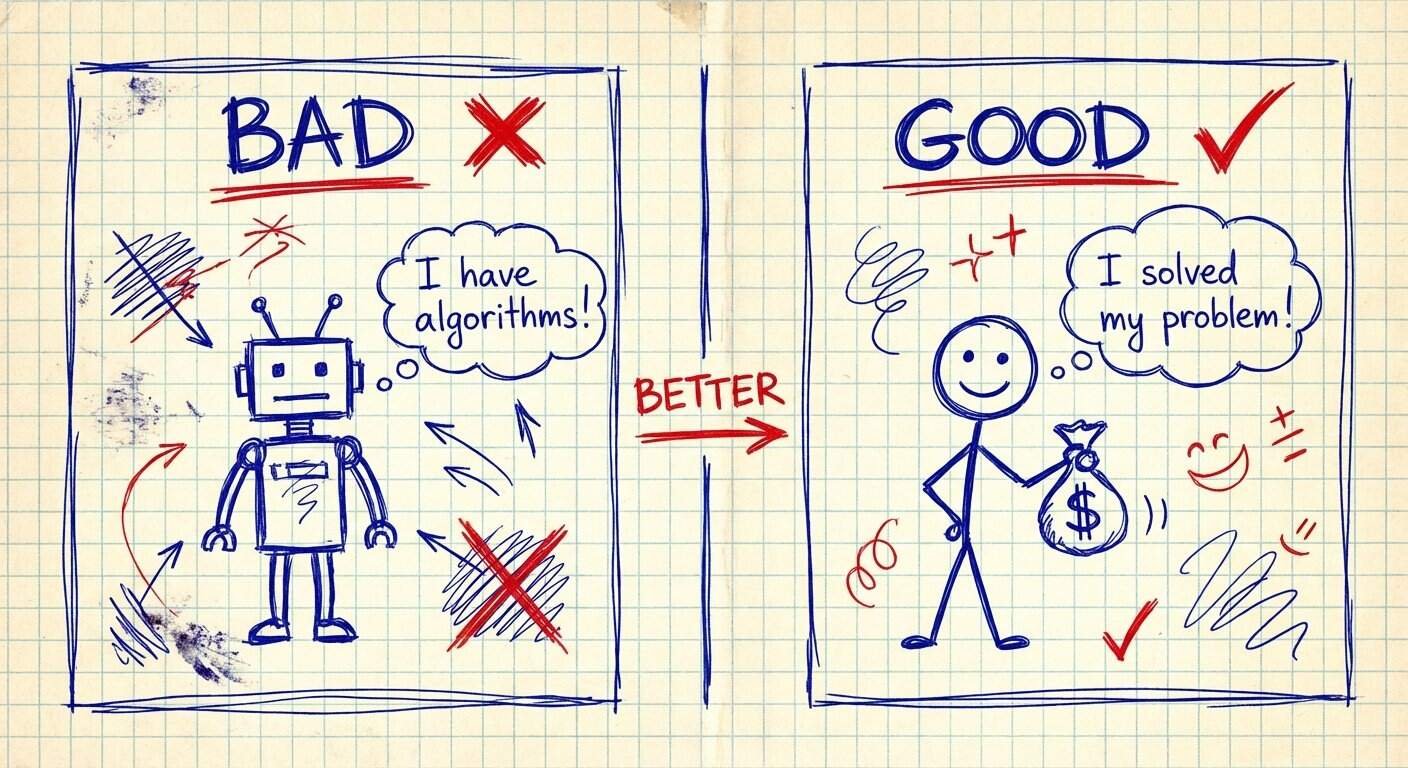
This is the filter I use. I print out the landing page. I show it to someone who has no idea what the tech industry is.
I ask them: “What does this sell?”
If they say, “I don’t know, something about cloud synergy?” I delete the page and start over.
If they say, “It helps you send invoices faster,” then I keep it.
Complexity is the enemy of execution. Confusion is the enemy of conversion.
Use simple words. Short sentences. If you can say it in five words, don’t use ten.
Tools for Aggressive Learning
You want to get good at this fast? Study the ads that made the most money. Don’t study the “award-winning” ads. Ad awards are given by creatives to other creatives for being “clever.”
Clever doesn’t pay the rent. Sold inventory pays the rent.
You need to study “Direct Response” copywriting. This is the style of writing where you measure every dollar out against every dollar in.
Ca$hvertising
The title is cheesy. The cover is ugly. The content is gold.
Drew Eric Whitman breaks down the “Life Force 8.” These are the eight things every human is biologically programmed to want (Survival, Enjoyment of Food, Sexual Companionship, Social Approval, etc.).
If your SaaS helps people get one of these 8 things, tell them. Don’t be shy about it. This book teaches you how to write copy that grabs people by the throat.
Current Price: $15 – $20
Friction is a Killer
Copywriting isn’t just about the sales letter. It’s about the micro-copy. The buttons. The error messages. The signup form.
Every extra field you ask a user to fill out drops your conversion rate by 10-15%.
Do you really need their phone number? No. You don’t. Delete the field.
Do you really need their “Company Size”? Probably not. Delete it.
Look at your “Call to Action” (CTA) button.
Does it say “Submit”?
“Submit” is a terrible word. It implies surrender. Nobody wants to submit.
Change it to “Get Started Free” or “Show Me My Dashboard.”
These tiny changes compound. They reduce friction. They grease the slide so the customer falls right into your bank account.

The “Risk Reversal”
The biggest barrier to buying software is fear.
“What if it doesn’t work?” “What if I can’t figure it out?” “What if I waste my money?”
Your copy must destroy this fear.
You do this with a Risk Reversal. The most common is the “Money Back Guarantee.”
But in SaaS, we can do better.
- “No credit card required.”
- “Cancel anytime.”
- “Concierge onboarding included.”
If you have a strong product, offer a strong guarantee. If your product sucks, fix the product.
A strong guarantee tells the customer: “I am so confident this will solve your problem that I am taking all the risk onto myself.”
That is powerful. That sells.
Visuals Matter (But Only If They Support the Copy)
You can write the best words in the world, but if they are presented in a giant wall of text, nobody will read them.
Design exists to support the copy. Not the other way around.
Use whitespace. Use bullet points. Use bold text for key concepts.
You need to study how the greats laid out their ads. They used specific fonts. Specific imagery. They knew that the eye moves in a “Z” pattern across the page.
Ogilvy on Advertising
David Ogilvy is the father of modern advertising. This book is visually beautiful, but it is packed with data.
He tested everything. He knew that putting a caption under a photo gets 300% more readership than the body copy. He knew that black text on a white background sells better than white text on a black background.
If you are building a landing page, you need to know these rules so you know when to break them.
Current Price: $20 – $30
Conclusion: The ROI of Boring
Stop trying to be a genius. Be a mechanic.
Fix the headline. Simplify the offer. Remove the friction.
SaaS copywriting is high stakes because the leverage is so high. A 1% improvement is a million-dollar difference over the lifetime of a company.
Don’t guess. Test.
Run A/B tests. Try a funny headline. Try a serious one. Try a long one. Try a short one.
The market is the only judge that matters. If they click, you win. If they don’t, you learn.
Get the words right. The money will follow.