
This post contains affiliate links. If you purchase through our links, we may earn a small commission at no extra cost to you.
The $120,000 Problem With Being a Digital Nomad
Most people get the digital nomad math wrong.
They see a YouTube video of a guy on a beach in Bali. They think, “I’m going to travel the world and make money from my laptop.” Then they look at Airbnb prices.
A mediocre apartment in London is $3,000 a month. A decent place in Austin, Texas is $2,500. Even the “cheap” places like Lisbon or Medellín are getting squeezed by nomad inflation. You end up paying tourist prices for housing.
If you pay $2,000 a month in rent, that is $24,000 a year. Over five years, that is $120,000. Gone. Poof. Handed to a landlord.
You didn’t become a nomad to be poor in different time zones. You did it for freedom. And nothing kills freedom faster than a massive monthly housing expense hanging over your head.
But there is a loophole.
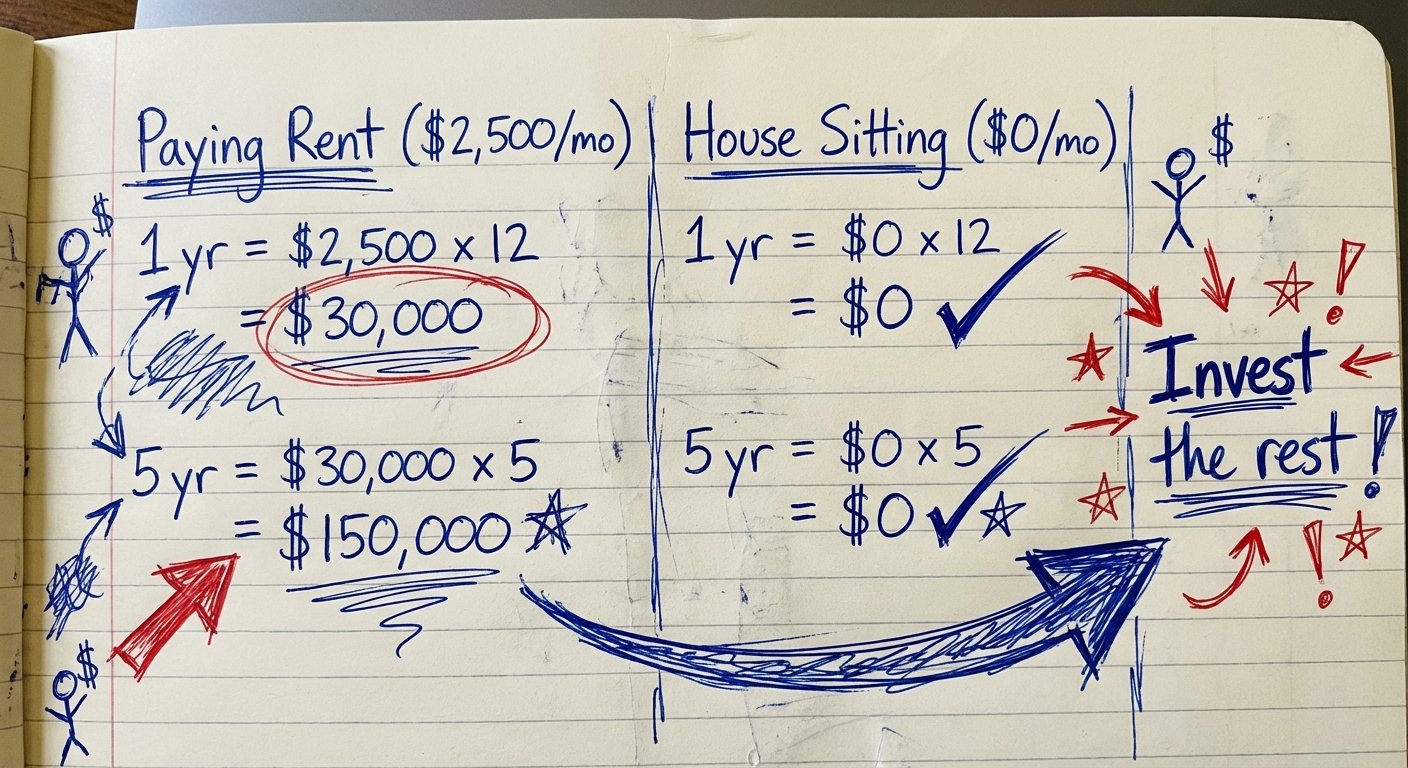
It’s called house sitting. And if you treat it like a serious business transaction, you can literally live in million-dollar homes around the world for exactly $0 a month.
I am not talking about crashing on a buddy’s couch. I am talking about high-net-worth individuals handing you the keys to their villas, penthouses, and estates. They get peace of mind. You get free rent.
Here is exactly how to exploit the trust arbitrage, eliminate your housing costs, and stack cash while traveling the world.
The Economics of the Trust Arbitrage
Why would a rich person let a stranger stay in their house for free?
Because you are solving a problem money can’t easily fix.
Imagine you own a $2 million house in the south of France. You also have two golden retrievers that are essentially your children. You want to go on a three-week vacation to Japan. What do you do?
Option A: Put the dogs in a kennel. It costs $100 a day, the dogs are miserable, and the house sits empty, making it a target for burglars.
Option B: Hire a professional pet-sitting service. It costs $150 a day, but the sitter only drops by twice a day. The house is still mostly empty.
Option C: Let a reliable, clean, professional remote worker live in the house for free. The dogs get constant attention. The house is occupied and secure. The plants are watered. Cost to the homeowner: $0.
This is a pure value exchange. You are trading trust and light responsibility (feeding a dog, taking out the trash) for $3,000 to $5,000 a month in housing value.
But to get this deal, you have to look like a premium solution, not a cheap freeloader.
How to Build a Top 1% Profile (Lead Generation)
Most nomads fail at house sitting because they frame it about themselves. Their profile says, “I love traveling and want to see your city!”
Newsflash: The homeowner does not care about your travel dreams. They care about their house and their dog.
If you want the best sits, you have to position yourself as a risk-free asset. You are applying for a job, and your profile is your landing page. Here is how you optimize it for conversion on platforms like TrustedHousesitters or MindMyHouse.
- The Headline: Make it about them. “Professional, quiet remote worker. Experienced with large dogs and home care.” Not “Wanderlust traveler looking for a couch.”
- The Photos: Do not post pictures of you drinking margaritas on a boat. Post photos of you playing with dogs, petting cats, and sitting in clean, well-maintained environments. Look responsible.
- The Bio: Address their fears immediately. “I work from home, meaning your pets will never be alone for long. I do not smoke. I do not throw parties. I leave homes cleaner than I found them.”
- The References: You have zero reviews when you start. Fix this. Have your former landlords, bosses, or friends you’ve pet-sat for write character references. Prove you are sane and reliable.

Your goal is to be the obvious, low-risk choice. When a homeowner reads your profile, they should feel a sigh of relief. You are the adult in the room.
The Application Process (The Sales Pipeline)
The best house sits—the beachfront condos in Costa Rica, the townhouses in London—disappear in hours. It is a highly competitive market.
You need a system.
Set up alerts for the cities you want. When a sit drops, you must be in the first five applicants. But do not copy-paste a generic message. Homeowners spot that immediately.
Use a template, but customize the first two lines.
“Hi [Name], I saw [Dog’s Name] needs some company while you are in Italy. I have experience with older Labradors and know they need gentle walks and regular medication routines.”
Then, immediately push for a video call. This is your sales call.
“I would love to jump on a quick 10-minute WhatsApp video call so you can see if I’m a good fit for [Dog’s Name].”
Nobody wants to hand their keys to text on a screen. They want to look you in the eye. On the call, be professionally dressed. Have a clean background. Ask questions about the pet’s routine, the home’s quirks, and emergency contacts. Make them sell you on the sit. It flips the dynamic and builds immense trust.
Operational Red Flags: Sits to Avoid
Not every free house is a good deal. If you aren’t careful, a “free rent” situation turns into an unpaid, full-time nightmare job.
You are a remote worker. Your time is tied to your income. If a house sit prevents you from working, it is costing you money.
Before you agree to anything, ask these questions:
- “How long can the pets be left alone?” If the dog has severe separation anxiety and cannot be left alone for more than an hour, you are under house arrest. Pass.
- “What is the daily routine?” Two 30-minute walks? Fine. An hour of hiking, medicating four different animals, and managing a hobby farm of chickens? That is a farmhand job. Pass.
- “What is the Wi-Fi speed?” Do not accept “It’s pretty fast.” Ask them to run a Speedtest.net check and send a screenshot. A free house is worthless if you can’t join a Zoom call and get fired.
- “Is anyone else staying on the property?” No weird roommate situations, no landlords in the basement. You want total privacy.
Value your time. It is better to pay for a cheap hotel than to accept a house sit that ruins your ability to make money.
The Nomad Infrastructure (Tech & Security)
When you house sit, you are at the mercy of someone else’s setup. You will encounter routers from 2012, terrible desk chairs, and single-monitor setups.
You need to bring your own infrastructure. This is where you spend the money you saved on rent. Invest in gear that guarantees your productivity and security.

First, you cannot rely on a stranger’s home network for security. You are likely handling client data, accessing business bank accounts, and logging into secure portals. If their router is compromised, you are compromised. You need a rock-solid VPN to encrypt your traffic at all times.
I recommend NordVPN. It is fast, doesn’t kill your bandwidth, and secures your connection instantly. Don’t risk your client’s business because a homeowner never changed their default router password. Get NordVPN.
Second, solve the hardware problem. You cannot control the Wi-Fi range in a massive house. You need a travel router to bypass network restrictions, create your own secure local network, and boost the signal. The standard for this is the GL.iNet Beryl AX travel router. It is tiny, supports Wi-Fi 6, and lets you plug directly into a modem if the wireless is terrible. It costs roughly $80 – $110. It pays for itself the first time it saves a client call. Check Price on Amazon.
Third, buy a portable monitor. Trying to run a business on a 13-inch laptop screen while hunched over a kitchen island is how you get poor and develop back problems. Get an ARZOPA Portable Monitor. It slides into your backpack, connects via USB-C, and gives you a dual-screen setup instantly. Estimated price: $70 – $100. Check Price on Amazon.
The Hidden Costs (It is Never 100% Free)
House sitting eliminates rent. It does not eliminate life.
You still have to pay for flights to get to the house. You still have to pay for groceries. And if you are jumping between countries, you face two massive financial drains: currency conversion fees and medical emergencies.
Let’s talk about the medical emergencies first. When you are walking a stranger’s 80-pound German Shepherd in an unfamiliar neighborhood, things happen. If the dog pulls you over and you break your wrist, or you get sick from local food, you are in trouble. Your standard health insurance back home is useless abroad. One hospital visit in a foreign country can wipe out six months of rent savings.
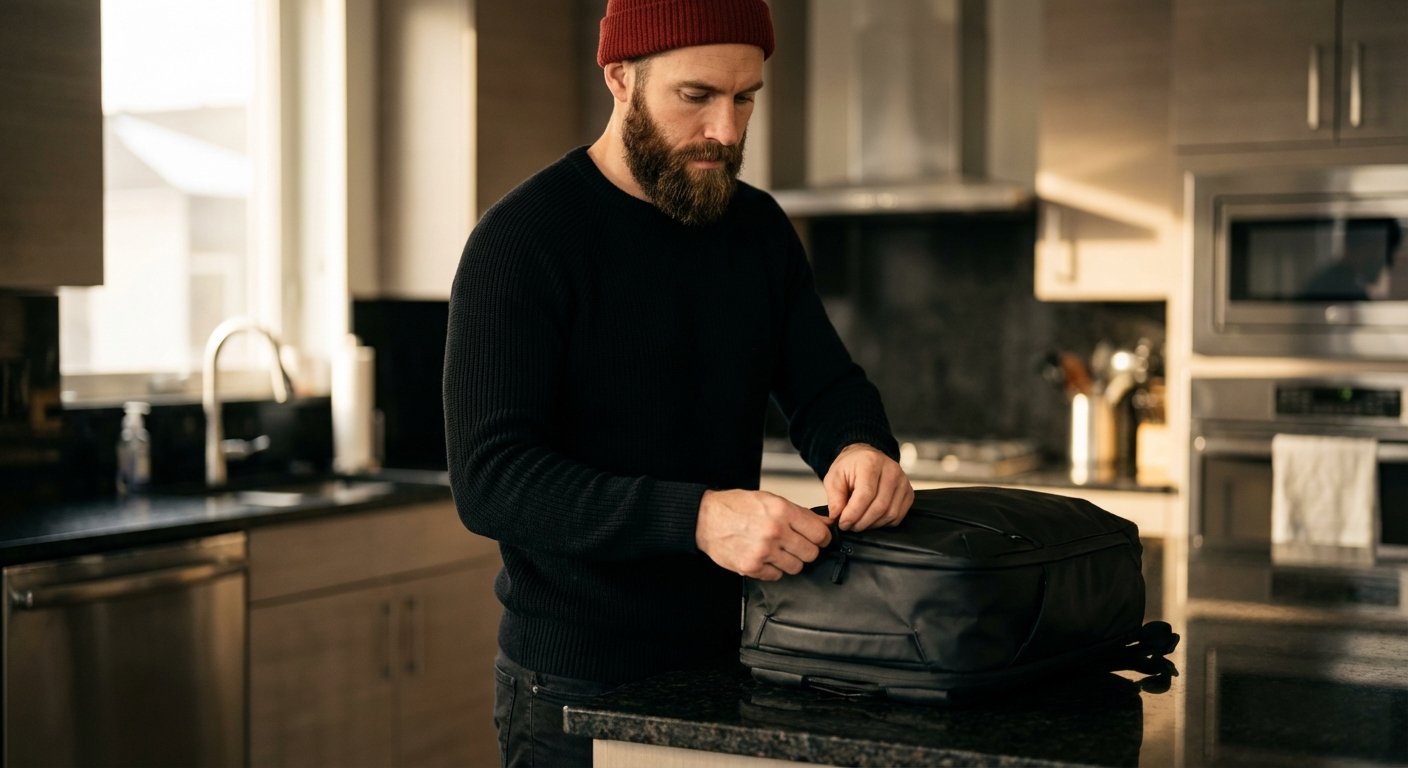
You need travel medical insurance built for nomads. Do not skip this. SafetyWing is the best option because it operates like a subscription. You turn it on when you travel, and it covers you for medical emergencies and travel delays almost anywhere in the world. It is cheap downside protection. Get SafetyWing.
Next is banking. Every time you swipe your normal bank card in a foreign grocery store, you are getting hit with a 3% foreign transaction fee and a terrible exchange rate. If you spend $2,000 a month on life expenses, you are losing $60 just to access your own money. Stop doing this.
Use a multi-currency account. Wise gives you local bank details in over 9 different currencies. You hold the money, convert it at the real mid-market rate, and spend it locally with zero hidden fees. Try Wise.
The Compounding ROI of Zero Rent
Let’s do the math one more time.
If you make $5,000 a month, and you spend $2,500 on Airbnbs, $1,000 on food, and $500 on travel, you have $1,000 left over. You are treading water.
If you house sit, you eliminate that $2,500 expense entirely. Your expenses drop to $1,500. You now have $3,500 left over every single month.
That is $42,000 a year in pure profit.
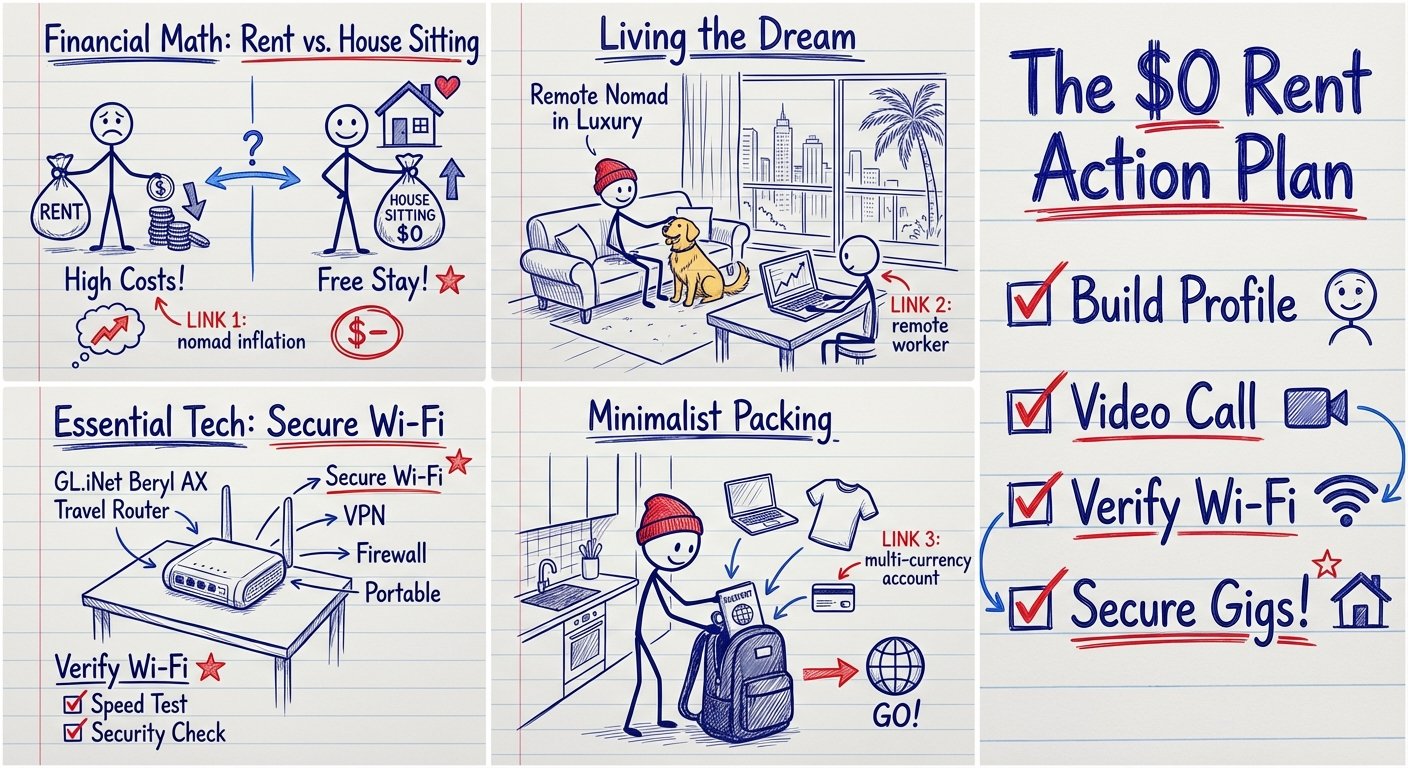
What do you do with that money? You don’t buy stupid luxury goods. You reinvest it.
You pump it into index funds. You use it to hire a virtual assistant so you can work fewer hours. You dump it into paid ads to scale your freelance business. You build a runway so big that you never have to take a bad client again.
House sitting is not a vacation strategy. It is an aggressive wealth-building strategy disguised as a lifestyle choice.
Your Action Plan
If you want to start, do this today:
- Sign up for a platform. TrustedHousesitters is the biggest. Pay the annual fee. Consider it a business expense.
- Build the 1% profile. Get three references. Upload high-quality, responsible photos. Focus the bio entirely on the homeowner’s peace of mind.
- Start local. Do not apply for a one-month sit in Paris with zero reviews. Apply for a weekend sit in your current city. Crush it. Get a 5-star review. Do this twice.
- Scale globally. Once you have three 5-star reviews, you can apply anywhere in the world and win the sit.
Stop paying a premium to live a free life. Master the trust arbitrage. Pack your gear. Secure your connections. Live anywhere.