
How to Become a Digital Nomad in 2026
A Hard, Practical Guide for People Who Actually Want This to Work
Let’s get something straight.
If you think becoming a digital nomad in 2026 is about freedom, beaches, or “escaping the system,” you’re already behind.
This lifestyle has nothing to do with travel.
It’s about control.
Control over:
- Your income
- Your location
- Your legal exposure
- Your stress
Most people never get there. Not because it’s impossible, but because they start with the wrong question.
They ask, “Where should I go?”
They should be asking, “How do I not screw this up?”
This guide answers that.
No hype. No fantasy. Just what actually works now.
What Being a Digital Nomad Really Means in 2026
A digital nomad is not someone who works remotely.
A digital nomad is someone who can:
- Earn money without being physically present
- Move countries without losing income
- Stay somewhere without creating legal problems
- Leave without financial damage
If any one of those breaks, the lifestyle breaks.
In 2026, governments don’t care about your laptop or your lifestyle branding.
They care about time spent, money earned, and tax responsibility.
That’s the game now.
Ignore it, and you’ll feel “free” right up until something goes wrong.
Step 1: If You Don’t Control Income, Nothing Else Matters
Let’s be blunt.
You don’t become a digital nomad by traveling.
You become a digital nomad by making money that doesn’t care where you are.
Most beginners reverse this order. That’s why most beginners fail.
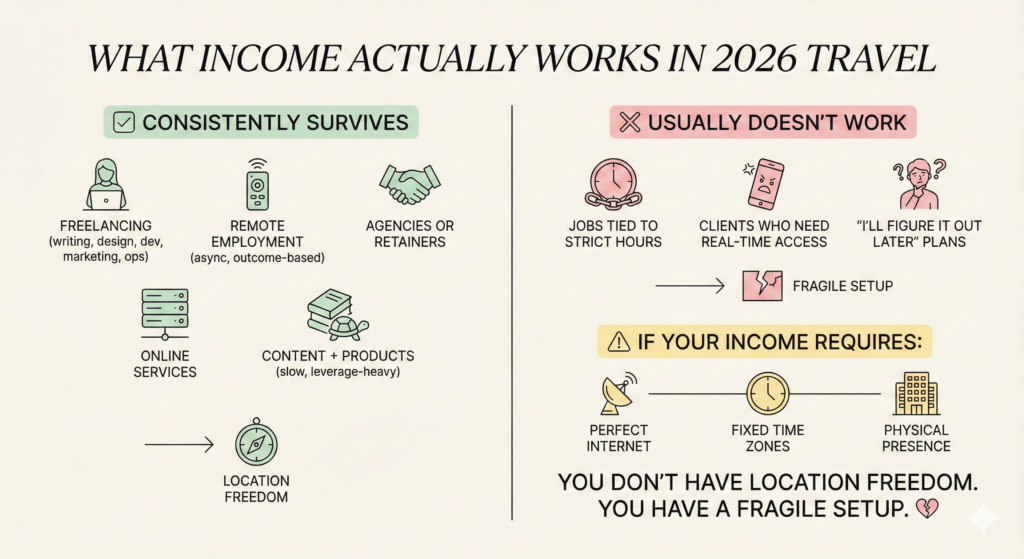
What Income Actually Works
Here’s what consistently survives travel in 2026:
- Freelancing (writing, design, dev, marketing, ops)
- Remote employment (async, outcome-based roles)
- Agencies or retainers
- Online services
- Content + products (slow, but leverage-heavy)
Here’s what usually doesn’t:
- Jobs tied to strict hours
- Clients who need real-time access
- “I’ll figure it out later” plans
If your income requires:
- Perfect internet
- Fixed time zones
- Physical presence
You don’t have location freedom. You have a fragile setup.
If your income doesn’t work at home, it won’t work abroad.
Fix that first.
Step 2: Nomad-Proof Your Income or Expect Friction
This is where theory meets reality.
Travel introduces friction:
- Time zones
- Fatigue
- Logistics
- Unpredictability
Your income must tolerate all of it.
That usually means:
- Fewer clients, higher rates
- Clear deliverables
- Asynchronous communication
- Outcome-based pricing
If you’re paid for hours, travel punishes you.
If you’re paid for results, travel becomes irrelevant.
This is not a mindset issue. It’s a structure issue.
Step 3: Visa Strategy Comes Before Country Choice
Most people pick a country first.
That’s backwards.
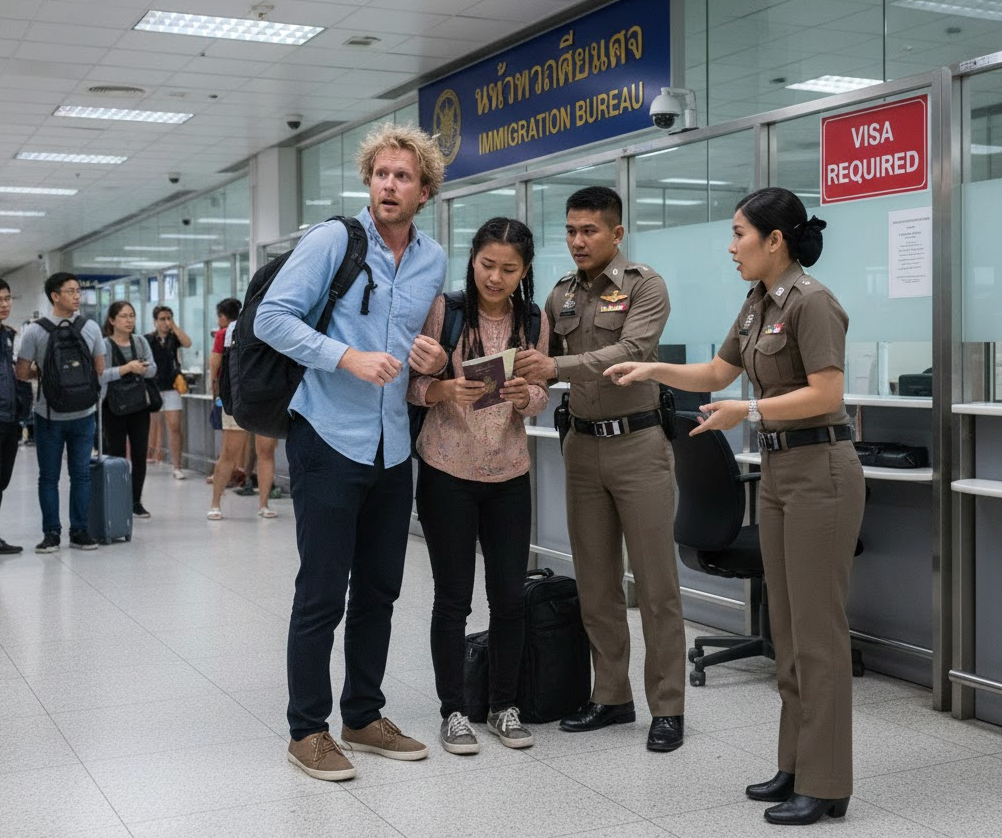
Countries don’t let you stay because you like them.
They let you stay because you fit a legal category.
In 2026, you have three realistic paths.
Path 1: Tourist Visa (Short-Term Testing)
- Low commitment
- Limited time
- High uncertainty
Fine for experimenting. Terrible long-term.
Path 2: Digital Nomad Visas
- Legal clarity
- Income requirements
- Paperwork, but stability
This is the default option for people who want peace of mind.
Path 3: Residency-Based Strategy
- Long-term leverage
- Tax planning opportunities
- Less flexibility
This is for people thinking years ahead, not months.
There is no “best” option.
There is only what matches your income and tolerance for complexity.
Step 4: Taxes Don’t Go Away Because You Travel
This is where people get emotional instead of rational.
Taxes are not based on where you feel like you live.
They’re based on residency, source of income, and time.
If you stay too long in one country, they notice.
If you earn money, someone wants a cut.
The biggest lie beginners believe:
“I’m a nomad, so I don’t owe taxes anywhere.”
That belief usually lasts until:
- A bank asks questions
- A visa application gets rejected
- An accountant explains reality
You don’t need perfection.
You need intentionality.
Know:
- Where you are tax resident
- Why
- What triggers changes
That alone puts you ahead of most people.
Step 5: Banking Is the Difference Between Smooth and Miserable
Bad banking makes everything harder than it needs to be.
You feel it when:
- Cards get blocked
- Transfers stall
- Fees stack quietly
- Support disappears
A functional nomad setup includes:
- One main international-friendly bank
- One backup account
- Cards that work globally
- Access to cash when things break
If your banking only works well in one country, you’re not mobile. You’re visiting.
Step 6: Insurance Is Boring Until It Isn’t
Most people delay insurance because nothing bad has happened yet.
That logic works right up until it doesn’t.
As a digital nomad, you take on risks:
- Medical emergencies abroad
- Accidents
- Unexpected disruptions
Insurance isn’t about optimism.
It’s about not letting one event ruin everything.
The goal is not maximum coverage.
The goal is eliminating catastrophic downside.
Experienced nomads usually learn this lesson once.
You don’t need to.
Step 7: Your First Country Should Reduce Stress, Not Increase It

Your first destination sets the tone.
Don’t optimize for “cool.”
Optimize for:
- Infrastructure
- Cost predictability
- Internet reliability
- Visa simplicity
- Community
Southeast Asia, parts of Europe, and Latin America work well for a reason.
They remove friction instead of adding it.
You can always get more adventurous later.
Step 8: Constant Movement Is a Beginner Mistake
Here’s something people don’t like to hear.
Most long-term digital nomads don’t move constantly.
They stay:
- 1–3 months per location
- Long enough to build routines
- Long enough to focus
Constant movement looks exciting online.
In real life, it destroys productivity.
Stability is not the enemy of freedom.
It’s what makes freedom sustainable.
Step 9: The Same Mistakes Happen Every Year
These errors repeat endlessly:
- Leaving without income
- Underestimating costs
- Ignoring visas
- Avoiding taxes
- Moving too fast
- Chasing novelty instead of systems
None of these are character flaws.
They’re planning failures.
Planning fixes them.
Step 10: Build for Longevity, Not Escape
The goal is not to travel forever.
The goal is optional structure.
That means:
- Income that scales
- Legal clarity
- Geographic flexibility
- Low stress
Most successful nomads eventually choose:
- A base
- A rotation
- Or a hybrid setup
That’s not failure.
That’s optimization.
The Reality Most People Avoid
Digital nomadism in 2026 is very doable.
It’s just not magical.
If you:
- Control income
- Respect legal systems
- Manage risk
- Design for stability
This lifestyle can last years.
If you don’t, it collapses fast.
Final Summary (Read This Twice)
This lifestyle rewards preparation, not optimism.
The order matters:
- Income
- Legal clarity
- Banking
- Insurance
- Location
Flip that order and you create stress.
Follow it and you buy options.
Digital nomadism isn’t about escaping life.
It’s about building one that works anywhere.