This post contains affiliate links. If you purchase through our links, we may earn a small commission at no extra cost to you.
You Are Pitching It Wrong
You want to travel the world. You want to work from a laptop. You want freedom.
Your partner wants a house. They want a predictable routine. They want security.
You think they are boring. They think you are reckless. You are both wrong. You just suck at selling.
Most people try to convince their partner to become a digital nomad by selling the sunset. They talk about beaches in Bali. They talk about drinking espresso in Rome. They talk about “finding themselves.”
Your partner doesn’t care about the sunset right now. When you pitch the sunset, all they hear is risk. They hear: “We are going to lose our jobs, drain our savings, live out of a dirty backpack, and ruin our future.”
People are wired to avoid loss. Loss aversion is a psychological fact. The pain of losing $1,000 is twice as strong as the joy of making $1,000. When you ask your partner to sell their furniture, end their lease, and move to a foreign country, you are asking them to take a massive risk for a theoretical reward.
Stop selling the dream. Start selling the math. Start de-risking the decision.

The ROI of Comfort
Before we get into the exact script, you need to understand one rule.
Do not cheap out. Ever.
I see “budget nomads” dragging their partners into $15-a-night hostels with no air conditioning and awful Wi-Fi. Three days later, they are having screaming matches. Six months later, they are broken up.
A breakup is a terrible return on investment. Divorce costs you half your net worth. Ruining a great relationship because you wanted to save $40 a night on an Airbnb is stupid.
If you want your partner to agree to this lifestyle, you have to promise them comfort. You have to promise them that their daily life will actually be better, easier, and less stressful than it is right now. You buy down the risk by investing in the right infrastructure.
Phase 1: Presenting the Math (Geo-Arbitrage)
Your partner’s biggest fear is going broke. You solve this with a spreadsheet.
It’s called geo-arbitrage. You earn in a strong currency (like US Dollars) and spend in a weaker currency (like Thai Baht or Mexican Pesos). You need to show them exactly how much money you are currently burning just to exist in your current city, and compare it to the upgraded lifestyle you could have abroad.
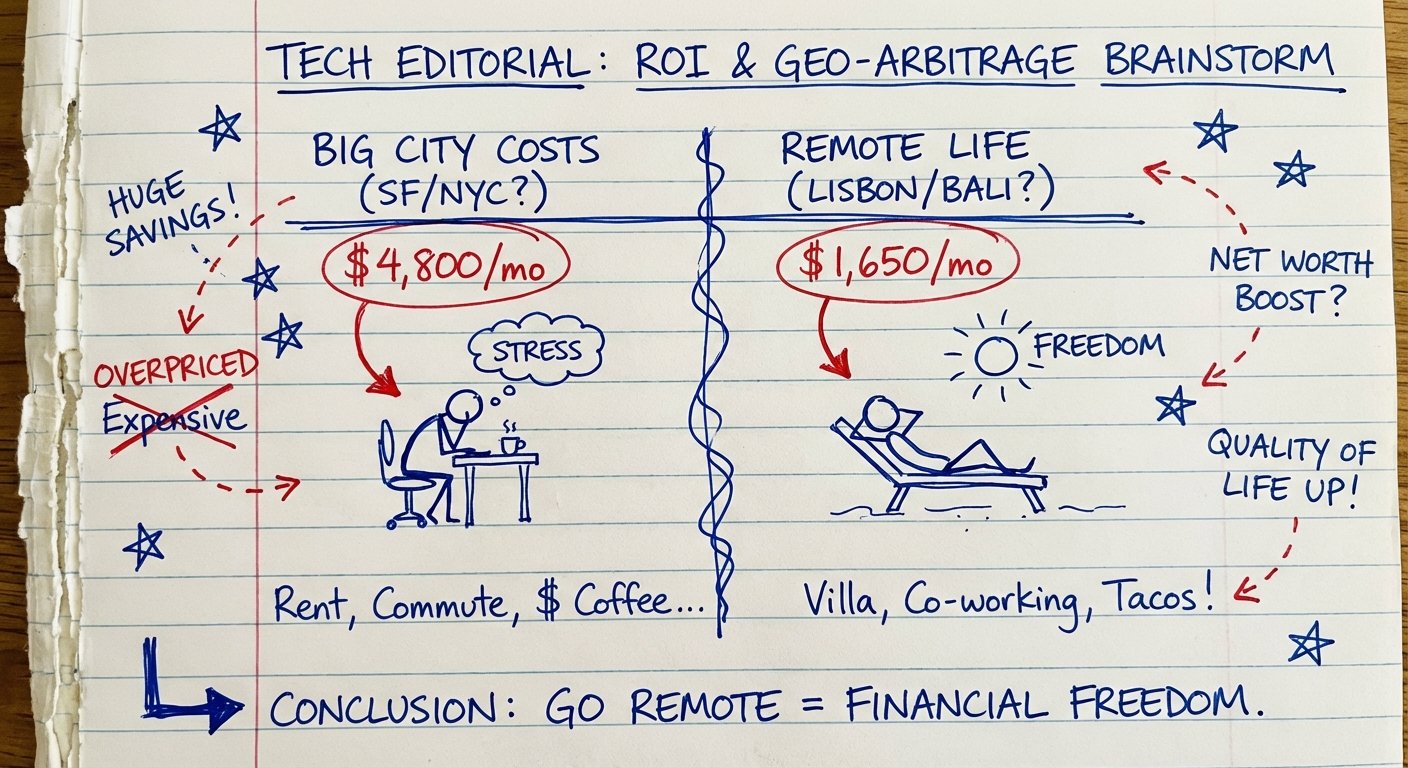
Here is an example you can show them:
- Current Life (Austin, TX): Rent ($2,500), Groceries/Dining ($1,200), Car/Insurance/Gas ($800), Utilities ($300). Total: $4,800/month.
- Nomad Life (Chiang Mai, Thailand): Luxury Condo with a pool and gym ($800), Eating out every single meal ($600), Co-working space ($150), Transportation ($100). Total: $1,650/month.
You are literally saving over $3,000 a month to live a better lifestyle. You don’t have to clean. You don’t have to cook. You have a pool.
When you present this, don’t say “We can travel.” Say: “I found a way for us to save $36,000 a year while taking a vacation, and it won’t impact our jobs.”
Money talks. Anxiety walks.
Phase 2: Eliminate the “What Ifs”
The moment you show them the spreadsheet, their brain will instantly look for holes in your plan. They will throw objections at you. You need to swat these objections away instantly with concrete, paid-for solutions.
If you hesitate, you lose trust. If you have the answer ready, you look like a leader.
Objection 1: “What if we get sick or hit by a scooter?”
This is a valid fear. Medical emergencies in a foreign country sound terrifying. Do not brush this off and say “We’ll be careful.” That is a weak answer.
Your answer: “I already looked into it. We are buying international health coverage designed specifically for remote workers. It covers emergency medical, hospital stays, and medical evacuation.”
Don’t mess around with cheap travel policies that look for excuses not to pay out. Get SafetyWing. It’s built for nomads. It works like a monthly subscription. It covers you in 175+ countries. It completely removes the medical risk from the equation.
Objection 2: “What about our money? How do we pay for things without crazy bank fees?”
Another valid fear. Using a standard debit card abroad will eat you alive in foreign transaction fees and horrible exchange rates. Your partner knows this.
Your answer: “We aren’t using our normal bank cards for daily expenses. We are setting up a multi-currency account. It holds over 40 currencies and converts at the mid-market rate. Zero hidden fees.”
You use Wise. It is the gold standard for moving money internationally and paying like a local. It takes ten minutes to set up.
Objection 3: “What if my company finds out, or we get hacked on public Wi-Fi?”
If your partner works remotely for a corporation, data security is non-negotiable. If they lose their job because of a data breach at a coffee shop in Lisbon, the dream is over.
Your answer: “We are encrypting all of our traffic. Our employers will see a dedicated IP address from the US, and our data will be military-grade encrypted, even on public Wi-Fi.”
Use NordVPN. It is the cheapest insurance policy for your career you will ever buy. Turn it on, connect to a US server, and work normally. Zero stress.
Phase 3: Upgrade The Hardware
Remember the rule: Do not cheap out on comfort. Your partner will hate the nomad lifestyle if their physical environment is chaotic.
Living out of a suitcase sucks if the suitcase is terrible. Working from a laptop sucks if you are used to a dual-monitor setup at home. You need to recreate their comfortable home environment, but make it mobile.
The Luggage System
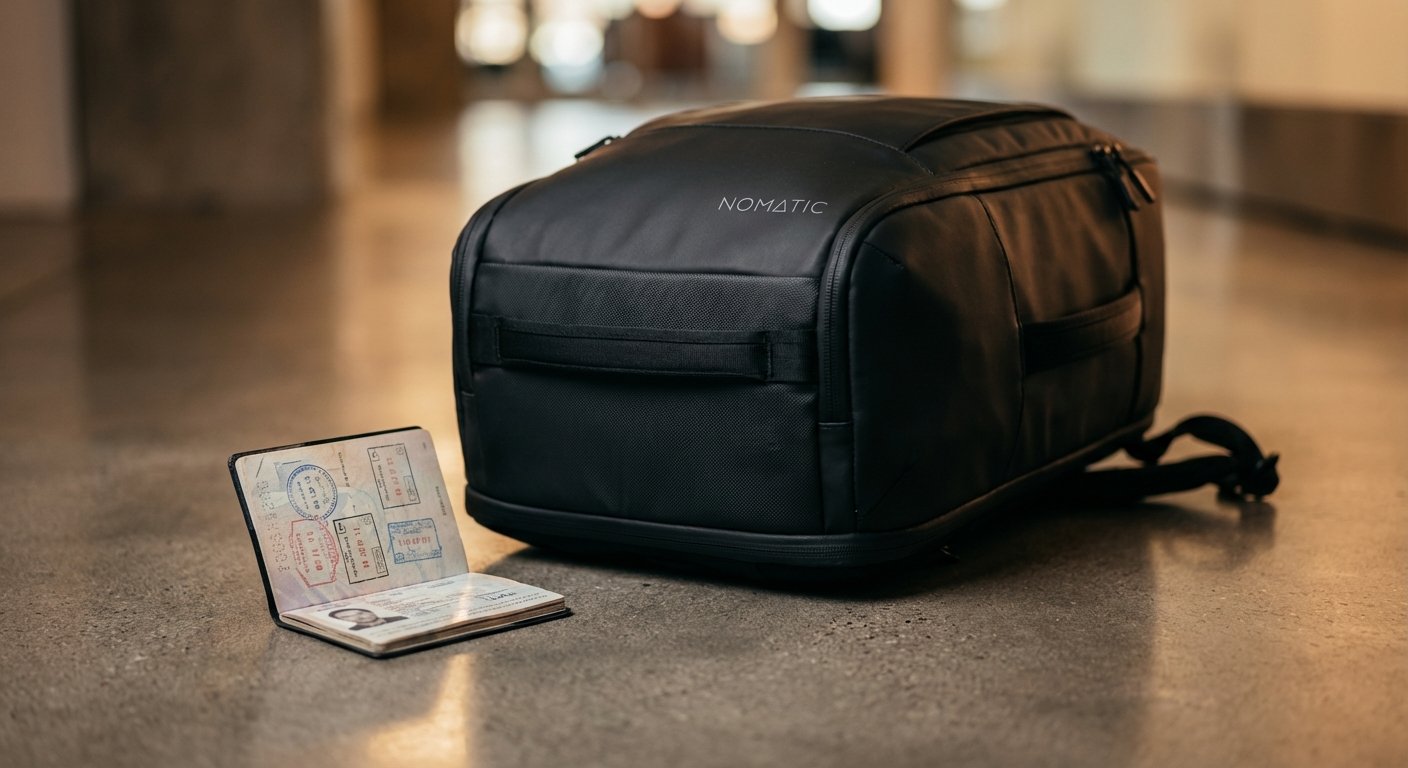
Do not let your partner pack a disorganized duffel bag. They will spend 20 minutes every morning looking for a pair of socks. That frustration will be blamed on you. Buy them a premium travel bag that acts as a mobile closet.
You want a bag that opens like a clamshell, has dedicated compartments, and fits in an overhead bin so you never have to worry about lost checked luggage.
Recommendation: Nomatic Travel Bag 40L.
Price: $280 – $300
Why: It’s virtually indestructible, has a dedicated laptop sleeve, a shoe compartment, and forces you to stay organized. It turns packing from a nightmare into a 5-minute process.
Check Price on Amazon
The Productivity Setup
If your partner’s productivity drops, their stress will skyrocket. You cannot do deep work efficiently on a single 13-inch screen if you are used to a real desk. Buy a portable monitor. It slips right into the laptop bag and doubles your screen real estate instantly.
Recommendation: ASUS ZenScreen 15.6″ Portable Monitor.
Price: $150 – $200
Why: It connects with one single USB-C cable for both power and video. It weighs less than two pounds. It instantly transforms a tiny cafe table into a professional workstation.
Check Price on Amazon
The Sanity Savers
Travel is loud. Airports are loud. Cafes are loud. If your partner gets overstimulated by noise, they will resent the travel. Buy the absolute best noise-canceling headphones on the market. Consider it an investment in relationship peace.
Recommendation: Bose QuietComfort Ultra Wireless Noise Cancelling Headphones.
Price: $350 – $430
Why: They literally turn off the outside world. Crying baby on the plane? Gone. Loud construction next to the Airbnb? Gone. Unmatched comfort for 8-hour work sessions.
Check Price on Amazon

Phase 4: Pitching The “Test Drive”
This is where most people fail.
They ask for a permanent lifestyle change. “Let’s sell the house, sell the cars, and go to Asia indefinitely!”
That is an insane pitch. No logical person would say yes to that.
You don’t sell a permanent move. You sell a 30-day test drive. You lower the barrier to entry so much that saying “no” sounds unreasonable.
Here is how you structure the test drive:
- Keep the apartment. Don’t break the lease. Sublet it if you want, or just eat the cost for one month. Your partner needs to know they have a safe home base to return to if they hate the experiment.
- Pick an “easy” location. Do not pick India or Vietnam for your first trip. The culture shock is too high. Pick somewhere with great infrastructure, fast Wi-Fi, and a familiar baseline. Think Lisbon, Portugal, or Medellin, Colombia (in a luxury neighborhood). Or even just a different state in the US to start.
- Over-budget. Plan to spend 20% more than you think you need. Book the nicer Airbnb. Book the direct flight. Pay for the premium co-working space. The first impression is everything. If the first week is miserable, the experiment is over.
Phase 5: The Exact Conversation Script
You have the math. You have the insurance. You have the gear. You have the test drive plan.
Now, you sit them down. You do not do this casually while watching Netflix. You treat it like a serious proposal, because it is.
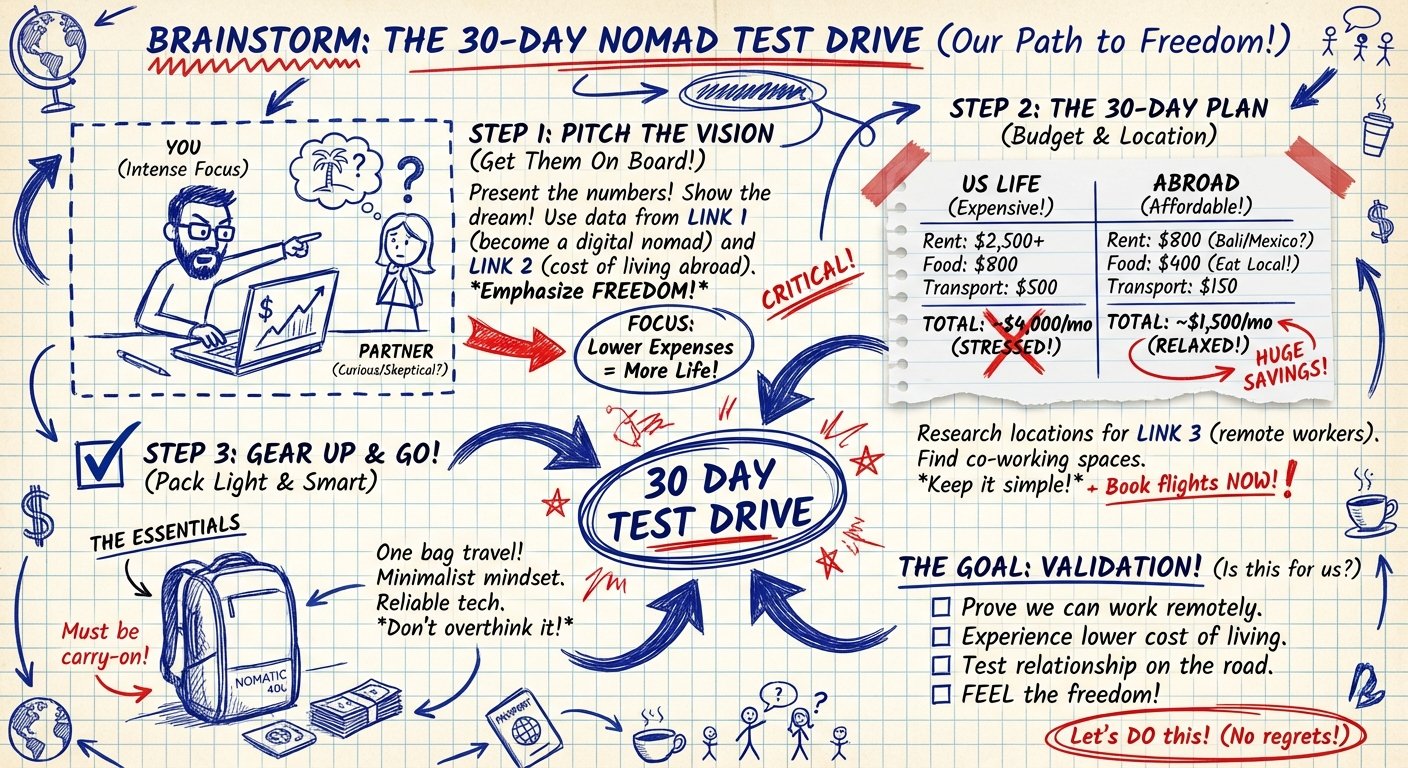
Here is the framework you use:
1. State your goal, but align it with theirs.
“I’ve been looking at our finances and our daily stress levels. I found a way for us to save a massive amount of money, get more free time, and not have to clean or cook as much, without quitting our jobs.”
2. Show the data.
“Here is exactly what we spend right now. Here is what we would spend living in [Location] for one month. We would actually save $[X].”
3. Address the fears before they speak them.
“I know the immediate concerns are health, money, and internet. I already found the solutions. We will use SafetyWing for medical, Wise for zero-fee banking, and NordVPN to encrypt our work data. I have the exact costs right here.”
4. Pitch the Test Drive, not the lifestyle.
“I am not asking to sell our stuff. I am asking for a 30-day experiment. We keep the apartment. We keep everything the same. We just work from a different room with a better view for four weeks.”
5. The Guarantee.
“If at the end of the 30 days, you hate it, we come home. We never have to do it again, and I will never bring it up again. But I think we owe it to ourselves to at least test it.”
Conclusion: Lead by Preparation
Convincing your partner to become a digital nomad is not about being a charismatic visionary. It is about being a competent planner.
People don’t follow dreamers. They follow people with a map.
If you come to the table with vague ideas about “freedom,” you will get rejected. If you come to the table with a spreadsheet, a fully costed risk-management plan, premium gear recommendations, and a low-risk 30-day trial run, you make it incredibly easy for them to say yes.
Remove the friction. Buy down the risk. Present the math. Then go pack your bags.