The Freelancer’s Trap: Why You Are Broke
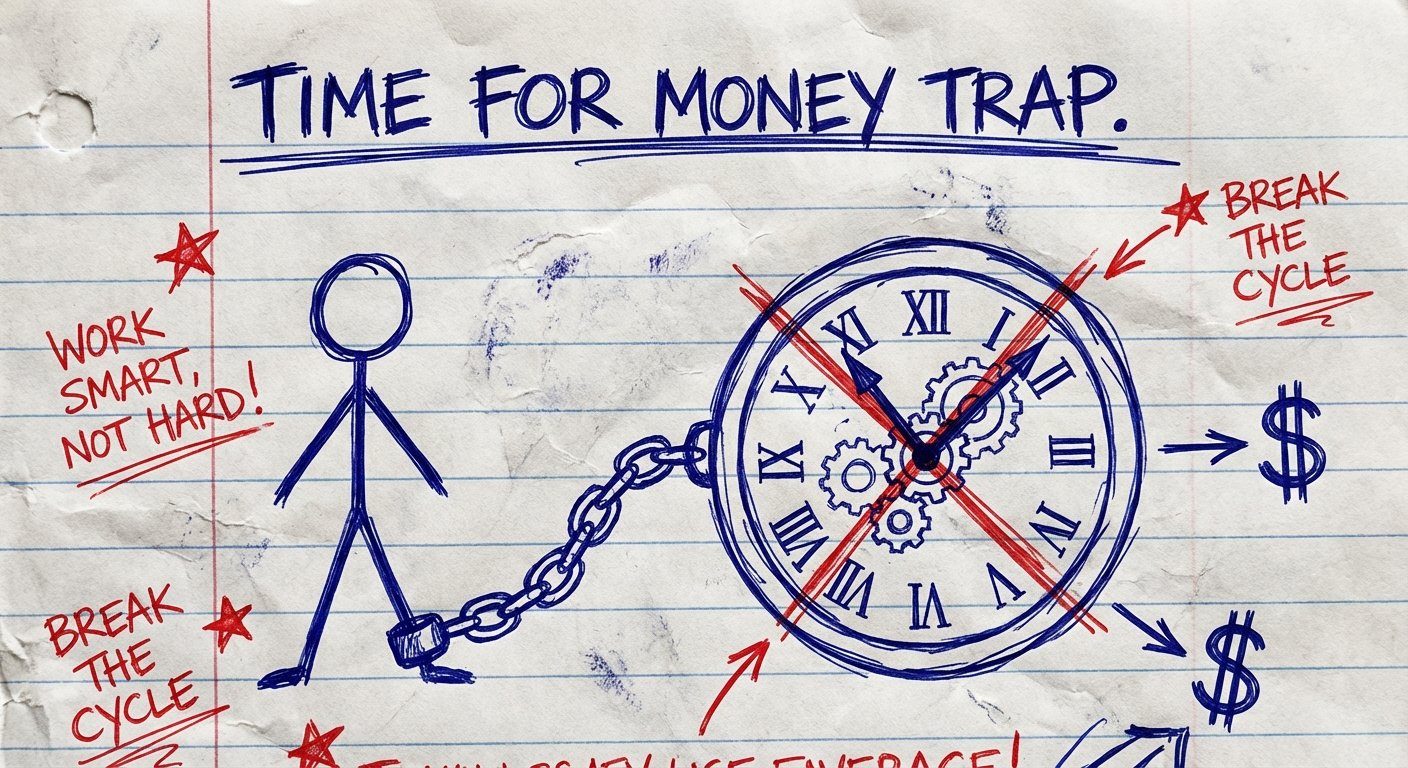
You are trading time for money. That is a losing game.
If you stop working, you stop eating. You have a job, not a business. Even if you charge $200 an hour, you have a ceiling. There are only 24 hours in a day. You need to sleep. You need to eat. Eventually, you cap out.
Most freelancers stay stuck here forever. They think the solution is to “work harder” or “get more clients.”
Wrong.
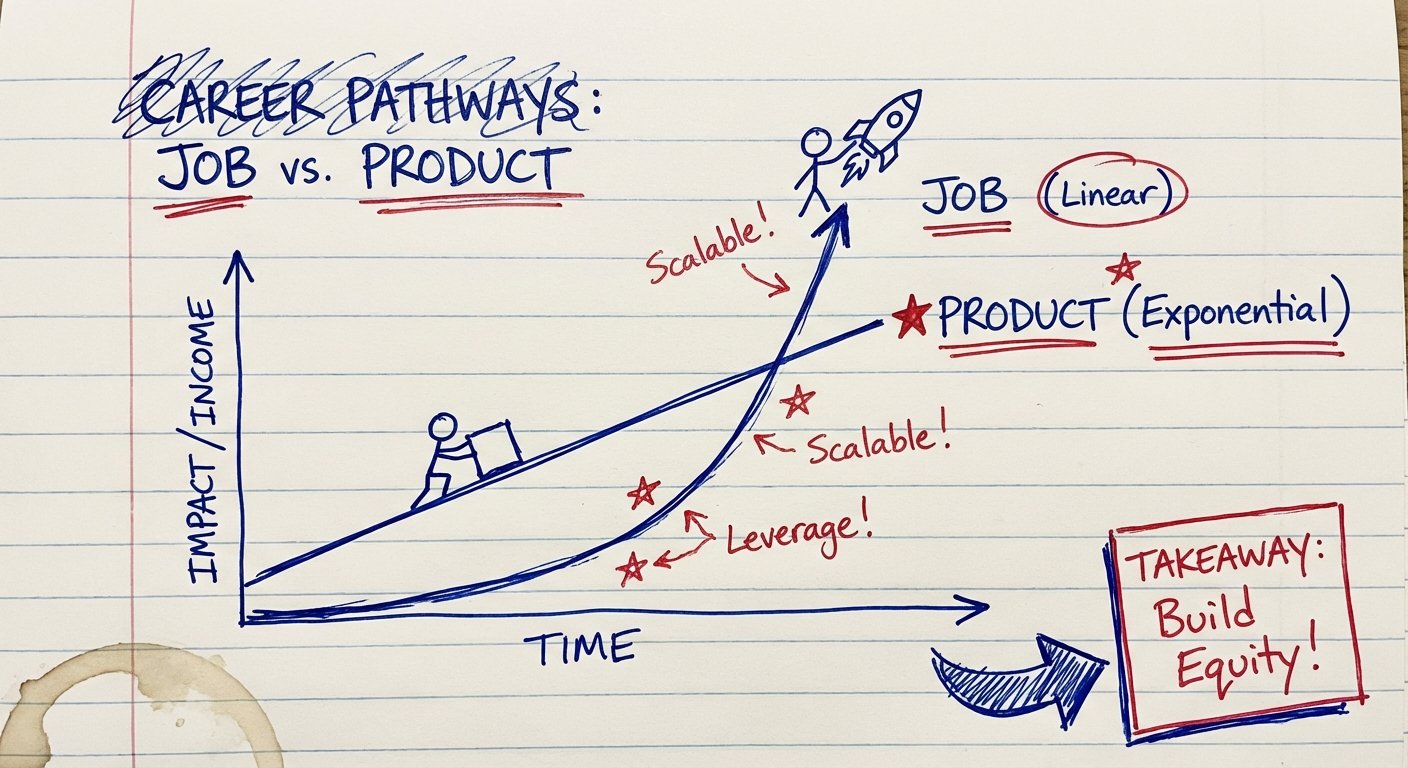
The solution is leverage. You need to detach your time from your income.
The best way to do that? Package what you know into a product. An online course. You build it once. You sell it forever. The margin is near 100%. The delivery cost is zero.
Stop overthinking it. You don’t need a PhD. You don’t need a studio. You just need to solve a problem people are already paying you to solve.
Step 1: The “Niche” Fallacy
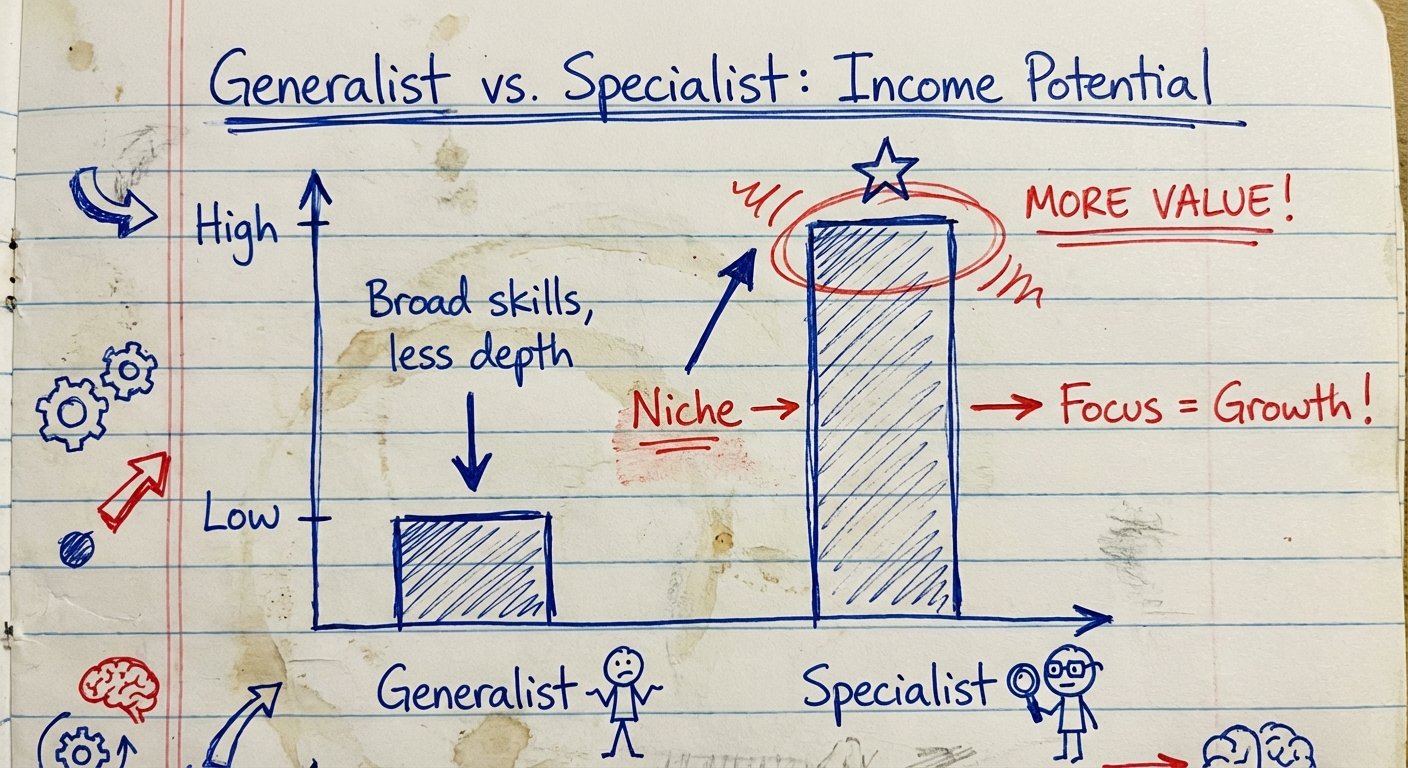
Most people fail before they start. They try to sell “Graphic Design.”
Nobody buys “Graphic Design.” That is a commodity. Commodities are cheap. You want to sell a solution to an expensive pain.
Don’t teach “How to use Photoshop.”
Teach “How to design landing pages that double conversion rates for dentists.”
See the difference? One is a skill. The other is a result. People pay for results. They pay for ROI.
Look at your last 10 freelance clients. What was the specific thing you did that made them the most money? Or saved them the most time?
That is your course. That is your offer.
Step 2: Sell It Before You Build It
Here is where everyone messes up. They spend six months recording videos. They build a beautiful website. They design a logo.
Then they launch. And nobody buys.
They wasted six months. This is stupid.
You validate with your wallet, not your feelings. You need to get paid before you do the work.
The Beta Launch Strategy
- Find 5 people who have the problem.
- Tell them: “I am building a system to solve [Problem]. It will normally cost $1,000. If you join the Beta group, you get it for $200. In exchange, I want your feedback.”
- If they say yes and give you money, you have a product.
- If they say no, you saved yourself six months of work.
Money is the only vote that counts.
Step 3: The Equipment You Actually Need
You are procrastinating. I know you are. You are looking at $3,000 cameras on YouTube. You think you need a cinema setup to teach people how to code or write copy.
You don’t.
Information is valuable because of the content, not the pixel count. However, there is one rule you cannot break: Audio must be perfect.
People will watch grainy video. They will not listen to bad audio. If you sound like you are in a bathroom, they will ask for a refund.
Here is the exact gear stack to get high-quality production without burning cash.
1. The Microphone (Don’t Mess This Up)
Do not use your laptop microphone. Do not use your AirPods. They sound like trash.
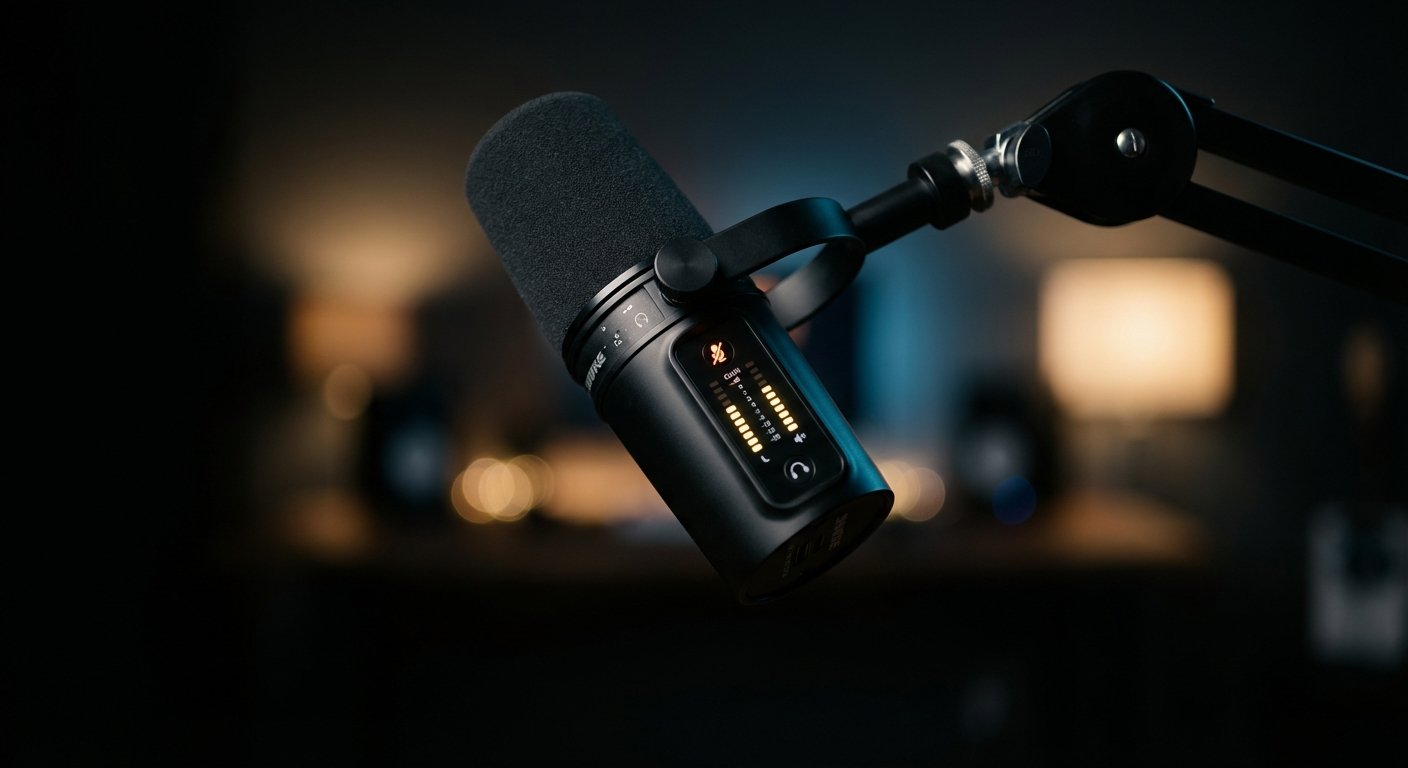
You need a dynamic microphone. It rejects background noise. It makes you sound authoritative. The current gold standard for USB microphones that sound like professional studio gear is the Shure MV7+.
It plugs directly into your computer via USB-C. No audio interface needed. It has a touch panel. It has auto-leveling so you don’t peak when you get excited.
Current Price: $270 – $300
2. The Camera (Good Enough is Perfect)
You do not need a DSLR. You do not need a Sony A7S III. You need a webcam that handles light well and focuses fast.
The Insta360 Link is currently the best webcam on the market. It is a 4K gimbal camera. It uses AI to track your face. If you move, it follows you. It has a larger sensor than typical webcams, so you look crisp even in average lighting.
It also has a “DeskView” mode. If you are teaching something physical or need to show a sketch, you tilt it down, and it corrects the perspective.
Current Price: $290 – $300
3. The Lighting
Lighting makes a $50 camera look like a $1,000 camera. Shadows on your face make you look tired and unprofessional.
Get a key light. Put it at a 45-degree angle from your face. The Elgato Key Light Air is built for this. It connects to your Wi-Fi. You can control the brightness and temperature from your computer. It comes with a stand. It takes up zero desk space.
Current Price: $120 – $140

Step 4: Structuring the Curriculum
Don’t dump information. Nobody wants information. They have Google for that. They want transformation.
Structure your course like a bridge.
Point A: Current State (Pain, Broke, Confused).
Point B: Desired State (Success, Rich, Clarity).
Your modules are the steps on the bridge.
Bad Structure:
- Module 1: History of Python
- Module 2: Syntax
- Module 3: Variables
This is boring. It feels like school.
Good Structure (Action-Based):
- Module 1: Setting up the Environment (The Quick Win)
- Module 2: Building Your First Script (Proof of Concept)
- Module 3: Automating Your Emails (Real World ROI)
Keep videos short. 5 to 10 minutes max. One concept per video. Give them homework after every module. If they don’t do the work, they don’t get the result.
Step 5: The Delivery Mechanism
Do not build a custom WordPress site. Do not hire a developer. That is procrastination.
Use a hosted platform. You pay a monthly fee. They handle the payments, the hosting, the login, and the security.
- Skool: Great for community-focused courses. Very simple.
- Kajabi: The all-in-one beast. Expensive, but does email marketing too.
- Teachable: Solid, reliable, standard.
Pick one. It doesn’t matter which one. Just pick one and upload the videos.
Step 6: The Math of Leverage
Let’s look at the numbers. This is why you do this.
Scenario A: Freelancing
You charge $100/hour.
You work 40 hours.
You make $4,000.
If you get sick, you make $0.
Scenario B: The Course
You spend 40 hours building the course.
You sell it for $500.
You sell 10 copies a month.
That is $5,000 a month. But here is the kicker: It takes you zero hours to fulfill those sales. You have bought back your life.
If you sell 100 copies? That’s $50,000. The work remains the same. The input is disconnected from the output. That is exponential growth.
Conclusion: Just Ship It
The only difference between you and the person making $50k a month from their course is that they actually launched it.
Their first version was probably terrible. Yours will be too. That’s fine. You can update it later. You can record better videos later.
But you cannot improve something that does not exist.
Stop reading articles. Stop researching cameras. Go find 5 people. Sell them the dream. Then build the bridge.
Get to work.