
This post contains affiliate links. If you purchase through our links, we may earn a small commission at no extra cost to you.
The Harsh Reality of the Remote Job Market
Everyone wants a remote job right now.
They want to sit on a beach in Bali. They want to sip from a coconut. They want to work two hours a day and collect a six-figure salary.
I have bad news. That is a fantasy sold to you by people selling cheap courses.
A remote job is just a job. The company gives you money. You give them a result. If you cost more than the result you produce, you get fired. If you produce more value than you cost, you get kept. It is simple math. ROI.
But here is your problem: You have zero experience.
To a business owner, a person with zero experience is a massive risk. You are a liability. You will take time to train. You will make mistakes. You might quit in two months.
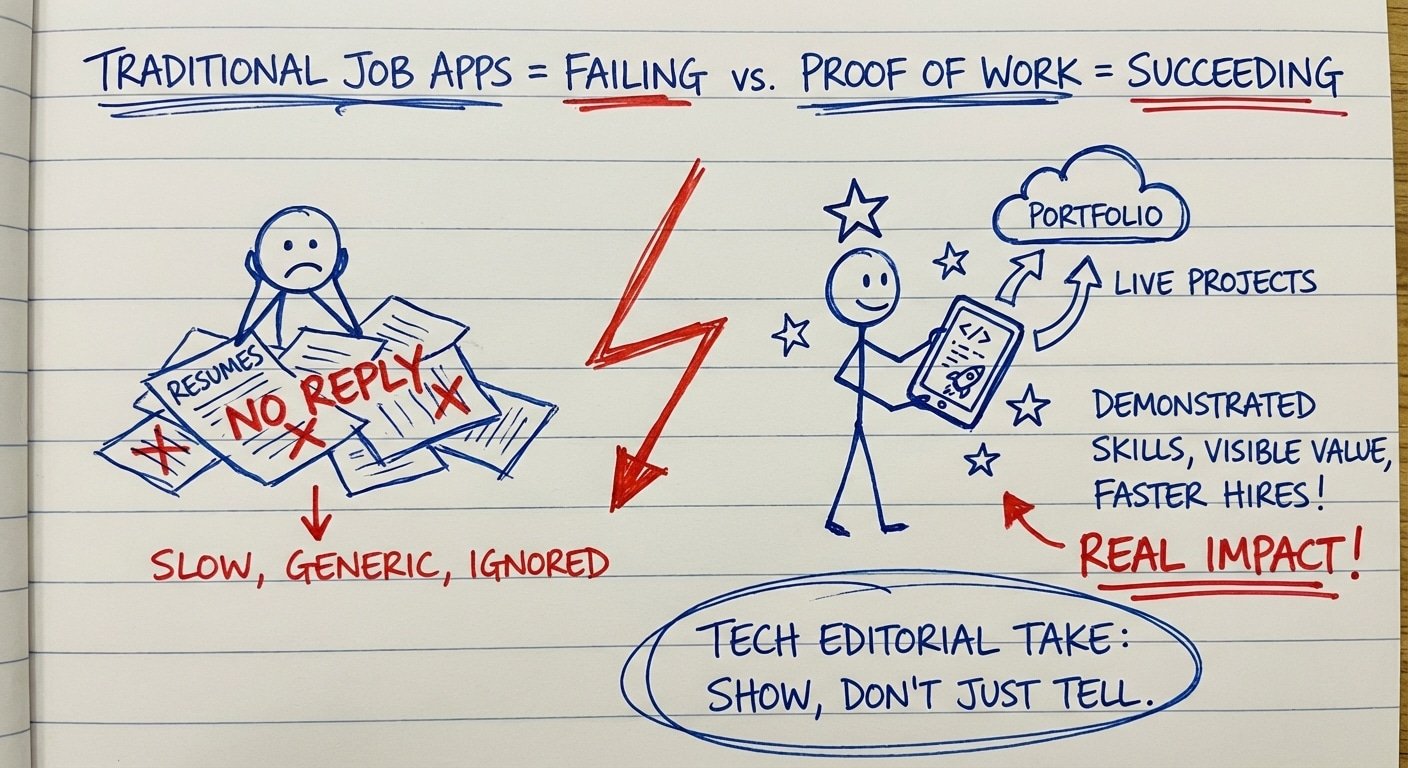
If you apply the traditional way—sending a resume to an “Easy Apply” button on LinkedIn—you are competing against 5,000 other people. Hundreds of them actually have experience. The hiring manager sorts by experience. Your resume goes into a black hole. You lose.
You cannot win a game where the odds are stacked against you. So, you have to play a different game.
Here is the exact 30-day blueprint to bypass the line, eliminate risk for the employer, and get your first remote job. No fluff. Just math and execution.
Phase 1: Stop Applying Like a Peasant (Days 1-5)
Most people treat job hunting like buying a lottery ticket. They spam out 100 identical resumes. They pray.
Stop. This is the definition of insanity.
If you have no experience, your resume is your weakest asset. It highlights exactly what you lack. We need to hide your weakness and highlight your competence.
Instead of applying to 100 jobs, you are going to pick 10 companies.
That is it. Just 10.
But you are going to research these 10 companies like your life depends on it. You need to understand how they make money. You need to understand who their customer is. You need to find a problem in their business that you can solve.
Because you have no experience, you need to pick a skill that requires high effort but low technical barrier to entry. Pick one of these three:
- Customer Support: Every growing business has angry customers. They need people to answer tickets fast.
- Lead Generation: Every business needs more customers. If you can build lists of potential clients, you are valuable.
- Basic Content Editing: Taking long-form podcasts and cutting them into short clips using basic software.
Pick one. Do not be a generalist. Generalists get ignored. Specialists get paid.
Phase 2: The “Proof of Work” Strategy (Days 6-15)
This is the secret. This is how you beat the guy with five years of experience.
Do not tell them you can do the job. Show them.
We call this “Proof of Work.” It removes the risk for the business owner. If you show me you can already do the exact task I need done, I do not care what your resume says. I do not care where you went to college. I care about the result.
Here is how you do it based on the skill you picked.
If you picked Customer Support: Go to the company’s software product. Sign up for a free trial. Find 5 things that are confusing. Write a 2-page FAQ document explaining how to use those features. Format it beautifully.
If you picked Lead Generation: Figure out who the company sells to. Use LinkedIn. Build a spreadsheet of 50 highly qualified leads. Include the lead’s name, company, email, and a personalized first line for an outreach email.
If you picked Content Editing: Go to the founder’s YouTube channel. Download a 40-minute interview. Cut out the 3 best 60-second clips. Add captions. Put them in a Google Drive folder.
You are doing the job for free before they hire you.
Is this hard? Yes. Will it take hours? Yes.
But the guy clicking “Easy Apply” isn’t doing this. This is how you separate yourself from the herd. You are proving that you are a self-starter. You are proving that you bring value before asking for money.

Phase 3: Building a Professional Tech Stack (Days 16-20)
You have no experience. So you cannot afford to look like an amateur.
When you get on an interview, if your camera is blurry, your audio is echoing, and your internet is dropping, you are dead. Perception is reality. If your setup looks cheap, they will assume your work is cheap.
You are going to invest in yourself. This is an ROI play. You spend $300 once to secure a $50,000 remote job.
1. The Video: Logitech Brio 4K
Your laptop webcam is garbage. Stop using it. You look like a hostage in a basement.
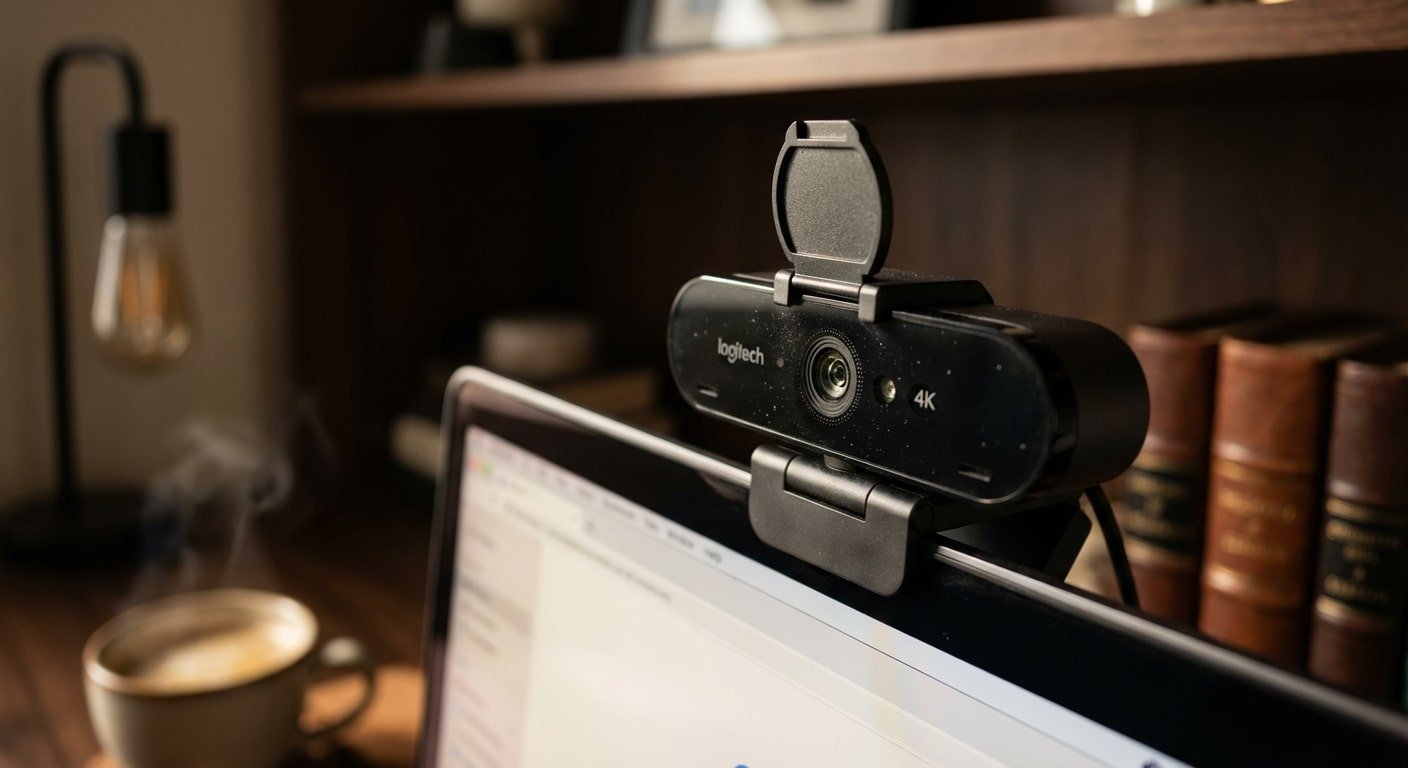
Get the Logitech Brio 4K Webcam. It automatically adjusts to bad lighting. It gives you a crisp, professional look. It makes you look like a high-level consultant, not a desperate job seeker.
Current Market Price: $130 – $160
2. The Audio: Blue Yeti USB Microphone
People will forgive bad video. They will not forgive bad audio. If you sound like you are in a tin can, the hiring manager will subconsciously want to get off the call.
Buy a Blue Yeti. Keep it close to your mouth. Turn the gain down. You will immediately sound authoritative. Good audio commands respect.
Current Market Price: $90 – $130
3. Security: NordVPN
Remote companies are paranoid about data breaches. If they hire you, and you log into their CRM from a public Wi-Fi network at a coffee shop, you are a security risk.
You need to proactively tell them, “I use a dedicated VPN for all work to ensure company data is secure.” This simple sentence blows hiring managers away. It shows maturity.
Use NordVPN. It is the industry standard. It is cheap. Do not overthink it.
4. Global Payments: Wise
If you are applying to companies outside your home country, HR will panic about how to pay you. Traditional bank wires cost a fortune and take days.
Remove the friction. Set up a Wise account. When they ask how compensation works across borders, you say, “I have a multi-currency Wise account. You just pay me locally in your currency, no wire fees required.” Friction removed. Deal closed.
Phase 4: The Outreach Machine (Days 21-28)
You have your target companies. You have your Proof of Work. You have your professional setup.
Now, we bypass HR.
HR’s job is to say “no.” Their job is to filter out the noise. We are not going to HR. We are going straight to the hiring manager or the founder. Their job is to solve business problems. You are bringing a solution.
Find the founder, VP of Operations, or Head of Support on LinkedIn or Twitter.
Send them a direct message or an email. Keep it incredibly short. Business owners are busy. Do not send a four-paragraph cover letter about your life story. They do not care.
Use this exact framework:
- The Hook: Acknowledge a specific thing about their business.
- The Value: Present your Proof of Work.
- The Ask: A low-friction Call to Action.
Here is an example script:
“Hey [Name],
Love the new feature you rolled out last week. I noticed your support team is getting slammed with questions about it on Twitter.
I went ahead and wrote out a complete, 3-page FAQ guide covering all the new workflows to help reduce your ticket volume. You can access the Google Doc here: [Link]. No strings attached.
If you are looking for someone to take customer support off your plate so you can focus on product, I’d love to chat. Either way, hope the guide helps.
Best, [Your Name]”
Read that again. It is utterly devoid of neediness. You are giving them free value. You are proving your competence. You are acting like a peer, not a beggar.
Now, do the math.
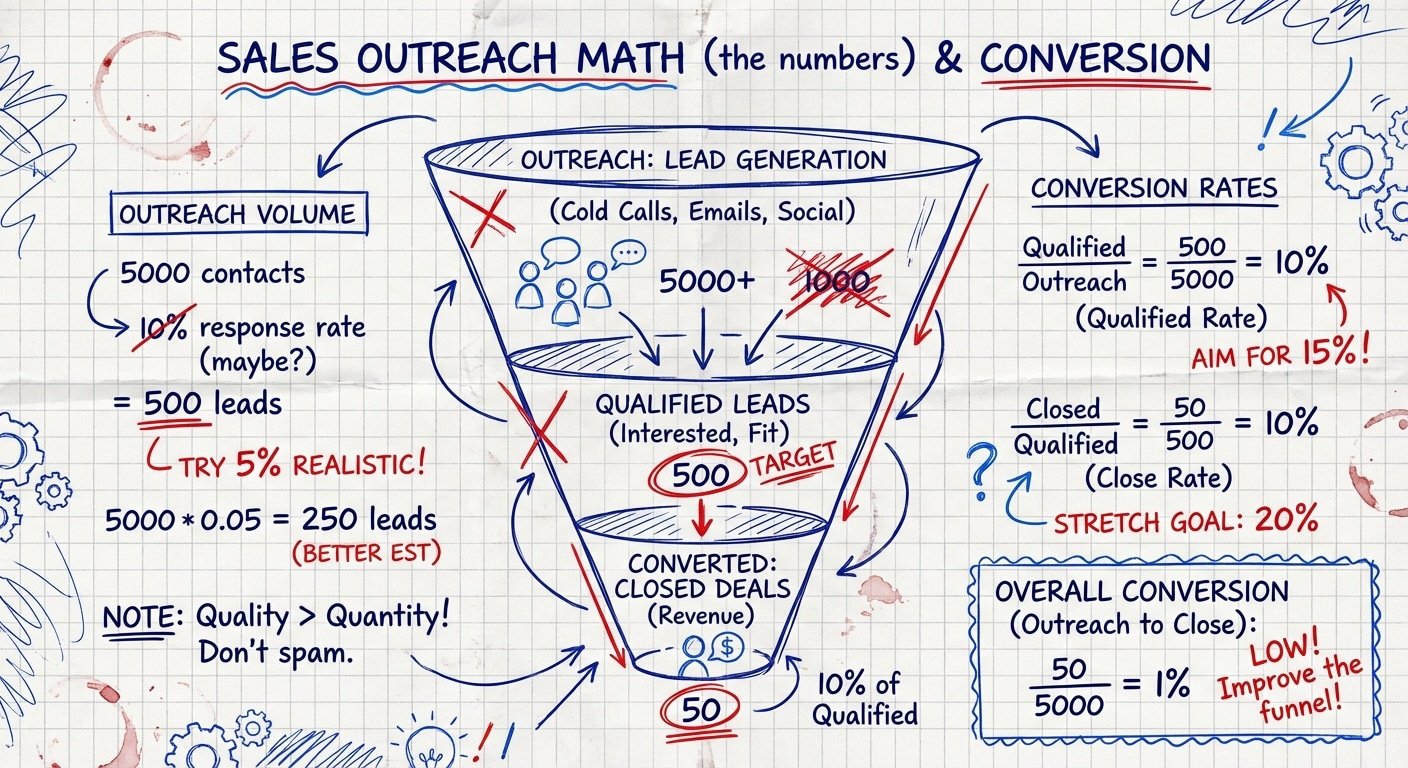
If you send this to 10 companies, 5 will open it. 3 will reply saying “Wow, thank you.” 1 or 2 will say, “This is amazing, do you have time for a call this week?”
You only need one “yes.”
Phase 5: Closing the Deal (Days 29-30)
You got the interview. You are on the final stretch.
Remember, you have no formal experience. If they ask about your past jobs, pivot immediately back to what you can do for them today.
When they say: “It looks like you haven’t worked in a remote tech role before. Why should we hire you?”
Do not get defensive. Own it. Turn it into a strength.

You say: “You are right. I don’t have a traditional tech background. But traditional candidates just send resumes. I spent 10 hours researching your business, found a bottleneck in your lead generation, and built you a list of 50 qualified leads for free. I don’t have bad habits from other companies. I am hungry, I learn fast, and as my work shows, I deliver results. If you hire me, I will bring that exact same intensity to the role every single day.”
That is how you answer the question.
Business owners want hunger. They want competence. They want people who solve problems instead of creating them.
During the interview, look directly into your Logitech Brio. Let your Blue Yeti capture your confident tone. Smile.
The Bottom Line
Finding a remote job with no experience is not a mystery. It is a process.
Most people fail because they are lazy. They want the reward without doing the work. They want to click “Easy Apply” and have a $60,000 salary drop into their lap.
That is not how the real world works.
If you want a remote job, you have to earn it.
Build a list of companies. Create Proof of Work. Upgrade your tech stack so you look like a professional. Pitch the decision-makers directly with upfront value. Close the interview with unshakeable confidence.
Execute this for 30 days. Your life will change. Stop making excuses and go do the work.