This post contains affiliate links. If you purchase through our links, we may earn a small commission at no extra cost to you.
How to Vet a Short-Term Rental Before Booking (The Checklist)
Most people are terrible at booking short-term rentals.
They look at glossy photos. They see a cheap price. They hit “book” and hope it works out.
It usually doesn’t.
They arrive. The internet crawls at 3 Mbps. The mattress feels like a sack of potatoes. The neighbors throw techno parties at 3 AM. The “charming street” is an active construction zone.
Suddenly, they can’t work. They miss client calls. They sleep three hours a night. They are miserable.
They thought they were saving $20 a night. Instead, they lost thousands of dollars in productivity, energy, and sanity.
If you work remotely, your Airbnb is not a vacation home. It is your office. It is your recovery center. It is your primary asset for producing income.
If your environment fails, you fail.
You must treat booking a rental like buying a business. You need a checklist. You need due diligence. You need to strip away the marketing BS and look at the cold, hard facts.
Here is the exact framework I use to vet short-term rentals. It removes emotion. It removes guesswork. It guarantees you get exactly what you pay for. Execute this, and you will never lose money on a bad rental again.
1. The Math of a Bad Rental (The Stupid Tax)
Let’s establish the stakes.
A bad rental doesn’t just annoy you. It drains your bank account. You have to understand the math behind your environment.
Let’s say your time is worth $50 an hour. You book a “cheap” apartment to save $300 for the month. But the Wi-Fi drops out constantly. It takes you an extra hour a day just to upload files, reconnect to Zoom, or find a coffee shop to work from.
One hour lost per day. Thirty days. That is 30 hours of lost labor.
At $50 an hour, you just paid $1,500 in lost productivity to save $300 in rent. You are in the red by $1,200.
That is terrible math.
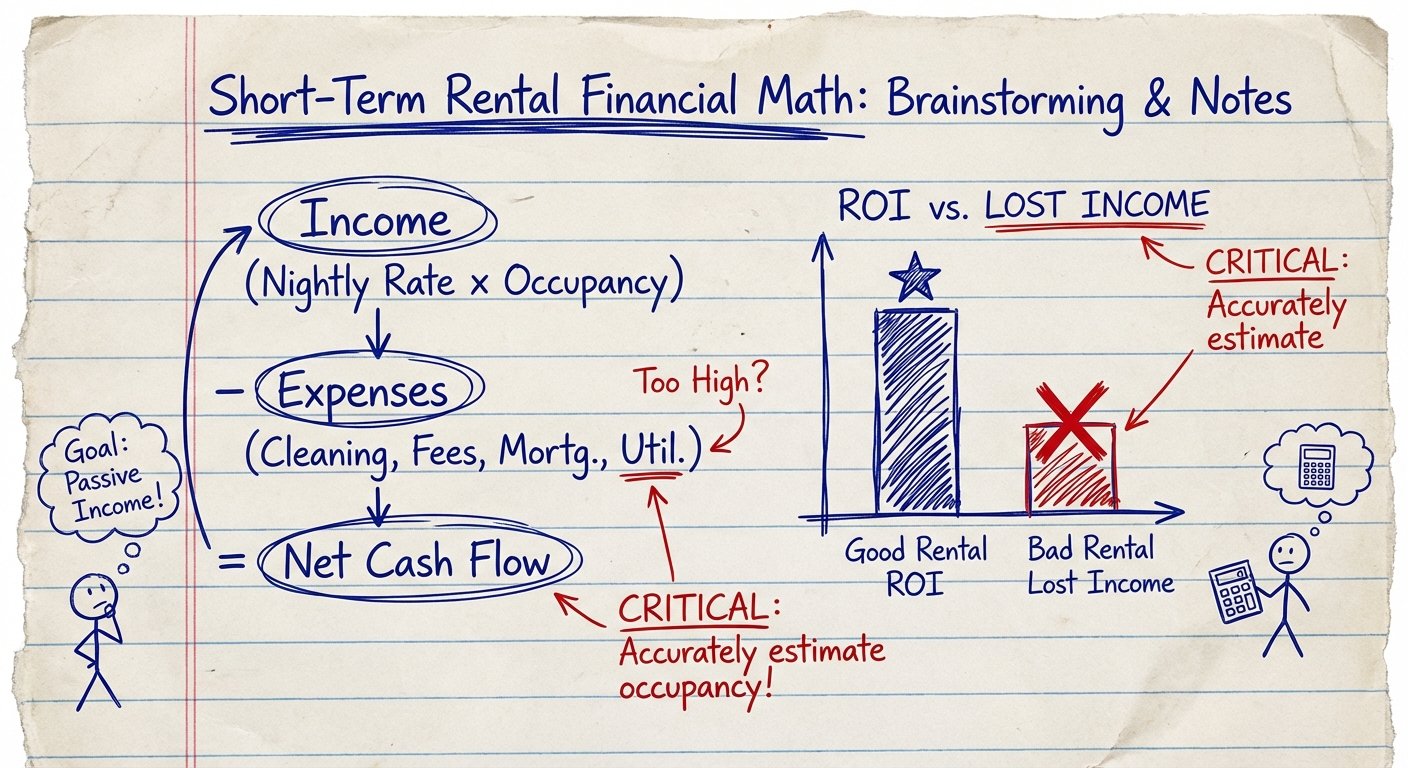
When you vet a rental, you are protecting your capacity to earn. You are buying time, focus, and sleep. If paying a 20% premium gets you flawless internet, zero noise, and a perfect bed, you pay the premium. The ROI on a perfect work environment is massive.
Don’t be cheap on the thing that allows you to make money.
2. Photos Are Marketing. Reviews Are Data.
Hosts hire professional photographers to distort reality.
They use wide-angle lenses to make a closet look like a master bedroom. They crank up the brightness to hide water damage and mold. They strategically crop out the brick wall blocking the window.
Ignore the photos. Look at the data.
Reviews are the only truth. But you have to know how to read them. Do not look at the 5-star reviews. 5-star reviews are useless. They are usually written by people who just want to be nice and say, “The host was friendly!”
Friendly hosts don’t fix broken internet.
You want to read the 4-star and 3-star reviews. These are the people telling the truth. They will say things like, “Great location, but the shower only stays hot for two minutes,” or “Nice place, but the Wi-Fi dropped every afternoon.”
Open the reviews on a desktop. Hit Ctrl+F (or Cmd+F). Search for these exact words:
- Noise
- Wi-Fi
- Internet
- Bed
- Cold
- Hot
- Smell
- Bugs
If a problem shows up twice in the reviews, it is not a fluke. It is a feature of the house. The host knows about it and hasn’t fixed it. Do not book it.
3. The Wi-Fi Interrogation & Tech Defense
Every host claims to have “Fast Wi-Fi.” 90% of them are lying.
Fast internet to a host means they can stream Netflix in 1080p without it buffering. Fast internet to you means you can screen-share a presentation on Zoom while uploading a 2GB video file.
Do not trust the Airbnb Wi-Fi badge. Message the host before you give them a dime. Send this exact script:
“Hi. I work online and need a highly stable connection for video calls. Could you please run a test on Speedtest.net from inside the apartment and send me a screenshot of the results?”
If they refuse, or say “We’ve never had a complaint,” they are hiding bad internet. Walk away.
If they send it, look at the Upload speed, not just the Download speed. Download is for consuming. Upload is for producing. You need at least 10 Mbps upload to not look like a pixelated mess on your calls.
But verifying the speed is only step one. Step two is securing the connection.
Never trust a host’s network. It is a massive security risk. You are sharing a network with the host, the previous guests who have the password, and whoever lives next door. They can intercept your traffic, steal your passwords, and access your devices.
You need an encrypted tunnel. I turn on a VPN the second I connect to any rental Wi-Fi. I use NordVPN because it’s fast enough that it doesn’t throttle my Zoom calls, and it instantly blocks anyone else on the network from seeing my data. Get NordVPN to protect your assets while traveling.
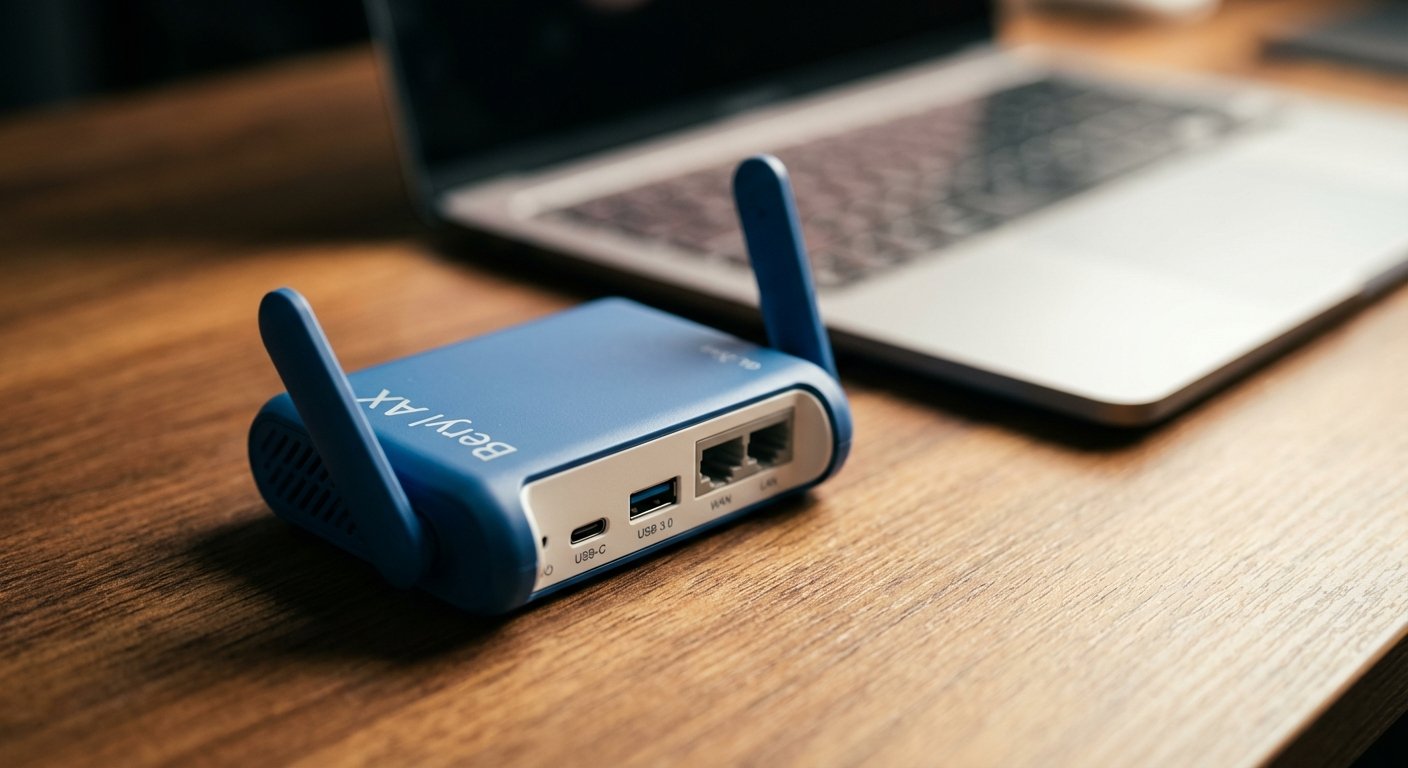
To take total control of your internet, bring your own hardware. Stop relying on the host’s $15 generic router from 2014.
I carry a dedicated travel router. It plugs directly into the host’s modem, creates my own private Wi-Fi network, and routes all my devices through a hardware VPN automatically. You connect your phone, laptop, and tablet to it once, and you never have to type in a host’s Wi-Fi password again.
Recommended Gear: The GL.iNet GL-MT3000 (Beryl AX) Pocket-Sized Wi-Fi 6 Router.
Estimated Price: $80 – $110
Action: Check Price on Amazon
4. The Sleep Audit (Beds and Light)
Sleep is your ultimate performance enhancer. You cannot outwork a bad mattress.
If you don’t sleep, your cognitive function drops. You make bad decisions. You snap at clients. You lose money.
Look very closely at the photos of the bed. Is it sitting on a flimsy, folding metal frame? Does the mattress look six inches thick? Do the pillows look like deflated balloons?
If the bed looks cheap, the sleep will be cheap.
Next, check the window coverings in the bedroom. Do you see thick, dark blackout curtains? Or do you see sheer white fabric and plastic blinds? Sheer fabric means the sun is going to wake you up at 5:30 AM every single day. If you can’t control the light, you can’t control your sleep schedule.
If the bed setup looks weak, do not book.
5. The Google Street View Audit (Noise and Chaos)
Location descriptions written by hosts are fiction.
“Steps from the vibrant city center” means the apartment is located directly above a nightclub that plays bass-heavy music until 4 AM.
“Up-and-coming neighborhood” means you will probably get mugged if you walk outside with a laptop bag.
Before you book, look at the map area. Find a cross street. Open Google Maps. Drop the yellow pegman onto the street and walk around digitally.
Look at the buildings next door. What do you see?
- Vacant lots with scaffolding? That means heavy construction noise starting at 7 AM. Jackhammers do not care about your Zoom schedule.
- Bars or restaurants directly underneath? That means drunk people smoking outside your window and clanking bottles late at night.
- Thick metal bars on the windows of every surrounding house? That tells you exactly what the locals think about the neighborhood crime rate.
Do the math again. If you save $15 a night but lose 3 hours of sleep because of a barking dog at a junkyard next door, your hourly rate just tanked. It’s a bad deal.
6. The HVAC Trap (Don’t Roast or Freeze)
In many parts of the world, “Air Conditioning” is a lie.
A host will check the AC box on the listing platform. When you arrive in the middle of July, you find a tiny, rattling desk fan pointing at the bed.
Look at the photos. Search the walls for a physical, white split-unit air conditioner. If you do not see the box on the wall, it does not exist. Do not assume central air is standard; outside of North America, it is incredibly rare.
The same goes for winter. If you are booking a place in November, ask how the heating works. Many old buildings rely on central heating controlled by the city, meaning the host cannot turn it on until a specific date mandated by the government. If a cold front hits early, you freeze.
Verify the temperature control, or your productivity will drop to zero.
7. The Kitchen and Workspace Check
If you stay in a city for a month, eating out for every meal destroys your profit margins.
You need a functional kitchen. But most short-term rental kitchens are built for making a cup of coffee, not cooking a meal.
They have one dull, rusted knife, a scratched Teflon pan that causes cancer, and zero counter space.
Zoom in on the kitchen photos. Can you actually prep a meal there? Is there a real stovetop, a refrigerator that isn’t a hotel minibar, and room to chop vegetables? If not, calculate the cost of eating out twice a day and add it to the rental price. It’s usually not worth it.
Next, look at the workspace.
A bar stool pulled up to a kitchen island is not a workspace. You will destroy your lower back in three days. You need a standard-height table and a chair with actual back support.
If the place is perfect but lacks a good chair, negotiate. Message the host: “I want to book for 30 days. If you buy a basic, ergonomic office chair for the desk, I will book it right now.”
Smart hosts will do it. It costs them $60 to secure a $2,000 booking. Guaranteed revenue. If they refuse, they are bad at business. Move on.
8. Health, Safety, and Defensive Gear
Short-term rentals are not regulated like hotels. There is no fire inspector. There is no corporate security guard. There is no standard maintenance protocol.
You have to protect yourself. Assume no one else cares about your safety.
First, check for a carbon monoxide detector. Most countries do not require them by law. If the apartment has a gas stove, a gas water heater, or gas heating, a leak will kill you silently in your sleep.
Never trust a host to provide one. Bring your own. It takes up zero space in your bag and could literally save your life.
Recommended Gear: Kidde Battery-Operated Carbon Monoxide Alarm.
Estimated Price: $20 – $35
Action: Check Price on Amazon
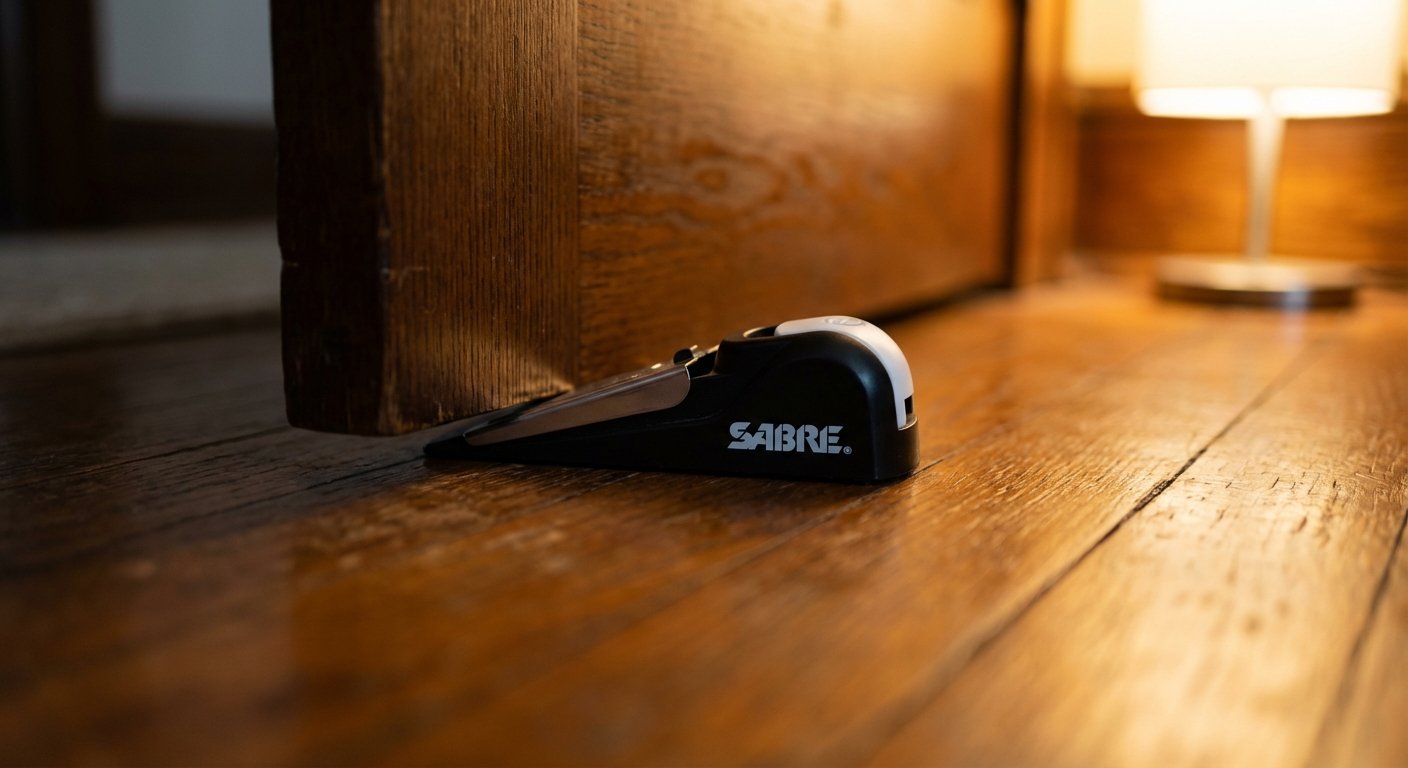
Second, upgrade the door security. You have no idea how many people have the spare key to that apartment. Previous guests who made copies. The cleaning staff. The maintenance guy. Random property managers.
When you are inside, lock the door and wedge a physical barrier under it. Even if someone has a key, they cannot enter while you are sleeping.
Recommended Gear: SABRE Wedge Door Stop Security Alarm (sounds a 120dB siren if the door is pushed).
Estimated Price: $12 – $20
Action: Check Price on Amazon
Third, cover your financial downside. If you trip down a poorly lit, narrow staircase in a foreign rental and break your arm, your domestic health insurance is not going to cover the $15,000 international hospital bill.
You need dedicated travel medical coverage. I use SafetyWing because it is built specifically for nomads and remote workers. It covers medical emergencies, travel delays, and unexpected disasters. It costs roughly $45 for four weeks. That is less than one bad dinner out. Don’t be cheap on things that can bankrupt you. Get SafetyWing before you fly.
9. The Host Speed Test
When the toilet breaks at 10 PM, or the internet goes down 30 minutes before a major client pitch, you want a host who replies fast.
You must test their response time before you give them your money.
Send them a message with a specific, slightly detailed question. For example: “Hi, I’m looking at booking this for three weeks. Quick question: Does the apartment have a dedicated hot water heater, or is it shared with the whole building?”
Time their response.
If they reply in 15 minutes, excellent. That is a professional who treats their rental like a business.
If they take 24 hours to reply to a sales inquiry, how long do you think they will take to reply when you have a problem? They don’t care. Do not book with them.
You are buying a service. Evaluate the customer support before you sign the contract.
10. The Bait and Switch Defense
There is a common scam in the short-term rental market.
A host lists a beautiful, underpriced apartment. You book it. You are thrilled.
The day before you arrive, the host sends you a message: “Oh no! I am so sorry, but there was a massive plumbing leak in the apartment today. But don’t worry! I have another apartment across town you can stay in. I will transfer your reservation.”
The other apartment is terrible. It is dirty, in a bad location, and worth half of what you paid.
This is the bait and switch. There was no plumbing leak. They double-booked the good apartment for a higher price, or the good apartment never existed.
To avoid this, look at the host’s profile. Do they have one or two listings? Or do they have 45 listings?
If they have 45 listings, they are a faceless property management company. They are significantly more likely to pull the bait and switch because they have the inventory to shuffle you around.
If this ever happens to you, DO NOT accept the change in the app. The moment you click “Accept,” you forfeit your right to a refund. Call the platform’s customer support immediately. Tell them the host is canceling and attempting to relocate you to an inferior property. Force the platform to cancel it on the host’s end, refund you in full, and penalize the host.
11. How to Negotiate the Rate
Once you find a place that passes every single test on this checklist, do not pay full price if you are staying long term.
Hosts want guaranteed income. They hate vacancies. Turning over an apartment every three days is exhausting and expensive for them.
If you want to stay for a month, you have leverage. Use it.
Message the host before booking with this script:
“Hi [Name], I love your place. I am a quiet remote worker looking to book for 30 days. Your current rate is $2,000. If you can do $1,500, I will book right now and you won’t have to worry about vacancies for the whole month. Let me know if that works.”
20% of hosts will say yes immediately. Another 30% will counter-offer at $1,700.
You just saved $300 to $500 for sending a 30-second message. That is a massive return on your time.
The Choice is Yours
Booking a short-term rental is pure risk management.
You eliminate variables until you are left with a high-probability bet.
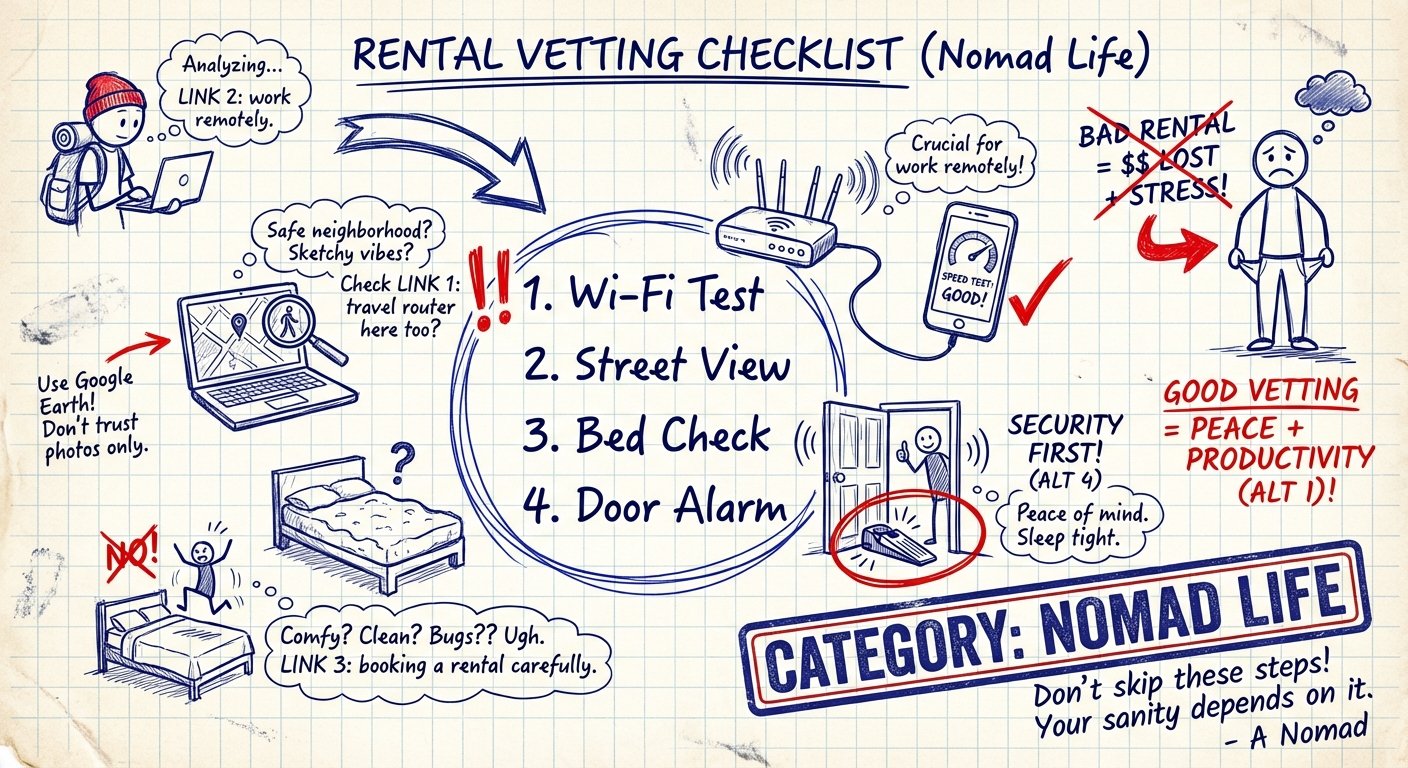
Read the negative reviews. Test the Wi-Fi. Verify the street view. Vet the host. Protect your physical safety with the right gear.
Do the work upfront, and you will work productively. You will sleep well. You will make more money.
Skip these steps, and you pay the stupid tax.
Execute the checklist.