Most digital nomads are broke.
They trade a cubicle for a hostel bunk. They trade a boss for fifty low-paying clients on Upwork. They trade security for anxiety.
Why? Because they position themselves as “freelancers” or “travelers.”
If your LinkedIn profile says “Aspiring Digital Nomad,” you are telling the market you are unemployed. You are telling them you are a risk. You are telling them you prioritize your vacation over their deadlines.
Stop it.
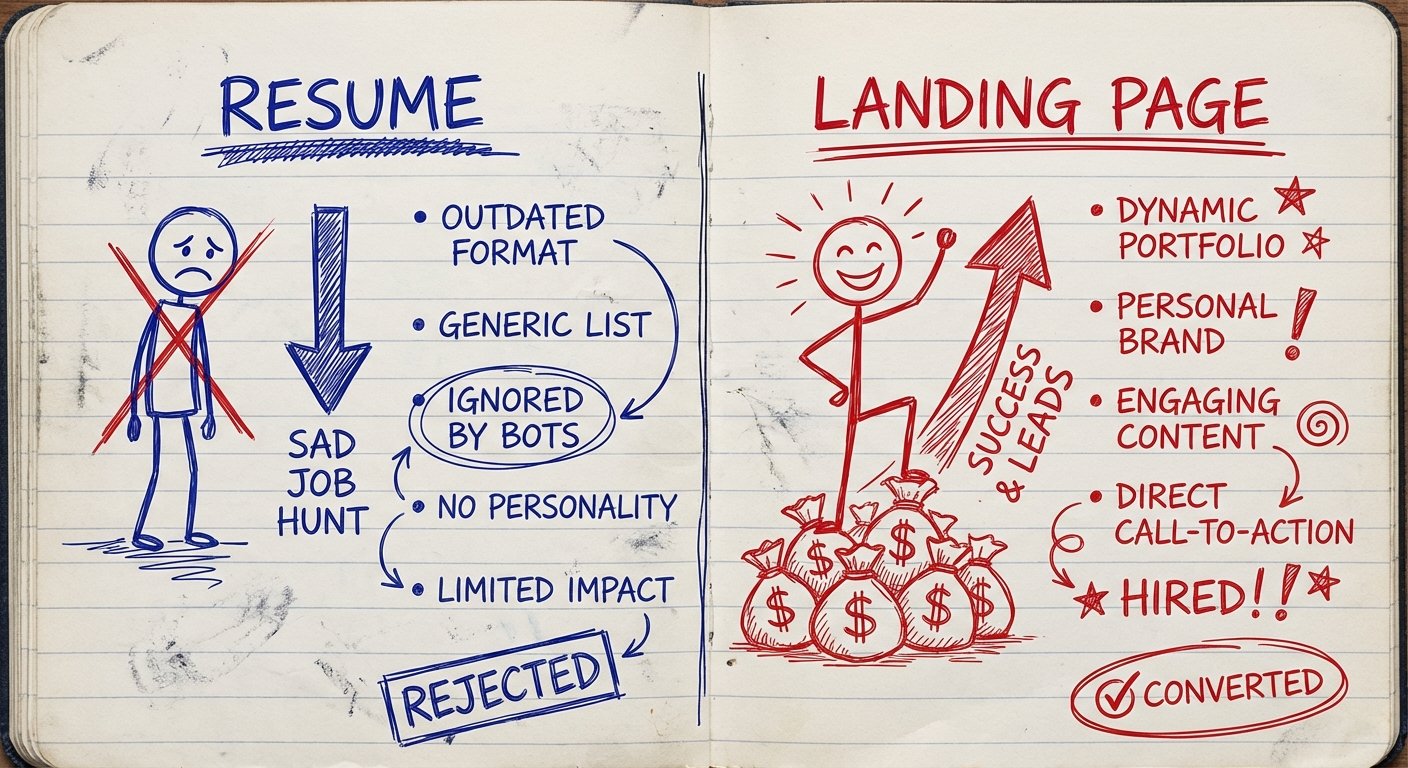
If you want to make serious money while traveling, you need to stop acting like a backpacker and start acting like a business. Your LinkedIn profile is not a resume. It is a landing page. Its only job is to convert strangers into leads.
I’m going to show you exactly how to fix your profile. We are going to strip out the fluff. We are going to focus on ROI. And we are going to turn your LinkedIn into a machine that prints money.
The Mindset Shift: You Are Not an Employee
The biggest mistake I see is nomads copying the corporate structure. They list their job titles. They list their duties. They talk about being a “team player.”
Nobody cares.
Clients do not buy “team players.” They buy results. They buy solutions to painful problems.
When you are location-independent, trust is the only currency that matters. A client in New York needs to know that the guy in Bali isn’t going to disappear when the surf is good. Your profile needs to scream competence.
Here is the formula:
- Old Way: “I am a graphic designer who loves travel.”
- New Way: “I help SaaS companies increase conversion rates by 20% through UI design.”
See the difference? One is a hobby. The other is an investment.
The Headline: Your $10,000 Billboard
You have about 200 characters to get someone to click. If you waste this space, you lose the game.
Do not use vague words like “Guru,” “Ninja,” or “Enthusiast.” Those words mean you are cheap. High-ticket clients look for specialists.
Use this structure: I help [Avatar] achieve [Result] by [Mechanism].
Examples:
- “I help E-commerce brands add $50k/mo in revenue via Email Marketing.”
- “I help Real Estate Agents automate lead gen using HubSpot.”
- “Video Editor for 7-Figure YouTubers. Retention focused.”
If you can put a dollar sign or a percentage in your headline, do it. Numbers build trust. Words build confusion.
The Visuals: Look Expensive
People judge books by their covers. They judge you by your profile picture.
If your photo is a selfie of you in sunglasses holding a coconut, you are done. You look like a tourist. Tourists don’t get paid $100/hour. Consultants do.
You need a clean, high-resolution headshot. You can take this yourself, but you need the right gear. If you are serious about content creation or client calls, buy a real camera. Your webcam is costing you sales.
The Sony Alpha a6400 is the standard. It is compact enough to fit in your carry-on, but powerful enough to shoot 4K video for your content.
Sony Alpha a6400 Mirrorless Camera
Price: $850 – $1,000
Use this camera for your profile picture. Use it for your banner image. Use it for your Zoom calls. When you look like you have high production value, clients assume your work has high value. It’s a psychological trigger. Use it.

The Banner: Prime Real Estate
Most people leave the banner blank. Or they use a stock photo of a laptop and coffee. Boring.
Your banner is a billboard. It should have:
- A clear value proposition (what you do).
- Social proof (logos of companies you’ve worked with).
- A Call to Action (DM me “GROWTH”).
If you have been featured in Forbes, put the logo there. If you helped a client make $1M, put that number there. Don’t be humble. Humble doesn’t pay the rent.
The “About” Section: The Sales Letter
Stop writing your biography. Nobody cares where you went to college. Nobody cares that you “love learning.”
Your “About” section is a sales letter. It should follow the classic copywriting framework: AIDA (Attention, Interest, Desire, Action).
1. The Hook (Attention)
Call out your specific audience immediately. “If you are a SaaS Founder struggling to lower churn, keep reading.”
2. The Problem (Interest)
Twist the knife. Describe their pain better than they can. “You are spending $10k a month on ads, but your users drop off after day 3. You are burning cash.”
3. The Solution (Desire)
Explain your mechanism. How do you fix it? “I implement a 4-step onboarding email sequence that engages users instantly.”
4. The Proof
Give examples. “I did this for Client X and they saw a 40% increase in retention in 30 days.”
5. The Call to Action (Action)
Tell them exactly what to do. “Scroll up and click ‘Message’ to book a 15-minute audit.”
The Nomad Tech Stack: Audio Matters More Than Video
You have fixed your profile. You got the lead. Now you have to close them on a call.
You are a nomad. You might be in a coworking space in Mexico City or an Airbnb in Lisbon. There is background noise. There is echo.
If your audio sounds bad, the client subconsciously thinks you are unprofessional. They think “This guy is on vacation.”
Bad audio loses deals. Good audio commands authority.
Do not use your AirPods. They are garbage for sales calls. Get a dynamic USB microphone that rejects background noise.
The Shure MV7+ is the best investment you can make. It creates that “podcast voice” that makes you sound authoritative. It plugs directly into your laptop via USB-C. It filters out the noise of the cafe around you.
Shure MV7+ Podcast Microphone
Price: $270 – $300

Pair this with lighting. You cannot rely on natural light. It changes. It gets dark. You look grainy.
Get a small panel light that clips to your laptop. The Lume Cube Panel Mini is the standard for a reason. It fits in your pocket.
Lume Cube Video Conference Lighting Kit (Panel Mini)
Price: $60 – $70
Experience Section: Results Over Responsibilities
Most profiles look like this:
- Marketing Manager (2019-2021)
- Responsible for social media posts.
- Managed a team of three.
This is weak. “Responsible for” means you showed up. It doesn’t mean you did anything good.
Rewrite every bullet point to focus on the outcome. Use the structure: Achieved [X] by doing [Y].
- Better: “Grew Instagram following from 10k to 100k in 6 months by implementing a Reels-first strategy.”
- Better: “Reduced ad spend by 30% while maintaining lead volume through improved targeting.”
If you are a freelancer, list your business as your current role. “Founder – [Your Name] Consulting.” Then list your major client wins as “Projects” or within the description.
Content Strategy: Document, Don’t Create
You need to post content to stay top of mind. But you don’t need to be a “creator.” You don’t need to dance on TikTok.
The best content for getting clients is Case Studies.
Every time you solve a problem, write a post about it.
- “We had a client with Problem X.”
- “We tried Solution Y.”
- “Here is the result (Chart/Screenshot).”
- “Here is what we learned.”
This proves you can do the job. It builds authority without being salesy. When a prospect sees that you solved their exact problem for someone else, the sale is already 80% done.
Networking: The Sniper Approach
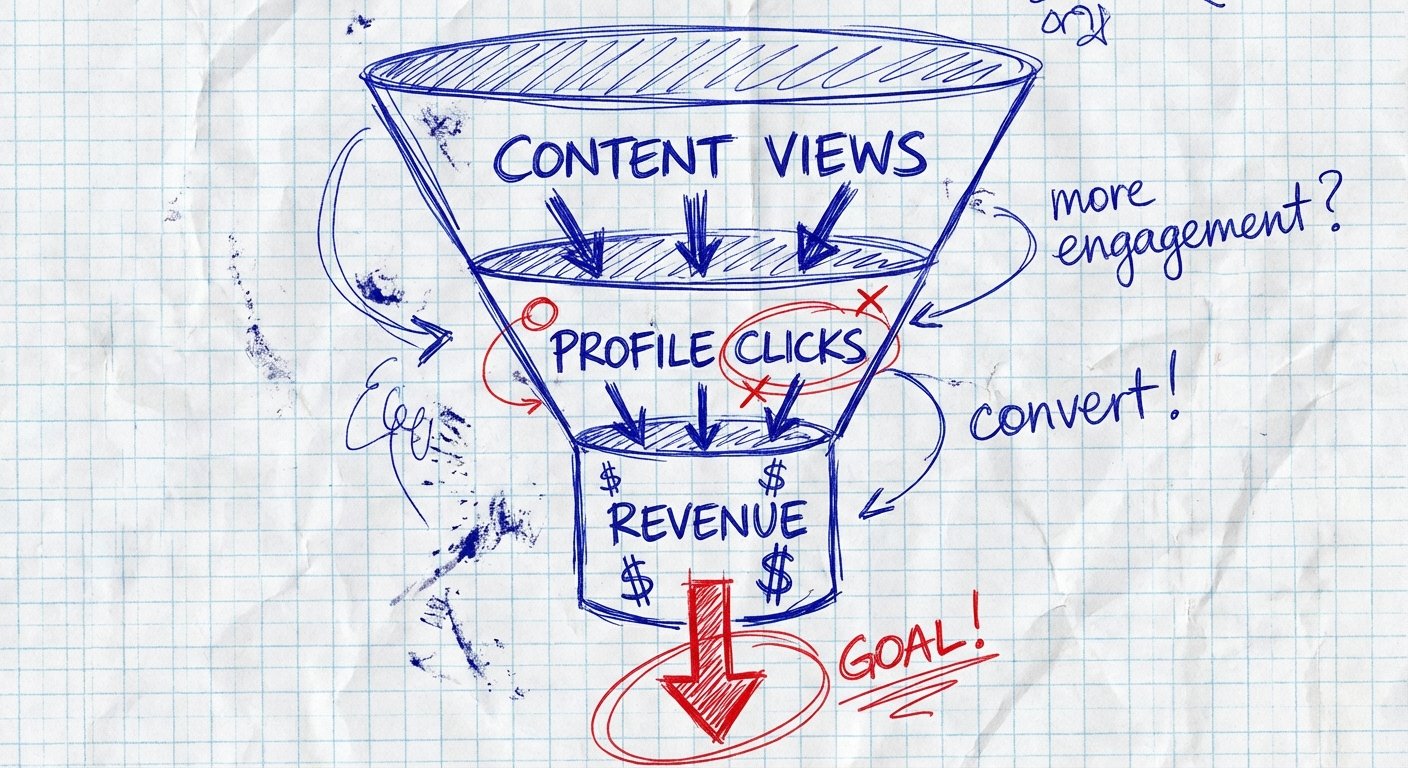
Inbound leads are great. Outbound gets you paid today.
Use LinkedIn Search. Filter by “Second Degree Connections” (friends of friends). Filter by industry.
Do not send a generic “Hi, I’d love to connect” message. And definitely do not pitch in the first message.
The Strategy:
- Visit their profile.
- Comment on their recent post with genuine insight.
- Send a connection request. Note: “Loved your post about X. Agree with you on Y.”
- Wait for them to accept.
- Send a value asset. “Hey, I saw you guys are scaling. I wrote a quick checklist on how we handled that for [Competitor]. Might be useful. No pitch. Cheers.”
Give value first. If the checklist is good, they will ask you for help.
Ergonomics: The Silent Killer of Productivity
You cannot grind on a LinkedIn strategy if your back hurts. Nomads often work from terrible chairs and low tables.
If you are hunched over a laptop, your energy drops. Your focus drops. Your output drops. Low output = low revenue.
You need to bring your screen up to eye level. It also makes you look better on camera (no double chin angle).
The Roost Laptop Stand V3 is the lightest, strongest stand on the market. It collapses into a tiny stick. I don’t travel without it.
Roost Laptop Stand V3
Price: $85 – $90

Social Proof Loop
Once you get a client from LinkedIn and deliver the work, you are not done.
You must ask for a recommendation. A LinkedIn recommendation is permanent social proof. It lives on your profile forever.
Do not say “Can you write me a review?”
Write it for them. Say: “Hey, I had a great time working on this. I wrote a draft recommendation to save you time. Feel free to edit it or just hit post. Would mean a lot.”
They will post it 90% of the time because you removed the friction.
The Math of a LinkedIn Magnet
Let’s look at the ROI.
Fixing your profile takes 4 hours. Buying the gear (Camera, Mic, Lights, Stand) costs about $1,400.
One high-ticket client is worth $3,000 to $5,000 a month.
If this improved profile gets you one extra client a year, you have made a 300% return on your investment. But if you do this right, it won’t get you one. It will get you one a month.
Conclusion: Do The Work
Most people reading this will nod their heads and do nothing. They will keep their blurry profile picture. They will keep their vague headline. They will complain that Upwork is too competitive.
Good.
That means less competition for you.
Treat your LinkedIn profile like a million-dollar asset, and it will become one. Treat it like a digital resume, and you will stay broke.
Fix the headline. Buy the gear. Write the case studies. Get the money.
It’s simple. It’s not easy. Go do it.