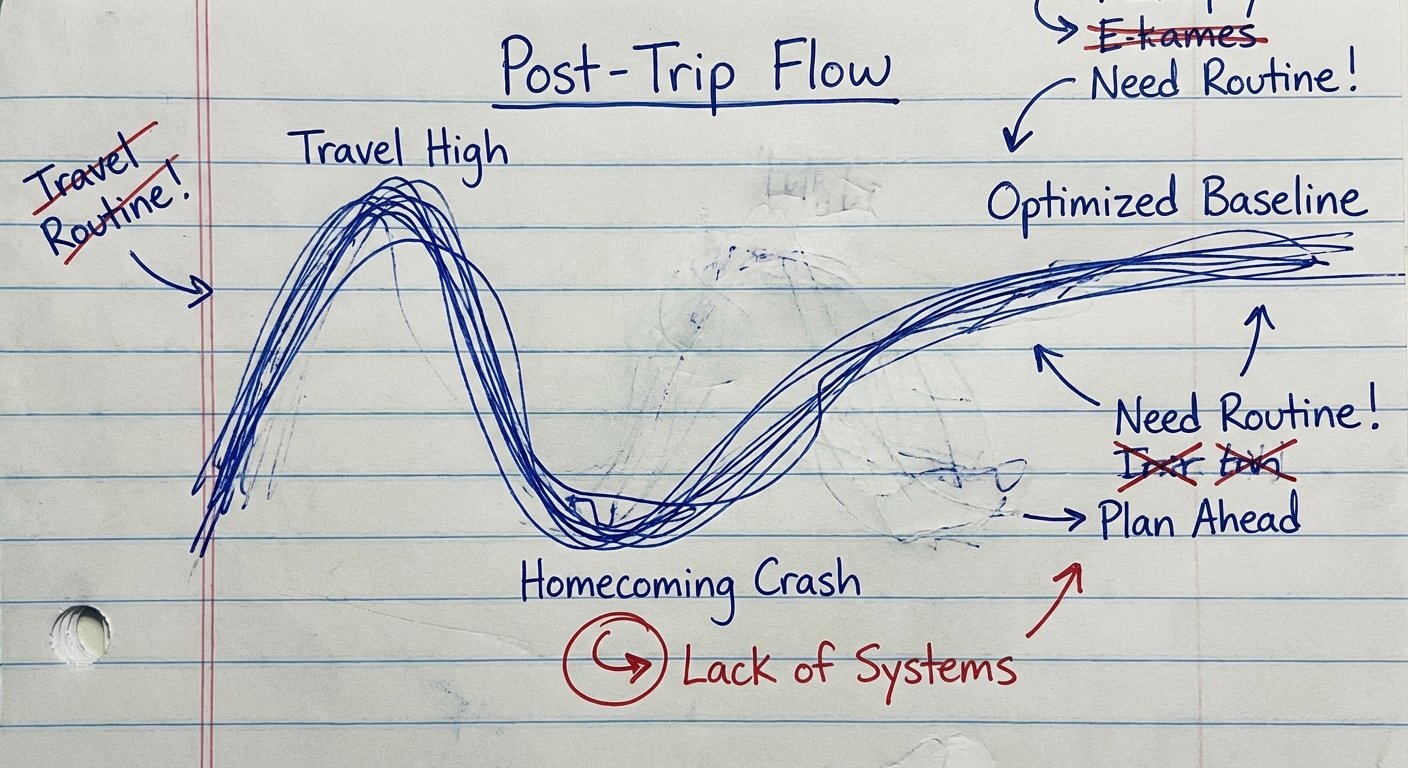
The Math of Coming Home: Why “Reverse Culture Shock” is Just Bad Resource Management
You spent two years living in Chiang Mai, Medellin, or Bali.
You lived on $1,500 a month. You ate restaurant food three times a day. You worked from beach clubs.
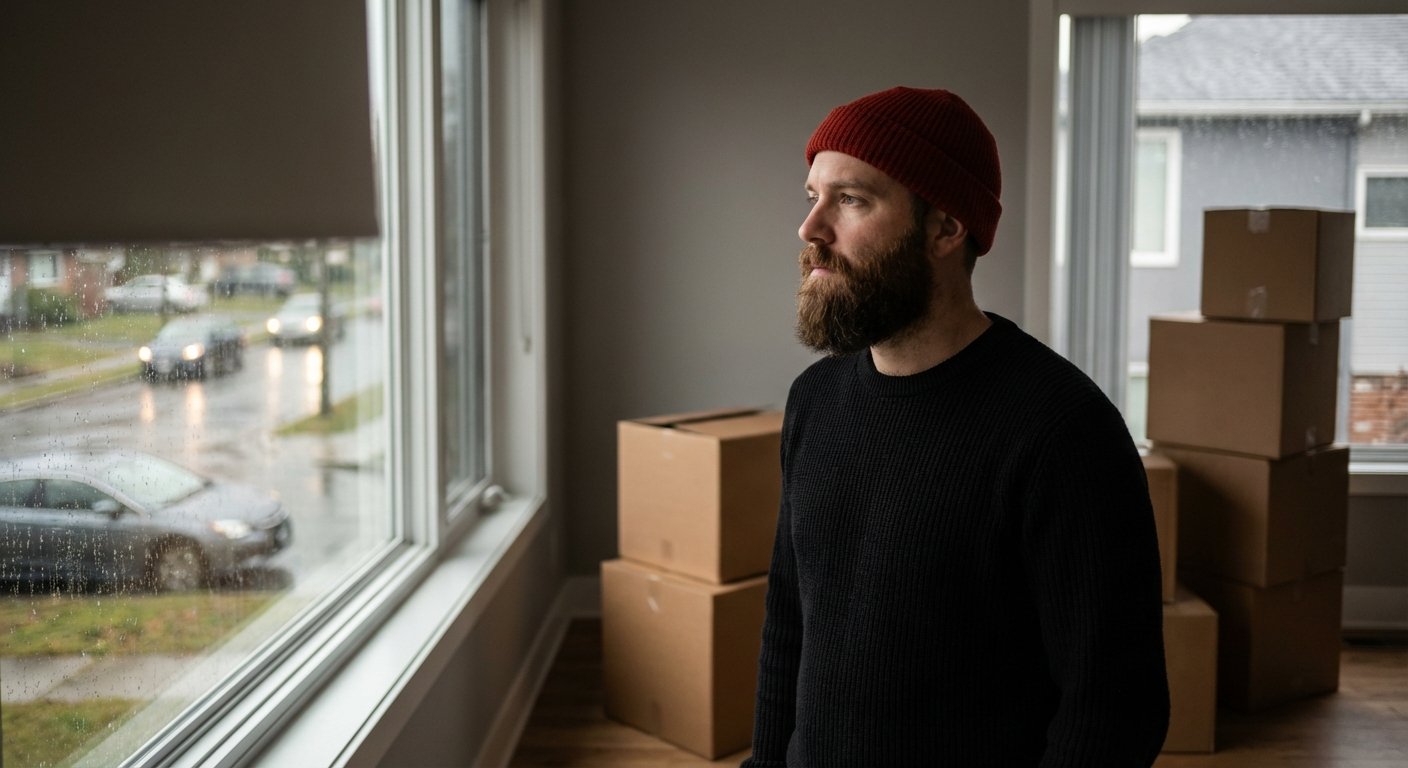
Now you are back in your hometown. Maybe you’re at your parents’ house. Maybe you’re in a overpriced apartment in a gray city.
You feel depressed. You feel misunderstood. You feel like you’ve gone backward.
Society calls this “Reverse Culture Shock.”
I call it a lack of leverage.
You are looking at this emotionally. “I miss the sun.” “I miss the freedom.”
Stop it. Look at the data.
Your environment changed. Your inputs changed. Therefore, your outputs (happiness, productivity, cash flow) changed.
If you want to fix the output, you don’t need a therapy session. You need to audit your inputs. You need a system to re-optimize for your current location.
Here is how you turn “coming home” into a high-ROI pivot point.
Phase 1: The Biological Reset (Fix the Hardware)
Most nomads come home and spend three weeks feeling like garbage. They sleep until 2 PM. They stay up until 4 AM doom-scrolling.
They blame “readjustment.”
It’s not readjustment. It is biological incompetence.
You traveled across 8 time zones. Your circadian rhythm is destroyed. Your cortisol is spiking at the wrong times.
You cannot have high-level thoughts with low-level biology.
If you are tired, you are stupid. If you are stupid, you make bad decisions. Bad decisions cost you money.
Do not wait for your body to “naturally” adjust. Force it.
The Protocol
- 07:00 AM: Sunlight in eyes immediately. 15 minutes.
- 08:00 AM: High protein breakfast. No carbs.
- 02:00 PM: Cut caffeine. Zero.
- 09:00 PM: Total blackout.
If you live in a place where the sun is inconsistent (like the UK or PNW), you cannot rely on the weather. You need to buy the sun.
I use sunrise alarms. They simulate a natural dawn. They suppress melatonin before you wake up. This is not “nice to have.” This is essential for resetting your internal clock in 3 days instead of 3 weeks.
The Tool: Hatch Restore 2
This is the current gold standard. It combines a sound machine with a gradual sunrise light. It removes the friction of waking up in a dark room.
Specs:
- Sunrise Alarm (mimics natural light)
- App-controlled sleep routines
- White noise and nature sounds
- Minimalist design (doesn’t look like cheap tech)
Price: $130 – $170
Is that expensive for an alarm clock? Yes.
Is it expensive for regaining 20 hours of productivity in your first week back? No. It’s cheap.
Phase 2: The Environmental Audit
Here is the trap.
You return to your old room. You sit in your old chair. You look at the same cracks in the ceiling you looked at when you were 16.
Your brain is an association machine. It anchors behaviors to locations.
If you sit in the “video game chair,” your brain wants to play video games. If you sleep in the “lazy teenager bed,” your brain wants to sleep in.
You cannot execute $100,000/year work in a $10/hour environment.
You have two choices:
- Move out immediately. (High cost, high speed).
- Terraform your environment. (Medium cost, high speed).
If you are staying with family or in a temporary spot, you must terraform. You need to make the space unrecognizable to your subconscious.
Rearrange the furniture. Change the lighting. But most importantly, control the noise.
Your parents watching TV downstairs is an output killer. Construction outside is an output killer.
You need total isolation.
The Tool: Sony WH-1000XM5
I don’t care if you prefer Bose or Apple. The data on the XM5s regarding noise cancellation effectiveness is top-tier. They are lightweight, so you can wear them for 8 hours without a headache.
When you put these on, you are not in Ohio. You are in “The Zone.”
Specs:
- Industry-leading Noise Cancellation (8 microphones)
- 30-hour battery life (Quick charge: 3 min = 3 hours)
- Multipoint connection (Laptop + Phone)
- Auto NC Optimizer (Adjusts to your environment)
Price: $348 – $400
Buying cheap headphones is a tax on your focus. Buy the asset that protects your attention.

Phase 3: Social Arbitrage (The “Nobody Cares” Rule)
This is the hardest part for the ego.
You want to tell everyone about the hike in Patagonia. You want to talk about the street food in Hanoi.
Nobody cares.
Your friends at home have a context window of their job, their spouse, and their local sports team. Your travel stories are outside their context window. They perceive it as bragging.
When they ask “How was it?”, they want a 30-second answer. Give it to them.
“It was incredible. Learned a lot. Good to be back. How is the new baby?”
Pivot the conversation to them. You gain social capital by listening, not by lecturing.
However, you still need a tribe. You need people who understand the nomad game.
You won’t find them at the local dive bar. You have to pay to find them.
Join a mastermind. Join a high-level gym. Go to industry conferences. Curate your circle intentionally.
The Rule of 33%:
- Spend 33% of your time with people below your level (to mentor).
- Spend 33% of your time with people at your level (to compete/collaborate).
- Spend 33% of your time with people above your level (to learn).
When you come home, you usually default to 100% of people below your level (in terms of business/lifestyle goals). Correct this ratio immediately.
Phase 4: Financial Re-Entry
In Vietnam, you felt rich. In New York, you feel poor.
This is simple purchasing power parity (PPP). Your dollar is worth less now.
Most nomads react to this by hoarding cash. They stop spending. They eat ramen. They try to live like they are still in a developing country.
This is a scarcity mindset. It kills growth.
You are back in a Tier-1 economy. The cost of living is higher, but the infrastructure is better. The networking is better. The access to capital is better.
You need to use the “expensive” infrastructure to generate more income.
You aren’t working from a cafe with spotty WiFi anymore. You have stable power. You have Amazon Prime overnight delivery. You have access to high-end equipment.
Upgrade your workstation. If you are coding, editing, or trading, a 13-inch laptop screen is a bottleneck.
The Tool: LG 34WN80C-B Ultrawide Monitor
Stop hunching over a laptop. Real estate on your screen equals real estate in your brain. An ultrawide monitor allows you to have your research, your communication, and your work open simultaneously. No tab switching.
Specs:
- 34-inch 21:9 Curved UltraWide QHD IPS Display
- USB-C connectivity (One cable for power and data)
- sRGB 99% Color Gamut
- HDR10
Price: $500 – $600
This monitor costs two weeks of rent in Bali. But here, it is the tool that helps you land the $5k retainer client. Do the math.

Phase 5: The “Next Mission” Gap
The real reason you feel empty isn’t because you miss the travel. It’s because you lost your mission.
When you travel, the mission is simple: Survive. Navigate. Explore.
Every day has a clear objective. Find food. Find a hotel. Catch the train.
When you come home, the survival friction disappears. You know where the food is. You have a bed.
The Mission Gap creates a vacuum. Your brain fills that vacuum with anxiety and nostalgia.
You need a new enemy. You need a new target.
Do not “find yourself.” Create a project.
- Launch the agency.
- Train for a marathon.
- Renovate the house.
It must be difficult. It must have a metric. It must require daily execution.
The Tool: The “Dull” Notebook
Don’t use a digital app for this. Apps are full of notifications. Notifications are other people’s goals, not yours.
Use a physical journal. Write the mission down. Track the daily reps.
I prefer the Leuchtturm1917. It lays flat. The paper is high quality. It doesn’t bleed. It feels like a serious tool for serious work.
Specs:
- Hardcover A5
- Numbered pages
- Dot grid (perfect for mapping systems)
- Ink-proof paper (80 g/sqm)
Price: $20 – $25
Conclusion: The Arbitrage of Home
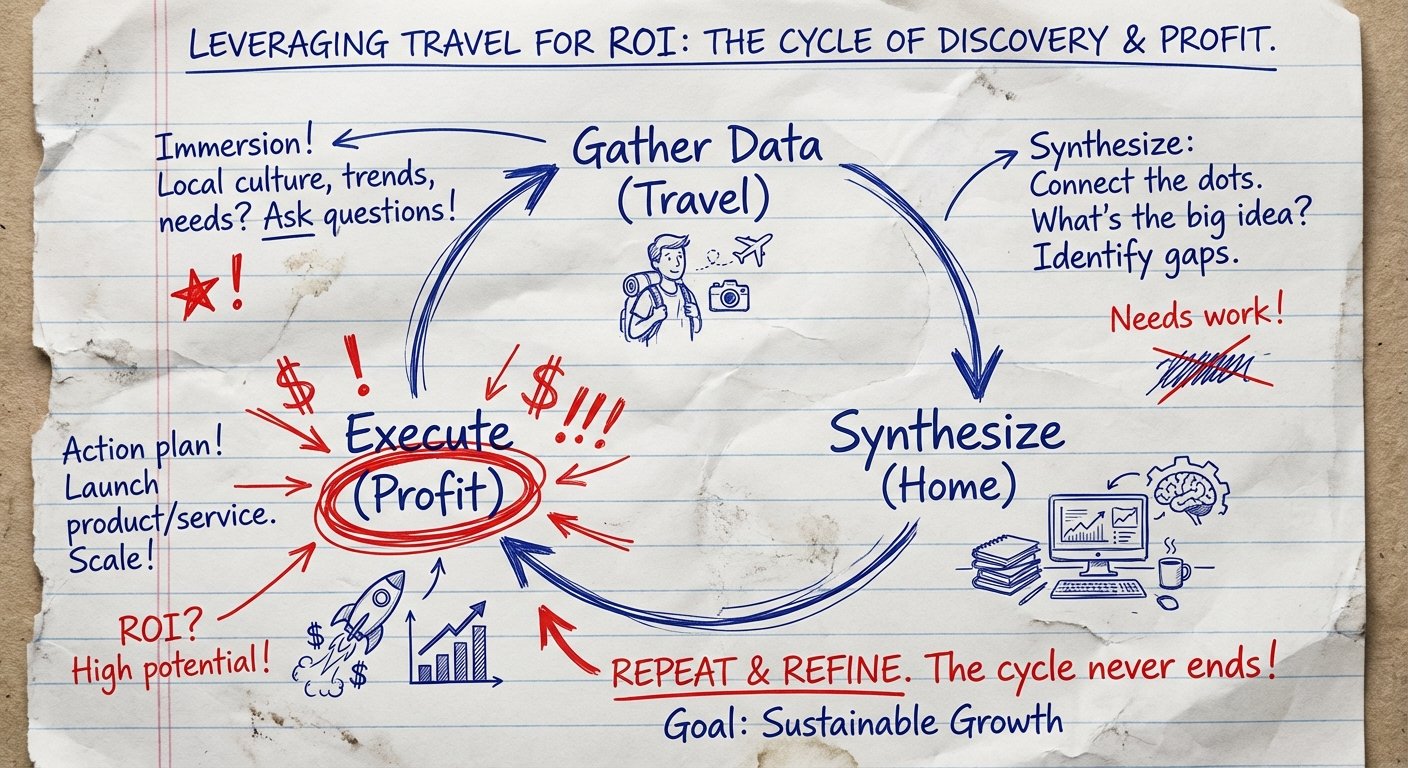
Travel is an input phase. You are gathering data, experiences, and perspective.
Home is an output phase. You are synthesizing that data into value.
Don’t be the guy who peaked in Thailand. Don’t be the guy who talks about his “gap year” for the next decade.
Take the resilience you learned on the road. Apply it to the market here.
You have an advantage. You know how to live with less. You know how to handle uncertainty. You know how to adapt.
Most people at home are soft. They haven’t been tested. You have.
Stop crying about the culture shock.
Get to work.