The Art of the Pitch: How to Win High-Paying Freelance Contracts
Most freelancers are broke.
They stay broke because they think they are selling a service. They think the client is buying graphic design, or copywriting, or coding.
The client is not buying that.
The client is buying money. They are buying speed. They are buying a lack of headaches.
If you pitch your “skills,” you will compete with everyone else on Upwork charging $15 an hour. You will lose.
If you pitch a Return on Investment (ROI), you have no competition. You become an investment, not an expense.
This is how you stop begging for work and start closing high-ticket contracts.
The Psychology of the $10k Pitch vs. the $100 Pitch
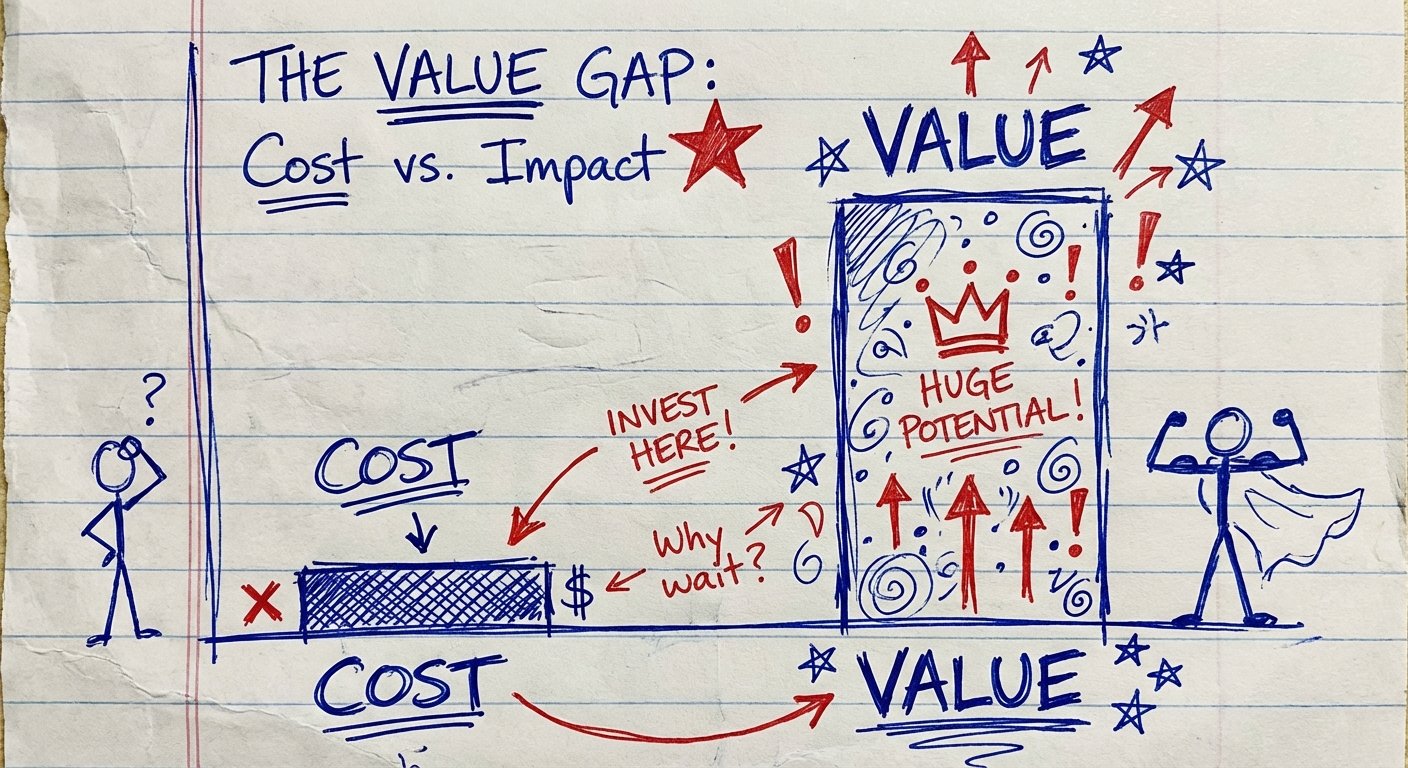
The difference between a $100 gig and a $10,000 contract is not the amount of work you do. It is the size of the problem you solve.
Low-paid freelancers focus on inputs: “I will work 10 hours for you.”
High-paid consultants focus on outputs: “I will add $100,000 to your bottom line.”
To win high-paying contracts, you must understand the Value Equation.
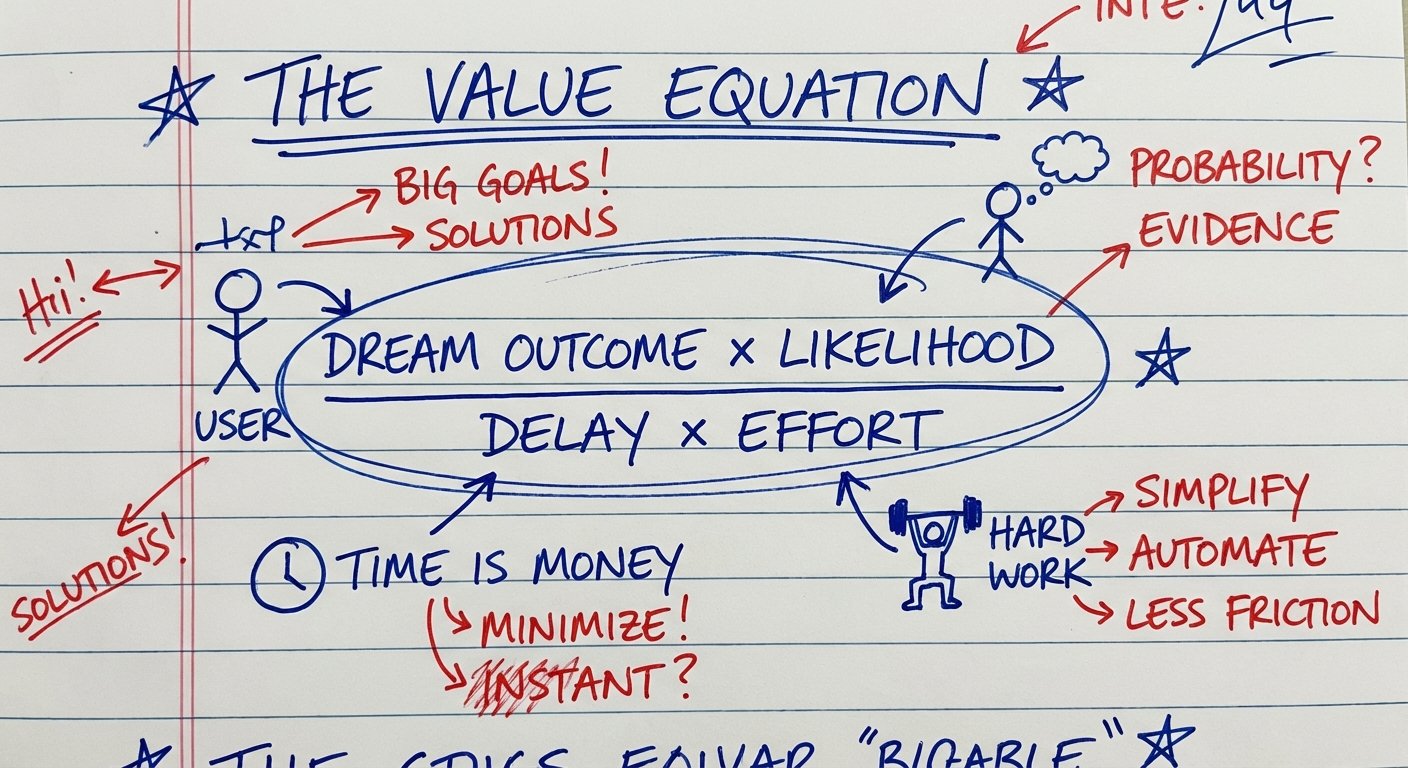
Value is driven by four things:
- The Dream Outcome: What does the client actually want? (Usually money or freedom).
- Perceived Likelihood of Achievement: Do they believe you can actually do it?
- Time Delay: How long will it take to get the result? (Shorter is better).
- Effort & Sacrifice: How hard is it for them to work with you? (Lower is better).
Your pitch must maximize the top two and minimize the bottom two.
If you walk into a pitch meeting with a slow laptop, a grainy webcam, and a shaky voice, you just killed your “Perceived Likelihood of Achievement.” You look like a risk. High-ticket clients do not buy risk.
You need tools that signal competence immediately. You cannot build a million-dollar reputation on a $300 Chromebook.
The Hardware of Credibility
Speed is money. If you are a video editor, a developer, or a designer, your render times are your bottleneck. If you are sitting in a meeting and your computer freezes while sharing your screen, you look like an amateur.
You need a machine that eats heavy workflows for breakfast.
Currently, the standard for high-performance creative work is the Apple MacBook Pro 16-inch (M3 Max Chip).
It handles 8K video editing, heavy compiling, and complex 3D rendering without the fans sounding like a jet engine. It signals to the client that you take your infrastructure seriously.
Current Market Price: $3,200 – $3,500
Do not be the guy apologizing for technical difficulties. Be the guy who is ready.
Structure Your Offer: The Grand Slam
Most pitches fail because the offer is weak.
A weak offer looks like this: “I will write 4 blog posts for $500.”
That is a commodity. I can buy that anywhere.
A Grand Slam Offer looks like this: “I will write 4 SEO-optimized articles. If they do not rank on the first page of Google within 90 days, I will work for free until they do.”
See the difference?
The second offer removes the risk from the client and places it on you. This is called Risk Reversal.
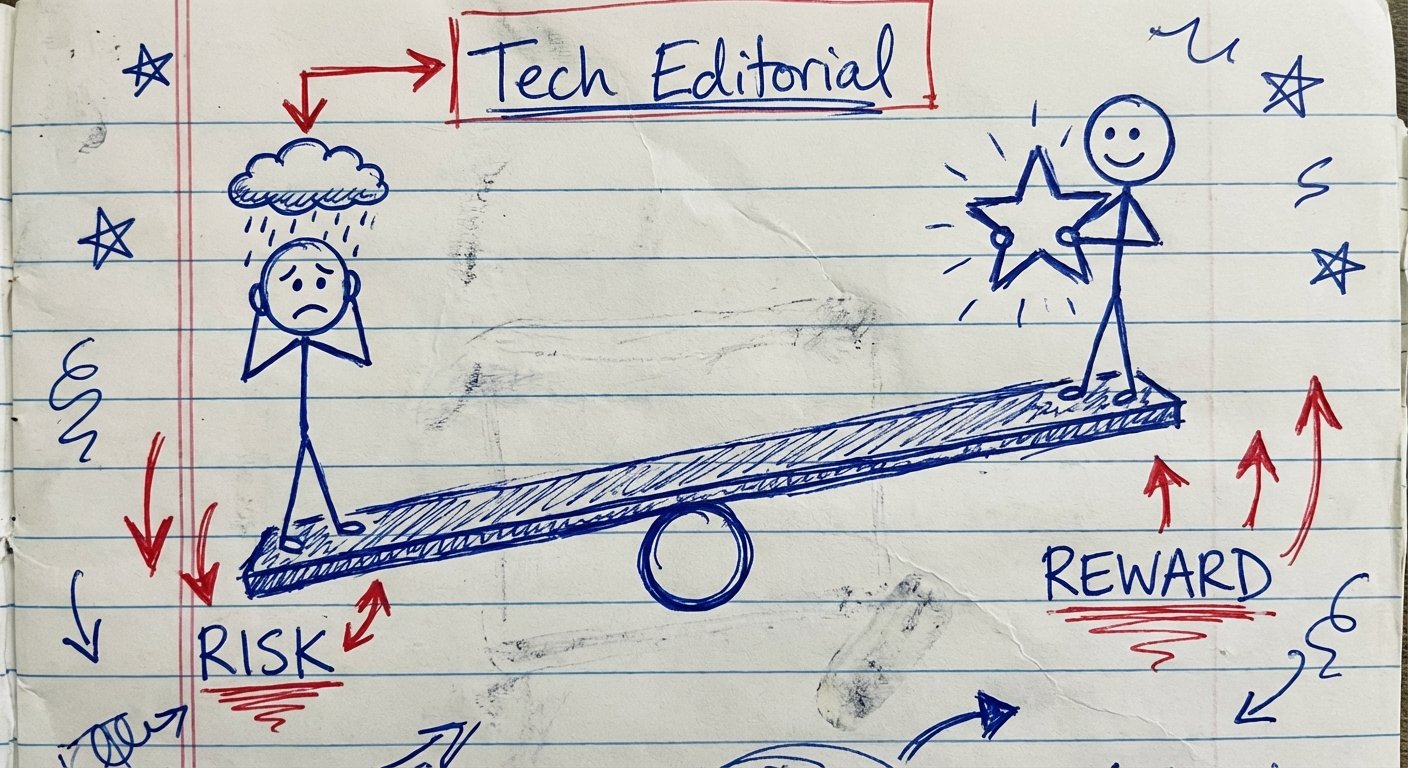
When you reverse the risk, you can charge 10x more. The client is willing to pay a premium for certainty.
The Components of the Pitch
Do not send a PDF resume. Nobody reads them. Send a proposal that outlines the logic of the investment.
1. The Problem: Restate their pain in their own words. Prove you listened.
2. The Solution: Describe what you will do, but tie it to the outcome. Don’t say “I will code a website.” Say “I will build a high-converting landing page to capture leads.”
3. The Proof: Show case studies. “I did this for Client X, and they made $50k.”
4. The Guarantee: If you don’t deliver, what happens? If the answer is “nothing,” you are a low-ticket freelancer.
The Audio/Visual Authority
Remote work is the standard. Your first impression happens on Zoom or Google Meet.
If you look dark, grainy, and sound like you are in a bathroom, the client subconsciously devalues you.
They think: “If he cuts corners on his own setup, he will cut corners on my project.”
You need to look like a broadcaster. You need to look expensive.
The Camera
Stop using the built-in webcam. It is garbage.
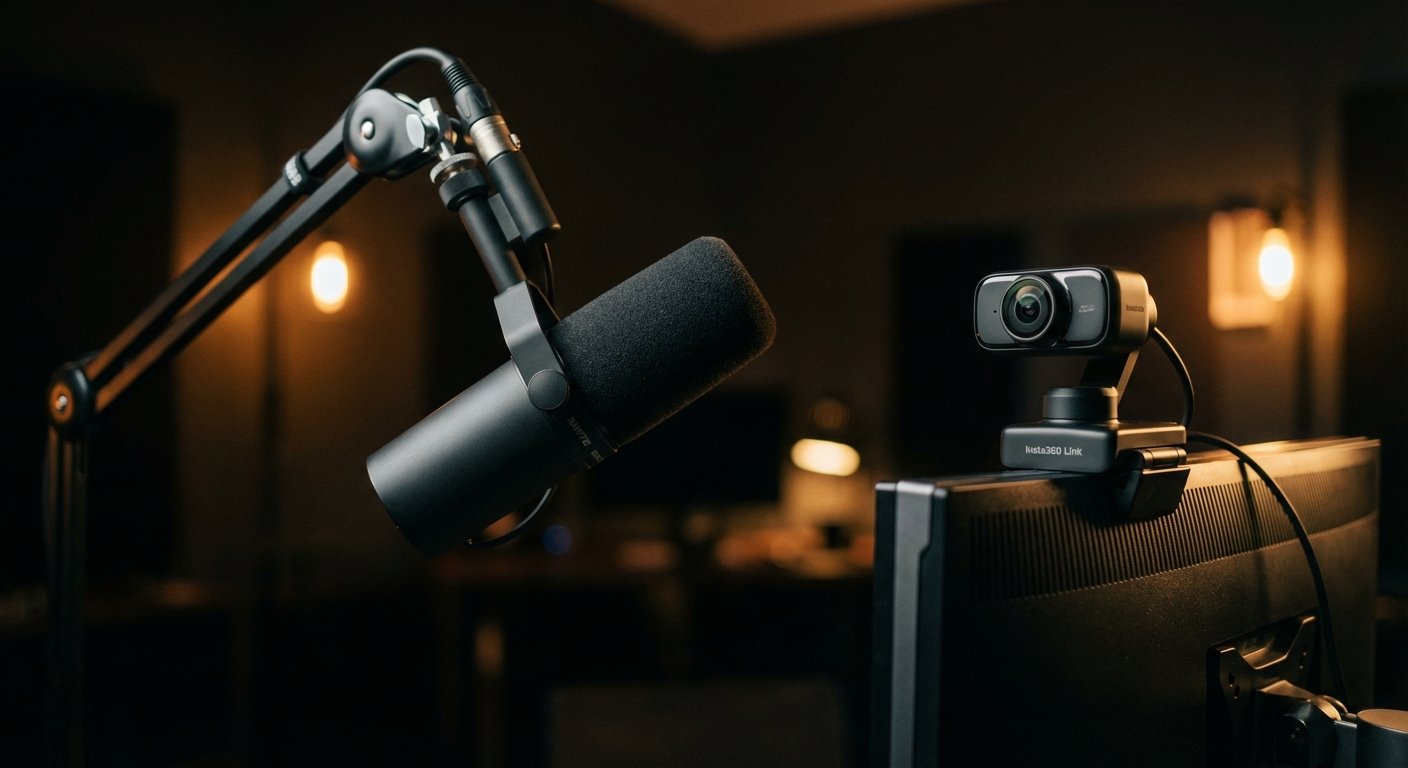
The Insta360 Link – AI-Powered 4K Webcam is a game changer. It uses a gimbal to track you if you move. It has a sensor that handles low light better than almost anything in its class. It gives you that crisp, professional depth of field.
It shows you are technically literate and care about presentation.
Current Market Price: $290 – $300
The Audio
Bad video is forgivable. Bad audio is not. If the client has to strain to hear you, they will get annoyed. If they are annoyed, they will not buy.
The industry standard for “The Podcast Voice” is the Shure SM7B. You see this mic on every top podcast (Rogan, diary of a CEO, etc). It has a proximity effect that makes your voice sound deep, rich, and authoritative.
When you speak into this, you sound like an expert.
Current Market Price: $399
The Mathematics of the Follow-Up
You pitched. They said “maybe.” Now what?
Most freelancers follow up once, feel annoying, and stop. This is why they are poor.
The money is in the follow-up.
You need to understand the Volume Equation. Luck is just volume over time.
- Pitch 1 person: Low chance of success.
- Pitch 100 people: High chance of success.
- Follow up 1 time: Low conversion.
- Follow up 10 times: High conversion.
You are not being annoying. You are being professional. You are showing them that you have systems in place.
If you forget to follow up, you prove to them that you are disorganized. If you stay on top of them, you prove that you will stay on top of their project.
Focus is Currency
To execute high-volume outreach and deep work, you cannot be distracted. The world is trying to steal your attention. Do not let it.
You need an environment of total silence.
The Sony WH-1000XM5 Wireless Noise Canceling Headphones are the best tool for this. The noise cancellation creates a vacuum. It shuts out the dog barking, the traffic, and the noise.
When these are on, you are working. When they are off, you are resting. Draw the line.
Current Market Price: $348 – $350

Pricing: The Anchoring Effect
Never give a single price. If you say “It costs $5,000,” the client’s brain asks: “Is $5,000 expensive?”
You want them to ask: “Which option is best for me?”
Always pitch three tiers.
Tier 1: The Decoy (High Price)
“We do everything. White glove service. 24/7 support. $25,000.”
Most won’t buy this. That’s fine. It exists to make Tier 2 look cheap.
Tier 2: The Core Offer (Target Price)
“We do exactly what you need to solve the problem. $10,000.”
Compared to $25k, this looks like a steal.
Tier 3: The Downsell (Low Price)
“We do the bare minimum. No support. $4,000.”
Nobody wants the bare minimum. They don’t want to feel cheap.
By presenting choices, you shift the conversation from “Yes/No” to “A, B, or C.”
Closing: The Logic, Not The Emotion
Stop trying to be liked. Start being respected.
When you ask for the sale, do not get emotional. Do not get nervous. State the logic.
“Mr. Client, you said you are losing $20,000 a month because of this problem. My solution costs $10,000 one time. Even if I am only half right, you make your money back in the first month. Does it make sense to proceed?”
That is not sales pressure. That is math.
Summary
Winning high-paying contracts is not magic. It is a process.
1. Invest in your infrastructure. Get the MacBook Pro, the Shure Mic, the Insta360 camera. Look the part.
2. Create a Grand Slam Offer. Solve a big problem. Reverse the risk.
3. Pitch with Options. Use price anchoring.
4. Follow up relentlessly. Volume negates luck.
The market does not care about your feelings. It cares about value. Go provide it.