Stop Working From Your Airbnb Sofa. It’s Costing You Thousands.
Most digital nomads are losing money. Every single day.
They book a flight to the Canary Islands. They find a cheap Airbnb. They open their laptop on a wobbly kitchen table. They rely on “shared residential WiFi.”
Then they wonder why their revenue dips.
They wonder why they feel burned out.
Here is the reality: Environment dictates performance.
If you are a serious entrepreneur or high-level operator, you cannot afford to work from a cafe. You cannot afford to work from a hotel lobby. And you certainly cannot afford the back pain from a cheap IKEA chair in a rental apartment.
The Canary Islands is the winter hub for European nomads. It’s the “Hawaii of Europe.” The tax breaks are good. The weather is perfect. The time zone aligns with London and Berlin.
But 90% of the co-working spaces there are trash.
They are social clubs disguised as offices. They want to sell you sangria events, not bandwidth. I don’t care about the sangria. I care about the upload speed. I care about the chair.
I care about ROI.
We are going to look at the specific spaces in the Canary Islands that actually produce ROI. We are also going to look at the gear you need to bring with you to make them work. Because even the best space has noise. Even the best space has power outages.
You need to be bulletproof.

The Math of the $200 Desk
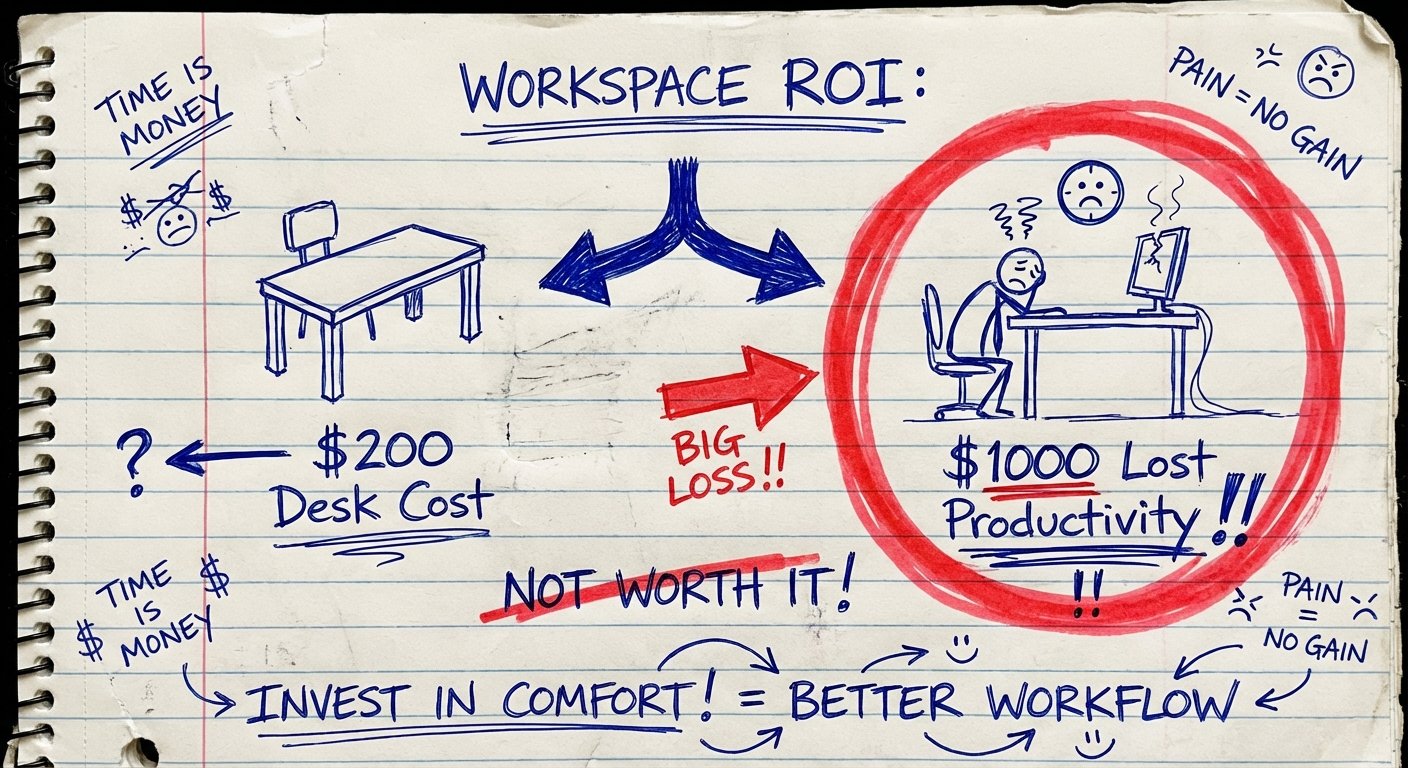
People complain about paying €150 or €200 a month for a desk.
“I can work from home for free,” they say.
This is poor-person thinking. Let’s look at the numbers.
If you make $100 an hour, and you lose 30 minutes a day dealing with slow WiFi, bad posture, or distractions from your roommates, that is $50 a day lost.
That is $250 a week.
That is $1,000 a month.
You are stepping over dollars to pick up pennies. You save €200 on a membership to lose $1,000 in productivity. That is a negative 400% return on investment.
A professional co-working space buys you two things:
- Certainty: The internet works. The lights work.
- Context: When you sit down, your brain knows it is time to kill.
If a space doesn’t provide those two things, leave. Immediately.
Gran Canaria: The Heavyweight Champion
If you want to get work done, you go to Las Palmas de Gran Canaria. Period.
Tenerife is for tourists. Fuerteventura is for surfers who work 2 hours a day. Gran Canaria is for people who have businesses to run.
The infrastructure in Las Palmas is city-grade. Fiber optics are everywhere. The digital nomad community is dense, which means the market forces the co-working spaces to be competitive. If they suck, they go out of business.
1. Talleres Palermo (The Vibe Play)
This is the most famous spot in Las Palmas. It used to be a carpentry workshop. It looks like a Brooklyn loft dropped into the middle of the Atlantic.
The Good:
- Volume: The ceilings are 20 feet high. You don’t feel trapped.
- Network: You will meet people here who actually make money. Not just dropshippers making $500 a month. Real operators.
- Location: It’s near Las Canteras beach. You work, you surf, you repeat.
The Bad:
- Ergonomics: It’s vintage furniture. It looks cool on Instagram. It feels terrible on your lumbar spine after 6 hours.
- Noise: It is an open space. Echoes are real.
If you choose Talleres, you need to bring your own silence. You cannot rely on the environment to be quiet. You must manufacture quiet.
For this, you need top-tier Active Noise Cancellation (ANC). Not “okay” headphones. The best.
Essential Gear: Sony WH-1000XM5
I see people trying to work with AirPods. They let in too much ambient noise. You get distracted. You lose flow. You lose money.
The Sony WH-1000XM5s are the current king of the hill. The ANC cuts out the chatter of the marketing team sitting next to you. The battery lasts 30 hours. That is three full workdays without a charge.
Specs:
- Battery: 30 Hours (ANC On)
- Weight: 250g (Light enough for all-day wear)
- Charging: 3 minutes charge = 3 hours playback
Estimated Price: $348 – $399

2. Hashtag Workspace (The Focus Play)
If Talleres is for networking, Hashtag is for execution.
It is located in the Mesa y López district. It feels corporate. This is a compliment.
They invested in Herman Miller chairs. They have soundproof phone booths that actually block sound. The internet is redundant (two different providers). If one line is cut, the other kicks in. You don’t drop the Zoom call. You close the deal.
Why you go here:
- You have high-stakes calls.
- You need back support.
- You don’t want to talk to anyone.
Tenerife: Avoid the Tourist Trap
Tenerife is tricky. The South (Las Americas) is a British holiday resort. It’s loud. It’s trashy. It’s hard to focus.
The North (Santa Cruz or Puerto de la Cruz) is where the work happens.
3. Coworking in the Sun (Puerto de la Cruz)
This is one of the oldest spaces in the Canaries. They have a system.
They bundle accommodation with the workspace. Usually, I hate this. Usually, “co-living” means “overpriced hostel.” But here, it works because they curate the residents.
The workspace itself is solid. Fast internet. Good light. However, the monitors provided are often old. They are too low. You end up hunching over like a shrimp.
The Fix: Portable Ergonomics.
You cannot trust a co-working space to have the monitor height you need. You must bring your elevation with you.
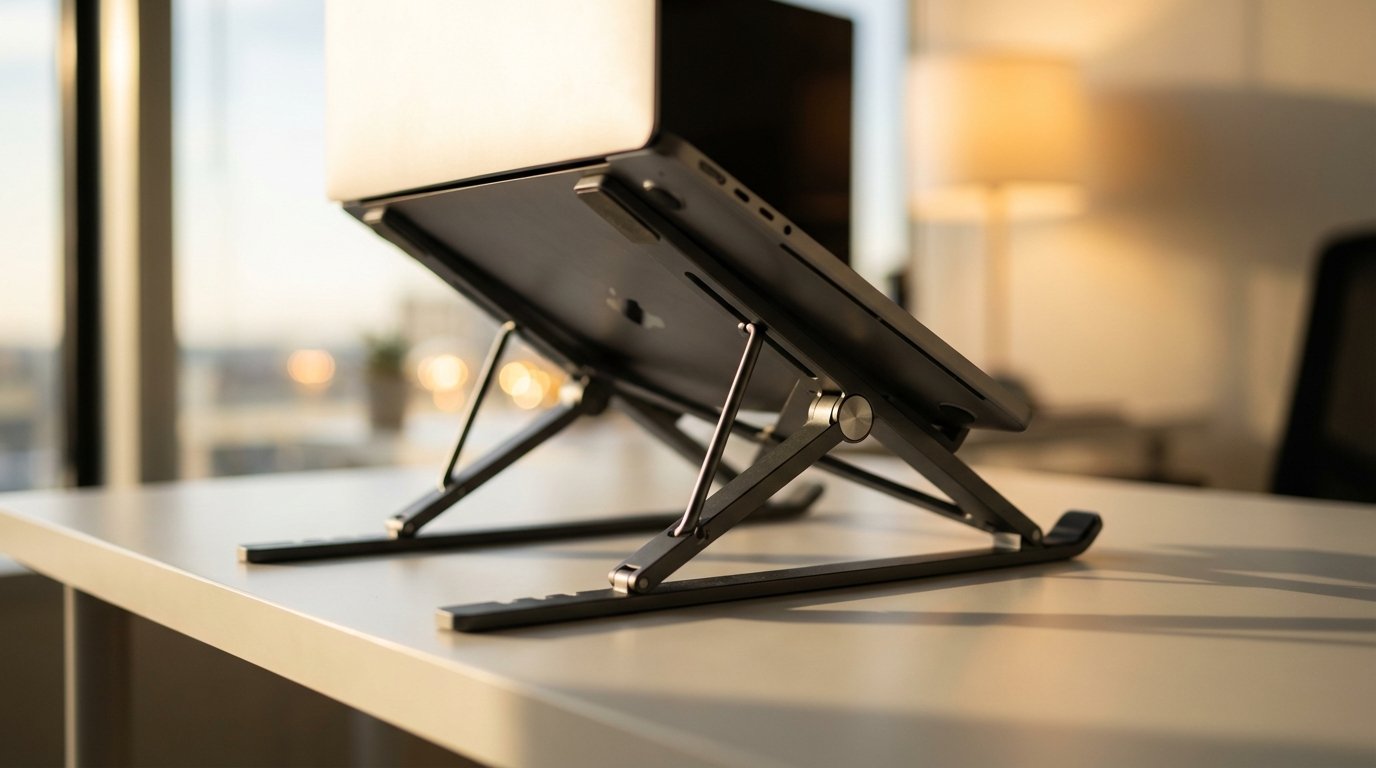
Essential Gear: Roost V3 Laptop Stand
This is the gold standard. It weighs nothing (5.8 ounces). It collapses into a stick. You throw it in your bag.
When you get to the desk, you pop it open. Your screen is now at eye level. Your neck stops hurting. Your endurance increases. You can work 10 hours instead of 6.
Cheap plastic stands break. They wobble. The Roost is glass-fiber-reinforced nylon. It is stable.
Estimated Price: $85 – $95
Fuerteventura: The Deep Work Retreat
Fuerteventura looks like Mars. It is red dirt and volcanoes. It is windy.
There are fewer distractions here. No big clubs. No shopping malls. Just wind, waves, and work.
4. Hub Fuerteventura (Corralejo)
This is the anchor of the island. It’s located in Corralejo, the main town in the north.
The Logic:
- Community: Heavy on developers and tech founders. Less “influencers.”
- Access: You can walk to the beach in 2 minutes for a break, then get back to grinding.
The infrastructure on Fuerteventura is less stable than Gran Canaria. Power outages happen. The grid is smaller.
If the power cuts out during a code deploy or a sales presentation, you are dead. You cannot rely on the island grid.
You need redundancy.
Essential Gear: Anker 737 Power Bank (PowerCore 24K)
This isn’t a little battery for your phone. This is a brick that can power your MacBook Pro.
It outputs 140W. It charges your laptop as fast as the wall outlet. It has a smart display that tells you exactly how much time you have left. When the cafe loses power, you don’t even blink. You keep working.
Specs:
- Capacity: 24,000mAh
- Output: 140W Two-Way Fast Charging
- Ports: 2 USB-C, 1 USB-A
Estimated Price: $109 – $150
The Spaces You Must Avoid
To win, you must know what to avoid. In the Canary Islands, avoid these three traps:
1. “Digital Nomad Friendly” Cafes
This is code for “We have one power outlet and the barista hates you.” The WiFi resets every 30 minutes. The music is too loud. You are renting a coffee, not an office. Don’t do it.
2. Hotel Lobbies
The chairs are designed for lounging, not typing. Your lower back will collapse. The internet is throttled. You look unprofessional.
3. Cheap Co-Workings in the South of Tenerife
There are pop-up spaces in Las Americas that are just empty retail stores with folding tables. No community. No ergonomic chairs. Just a cash grab. Avoid.
The Final Decision
The Canary Islands works as a winter base only if you treat it like a base.
If you treat it like a holiday, your revenue will drop.
The Playbook:
- Fly to Gran Canaria (Las Palmas) for maximum infrastructure.
- Join Talleres Palermo if you need leads/partners.
- Join Hashtag if you need to execute.
- Buy the Sony XM5s to block the noise.
- Buy the Roost Stand to save your neck.
The investment is roughly $500 in gear and $200/month in rent.
If you cannot turn a $700 investment into $7,000 of output, the problem isn’t the location.
The problem is you.
Get to work.