The ROI of Your Glutes: Why You Need a Seat Cushion
You spend money on a laptop. You spend money on noise-canceling headphones. You spend money on coffee.
But you sit on a wooden slab for 8 hours a day.
This is stupid.
If you are a digital nomad, an entrepreneur, or anyone who works remotely, your chair is your factory. If the factory is broken, production stops. When your lower back hurts, your brain stops solving problems and starts focusing on pain.
Pain is a distraction. Distraction costs you money.
I see guys spending $3,000 on a MacBook Pro but refusing to spend $50 on the thing that actually keeps them working. They sit in cheap Airbnbs. They work from cafes with metal stools. They grind their sciatic nerves into dust.
The result? Lower output. Shorter work blocks. More friction.
You don’t need to ship a Herman Miller Aeron across the ocean. You just need a buffer. A variable you can control.
Here is the list of the best travel seat cushions. They turn a $10 plastic chair into a productivity asset. Stop suffering. Fix the variable.

The Mathematics of Comfort
Let’s look at the numbers.
A high-end ergonomic chair costs $1,500. It is heavy. You cannot put it in a backpack.
A terrible cafe chair costs $0 (it comes with the coffee). It destroys your posture.
A premium travel cushion costs between $40 and $150.
If that cushion gives you one extra hour of deep work per day, what is the return on investment?
If your time is worth $50 an hour, and the cushion costs $100, you break even in two days. After that, it is pure profit. It is infinite return. Buying a cushion is not spending. It is investing in capacity.
Here are the top picks based on density, durability, and portability.
1. The Purple Double Seat Cushion
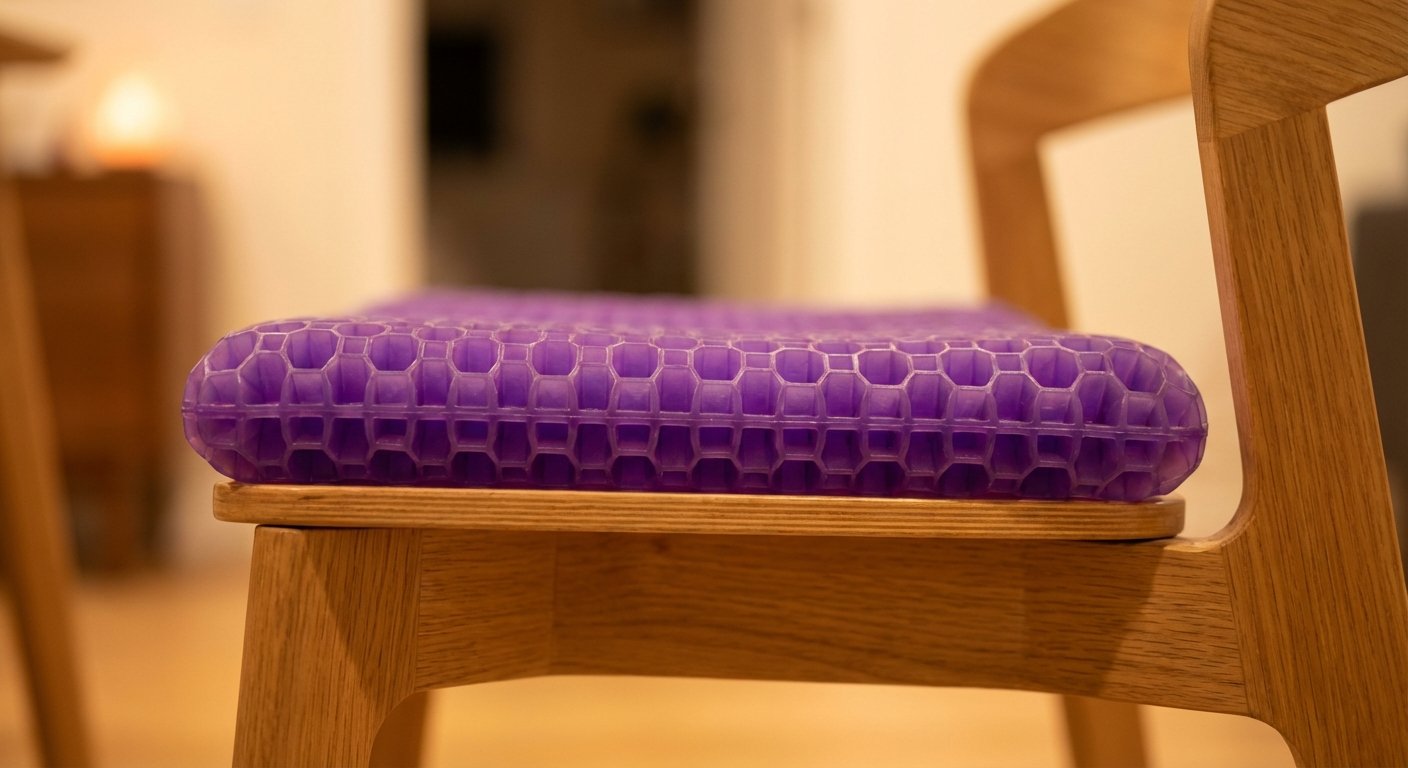
This is the heavy hitter. Literally.
If you care about maximum comfort and don’t mind carrying extra weight, this is the winner. It uses a hyper-elastic polymer grid. It does not use foam.
The Problem with Foam: It traps heat. It flattens out over time. It gets gross.
The Purple Solution: The grid collapses under pressure points (your sit bones) but stays firm everywhere else. It allows air to flow through it. You do not get “swamp ass.”
The Reality: It weighs about 2.5 pounds. That is heavy for a backpack. But if you are working 10-hour days from a dining table in Bali, the weight is worth it. It feels the closest to a high-end office chair.
Specifications:
- Material: Hyper-Elastic Polymer Grid
- Weight: ~2.5 lbs
- Thickness: 2 inches
- Best For: Long work sessions, heavy people, hot climates
Price Range: $100 – $130
2. Cushion Lab Pressure Relief Seat Cushion
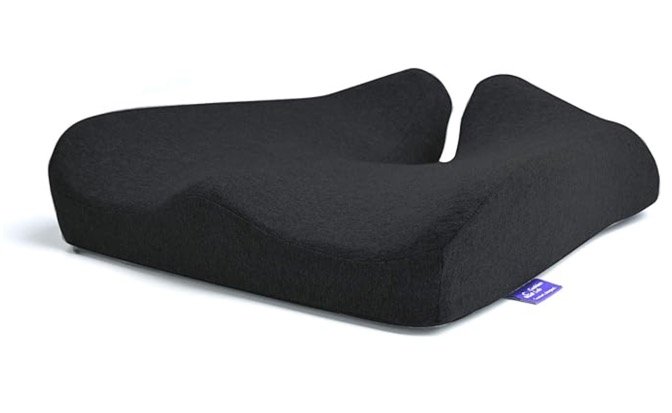
This is for the posture nerds. If you slouch, this fixes you.
Most cushions are flat slabs. Cushion Lab designed this with contours for your thighs and a cutout for your tailbone. It forces your pelvis into alignment. When your pelvis is aligned, your spine stacks correctly.
It uses extra-dense memory foam charcoal. It is firmer than cheap cushions. Cheap cushions feel soft when you touch them, but flatten to zero when you sit on them. This one fights back.
The Trade-off: It is shaped specifically for sitting upright. You cannot sit cross-legged easily on this. It dictates your position. For deep work, that is good. For lounging, it is bad.
Specifications:
- Material: Hyperfoam (Memory Foam)
- Weight: ~1.5 lbs
- Shape: Ergonomic contour
- Best For: Back pain relief, posture correction
Price Range: $75 – $90
3. Therm-a-Rest Z Seat
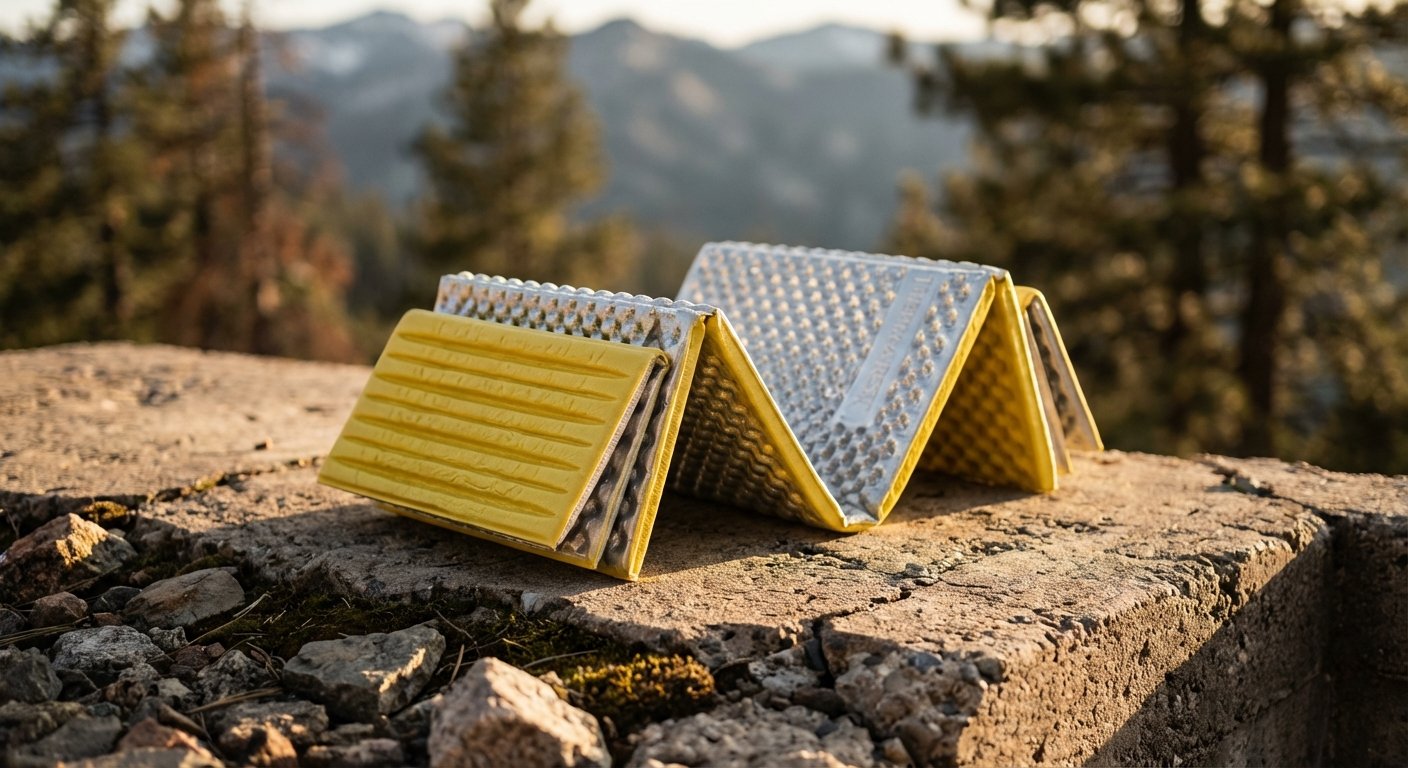
This is the minimalist option. The “Ultralight” choice.
If you travel with one bag (25L or 30L), you cannot carry a Purple cushion. It takes up too much volume. The Z Seat is a closed-cell foam pad. It folds accordion-style. It weighs nothing.
Is it luxurious? No.
Is it better than wood? Yes. 100%.
It provides insulation from cold surfaces and a basic layer of padding. It is indestructible. You can throw it on a rock, a wet bench, or a dirty airport floor. It does not absorb water.
Use this if you move locations every two days. It is not for the 8-hour grinder. It is for the traveler who needs a seat anywhere.
Specifications:
- Material: Closed-cell foam
- Weight: 2 ounces (0.13 lbs)
- Packability: Folds flat
- Best For: Ultralight travel, hiking, cold surfaces
Price Range: $15 – $25
4. Aylio Coccyx Seat Cushion
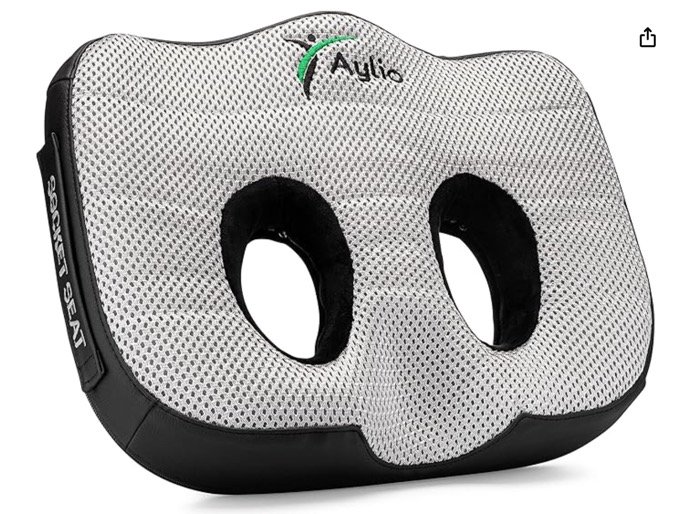
If you have sciatica, read this.
Sciatica is when the nerve running down your leg gets pinched. It feels like electricity shooting through your thigh. It ruins focus. It happens when pressure is applied directly to the tailbone.
The Aylio has a U-shaped cutout at the back. Your tailbone floats over empty space. It touches nothing. No contact means no pressure. No pressure means no pain.
It is lighter than the Cushion Lab option but uses slightly softer foam. It is very popular because it works instantly. You sit down, the pressure vanishes.
It has a velour cover. It looks a bit medical. But nobody cares how it looks if it doubles your work capacity.
Specifications:
- Material: High-density memory foam
- Design: U-Cutout for tailbone
- Weight: ~1 lb
- Best For: Sciatica, tailbone injury recovery
Price Range: $40 – $50
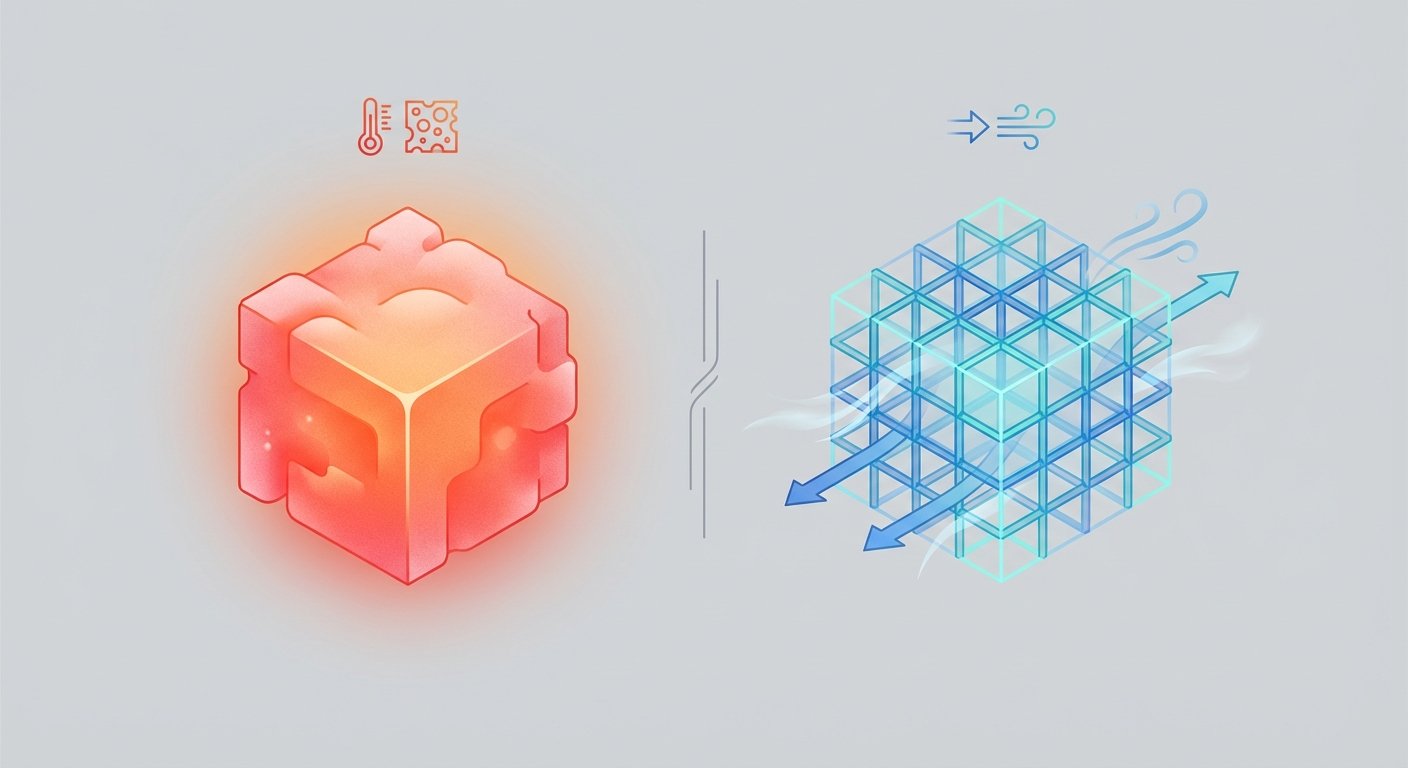
Decision Matrix: Grid vs. Foam
You have two main technologies here. You need to pick the one that matches your environment.
1. Memory Foam (Cushion Lab, Aylio)
Memory foam relies on heat to mold to your body. It provides a “hug” sensation.
- Pros: High stability. Forces good posture. Lighter weight.
- Cons: Retains body heat. Can get sweaty in tropical climates. Takes time to rebound.
2. Gel/Polymer Grid (Purple)
This is structural buckling. It is mechanics, not chemistry.
- Pros: Airflow is massive. Stays cool. Zero breakdown over time. Instant response.
- Cons: Heavy. Expensive. Feels “jiggly” (some people hate this).
If you run hot, get the Grid. If you need posture support, get the Foam.
5. Klymit V Seat
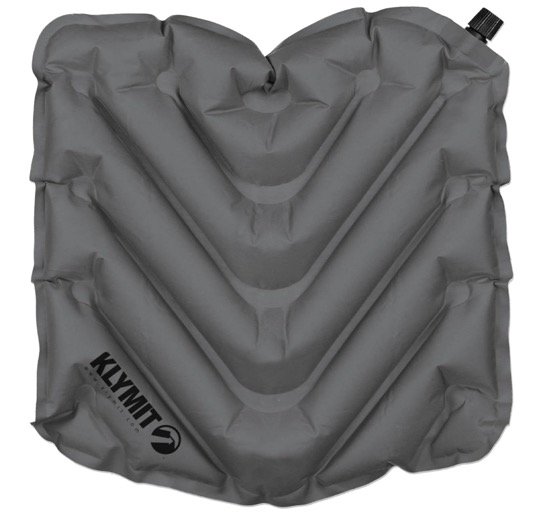
This is the wildcard. It is inflatable.
Inflatable cushions usually suck. They feel like sitting on a balloon. You roll around. You feel unstable.
Klymit uses a “V” chamber design. It limits air movement. It feels stable.
The Leverage: Volume. When deflated, this thing is the size of a deck of cards. You can put it in your pocket. When inflated, it is a legitimate cushion.
It is not as comfortable as the Purple. It is not as ergonomic as the Cushion Lab. But it is the most portable option that still offers real cushioning (unlike the thin Z seat).
If you are a nomad who literally lives out of one backpack, this is your only logical choice.
Specifications:
- Material: 75D Polyester
- Type: Inflatable
- Packed Size: Pocket-sized
- Best For: Extreme minimalism with comfort needs
Price Range: $15 – $20
Implementation: How to Pack
Buying the gear is step one. Using it is step two.
I see people carry these cushions in their hands. That creates friction. If it is annoying to carry, you will leave it at the hotel. If you leave it at the hotel, you will have back pain.
For the Purple Cushion: It is heavy. Put it at the very bottom of your backpack, against your back panel. This keeps the center of gravity close to your spine.
For Memory Foam: Do not crush it for weeks. If you compress memory foam tight for a long flight, let it expand for 24 hours when you land. If you keep it crushed forever, you damage the cell structure.
For Inflatables: Carry a patch kit. If it pops, it is garbage.
The Verdict
Stop romanticizing the grind. The grind is about doing hard work, not sitting on hard chairs.
Physical discomfort is a leak in your system. Plug the leak.
If you have the budget and the luggage space, buy the Purple Double Seat Cushion. It is the best product on the market. It wins on durability and cooling.
If you need to fix your spine and save space, buy the Cushion Lab Pressure Relief.
If you are counting grams, get the Therm-a-Rest Z Seat.
The cost is negligible. The return is your health and your focus. Do the math. Make the purchase.
Get to work.