This post contains affiliate links. If you purchase through our links, we may earn a small commission at no extra cost to you.
The Laptop on the Beach is a Lie
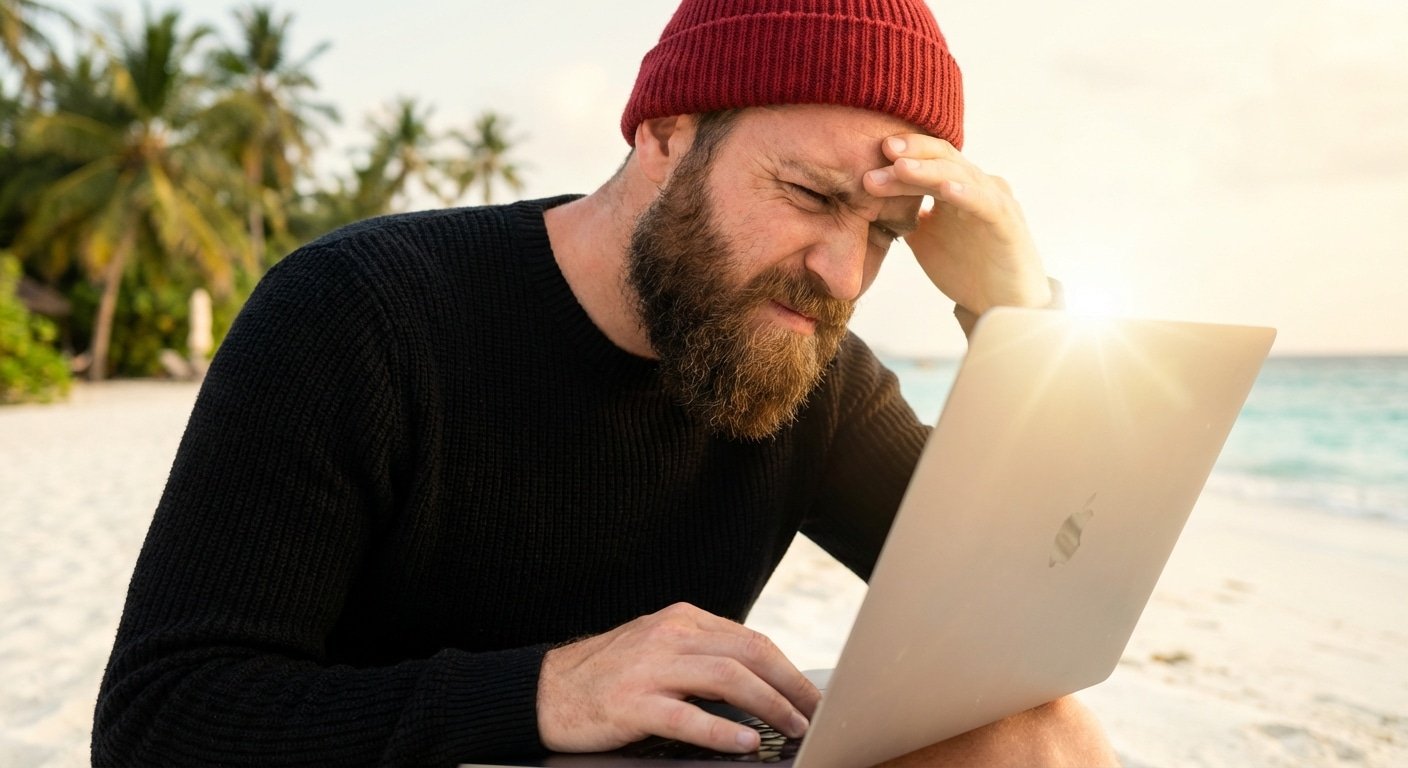
You see the Instagram posts. A guy sitting on a beach in Bali. A laptop on his knees. A coconut in his hand. He’s looking at the ocean and “working.”
It’s garbage.
Have you ever tried to work on a beach? The sun creates absolute screen glare. The sand ruins your keyboard. The heat overheats your battery in twelve minutes. It is the single worst place on earth to get work done.
Most first-time digital nomads chase the aesthetic instead of the ROI. They want to look like they are living the dream, but behind the scenes, their business is tanking, their bank account is draining, and their back hurts.
When you take your work on the road, your environment becomes a variable. If you don’t control the variables, the variables control you.
I see beginners make the same six mistakes every single time. They bleed money. They lose clients. They burn out. And then they go back home to a cubicle and say the nomad lifestyle “wasn’t for them.”
No. You just didn’t do the math. You treated your business like an extended vacation.
Here are the biggest mistakes first-time digital nomads make, the exact math on why they cost you money, and how to fix them today.
Mistake 1: The “Three-Day City Hop” Sprint
You land in Europe. You want to see everything. So you book three days in Rome, three days in Florence, three days in Venice, and three days in Milan.
You are an idiot.
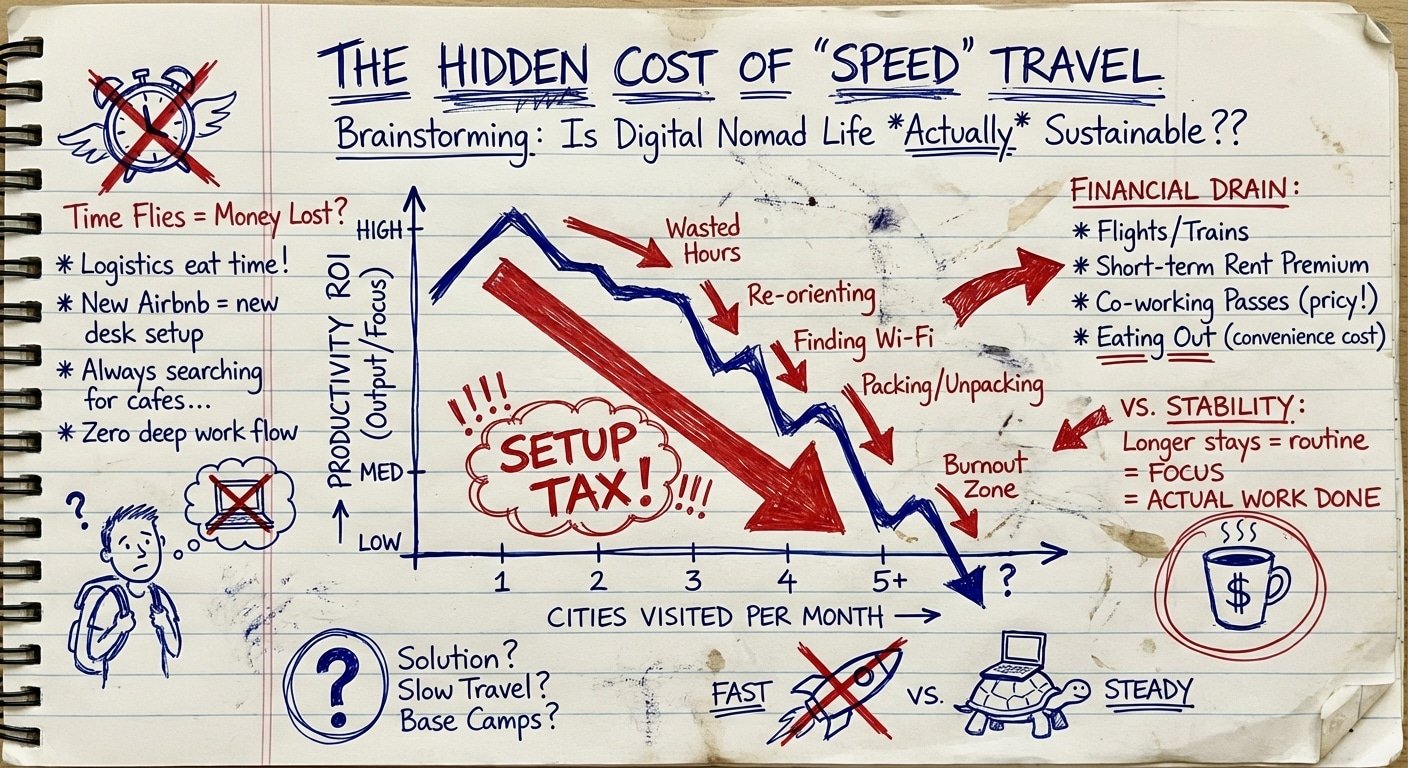
This is the fastest way to destroy your productivity. Every time you change locations, you pay a “Setup Tax.”
Let’s do the math on the Setup Tax:
- Packing your bags: 1 hour.
- Traveling to the airport or train station: 1 hour.
- Waiting for transit: 2 hours.
- Actual transit time: 3 hours.
- Getting to the new Airbnb: 1 hour.
- Figuring out where the grocery store is, testing the Wi-Fi, finding a coffee shop: 2 hours.
That is 10 hours of completely wasted time. Time where you produced zero dollars. If you value your time at $50 an hour, every move costs you $500 in lost opportunity.
If you move every three days, you are spending 30% of your waking life in transit. Your output will plummet. Your clients will get annoyed. You will be constantly exhausted.
The Fix: Slow travel. Stay in one place for a minimum of one month. Rent is cheaper when you book monthly. Your routine stabilizes. You find a gym. You find a good workspace. You actually get work done.
Amateurs travel fast. Professionals travel slow.
Mistake 2: Relying on “Good Wi-Fi” Reviews
Your income depends on the internet. Without the internet, you are unemployed.
Yet, I see nomads book an Airbnb because the host said the Wi-Fi is “fast.” The host’s definition of fast is being able to stream Netflix. Your definition of fast is hosting a 10-person 4K Zoom call while uploading a 5GB video file.
When you get there and the Wi-Fi drops every ten minutes, what happens? You panic. You miss a client call. You lose a $5,000 contract because you looked unprofessional.
You tripped over pennies to lose thousands of dollars. You need physical hardware to protect your downside.
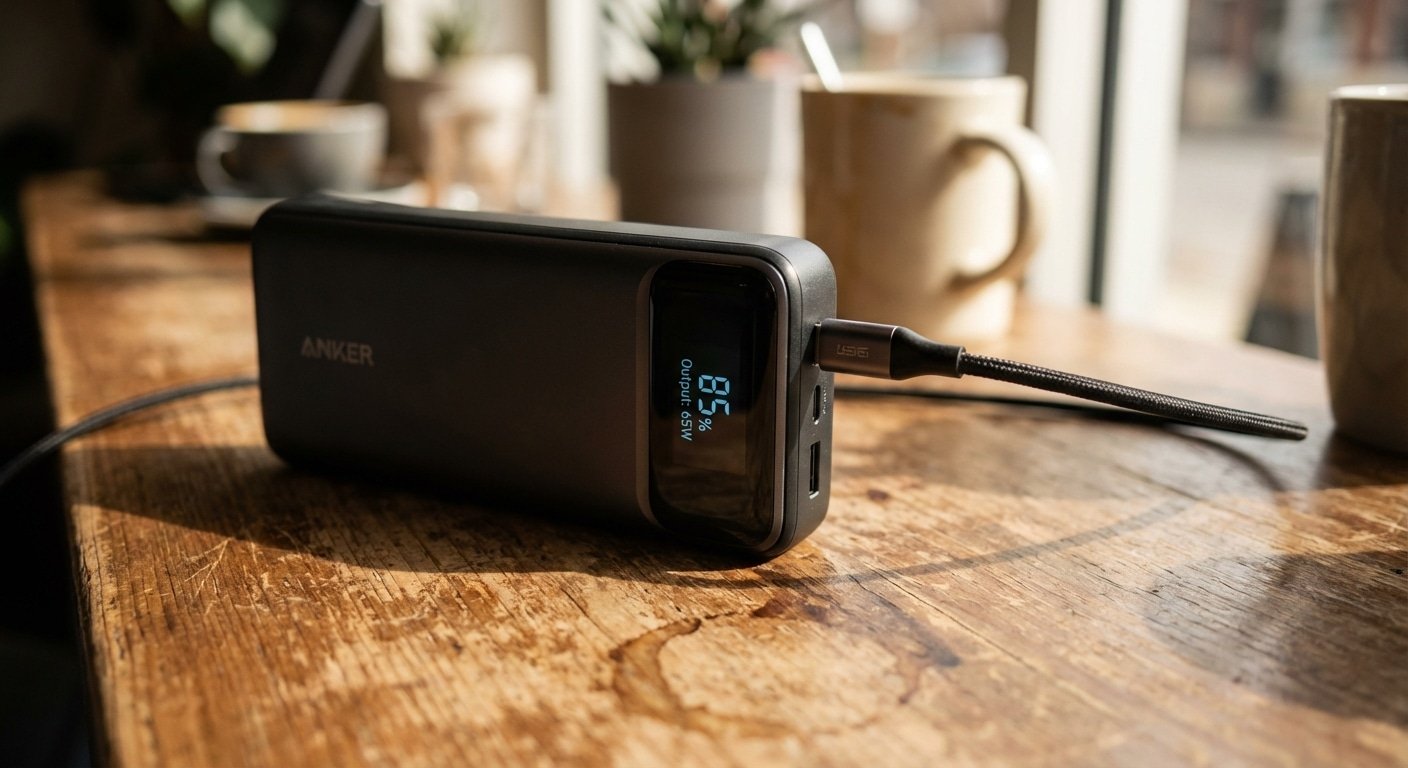
If the power goes out, your router dies. You need a massive battery bank to keep your laptop and phone alive so you can hotspot.
The Anker 737 Power Bank is a non-negotiable. It holds a massive charge, outputs 140W (enough to fast-charge a MacBook Pro), and has a digital screen showing exactly how much juice you have left. It’s a brick of pure reliability.
Price: $100 – $130.
But hardware is only half the battle. When the Airbnb Wi-Fi fails, you will run to the nearest café. You will connect to “Starbucks_Guest” along with fifty other people.
Public Wi-Fi is a goldmine for hackers. If you log into your business bank account on an open network without a VPN, you are basically handing your passwords to a stranger. It is a stupid risk.
You need a VPN. Not a free one that sells your data. A real one. NordVPN encrypts your connection so no one can intercept your work. It also lets you route your IP back to the US so your bank doesn’t freeze your account for logging in from Colombia.
Mistake 3: The Hunchback Couch Setup
You are running a business, not doing homework.
Working from an Airbnb couch with your laptop on your thighs will destroy your posture. Within a month, your neck will ache. Your lower back will tighten. You will get tension headaches.
When you are in physical pain, your output drops. You work three hours instead of eight. If you make $300 a day, losing five hours of work costs you almost $200 a day. Over a month, you lose $6,000 in productivity.
You don’t need a standing desk, but you do need to elevate your screen to eye level.
Most people buy a cheap $15 plastic laptop stand on Amazon. It breaks in their bag. Their laptop wobbles when they type. They hate it, throw it away, and end up back on the couch.
Buy the best tool once. The Roost V3 Laptop Stand is the only stand you should look at. It weighs almost nothing. It folds up to the size of a ruler. It is indestructible. It raises your screen perfectly to eye level, forcing you to sit up straight.
Pair it with a Bluetooth keyboard and a good mouse. Your Airbnb kitchen table is now a professional workstation.
Price: $80 – $90.

Mistake 4: Getting Robbed by Traditional Banks
Most people have no idea how much money they lose to invisible fees.
You go to an ATM in Mexico. Your bank charges you a $5 out-of-network fee. The local ATM charges you a $4 fee. Then your bank charges a 3% foreign transaction fee. You just paid $15 to withdraw $100.
You just lost 15% of your cash to nothing.
If you spend $3,000 a month while traveling, and you use a standard debit or credit card, you are likely losing $100 to $150 a month in exchange rate markups and foreign transaction fees. Over a year, that is $1,800. You are paying a bank $1,800 for the privilege of spending your own money.
It’s bad business.
You need a multi-currency account. You need a card that uses the mid-market exchange rate—the real rate you see on Google. No markups. No hidden spreads.
This is where Wise completely dominates. You can hold balances in dozens of currencies. When you swipe the Wise card, it converts the money instantly at the absolute lowest rate possible. It is the most ruthlessly efficient way to move money across borders.
Get the card before you leave. Stop giving traditional banks your profit margins.
Mistake 5: The “Invincible Tourist” Fallacy
I hear this all the time: “I’m only going for three months, I don’t need insurance. I’m healthy.”
This is a fundamental misunderstanding of risk.
You don’t buy insurance because you expect to get sick. You buy insurance to protect your downside. You buy it so a random accident doesn’t bankrupt you.
If you rent a scooter in Thailand and a dog runs into the street, you crash. You shatter your collarbone. You need surgery. The hospital bills you $15,000.
If you don’t have insurance, you are paying that out of pocket. Your business capital is gone. You have to fly home, move into your parents’ basement, and start over.
Why risk $15,000 when you can cap your downside for the cost of a couple of dinners?
Normal travel insurance is usually garbage. It covers canceled flights but barely covers medical emergencies. You need insurance built specifically for digital nomads. Insurance that works like a subscription model and covers you everywhere.
SafetyWing is the only logical choice here. You pay a low monthly fee. It covers medical emergencies, hospital stays, and emergency medical evacuation. You can start it and stop it whenever you want. It’s cheap, simple, and prevents you from losing everything.
If you can’t afford a few bucks a day for insurance, you can’t afford to be a nomad. Period.
Mistake 6: Buying Cheap Luggage
Your bag is your closet, your office, and your safe.
First-timers try to save money by using the $40 backpack they had in college. Three weeks into the trip, the zipper blows out in the middle of a train station in Berlin. All your tech falls onto the floor. You have to duct tape the bag shut and spend $150 on an overpriced replacement at a tourist shop.
Buy cheap, buy twice.
You need a bag that fits carry-on requirements perfectly. Checked bags get lost. If an airline loses your checked bag with your second monitor and hard drives, your business halts. Carry-on only. Always.
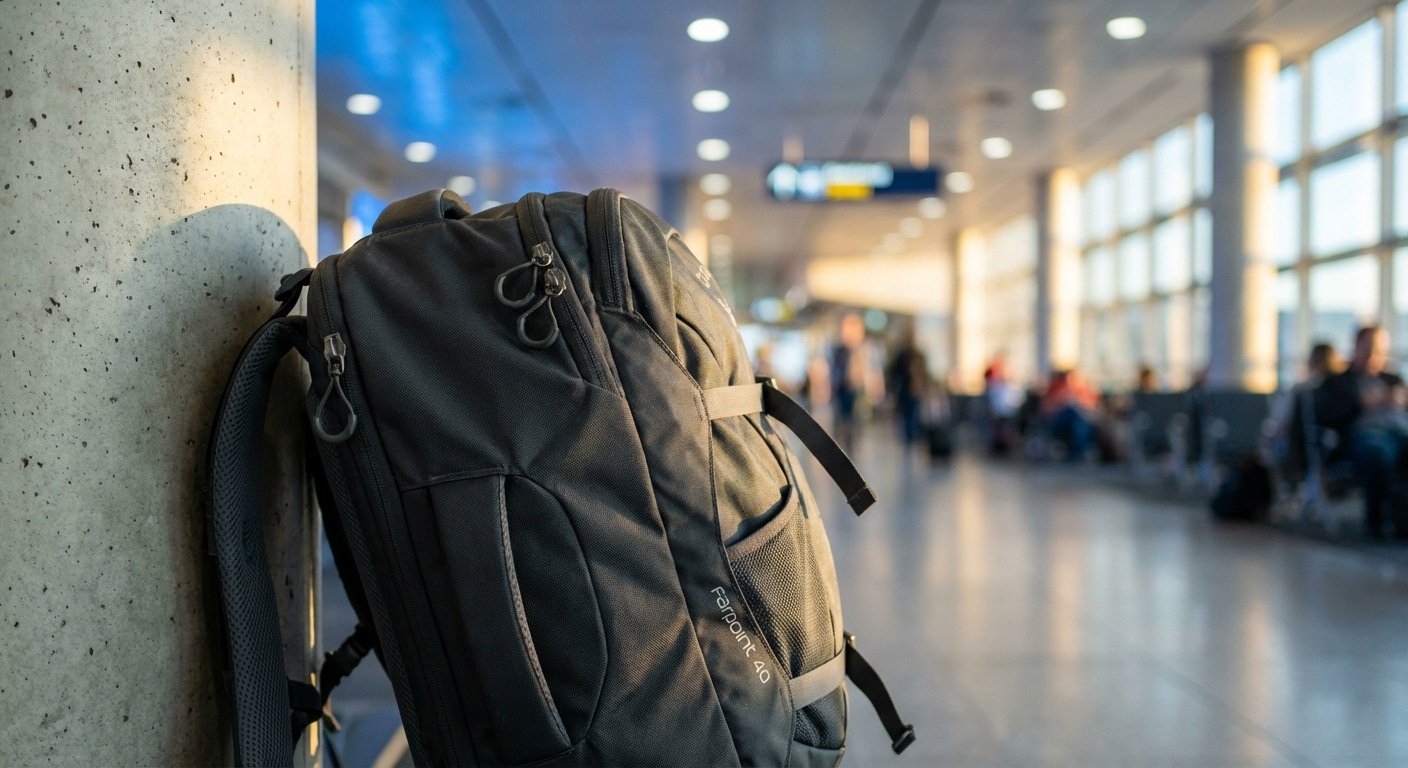
The Osprey Farpoint 40 Travel Backpack is the gold standard. It fits the exact dimensions of airline overhead bins. The suspension system makes 30 pounds feel like 10. The zippers are massive and won’t break. It opens like a suitcase so you don’t have to dig from the top.
It is an investment in speed and reliability.
Price: $170 – $185.
The Bottom Line
The digital nomad lifestyle is incredible, but only if you treat it like a business operation.
Amateurs focus on the beaches, the parties, and taking selfies. Professionals focus on infrastructure. They secure their internet. They optimize their workspace. They eliminate bank fees. They protect their health and equipment.
Every dollar you lose to an ATM fee, every hour you lose to bad Wi-Fi, and every day you lose to transit is a direct hit to your ROI.
Stop romanticizing the struggle. Buy the right gear. Setup your systems. Protect your downside.
Do the math. Fix the mistakes. Go make money.