Most Digital Nomad Couples Break Up. Here is Why.
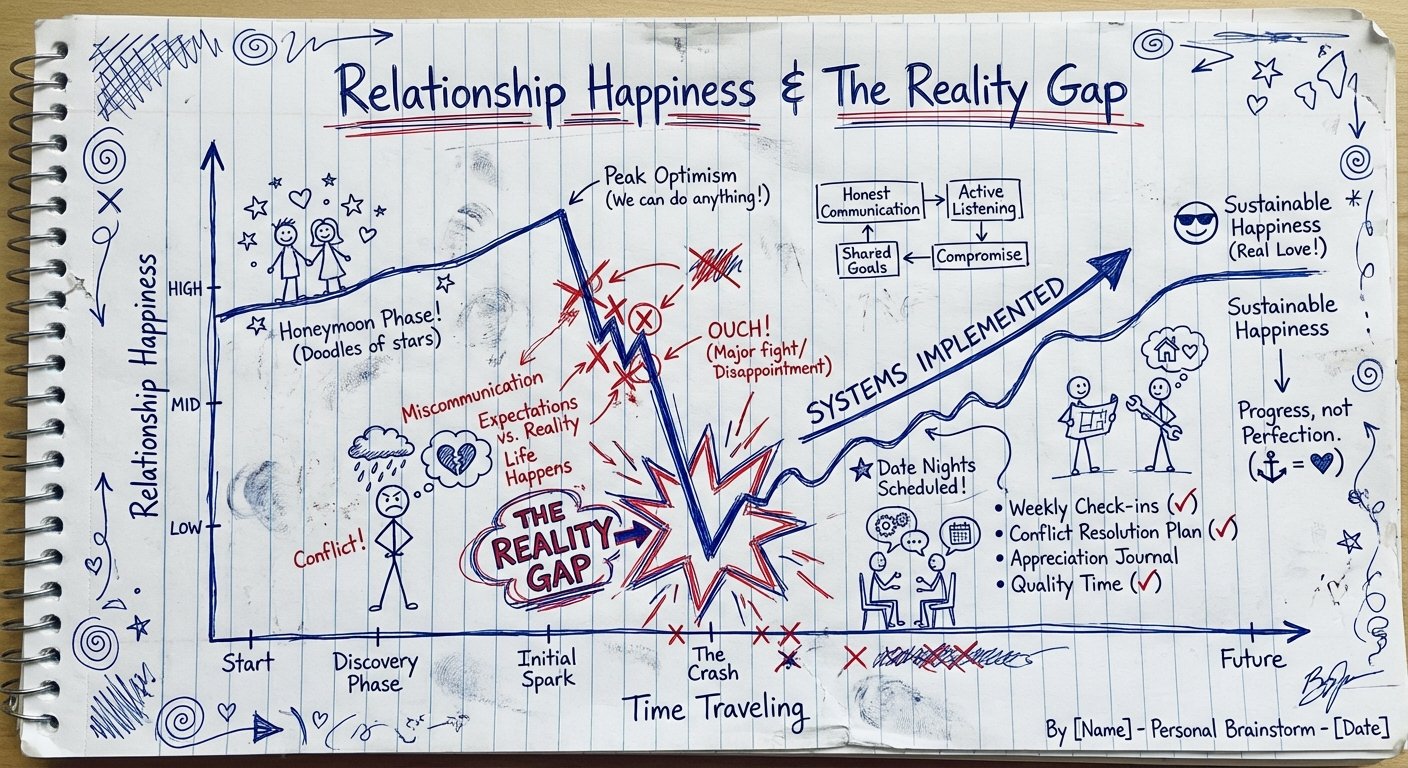
People think the “digital nomad couple” life is a permanent honeymoon. They see the Instagram reels. They see the laptops on the beach. They see the sunsets.
They don’t see the reality.
The reality is two stressed-out people in a 400-square-foot AirBnB with spotty WiFi, arguing about whose Zoom call is more important.
I look at relationships through the lens of ROI (Return on Investment). A relationship is a partnership. If you are traveling and working, it is a business partnership.
Most businesses fail because they lack systems. Most nomad marriages fail for the same reason. They rely on “love” and “vibes” to solve logistical problems.
That doesn’t work.
If you want your relationship to survive the road, you need to operationalize your marriage. You need protocols. You need the right gear. And you need to stop being cheap on things that buy you peace of mind.
Here is the blueprint for maintaining high output and a healthy marriage while living out of a suitcase.
The “One Room” Fallacy
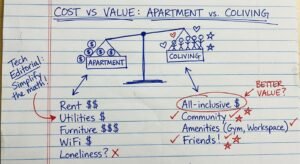
The biggest mistake beginners make is booking the cheapest accommodation.
You see a studio apartment in Lisbon for $1,200 a month. You think, “Great deal.”
It is not a great deal. It is a trap.
If you and your spouse both work full-time, a studio apartment is a pressure cooker. You are on a sales call. She is trying to write copy. You can hear her typing. She can hear you breathing.
You have zero separation between “work mode,” “rest mode,” and “intimacy mode.” Everything happens in the same 15×15 box. This kills attraction. It kills productivity.
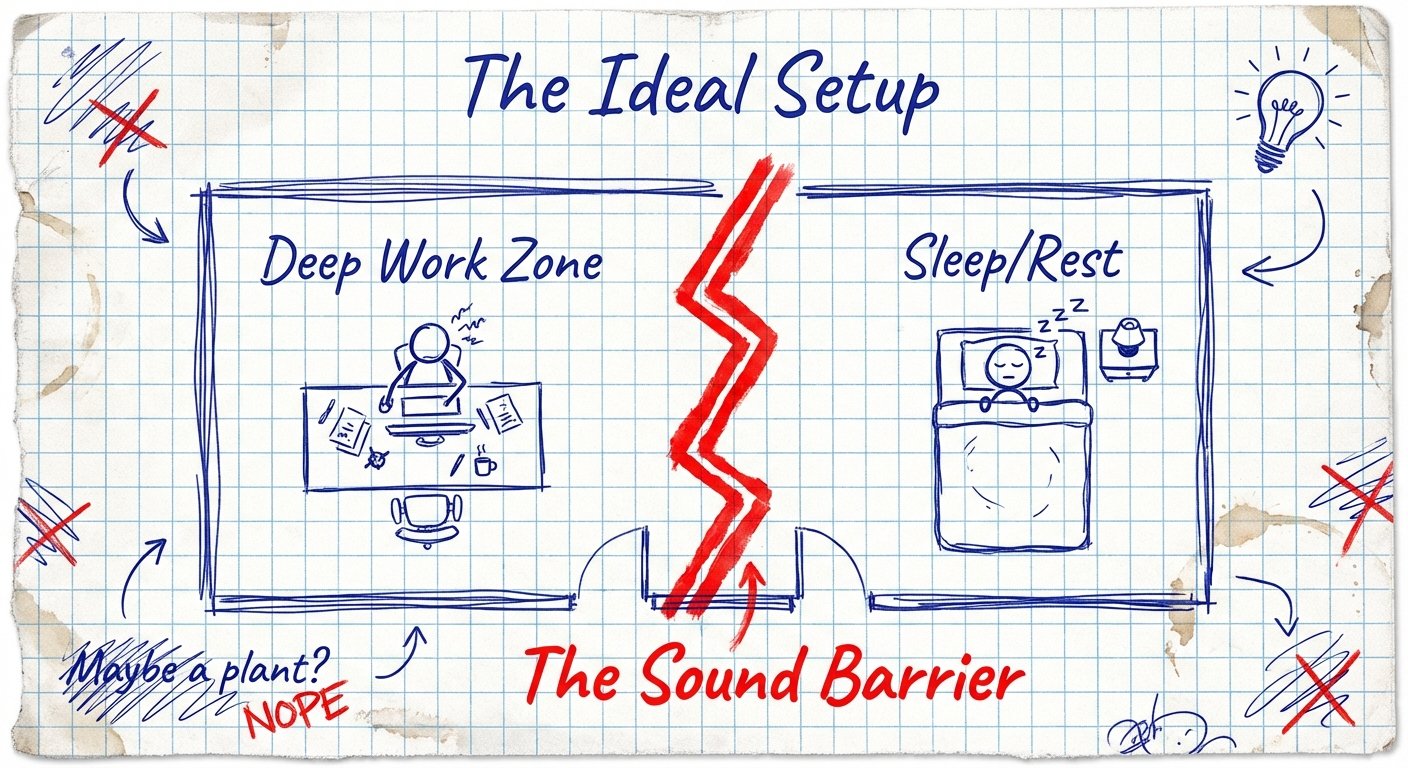
**The Rule of Two Rooms**
We have a hard rule: **The door must close.**
We never book a place unless there is a physical door separating the workspace from the sleeping space.
Ideally, you rent a 2-bedroom apartment. One room is for deep work. One room is for sleep.
Does this cost more? Yes. Usually 30% to 50% more.
Do the math on the ROI.
* Scenario A: You save $600/month. You fight daily. Your work output drops by 20% because you are distracted. You lose $2,000 in potential income. **Net Loss: $1,400.**
* Scenario B: You spend the extra $600. You have silence. You crush your work. You are happy to see your spouse at dinner because you haven’t been staring at them for 8 hours. **Net Gain: Sanity + Income.**
Spend the money on space. It is cheaper than a divorce lawyer.
The Hardware of Peace (Noise Cancellation)
If you cannot afford two rooms, or if you are working in cafes, you need to buy silence.
Environment control is the number one predictor of focus. When you are traveling, you cannot control the environment. There might be construction outside. There might be a crying baby on the plane. Your spouse might be on a loud call.
You need to control your auditory input.
This is not a “nice to have.” This is mandatory equipment.
We use the **Sony WH-1000XM5**.
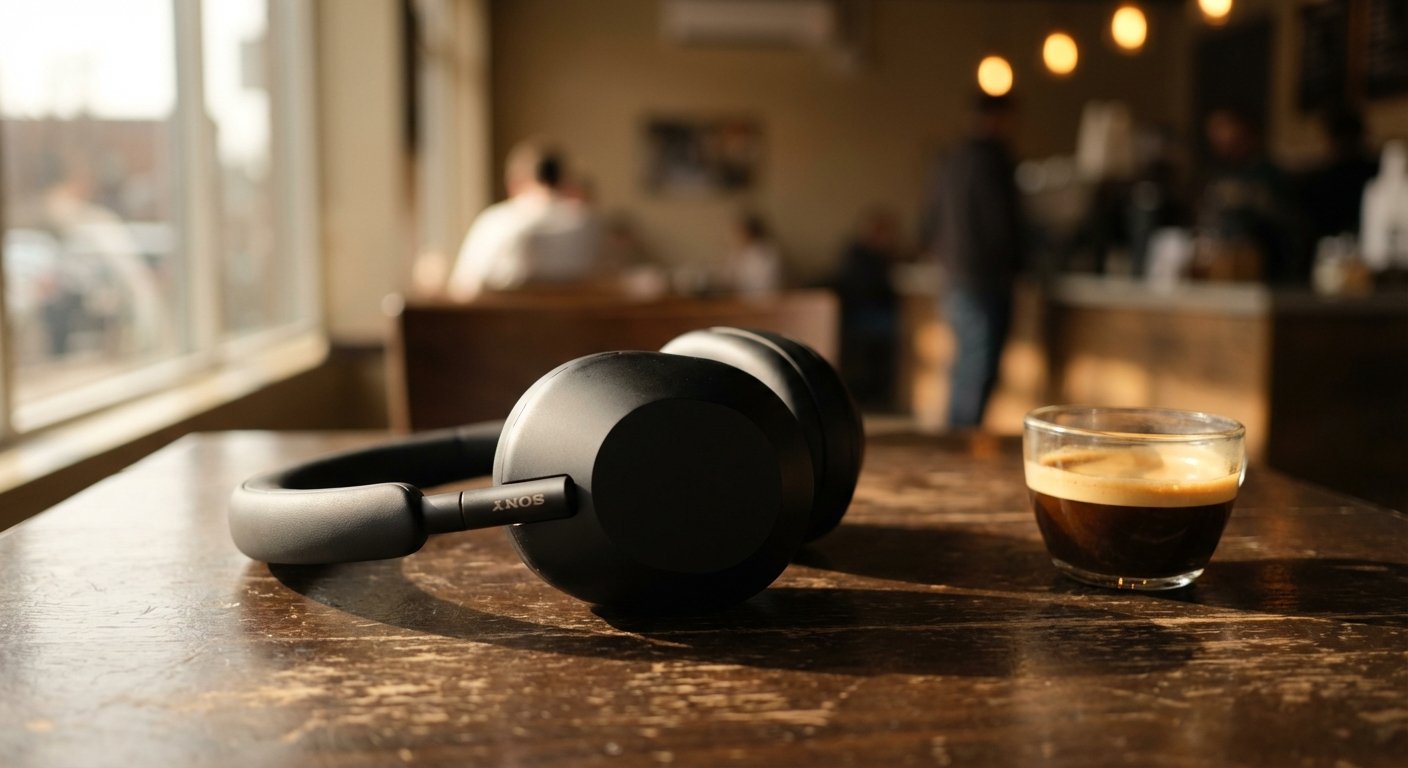
These are the industry standard for a reason. They don’t just dampen sound; they delete it.
The Active Noise Cancellation (ANC) on these uses eight microphones and two processors to filter out mid-high frequency sounds—like human voices. That is the key. Most headphones block the low hum of an airplane engine. These block the conversation happening three feet away from you.
**The Specs that Matter:**
* **Battery Life:** 30 hours. That covers any flight in the world.
* **Call Quality:** 4 beamforming microphones. You can take a client call in a noisy airport lounge, and they will think you are in a library.
* **Comfort:** They are lighter than the previous model (XM4). You can wear them for 8 hours without a headache.
**Current Market Price:** ~$348.00 – $399.00
Some people balk at spending $350 on headphones. That is poor logic. If these headphones save you one hour of distracted work per week, they pay for themselves in a month. If they stop one argument about noise, they pay for themselves instantly.
Redundancy is Reliability
The fastest way to ruin a trip is bad internet.
You arrive at the AirBnB. The host promised “High Speed WiFi.” You open your laptop. Speed test says 3 Mbps.
You have a Zoom call in 10 minutes. Panic sets in. You start sweating. You blame your partner for booking this place. They get defensive.
Now you are fighting, and you missed your meeting.
Digital nomads live on data. If you do not have data, you are just unemployed people on vacation.
You never rely on the AirBnB WiFi. You bring your own infrastructure.
**The Solution: Netgear Nighthawk M6 Pro**

This is a mobile hotspot router. It is not the cheap USB stick you used in 2015. This is enterprise-grade hardware.
It uses 5G mmWave technology. It creates a WiFi 6E network wherever you are. You buy a local SIM card (or use Google Fi), pop it in, and you have your own dedicated, secure, high-speed network.
**Why this specific model?**
1. **Speed:** It supports up to 8Gbps (theoretical). In the real world, I’ve pulled 400+ Mbps in cities where the hotel WiFi was barely loading Google.
2. **Capacity:** It connects up to 32 devices. You, your spouse, laptops, phones, tablets. All of it runs through one pipe.
3. **Ethernet Port:** This is the killer feature. You can plug it directly into a laptop for zero latency, or plug it into a larger router to distribute the signal.
**Current Market Price:** ~$450.00 – $499.00
Is it expensive? Yes. But consider the cost of downtime. If your internet drops during a sales close, you lose the deal. That deal was worth $1,000. The router costs $450. You are losing money by not having it.
The “Sync” Meeting
Hardware solves the physical problems. Systems solve the emotional problems.
When you travel, variables change constantly. Time zones. Checkout times. Flight schedules. Work deadlines.
If you keep this info in your head, you will crash.
My partner and I treat our marriage like a logistics company. Every Sunday night, we have a “Sync Meeting.”
It is not romantic. It is operational.
**The Agenda:**
1. **The Calendar Review:** We open our Google Calendars. We look at the next 7 days.
* “I have a deep work block on Tuesday morning. Do not disturb me.”
* “We have a flight Thursday. We need to leave for the airport at 10 AM. That means no calls after 9 AM.”
2. **The Money Review:** We look at the spend from the last week. Did we blow the budget on food? Do we need to tighten up?
3. **The “Vibe Check”:** On a scale of 1-10, how stressed are you? If I am at a 9 and she is at a 2, she picks up the slack on logistics (booking Ubers, finding dinner). If we are both at a 9, we cancel plans and sleep.
This meeting takes 15 minutes. It eliminates 90% of the arguments for the week.
Financial Architecture
Money is the number one cause of divorce. Traveling exacerbates money issues because your spending is variable.
Some months you are in Switzerland and a coffee costs $8. Some months you are in Vietnam and a coffee costs $1.
If you don’t have a clear system, you will resent each other.
“Why did you order the expensive wine?”
“Why did you book the expensive seat?”
**The Joint Operating Account**
You need a Joint Account. Period.
Keep your personal accounts for your personal toys. But for the “business” of living together (Rent, Food, Travel, Flights), you pool resources.
**The Protocol:**
1. Calculate your total monthly burn rate (e.g., $5,000).
2. Add 20% for the “chaos buffer” (missed flights, medical issues, broken tech). Total: $6,000.
3. Contribution is pro-rated based on income. If I make $100k and she makes $50k, I pay 66% of the joint costs. She pays 33%.
4. All travel expenses come out of this bucket.
This removes the transaction-level friction. You aren’t Venmo-ing each other $12 for a sandwich. That is petty and exhausting. You are a team. Act like one.
The Exit Strategy (The 3-Month Rule)
Travel is exhausting. Decision fatigue is real.
When you move to a new city every week, your brain is constantly processing new data. Where is the gym? Where is the grocery store? Is this neighborhood safe?
This burns cognitive calories that you should be using to grow your business.
We follow the **3-Month Rule**.
We stay in one location for a minimum of 30 days, ideally 90 days.
* **Days 1-7:** Setup cost. Low productivity. figuring out the map.
* **Days 8-30:** Breakeven. You have a routine.
* **Days 31-90:** Profit zone. You know the barista. You have a gym routine. You can actually work.
If you move every 5 days, you are perpetually in the “Setup Cost” phase. You are bleeding efficiency.
Slow down. You aren’t on The Amazing Race. You are building a life.
Summary: The ROI of Boring
The secret to a successful digital nomad marriage is not more adventure. It is more boredom.
It is boring protocols. Boring calendar invites. Boring financial spreadsheets. Reliable, boring hardware.
These things create a platform of stability.
When you have stability in your operations, you can afford to have adventure in your experiences. You can enjoy the hike because you aren’t worried about the WiFi. You can enjoy the dinner because you aren’t fighting about the budget.
Fix the operations. The romance will take care of itself.