The “Vacation Mode” Trap
Most people land in a new country and their brain turns off.
They treat the first 48 hours like a throwaway period. They say, “I’m jet-lagged.” They say, “I need to get my bearings.” They wander around looking for food. They struggle with spotty airport Wi-Fi.
This is a loser’s mentality.
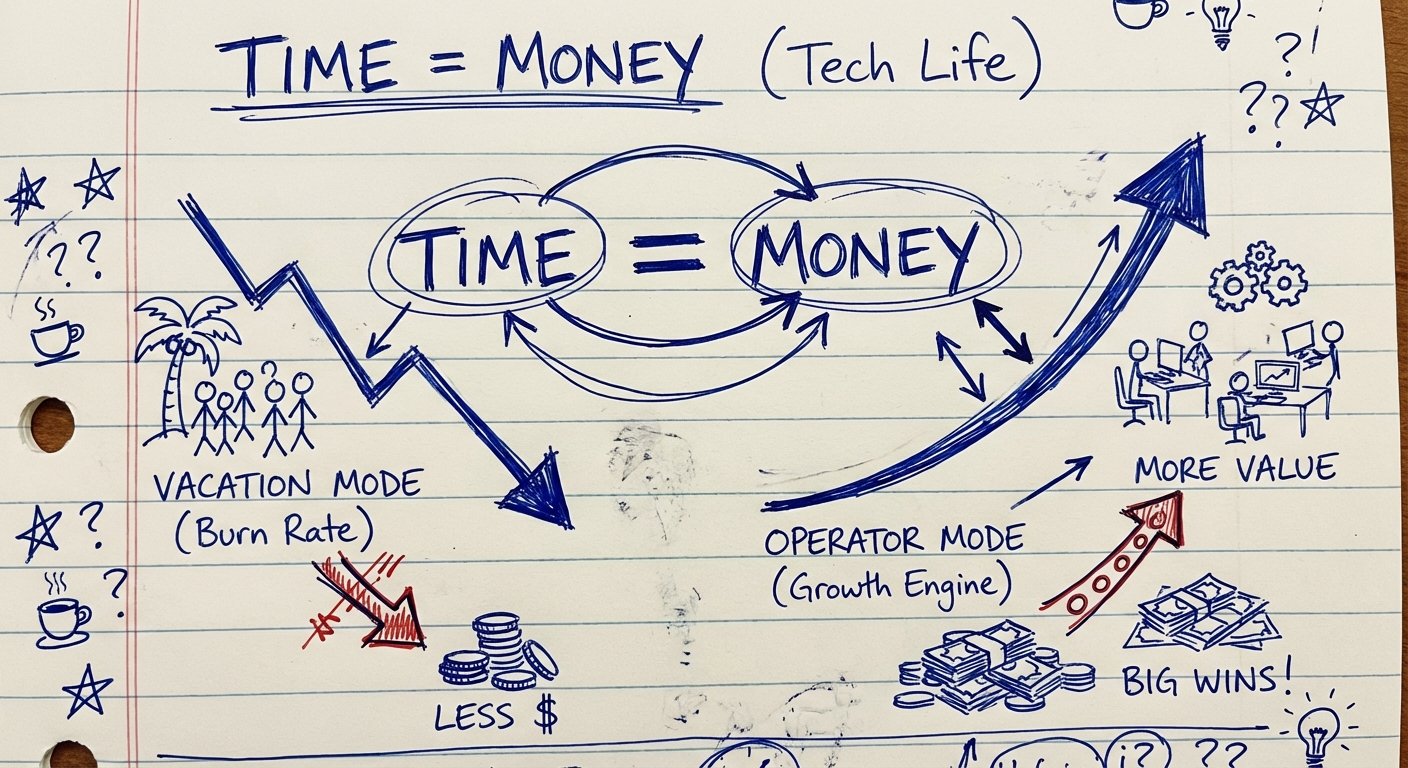
If you are a high-performer, time is your most expensive asset. Let’s do the math. If your time is worth $500 an hour, and you waste two days “getting settled,” you just burned $16,000 in opportunity cost. That is expensive tourism.
I don’t land to sightsee. I land to dominate. The goal of the First 48 Hours is simple: Reduce the “Time to Operational Capacity” to zero.
You need to go from “Seatbelt Sign Off” to “Closing Deals” as fast as possible. Friction is the enemy. Every minute you spend figuring out a plug adapter or arguing with a taxi driver is a minute you aren’t building your business.
Here is the system I use. It is not cheap. It is effective.
Phase 1: The Oxygen (Connectivity)
Internet is not a luxury. It is oxygen. If you cut off my air, I die in three minutes. If you cut off my internet, my cash flow dies in three seconds.
The Mistake: Relying on public Wi-Fi or trying to buy a local SIM card at the airport kiosk. The airport kiosk is a tax on laziness. You will pay 3x the price, wait in line for 45 minutes, and hand over your passport to a stranger. It is low leverage.
The Solution: You need redundancy. You need two layers of connectivity before the plane wheels touch the tarmac.
- Layer 1: The eSIM. Buy an Airalo or Holafly plan before you fly. Install it. Activate it the second you land. You have data before you unbuckle.
- Layer 2: The Hardware Backup. Sometimes networks fail. Sometimes your phone dies. You need a dedicated pipeline.
I use a dedicated mobile hotspot. It keeps my laptop connected in the Uber. It works when the Airbnb Wi-Fi inevitably fails because the host lied about the speed.
Recommended Gear: GlocalMe G4 Pro 4G LTE Mobile Hotspot
This device is a tank. It covers 140+ countries. It has no SIM card slot because it uses CloudSIM technology (though you can put one in if you want). You turn it on, pay for a data package on the screen, and you have internet. It also doubles as a power bank.
Is it the cheapest option? No. It costs money to buy the device and money for data. But if this saves you one hour of downtime during a launch, it pays for itself ten times over.
Current Price: $140 – $170
Phase 2: The Base (Logistics & Transport)
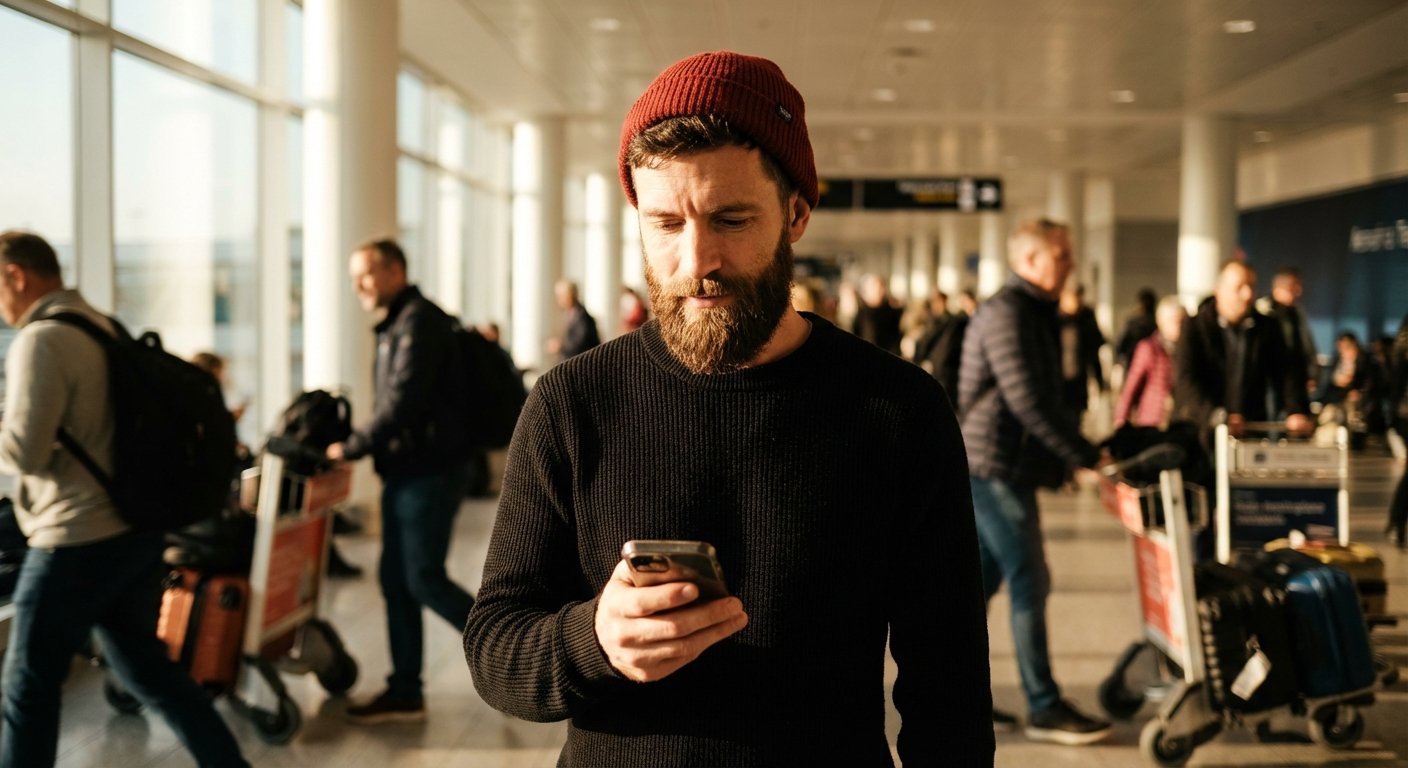
You have landed. You have internet. Now you need to move.
The Mistake: Taking a local “metered” taxi. In 80% of the world, the guy standing at the arrival gate whispering “Taxi? Taxi?” is a scammer. He views you as a walking wallet. He will take the long route. He will “forget” to turn on the meter. He will claim he doesn’t have change.
This creates emotional friction. You get angry. You arrive at your hotel stressed. Stressed people make bad business decisions.
The Solution: Algorithmic Transport.
Use Uber. Use Grab. Use Bolt. Whatever the local app is. Why? Because the price is fixed before you get in. The route is tracked. There is no negotiation. Negotiation over a $10 fare is a waste of your mental bandwidth.
The Accommodation Audit
You arrive at your “Base.” Most people check the view. I check the download speed.
Before I unpack, I run a speed test. If it is below 50 Mbps down and 10 Mbps up, I leave. I don’t care if I already paid. I will book a hotel nearby.
Why? Because a Zoom call that freezes every 15 seconds makes you look incompetent. Incompetence costs you trust. Lack of trust costs you money.
Phase 3: The Energy Grid (Power)
Different countries have different plugs. This is a solvable problem that people refuse to solve permanently.
I see entrepreneurs carrying a bag full of ten different plastic adapters they bought at 7-Eleven. They rattle. They spark. They fall out of the wall.
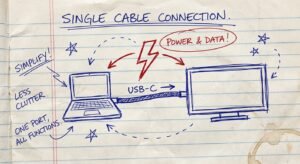
Stop buying cheap plastic junk. You need one adapter that handles everything. It needs to charge your laptop, your phone, and your hotspot simultaneously. It needs to be heavy-duty.
Recommended Gear: EPICKA Universal Travel Adapter
This is the only one I use. It works in 150 countries (EU, UK, AU, US). It has USB-C fast charging ports. It has a self-resetting fuse so you don’t blow up your $3,000 MacBook because the voltage spiked in Bali.
It costs less than a round of drinks, yet people try to save $5 here. Don’t be cheap with your power supply.
Current Price: $20 – $25
Phase 4: The Recovery (Sleep Optimization)
Jet lag is biological friction. Your body thinks it is 3:00 PM. The sun says it is 3:00 AM.
If you don’t sleep, your IQ drops. A sleep-deprived entrepreneur is just an idiot with a budget. You cannot make high-leverage decisions on three hours of sleep.
You cannot control the noise outside your apartment. You cannot control the streetlights leaking through the curtains. You must control your immediate environment.
The Rule: Total sensory deprivation.
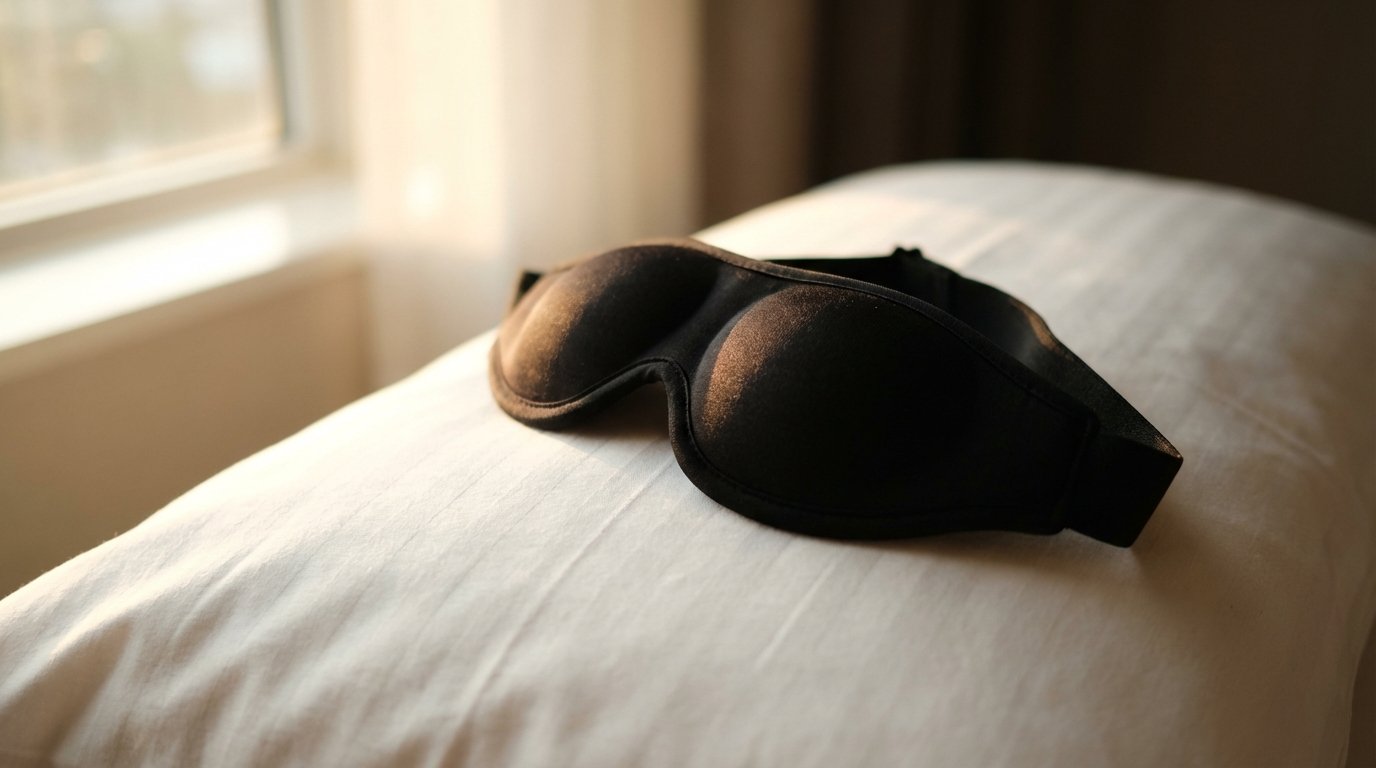
Recommended Gear: Manta Sleep Mask (PRO or Original)
Most sleep masks are garbage. They press against your eyelids. They let light in around the nose. They are uncomfortable.
The Manta mask has deep eye cups. You can open your eyes while wearing it and your lashes won’t touch the fabric. It is 100% blackout. I put this on, pop in earplugs, and I can sleep in the middle of a construction site.
If you sleep better, you work better. The ROI on a $35 mask is infinite.
Current Price: $30 – $35
Phase 5: The Workflow (Ergonomics)
This is where 99% of digital nomads fail.
They sit at a kitchen table. They hunch over a 13-inch laptop screen. Their neck is bent at a 45-degree angle. After four hours, their back hurts. Their focus breaks. They stop working.
Pain is a distraction. You cannot enter a flow state if your spine is screaming at you.
You need to replicate your home office setup in a backpack. This requires elevation. Your screen needs to be at eye level. This means you need a laptop stand, an external keyboard, and a mouse.
“But Alex, that’s too much gear.”
No, it isn’t. It fits in a carry-on. The cost of carrying 2 extra pounds is nothing compared to the gain of working 10 hours without fatigue.

Recommended Gear: Roost V3 Laptop Stand
There are cheap knock-offs of this for $15. They wobble. They break. The Roost V3 is the original and it is the best. It is incredibly light, collapses into a tiny stick, and holds the laptop rock steady. You can adjust the height to match your eye level perfectly.
Current Price: $85 – $90
Phase 6: The Fortress (Focus)
New countries are noisy. Scooters, construction, loud neighbors, cafes with terrible music. You cannot ask the world to be quiet. You must silence the world.
If you are trying to write copy or analyze data, you need silence. Noise pollution increases cortisol. Cortisol kills creativity.
I don’t leave my house without high-end noise-canceling headphones. Not earbuds. Over-ear headphones.
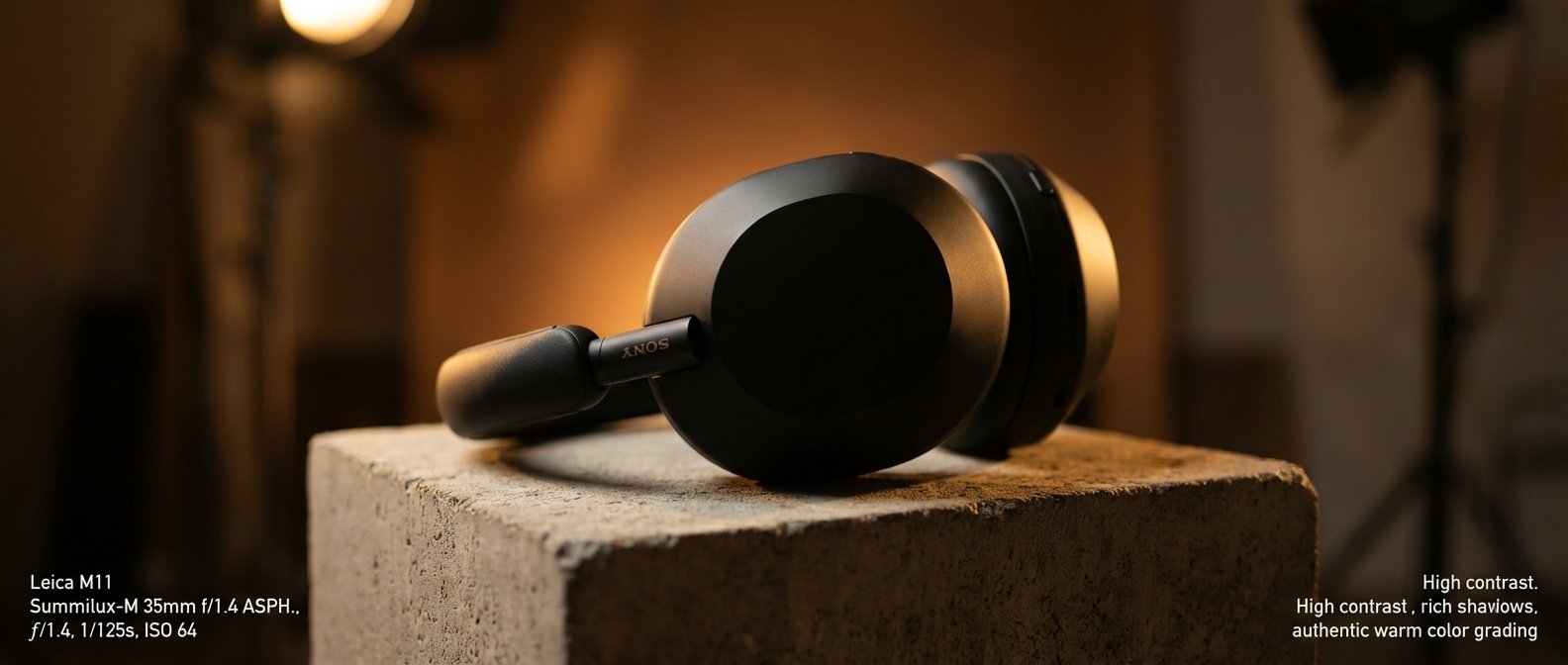
Recommended Gear: Sony WH-1000XM5
These are the industry leader for a reason. The noise cancellation is terrifyingly good. You put them on, and the world disappears. The battery lasts 30 hours. That is enough for the longest flight in the world plus your first day of work.
The microphone is also studio quality. This means you can take client calls in a noisy Starbucks and they will think you are in a soundproof booth. That perception of professionalism allows you to charge more.
Current Price: $348 – $400
The “First 48” Checklist
Here is the summary. Print this out. Or don’t, and keep losing money.
- Pre-Flight: Install eSIM. Charge the GlocalMe hotspot. Download offline maps.
- Touchdown: Turn on phone. Verify data. Order Uber. Ignore taxi touts.
- Arrival: Speed test the Wi-Fi. If it fails, leave.
- Setup: Unpack the EPICKA adapter. Set up the Roost stand. Plug in.
- Sleep: Put on the Manta mask. Sleep for 8 hours.
- Work: Put on the Sony XM5s. Grind.
The world doesn’t care that you are traveling. The market doesn’t pause for your jet lag. Build the system. Remove the friction. Get to work.