The “Technical Co-Founder” Myth
Most people stay poor because they wait for permission. In the tech world, that permission looks like a “Technical Co-Founder.”
You have an idea. You think it’s the next Uber for dog walking. But you don’t know how to code.
So, you go looking for a developer. You pitch them your “equity” offer. They laugh at you. They want a salary. A big one.
You get a quote from a dev shop. They want $50,000 upfront. You don’t have $50,000. You have an idea and a maxed-out credit card.
So the idea dies. You go back to your day job.
That is the old way. It is the slow way. And frankly, it is the stupid way.
Today, if you can drag a mouse and use logic, you are a developer. We call it “No-Code.” I call it “High Leverage.”
The market doesn’t care if your code is written in Python or generated by a visual editor. The market cares if your product solves a problem. Period.

The ROI of Speed
Let’s look at the math.
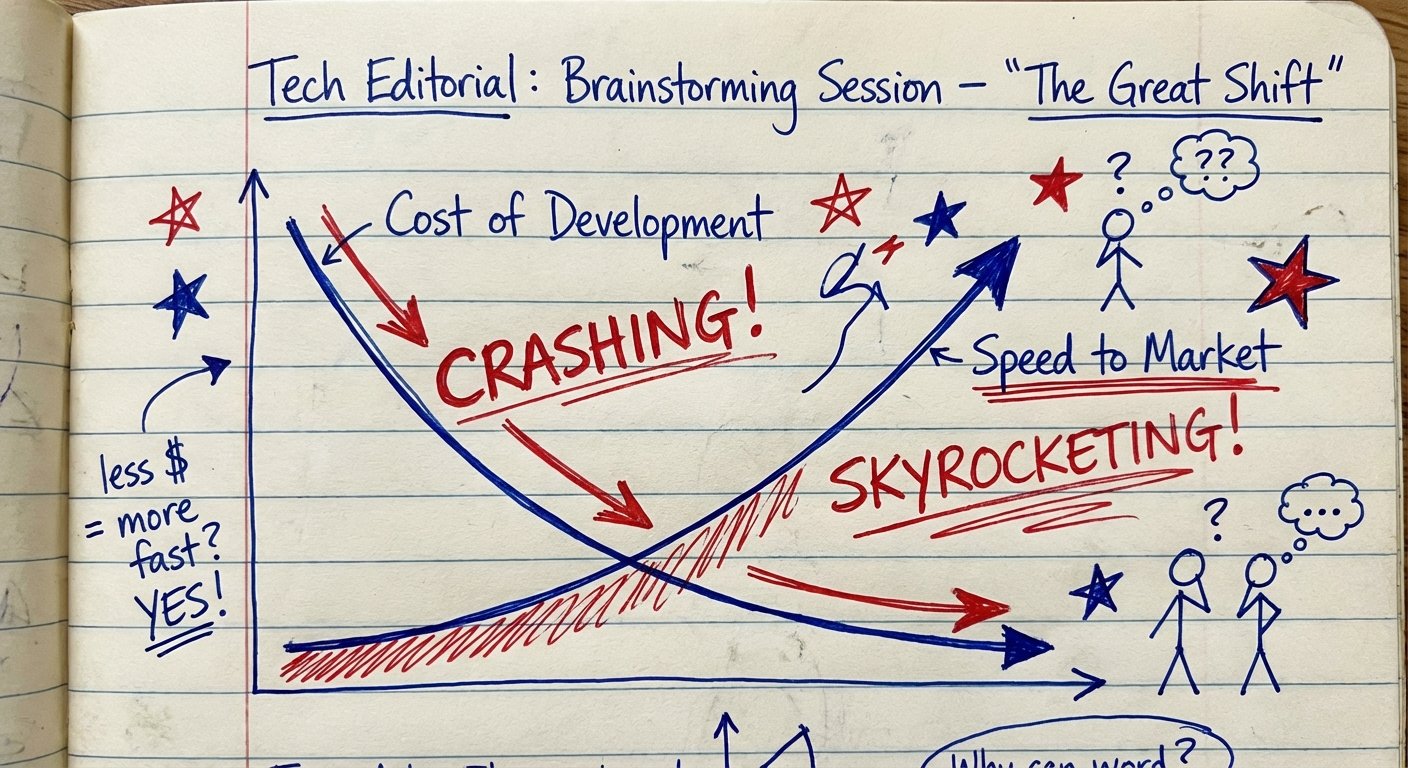
Scenario A: Traditional Development
- Cost: $50,000+ (Minimum MVP)
- Time: 3 to 6 months
- Flexibility: Low. Every change costs more money.
Scenario B: No-Code Development
- Cost: $50 – $150 per month (Subscription fees)
- Time: 2 to 4 weeks
- Flexibility: High. You change it yourself in real-time.
The goal of a startup is not to build a product. The goal is to validate an offer. No-code lets you validate the offer before you run out of cash. That is the only metric that matters.
The Heavy Lifter: Bubble.io
If you want to build a real web application—something like Airbnb, LinkedIn, or a SaaS platform—you use Bubble.
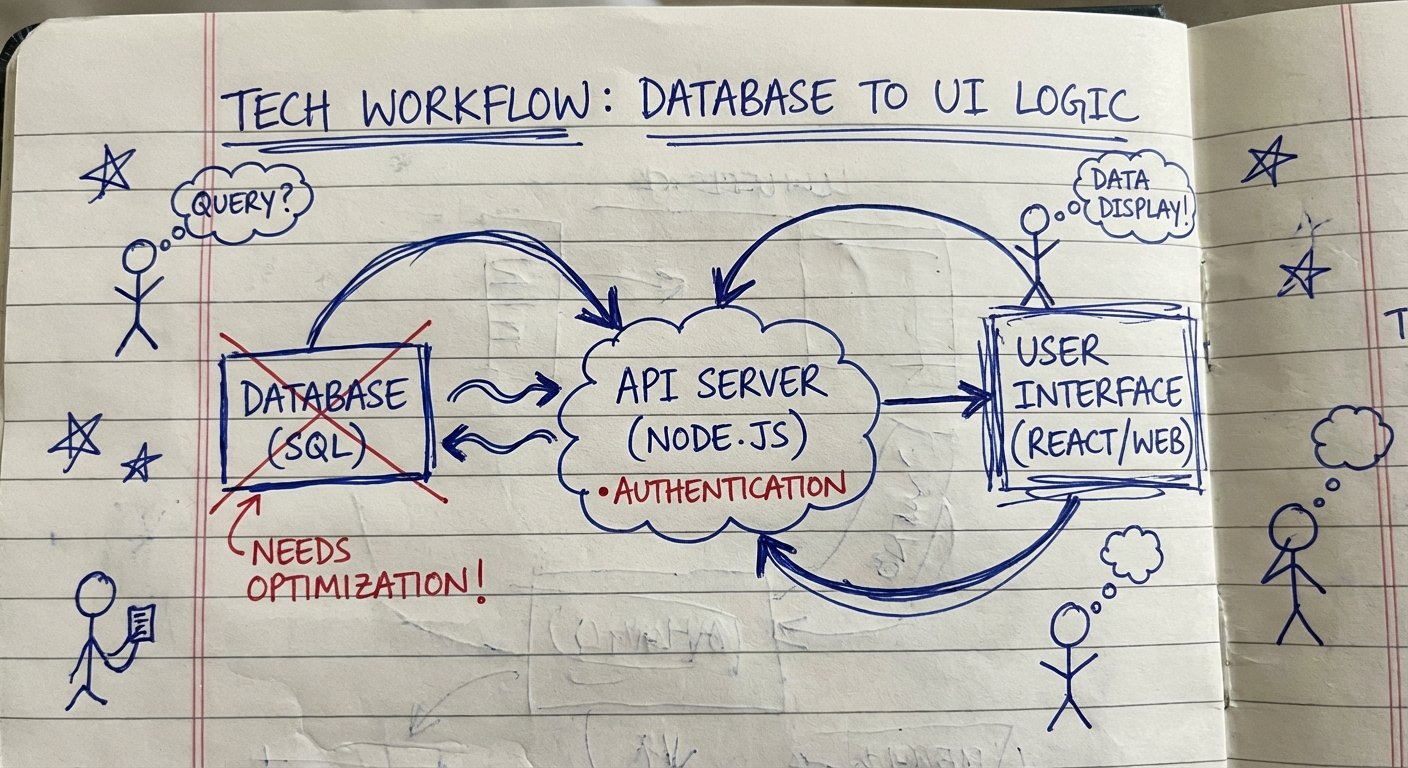
Bubble is not a toy. It is a visual programming language. It allows you to design the front end (what people see) and the back end (the data and logic) without writing syntax.
The Capabilities:
- Complex Databases: You can manage thousands of users and millions of data entries.
- API Integrations: Connect to Stripe for payments, OpenAI for AI features, or SendGrid for emails.
- Workflows: This is where the magic happens. “When User clicks Button A, charge credit card, send email, and update database.”
The Learning Curve:
Bubble is harder than Wix or Squarespace. You will feel stupid for the first week. That is normal.
You have to learn how to think like a programmer. You need to understand data types and logic flows. But you do not need to memorize where to put a semicolon.
Once you get over the hump, you become dangerous. You can build features in an afternoon that take traditional dev teams two weeks.
The Mobile Speedster: Adalo
Bubble is great for web apps. But if your users need something on their phone—a native app they download from the App Store—you look at Adalo.
Adalo is strictly for mobile. It is drag-and-drop simple. You can have a functional app on your phone screen in under an hour.
Why use Adalo?
- Native Publishing: One-click publishing to the Apple App Store and Google Play Store.
- Marketplaces: Perfect for Uber-style apps, delivery apps, or directories.
- Visual Database: It feels like using a spreadsheet. Very intuitive.
The Trade-off:
Adalo is slower than Bubble when handling massive amounts of data. If you have 100,000 users hitting the database at once, Adalo might choke. But if you have 100,000 users, you have enough revenue to hire a real dev team to migrate you. That is a good problem to have.
Do not optimize for a million users when you have zero. Optimize for speed.
The Gear: What You Need to Build
You are building a software company. You need the right tools. Do not try to build a business on a Chromebook that lags every time you open three tabs.
Time is money. If your computer freezes for 5 seconds every minute, you are losing hours of your life every week. That is negative leverage.
1. The Workhorse Laptop
You don’t need a $5,000 gaming rig. You are moving logic blocks, not rendering 3D animation. However, web-based editors like Bubble rely heavily on your browser’s performance (JavaScript engine).
You want single-core speed and RAM.
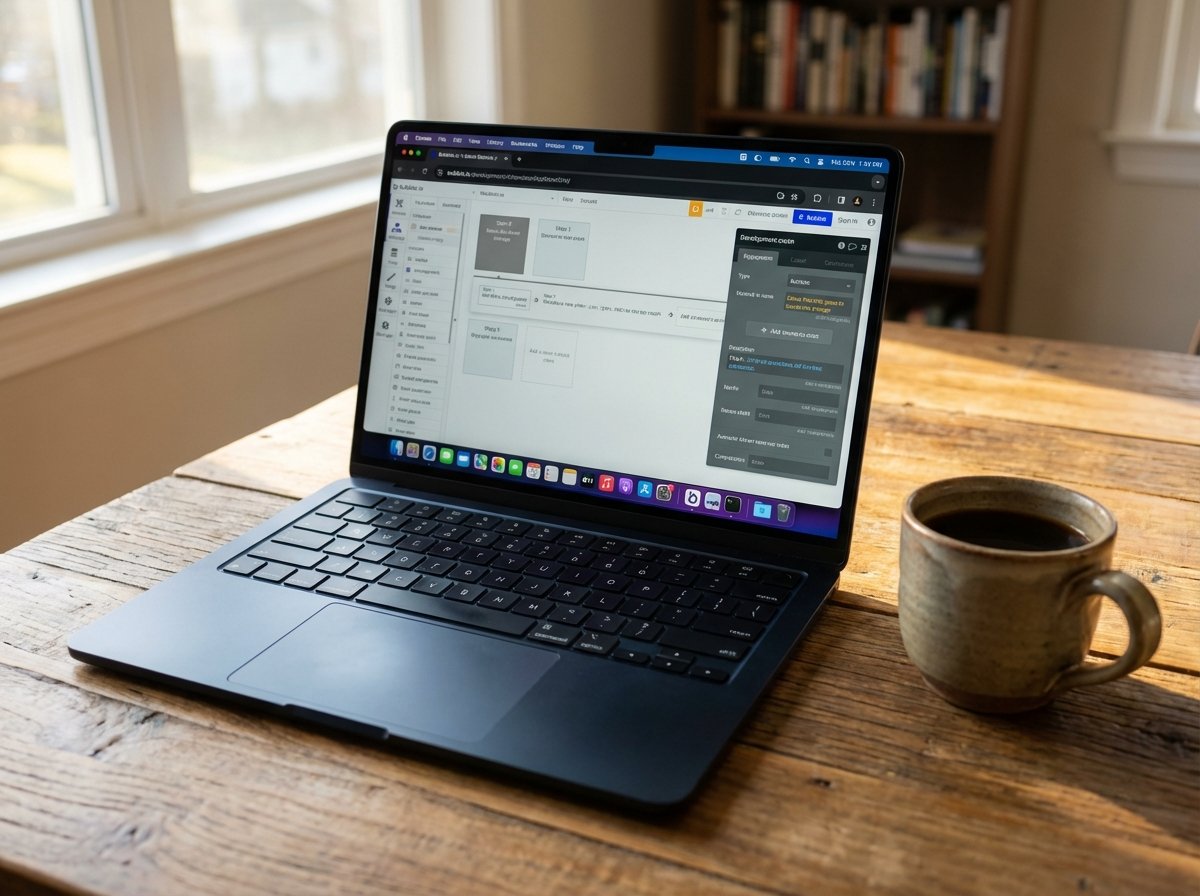
Recommendation: Apple MacBook Air (M3 Chip)
The M3 chip is a beast for web applications. It handles heavy browser loads without the fan spinning up like a jet engine. It’s light, the battery lasts all day, and it holds its resale value.
- Specs to target: 16GB Unified Memory (minimum), 512GB SSD. Do not get the 8GB version. It will bottleneck you when you have 50 tabs open.
- Current Price: $1,000 – $1,300
2. The “God Mode” Monitor
When you are building in Bubble or Adalo, you need to see the canvas. You have a workflow editor on one side, your design on the other, and a preview window open.
Doing this on a 13-inch laptop screen is torture. It is inefficient.
Get an ultrawide monitor. It allows you to see the entire logic flow at once without scrolling. This saves you mental energy. Mental energy equals better product decisions.
Recommendation: LG 34-Inch UltraWide Monitor (34WP60C-B)
This gives you enough real estate to have your database, workflows, and frontend open side-by-side. It is curved, so it’s easy on the eyes.
- Specs: QHD resolution, 160Hz refresh rate.
- Current Price: $300 – $400
3. The Input Device
You are going to be clicking and dragging thousands of times a day. A trackpad is fine for browsing. It is terrible for developing.
You need precision. You need to map macros to buttons to speed up your workflow. You need a mouse that doesn’t give you carpal tunnel in week one.
Recommendation: Logitech MX Master 3S
This is the industry standard for a reason. The scroll wheel has a “Magspeed” function that lets you scroll through thousands of database rows in a second. It has a thumb scroll for horizontal movement (crucial for timeline editors in Bubble).
- Feature: Silent clicks, track on glass, app-specific customizations.
- Current Price: $90 – $100

The “No-Code” Trap
I need to warn you about something.
No-code is addictive. You will get a rush from building. You will wake up at 4 AM to fix a workflow. You will feel productive.
But building is not selling.
I see “No-Code Developers” spend six months building the perfect app with 50 features. They launch. Crickets. Nobody cares.
They built a solution for a problem that didn’t exist.
The Rule of MVP (Minimum Viable Product):
Build the absolute minimum required to solve the core pain point. If your app is supposed to match dog walkers with owners, do not build a forum. Do not build a merch store. Do not build AI photo recognition.
Build a button that says “Find Walker.” Make sure it works. Charge money for it.
If you can’t sell the ugly version, you won’t be able to sell the pretty version.
Scalability: When to Switch?
The haters will tell you: “You can’t scale on Bubble.”
They are lying. Or they are ignorant. Usually both.
There are companies doing $10M+ in ARR (Annual Recurring Revenue) on Bubble. There are apps handling millions of API calls a month.
However, there is a ceiling. If you become the next Facebook, yes, you will need to move off Bubble. You will need custom AWS servers and a team of 50 engineers.
But you know what? If you have the traffic of Facebook, you have the money to rebuild the platform.
Worrying about scaling to a million users when you haven’t made your first dollar is arrogance. It’s procrastination disguised as planning.
Get to $10k/month first. Then worry about the tech stack.
The Hybrid Approach: AI + No-Code
This is where things get crazy. In 2024, you aren’t just dragging and dropping.
You can use ChatGPT to write complex regular expressions (RegEx) for your Bubble app. You can use Midjourney to generate your UI assets. You can use AI to write the SQL queries for your database.
The barrier to entry isn’t just lowered. It is demolished.
The “No-Code Developer” is actually just a Product Manager who doesn’t have to wait on a team. You are the architect and the builder.
Conclusion: No More Excuses
Ten years ago, you had an excuse. “I don’t know how to code” was a valid reason not to start a software company.
Today, that excuse is gone.
The tools cost less than a gym membership. The hardware is affordable. The knowledge is free on YouTube.
The only bottleneck left is you.
Are you going to keep talking about your “million dollar idea,” or are you going to build it this weekend?
Pick a tool. Buy the laptop. Do the work.