Why You Are Broke (And How to Fix It)
Most business owners stay poor because they are terrified.
You are scared that if you raise your prices, everyone will leave.
So you compete on price. You try to be the cheapest option in town. You think this makes you “competitive.”
It doesn’t. It makes you a commodity.
A commodity is something like rice or gasoline. Nobody cares who sells it. They just want the lowest number on the sticker.
If you are reading this, you are probably selling a service, coaching, or a specialized product. You are not selling gasoline. So stop pricing like a gas station.
Pricing is not math. Pricing is psychology. It is about perceived value.
If I hand you a rock and ask for $1,000, you will laugh. If I tell you that rock cures cancer, you will ask if I take credit cards.
The rock didn’t change. The story did.
This article is about changing your story. I am going to show you how to double your rates. Today. And I am going to show you why your customers will actually thank you for it.

The “Cost-Plus” Trap
Most people price their stuff backwards.
They look at their costs. They add a little margin. That is their price.
Example:
- Cost to deliver service: $50
- Desired profit: $20
- Price: $70
This is “Cost-Plus” pricing. It is stupid.
Why? Because the customer does not care about your costs. They do not care about your rent. They do not care how hard you worked.
They care about value.
Value is what they get out of it. If you save a business owner $100,000 in taxes, does it matter if it took you one hour or one hundred hours? No.
If you charge $5,000 to save them $100,000, that is a 20x return on investment. It is a no-brainer deal. Even if your “cost” was $0.
Stop looking at your expenses. Start looking at their outcome.
The Value Equation
I didn’t invent value, but I did create a formula to explain it. If you understand this, you will never be poor again.
Value is composed of four variables.
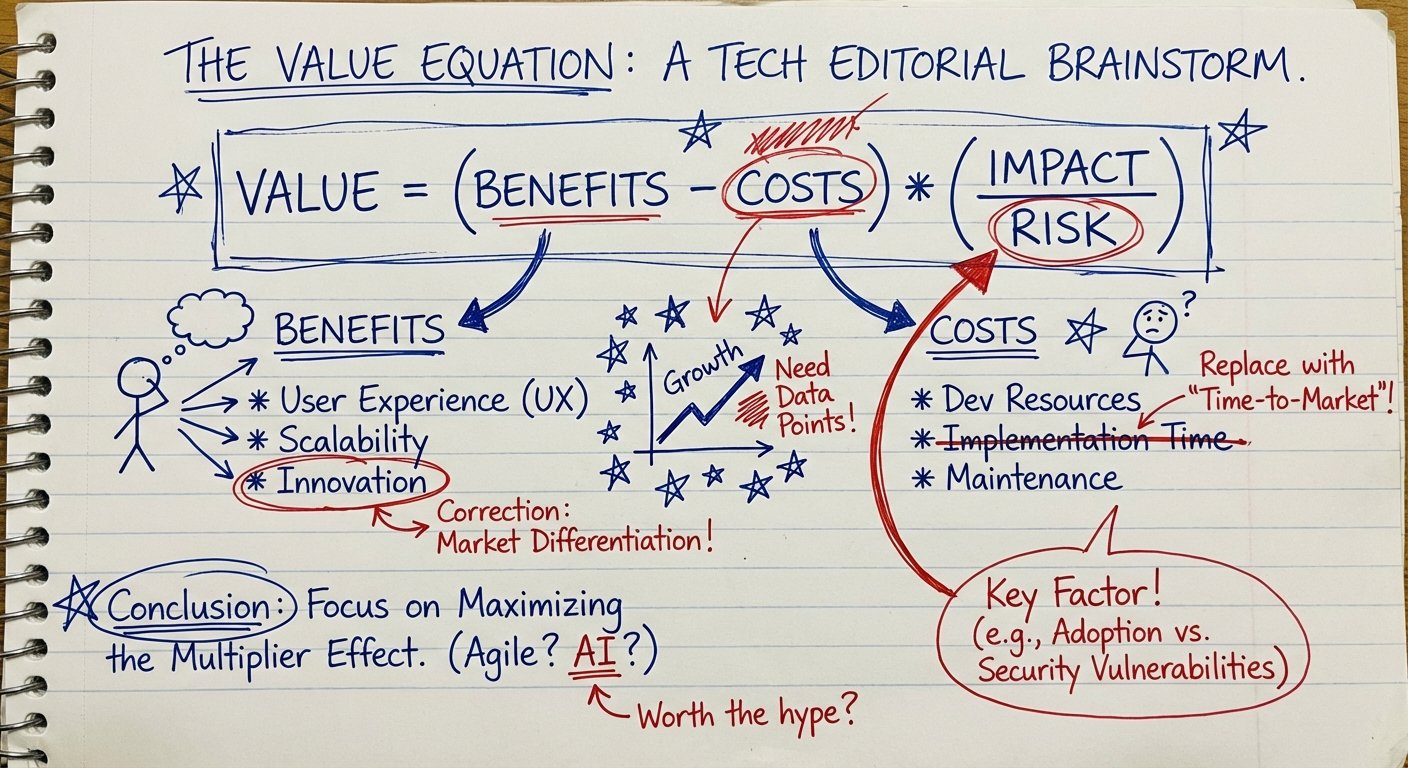
The Top (Increase these):
- Dream Outcome: What will their life look like after they buy? A six-pack? A million dollars? A saved marriage?
- Perceived Likelihood of Achievement: Do they believe YOU can actually get them there?
The Bottom (Decrease these):
- Time Delay: How long do they have to wait to get the result?
- Effort & Sacrifice: How hard is it for them?
If you want to charge more, you don’t just “ask for more money.” You manipulate these variables.
You make the outcome bigger. You make the proof stronger. You make the speed faster. You make it effortless for them.
Understanding Human Behavior
You cannot execute this if you don’t understand how humans think. We are simple creatures. We fear loss more than we desire gain.
We look for social proof. We follow authority.
If you haven’t read the foundational texts on this, you are operating blindly. You need to understand the triggers that make people say “yes.”
There is one book that breaks this down better than anything else. It isn’t new. It isn’t trendy. But it works.
Influence: The Psychology of Persuasion (New and Expanded) by Robert Cialdini
This is the playbook. Reciprocity. Commitment. Social Proof. Authority. Liking. Scarcity.
If you don’t have these elements in your sales process, you are leaving money on the table. Cialdini explains exactly why people buy things they didn’t plan to buy.
Current Price Range: $15 – $25
Niche Down to Charge Up
Generalists get paid peanuts. Specialists get paid diamonds.
Imagine you have a brain tumor.
- Doctor A is a General Practitioner. He charges $200.
- Doctor B is a Neurosurgeon who only removes your specific type of tumor. He charges $50,000.
Who do you hire? You hire Doctor B. You find the money. You beg him to take your money.
Why?
Because he is a specialist. His “Perceived Likelihood of Achievement” is through the roof. He has done this 1,000 times.
If you market yourself as a “Business Consultant,” you are a commodity. You are Doctor A.
If you market yourself as “I help Dental Practices scale to $2M using Facebook Ads,” you are Doctor B.
Narrow your focus. Your total addressable market gets smaller, but your price elasticity gets infinitely higher.
The Environment of Focus
To build a high-ticket offer, you need deep work. You cannot design a $10,000 offer while checking email every 30 seconds.
You need to shut out the world. I see too many entrepreneurs trying to strategize in chaos.
If you work in a noisy office, a coffee shop, or at home with kids, you need to buy silence. Silence is an asset.
Sony WH-1000XM5 Wireless Noise Canceling Headphones
These are the industry standard for a reason. When you put them on, the world disappears. The noise cancellation is aggressive. The battery life lasts 30 hours.
I don’t care about audio fidelity for music. I care about silence for money. These give you silence. They signal to your brain (and your family) that you are in work mode.
Current Price Range: $348 – $399

Anchor Pricing
Pricing is relative.
If I tell you a watch costs $5,000, you might think it is expensive.
If I put it next to a $500,000 watch, suddenly the $5,000 watch looks like a bargain.
This is called Anchoring. You must use this in your sales process.
Never present your price in isolation. Always contrast it against a higher number.
Contrast against the alternative:
“You could hire a full-time employee to do this. That will cost you $60,000 a year plus benefits, training, and management headaches.”
Contrast against the cost of inaction:
“If you don’t fix this problem, you are losing $10,000 a month. Over a year, that is $120,000 gone.”
Then reveal your price:
“My program is $5,000.”
Suddenly, $5,000 isn’t a cost. It’s a massive saving. You just saved them $55,000 (vs the employee) or $115,000 (vs doing nothing).
Visualize the Offer
When you are building these pricing models, you cannot do it in your head. You need to see it.
You need to map out the customer journey. You need to draw the funnel. You need to list every single problem the customer has, and how you solve it.
I use whiteboards. Big ones. If you are trying to build a million-dollar business on a sticky note, you are going to fail.
Quartet Glass Whiteboard (Infinity Series)
Don’t buy the cheap melamine boards that stain after a month. Get glass. It looks professional, it erases perfectly every time, and it lasts forever.
This is where you do the math. This is where you draw the Value Equation.
Current Price Range: $150 – $300 (Depending on size)

Supply and Demand (Scarcity & Urgency)
People want what they cannot have.
If you are “always available,” you are not valuable. A heart surgeon is not available for a walk-in at 2 PM on a Tuesday. You wait three months for him.
You need to manufacture scarcity. And it must be honest.
Honest Scarcity:
- “I only take 5 clients per month because I deliver high-touch service.”
- “This cohort starts on Monday. If you miss it, you wait 3 months.”
When supply goes down, price goes up. This is Economics 101.
If you have infinite capacity (like a digital course), you must create artificial limitations. Limit the bonuses. Limit the support calls. Limit the timeframe.
Give them a reason to buy now rather than later.
The “Grand Slam” Concept
You shouldn’t just raise your price on the same old product. You need to re-package it.
I call this a Grand Slam Offer. It is an offer so good that people feel stupid saying no.
It includes:
- The Core Product: The thing they buy.
- Bonuses: Tools, templates, scripts (high value, low cost to you).
- Guarantees: Risk reversal. “If you don’t get X result, I will refund you + $1,000.”
- Payment Terms: Make it easy to say yes.
If you want to go deep on this, you need to study the architecture of offers. I wrote a book on this. I’m not going to pitch it hard, but if you haven’t read it, you are fighting with one hand tied behind your back.
$100M Offers by Alex Hormozi
This is the manual. I wrote it to be the best book on offers ever written. It has 4.9 stars with thousands of reviews for a reason. It explains the math and the psychology in detail.
Current Price Range: $20 – $30
The Guarantee creates the Premium
You want to double your price? Offer a guarantee that terrifies you.
Weak businesses have weak guarantees. “30-day money back if you don’t open the box.” That is trash.
Strong businesses take on the risk. “I guarantee you will add $10k to your monthly revenue in 90 days, or I will work with you for free until you do.”
That is a Service Level Guarantee.
When you remove the risk from the client, the price becomes irrelevant. They aren’t paying for “coaching.” They are buying the result.
If the result is guaranteed, the price is just an investment with a protected downside.
Capture the Strategy
You are going to have ideas. You are going to have insights on how to structure your guarantee or your bonuses.
Do not trust your memory. Your memory is a leaky bucket.
Write it down. I carry a notebook. Not a digital note app that distracts me with notifications. A physical notebook.
Moleskine Classic Notebook, Hard Cover, Large (5″ x 8.25″)
Simple. Durable. Black. It fits in a bag. The paper is good. It doesn’t need to be fancy, it just needs to be reliable.
Use this to write down your objections. Every time a prospect says “no,” write down why. Then build a bonus or a guarantee to fix that objection for the next person.
Current Price Range: $20 – $25
Conclusion: It’s All In Your Head
The only thing stopping you from doubling your prices is you.
The market isn’t stopping you. The economy isn’t stopping you.
You are afraid of rejection. Get over it.
Here is the math of doubling your price:
If you double your price, you can lose half your customers and still make the same amount of money.
But you will have half the work. Half the headaches. And you will be working with better clients who respect you.
Raise your rates. Do it today. Do it on the next call.
Watch what happens.