Most people think becoming a YouTuber means screaming at a camera. They think it means dyeing your hair blue. They think it means becoming famous.
They are wrong.
You don’t need fame. You need cash flow.
YouTube is not a popularity contest. It is digital real estate. You upload a video once. It pays you forever. That is an asset. If you have to show up and dance every day to get paid, you don’t have a business. You have a job.
The smartest people in this game remain invisible. They run “Faceless Channels.” This model is called YouTube Automation.
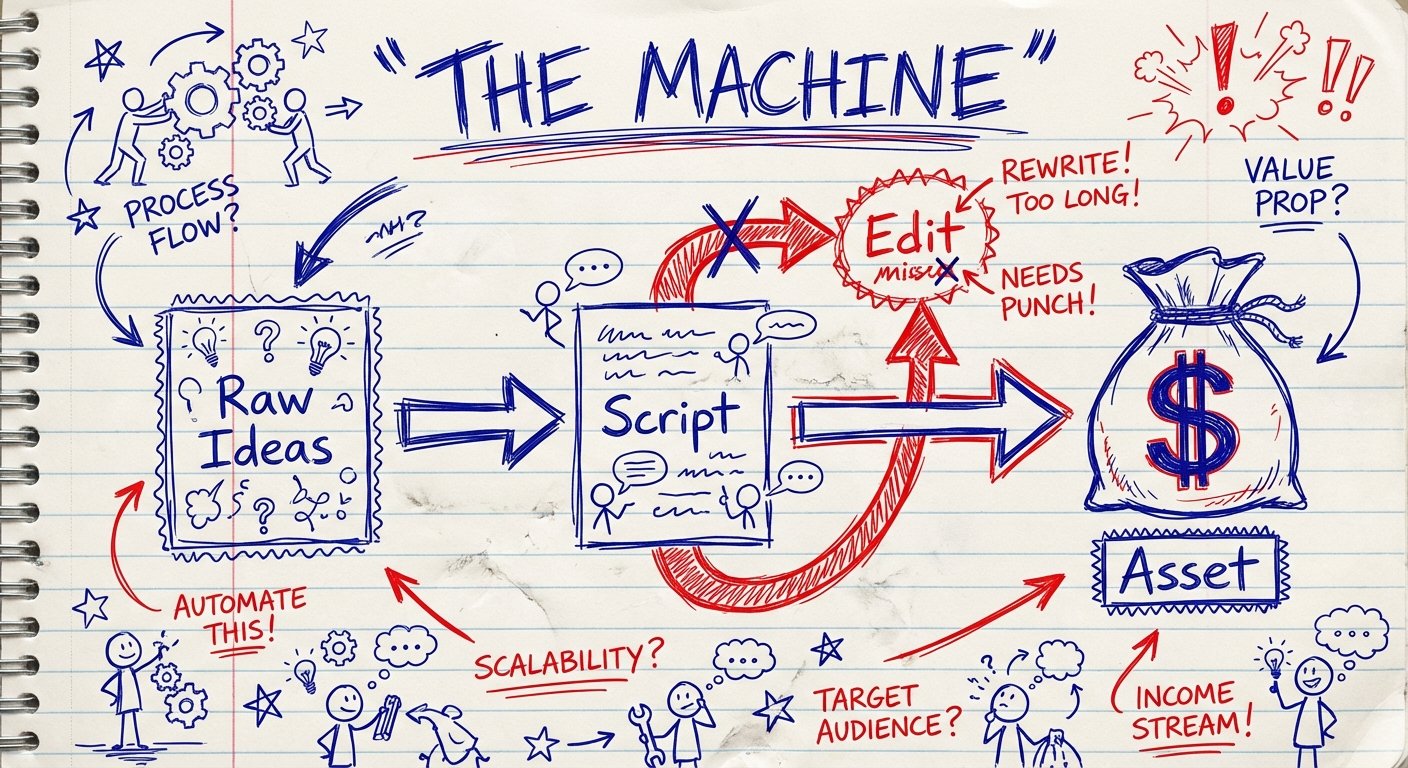
It is not a get-rich-quick scheme. It is an assembly line. You put capital and systems in at the top. You get views and revenue out at the bottom. If you do the math right, the machine prints money.
Here is how you build the machine.
The Business Model: It’s Just Supply Chain
Stop looking at YouTube as “content creation.” Start looking at it as manufacturing.
In a traditional factory, you buy raw materials (steel), you pay workers to assemble them, and you sell the finished product (cars). If the car sells for more than the cost of the steel and the labor, you make a profit.
YouTube Automation is identical.
- Raw Materials: Ideas and Topics.
- Labor: Scriptwriters, Voiceover Artists, Video Editors.
- Finished Product: An .MP4 file.
- Customer: The Viewer (paid for by advertisers).
The goal is simple: Produce a video for $100. Make it generate $500 over its lifetime.
That is a 5x return on investment. Wall Street kills for 10% a year. You can get 500% in a few months if you stop acting like an artist and start acting like a media buying agency.
Step 1: Pick a Niche That Pays (The RPM Game)
This is where 90% of people fail before they upload their first video.
They pick a niche because they “like” it. They start a gaming channel. They start a compilation channel of funny cat videos.
This is stupid.
You are here to make money. The metric you need to watch is RPM (Revenue Per Mille). This is how much YouTube pays you per 1,000 views.
The Poverty Niches:
- Gaming: $1 – $2 RPM.
- Pranks: $1 – $3 RPM.
- Motivation: $2 – $4 RPM.
If you get 1,000,000 views on a gaming channel, you might make $2,000. That is minimum wage behavior.
The Wealth Niches:
- Personal Finance / Investing: $15 – $40 RPM.
- Tech Reviews: $10 – $25 RPM.
- Business / SaaS: $20 – $50 RPM.
If you get 1,000,000 views on a finance channel, you could make $30,000. Same views. Same effort. 15x the money.
Do not follow your passion. Follow the money. You can use the money to fund your passion later.
Step 2: The Hardware (Don’t Overspend)
You are running a business, not a Hollywood studio. You need minimal viable equipment. If you are doing the voiceovers yourself to save cash early on, you need exactly one piece of gear that matters: The Microphone.
Bad audio kills retention faster than bad video. If you sound like you are recording inside a toaster, people click off. When they click off, the algorithm buries you.
The industry standard is the Shure SM7B. It’s the mic every top podcaster uses. It gives you that deep, authoritative “radio voice.”
Shure SM7B Vocal Dynamic Microphone
- Why you need it: It rejects background noise. You can record in a messy room and still sound pro.
- Current Price: $350 – $400
You cannot plug this directly into your computer. You need an interface. If you buy the mic without the interface, you just bought an expensive paperweight. Get a Cloudlifter to make the signal clean.
Cloudlifter CL-1 Mic Activator
- Why you need it: The SM7B is “quiet.” This boosts the volume without adding static.
- Current Price: $130 – $160

Step 3: The Assembly Line (SOPs)
You cannot scale if you are doing everything. You have 24 hours in a day. A system has infinite hours.
Eventually, you must outsource. But first, you must understand the roles. Here is the workflow for a faceless video.
1. Ideation & Packaging
Most people make the video, then think of the title. This is backward.
Title and Thumbnail comes first. If you cannot think of a clickable title and a compelling thumbnail, do not write the script. No one will click. If no one clicks, the quality of the video does not matter.
Look for “outlier” videos in your niche. If a channel usually gets 10k views, but one video got 500k views, that is a proven topic. Steal the topic. Improve the angle.
2. The Script
The first 30 seconds are the only thing that matters. This is the “Hook.”
Do not say “Welcome back to the channel.” Boring. They left.
Say: “This single stock could triple by 2025, and here is the math why.”
Give them the payoff immediately. Then explain the details. Keep sentences short. Fifth-grade reading level.
3. The Voiceover (VO)
You have two options here.
Option A: Human. Go to Upwork or Fiverr. Pay someone $15-$30 to read your script. It adds emotion. It builds trust.
Option B: AI. Tools like ElevenLabs are getting scary good. They are cheap. They are fast. But YouTube is getting smarter at detecting low-effort AI. If you use AI, you must edit it to sound natural. Add breaths. Add pauses.
4. The Edit
This is the visual layer. You use stock footage (Storyblocks, Envato) to visualize what the voice is saying.
The rule is simple: Change the screen every 3 to 5 seconds. Zoom in. Zoom out. Pop up text. Show a chart.
If the screen is static, the viewer’s brain goes into sleep mode. Keep them stimulated.
To edit fast, you need a machine that doesn’t lag. If you are rendering 4K video, a cheap laptop will melt. You lose hours waiting for exports. Time is money.
Apple MacBook Pro (M3 Pro Chip)
- Why you need it: The M3 chips destroy video editing tasks. No lag. Instant playback.
- Current Price: $1,800 – $2,100

Step 4: The Economics of Outsourcing
Let’s talk numbers. You want to remove yourself from the process so you can own the business, not work in it.
Here is a realistic budget for a high-quality faceless video (8-10 minutes):
- Script: $30
- Voiceover: $20
- Video Editing: $50
- Thumbnail: $10
Total Cost of Goods Sold (COGS): $110 per video.
If you upload 10 videos a month, you spend $1,100.
Now, let’s look at the revenue. If your channel is in a high RPM niche ($20 RPM), you need 55,000 views total across all 10 videos to break even on AdSense alone.
That is 5,500 views per video. That is nothing. A good video can hit 100k views easily.
If one video hits 100k views at $20 RPM, that is $2,000 in revenue. You spent $110. That is a 17x return.
You take that $2,000 and you buy 18 more videos. This is how you scale. This is leverage.
Step 5: Beyond AdSense (Real Monetization)
AdSense is nice. But it is “renting” your income. YouTube can demonetize you tomorrow.
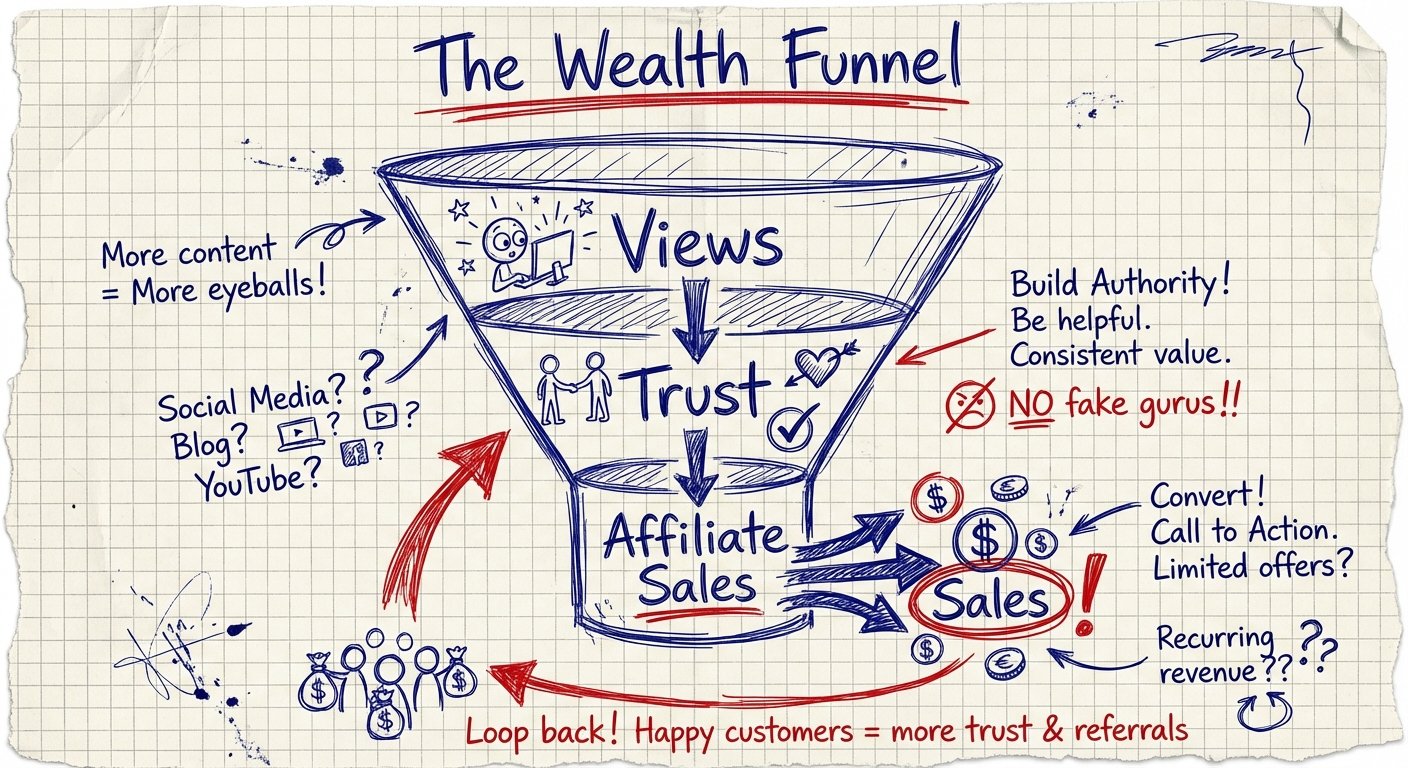
Smart entrepreneurs use the traffic to sell something else.
Affiliate Marketing
This is the easiest plug-in. If your video is about “Top 5 Laptops for Editing,” you put Amazon links in the description.
You don’t need a product. You don’t need inventory. You don’t need customer support.
You just need the link.
Let’s say you recommend a high-end noise-canceling headset for editors. High ticket price means higher commission.
Sony WH-1000XM5 Wireless Headphones
- Why it sells: Best noise cancelling in the market. Every editor wants them to focus.
- Current Price: $320 – $350
If 10,000 people watch your video, and 0.5% buy the headphones, that is 50 sales. You make a commission on $17,000 worth of sales. That often pays more than the AdSense.
The Trap: Where You Will Fail
I see the same mistakes every time.
1. The Perfectionist Trap.
You spend 4 weeks on one video. You want it to be a masterpiece. You upload it. It gets 12 views. You quit.
Volume negates luck. You need to upload 30-50 videos before the algorithm even knows who you are. Commit to 100 videos. Improve something small every time.
2. The Copycat Trap.
You see a channel doing “Rain Sounds for Sleep.” You try to do the exact same thing. You fail.
Those markets are saturated. You need a unique mechanism. If everyone is doing “Top 10 Tech Gadgets,” you do “Top 10 Tech Gadgets Under $50 That Are Actually Useful.” Niche down to blow up.
3. The Consistency Trap.
You upload three times in week one. Zero times in week two. YouTube hates this. The algorithm craves predictability. Feed the beast on a schedule.
Conclusion: It’s Just Math
There is no magic. There is no secret society.
There are inputs and there are outputs.
The input is a consistent stream of videos targeting high-value keywords. The output is attention. You monetize that attention through ads and products.
Most people are too lazy to do the research. They are too scared to spend money on freelancers. They are too impatient to wait for the compound effect.
That is good news for you.
The bar is low. The opportunity is massive. But you have to treat it like a business.
Stop watching. Start uploading.